
BuddhistCatholicContemplativeEvangelicalGeneral ChristianHinduJewishLatter-day SaintMuslimNew VisionsProgressive Christian
Beliefs
- Buddhist
- Catholic
- Contemplative
- Evangelical
- General Christian
- Hindu
- Jewish
- Latter-day Saint
- More Voices
- Muslim
- New Visions
- Pagan
- Progressive Christian
Topics
- Religion News
- Food and Religion
- Sports and Religion
- Religious Art
- Religious Music and Entertainment
- Religious Events
- History and Religion
- Style and Religion
- Politics and Religion
- Women in Religion
- Recreation Outdoors and Religion
- Business Finance and Religion
- Careers Workplace and Religion
- Education and Religion
- Family Parenting and Religion
- Health Fitness and Religion
- Home and Religion
- Relationships and Religion
- Technology and Religion
- Travel and Religion
Columnists
- Buddhist Columnists
- Business Finance and Religion Columnists
- Careers Workplace and Religion Columnists
- Catholic Columnists
- Contemplative Columnists
- Education and Religion Columnists
- Evangelists Columnists
- Family Parenting and Religion Columnists
- General Christian Columnists
- Health Fitness and Religion Columnists
- Hindu Columnists
- History and Religion Columnists
- Home and Religion Columnists
- Jewish Columnists
- More Voices Columnists
- Latter Day Columnists
- Muslim Columnists
- New Visions Columnists
- Nonreligious Columnists
- Pagan Columnists
- Politics and Religion Columnists
- Progressive Columnists
- Recreation Outdoors and Religion Columnists
- Relationships and Religion Columnists
- Religion News Columnists
- Religious Art Columnists
- Religious Events Columnists
- Religious Music and Entertainment Columnists
- Sports and Religion Columnists
- Style and Religion Columnists
- Technology and Religion Columnists
- Travel and Religion Columnists
- Women in Religion Columnists
Resource Library
- 2026 Calendar
- Library of World Religions
- The 100 Most Holy Places on Earth
- Patheos Answers
- Podcasts
- Videos
- Faith Leaders Database
- Anglican Episcopalian
- Bahai
- Baptist
- Buddhism
- Christianity
- Confucianism
- Eastern Orthodoxy
- Hinduism
- Holiness and Pentecostal
- ISKCON
- Islam
- Judaism
- Lutheran
- Methodist
- The Church of Jesus Christ of Latter-day Saints
- New Age
- Paganism
- Presbytarian and Reformed
- Protestantism
- Religion Behind the Scenes
- Roman Catholic
- Scientology
- Shia Islam
- Sikhism
- Sufism
- Sunni Islam
- Taoism
- Zen
- See all religions
Research Tools
 Ad-Free & Subscriber Log-In Subscription Support
Ad-Free & Subscriber Log-In Subscription Support
Follow Patheos 

- Trending:
- Forgiveness
- |
- Marriage
- |
- Consciousness
- |
- Death Penalty
- |
- Election
- |
- Halloween

- Home
- Catholic
- Credo, I Believe in … the Father (Comma)
Credo, I Believe in … the Father (Comma)
Last updated on: March 13, 2019 at 3:38 pm by Jack Hartjes
Credo, I Believe in … the Father (Comma) 2019-03-13T15:38:39-06:00 Jack Hartjes
Patheos Explore the world's faith through different perspectives on religion and spirituality! Patheos has the views of the prevalent religions and spiritualities of the world.
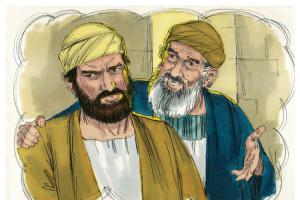
God is the prodigal father. Are we the unhappy older brother?
The first thing we say about God in the Creed is that God is Father. Actually, in the current English translation we name God “Father almighty.” I prefer to separate these two ideas with a comma. As I explained in my last post, I can think of God as Father and as almighty, but not both at once. If you’re thinking of yourself as especially mighty, I suggest becoming a father to cure your delusion.
This is the fourth in a series on the Creed of Christians. An introduction consists of my retelling of the Creed’s story. That and links to other posts in the series are here.
Imagining God as father with Jesus
Since the time of Jesus, “Father” has been probably the most loved of the titles Christians give to God. But the father image is a challenge, too, especially if we try to enter into Jesus’ imagination. For Jesus God is a father who waits and watches for the wayward son’s return and welcomes him back with a kiss.
One way of reading a parable is to locate oneself in the story. Where do we belong in the Prodigal Son parable? Most likely we’re the older brother. He has a just complaint, and it’s not just against the younger brother. He’s thinking:
That wastrel has already gotten his full inheritance gone and done whatever he pleased. Now he’s back, Father loves him for no good reason, and I’ll bet he gets another full inheritance. Father’s not being fair to me. And now he throws a big party in the kid’s honor.
The Father’s response to the grumbling son is surprising. He doesn’t apologize, doesn’t say, “I’ll make it up to you.” There’s no explanation of why, after all, this is the best course. Without even the slightest attempt at self-justification, the Father just says what the older son already knows:
Your brother was dead and has come to life again; he was lost and has been found. (Luke 15:32)
If that’s parenting at its best, it’s a challenge. To let reality speak, because it speaks to the heart, when every nerve tells us to try to convince the mind. Or to get our way by bribe or force or threat; but the Father wields no power over the son who won’t join the party. Just: “We had to celebrate.”
Father in the Old and New Testaments
Jesus wasn’t entirely original when he called God his Father, but his relationship as son to a father was intensely intimate and real. For the most part, you don’t find that in the Scriptures Jesus inherited. Some biblical images seem to apply more literally to God and others less literally. In the Hebrew Scriptures “king” seems to be the most literal image. On Jesus’ lips it’s “father” that is most literal.
The development of the father image started a little before Jesus. Hebrew authors give many titles to God, but with “king” you get the impression they really mean it. Not so, most of the time with “father.” Here are some examples of God as king:
- Listen to the sound of my cry, my King and my God, (Psalms 5:2)
- The Lord is king forever and ever. (Psalms 10:16)
- Who is the King of glory? The Lord, strong and mighty, the Lord, mighty in battle. (Psalms 24:8)
And that’s only one sixth of the way through the Book of Psalms. In contrast, here are some of the Hebrew references to God as father:
- Isaiah 64:8. Yet, O Lord, you are our Father; we are the clay, and you are our potter; we are all the work of your hand.
- Jeremiah 3:19. I thought how I would set you among my children, and give you a pleasant land, the most beautiful heritage of all the nations. And I thought you would call me, My Father, and would not turn from following me.
- Psalm 103:13. As a father has compassion for his children, so the Lord has compassion for those who fear him.
Imagine you were the Isaiah of the first quote telling your real father, “You are my father.” It doesn’t make sense. That’s something you would only say to someone who is not your real father, a mentor perhaps. Most of the older references to God as father are like that or are obviously just comparisons, like the third quote above.
Very late in the pre-Christian era, however, it changes somewhat. In a work written in the second century before Christ we find:
- LORD, Father and Master of my life, permit me not to fall by them! (Sirach 23:1)
It sounds like the author of this work, which Catholics, but not the Protestants, include in the Bible, really means “father.”
Jesus’ reversal
With Jesus “Father” is even more real, and “king” becomes the metaphor as the two images change places:
- Father, hallowed be your name. (Luke 11:2) ·
- Father, if you are willing, remove this cup from me. (Luke 22:42) ·
- Your heavenly father knows that you need all these things. (Matthew 6:32)
Jesus refers to God the King and the Kingdom of God often, but it’s always in a figure of speech, a comparison:
- “The kingdom of heaven may be compared to a king who gave a wedding banquet . . .” (Matthew 22:2)
There are many such Kingdom parables. But when it came to praying to God and speaking in a more literal way about God, Jesus complets the switch from “king” to “father.”
King and father are both male images, and I worry about way traditional language preferences the masculine in many ways. The father image, though, does make room for feminine qualities. That will be the theme of the next post: Is God also mother?
Image credit: Diocese of Westminster Youth Ministry via Google Images
Previous Post

January 21, 2019
‘The Weakness of God is Stronger Than … Strength’
Next Post
January 25, 2019 Praying the Luminous Mysteries of the Rosary with Scripture
Browse Our Archives
Select a Category Advent Christmas Amazon Synod Angels Being Consumed Bible Catholic Modern Creed Ecology Economics Elizabeth Johnson Eucharist Fragments and Filaments Gender and Sex Gospel of Mark Herzog Historical Jesus Liturgy Luke Opening Scriptures on Way to Emmaus Ordinary radicals Parables Pro-Life Reincarnation Rosary Sacraments science Social Justice Souls Stories of Jesus The Creed Torture and Eucharist Tracy Uncategorized War and Peace
Select a Month October 2026 June 2025 April 2025 March 2025 February 2025 January 2025 November 2024 July 2024 March 2024 December 2023 October 2023 September 2023 August 2023 May 2023 April 2023 March 2023 February 2023 January 2023 December 2022 November 2022 October 2022 September 2022 August 2022 July 2022 June 2022 April 2022 March 2022 February 2022 January 2022 December 2021 November 2021 October 2021 August 2021 July 2021 June 2021 April 2021 March 2021 February 2021 December 2020 November 2020 October 2020 August 2020 July 2020 June 2020 May 2020 April 2020 March 2020 February 2020 January 2020 December 2019 November 2019 October 2019 September 2019 August 2019 July 2019 June 2019 May 2019 April 2019 March 2019 February 2019 January 2019 December 2018 November 2018 October 2018 September 2018 August 2018 July 2018 June 2018 May 2018
Follow Us!
TAKE THE
Religious Wisdom Quiz
I wanted a vineyard so badly that my wife arranged the owner's death through false witnesses. Who am I?
Select your answer to see how you score.
Jezebel Ahab David Naboth
Related posts from Lost in a One-Acre Wood
The Nicene Creed: Thinking with the Bishop Barron...
The Creed, Entering God’s Dangerous World

What about the Traditional Angels, and What’s the...

Cosmos and History: Connecting the Angels
TRENDING AT PATHEOS Catholic

The Parable Of The Sower And The Word...
One of Christ’s most famous parables is that of the sower who...

Rejecting Doom: Christian Hope And Human Action
Christianity is a religion of hope. We are to have hope and...

Why I Choose the Eucharist Over the Sermon
Choose the Eucharist, Not the Sermon What are we supposed to get...

5 Design Elements Found in Spiritually Rooted Homes
Putting Spirituality Into Home Decor Our homes are more than our living...

Credo: A Story of God Told with the...
About 10 years ago, I began to imagine a personal "Credo" that...

The Anatomy of Divine Revelation in Catholic Thought
The claim that God has made Himself known to human beings is...
view all Catholic blogs
Ad-Free & Subscriber Log-In Subscription Support
- About Us
- 2026 Calendar
- Videos
- Podcasts
- Library of World Religions
- Faith In Media Tracker
- Advertise With Us
- Write for Us
- Privacy Policy
- Terms of Service
- Do Not Sell My Data
- Contact Us
- Radiant Digital
- Manage Newsletter Subscriptions
- Unsubscribe From Notifications
- Sitemap
Copyright 2008-2026, Patheos. All rights reserved.
Subscription Support Ad-Free & Subscriber Log-In
Follow Patheos