
BuddhistCatholicContemplativeEvangelicalGeneral ChristianHinduJewishLatter-day SaintMuslimNew VisionsProgressive Christian
Beliefs
- Buddhist
- Catholic
- Contemplative
- Evangelical
- General Christian
- Hindu
- Jewish
- Latter-day Saint
- More Voices
- Muslim
- New Visions
- Pagan
- Progressive Christian
Topics
- Religion News
- Food and Religion
- Sports and Religion
- Religious Art
- Religious Music and Entertainment
- Religious Events
- History and Religion
- Style and Religion
- Politics and Religion
- Women in Religion
- Recreation Outdoors and Religion
- Business Finance and Religion
- Careers Workplace and Religion
- Education and Religion
- Family Parenting and Religion
- Health Fitness and Religion
- Home and Religion
- Relationships and Religion
- Technology and Religion
- Travel and Religion
Columnists
- Buddhist Columnists
- Business Finance and Religion Columnists
- Careers Workplace and Religion Columnists
- Catholic Columnists
- Contemplative Columnists
- Education and Religion Columnists
- Evangelists Columnists
- Family Parenting and Religion Columnists
- General Christian Columnists
- Health Fitness and Religion Columnists
- Hindu Columnists
- History and Religion Columnists
- Home and Religion Columnists
- Jewish Columnists
- More Voices Columnists
- Latter Day Columnists
- Muslim Columnists
- New Visions Columnists
- Nonreligious Columnists
- Pagan Columnists
- Politics and Religion Columnists
- Progressive Columnists
- Recreation Outdoors and Religion Columnists
- Relationships and Religion Columnists
- Religion News Columnists
- Religious Art Columnists
- Religious Events Columnists
- Religious Music and Entertainment Columnists
- Sports and Religion Columnists
- Style and Religion Columnists
- Technology and Religion Columnists
- Travel and Religion Columnists
- Women in Religion Columnists
Resource Library
- 2026 Calendar
- Library of World Religions
- The 100 Most Holy Places on Earth
- Patheos Answers
- Podcasts
- Videos
- Faith Leaders Database
- Anglican Episcopalian
- Bahai
- Baptist
- Buddhism
- Christianity
- Confucianism
- Eastern Orthodoxy
- Hinduism
- Holiness and Pentecostal
- ISKCON
- Islam
- Judaism
- Lutheran
- Methodist
- The Church of Jesus Christ of Latter-day Saints
- New Age
- Paganism
- Presbytarian and Reformed
- Protestantism
- Religion Behind the Scenes
- Roman Catholic
- Scientology
- Shia Islam
- Sikhism
- Sufism
- Sunni Islam
- Taoism
- Zen
- See all religions
Research Tools
 Ad-Free & Subscriber Log-In Subscription Support
Ad-Free & Subscriber Log-In Subscription Support
Follow Patheos 

- Trending:
- Forgiveness
- |
- Marriage
- |
- Consciousness
- |
- Death Penalty
- |
- Election
- |
- Halloween

- Home
- Catholic
- Miracle Stories, Science, and Jesus’ Humanity
Miracle Stories, Science, and Jesus’ Humanity
Last updated on: January 7, 2019 at 1:50 pm by Jack Hartjes
Miracle Stories, Science, and Jesus’ Humanity 2019-01-07T13:50:03-06:00 Jack Hartjes
Patheos Explore the world's faith through different perspectives on religion and spirituality! Patheos has the views of the prevalent religions and spiritualities of the world.
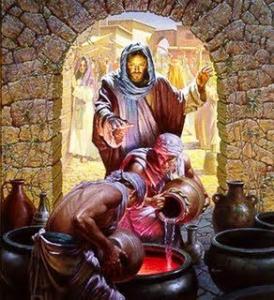
Miracle stories run through the larger story of Jesus from beginning to end.
Science does not easily accept as real an event that breaks the laws of nature. There may be gaps in our understanding, but once we do understand how something works, we figure it will work that way all the time. An apparently miraculous exception is, to scientists, only a challenge to keep on looking for a rational explanation. They want to investigate–if not the event then the experience or the report. For Christians some of that rational activity may take the form of in-depth study of the Bible’s miracle stories.
Theology should not easily jump from miracle stories to God. Not only is it an unlikely path, it’s likely to lead to the wrong God. At least the premise of this series is that Jesus’ humanity tells us what God is like. Here I report on some of the analyzing of miracle stories that Catholic theologians have done.
Ninth in the series “Stories of Jesus and the Character of God.” In this series I probe what historical Jesus scholars can say about the humanness and the earthly career of Jesus—beyond which historical research cannot go. The ultimate objective is to let this Jesus reveal the character of God. Contents and links to other entries in the series here.
One theologian who has studied the miracle stories is Walter Kasper, a cardinal in the Church. I have been and will continue relying on his book Jesus, The Christ. (89-98)
The miracle genre
Kasper identifies what he calls the “genre” of miracle stories in the Bible and ancient non-Christian literature. In non-Christian literature the miracle story has a number of identifiable features. There’s a three-part pattern: The story stresses the difficulty the healer faces, including the failure of previous attempts at a cure. The cure itself is related. Finally the story confirms the cure with accounts of witnesses’ amazement.
Some of the New Testament’s miracle stories exhibit these same features. It’s easy to see why a storyteller would follow literary conventions in telling a story. It’s less likely that historical reality would follow the same conventions. So scholars tend to be skeptical of a story in the Bible when it follows too closely the “miracle story” genre.
Some of the Bible’s miracle stories don’t follow this miracle-story pattern. One of these tells us that Jesus healed Peter’s mother-in-law. The story reads like somebody simply remembering something that happened. For that reason it seems likely that it did happen more or less as told. But what exactly happened, and what does God have to do with it?
An interventionist God?
Kasper finds theologically unacceptable the idea of an interventionist God, one who imposes changes on the created world from the outside. But he also thinks Jesus’ reputation as miracle worker must have had a basis in fact. Some things Jesus did must have astounded his contemporaries. Would a 21st century scientist seeing the same things be convinced that laws of nature were broken? In the homey scene with Peter’s mother-in-law, it’s easy to imagine the excitement of company arriving, especially when it’s Jesus, effecting a cure. It could have a natural explanation.
For first-century Judeans a miracle was simply a sign that God was at work in a special way. And God was always at work. The idea of a law of nature to be broken was not part of their mindset. Kasper thinks it’s not necessarily part of the meaning of miracle in the Bible.
Analyzing miracle stories
Kasper’s analysis of miracle stories continues along the following lines:
- On the number of miracles: From an earlier layer of the Jesus tradition to another later one (e.g., from Mark to Matthew and Luke), we see exaggeration in the quantity and quality of miracles. There are more of them and they are more amazing. It’s logical to suppose that exaggeration was also operating in oral tradition before the Gospels were written. “This reduces the material on which the miracle reports are based very considerably.” (Jesus, the Christ, p. 89, note)
- Early historical Jesus scholars thought they could attribute all the miracles to later, legendary additions to stories about Jesus. Kasper says that some, but not all, miracle stories are like this. One whole set of miracles that he thinks are later additions are the nature miracles. He thinks of them as “projections of the experiences of Easter back into the historical life of Jesus.” They would include “the stilling of the storm, the transfiguration, Jesus’ walking on the lake, the feeding of the four (or five) thousand, and the miraculous draught of fishes.” It would also include raisings from the dead. (p. 90)
- Still, Kasper says, “There can scarcely be a single serious exegete who does not believe in a basic stock of historically certain miracles of Jesus.” Jesus must have “performed extraordinary actions, which amazed his contemporaries.” (p. 90-91)
- What to make of these actions is the question. Could there be a psychosomatic explanation? Kasper mentions that possibility and then gets into something more theological: “God can never replace this-worldly causality. If he were on the same level as this-worldly causes, he would no longer be God but an idol. If God is to remain God, even his miracles must be thought of as mediated by created secondary [i.e., this-worldly] causes.” (92)
- Otherwise, a miracle would be “like a meteor from another world: an alien body completely unassimilable to our world.”
- Such an event “would be of no profit to theology either. A miracle of this sort would compel belief, and would remove its character of free choice.” (92) Even more boldly: “A divine intervention in the sense of a directly visible action of God is theological nonsense.” (95)
Miracles and the relation between God and world
Kasper seems to be saying God does not intervene obviously in history. I would agree about the obviously part. The path to doubt – even sincere doubt – is always open. Actions of God are not directly visible or scientifically provable. In the face of phenomena like Lourdes or Guadalupe and the Church’s strict procedures for verifying miracles, I have to say I hold to that idea rather tentatively.
At the same time, I do believe in an invisibly intervening God, except I would rather say an interrupting God. Jesus didn’t come because God wants to keep everything as it was. Certainly not in our human worldly ways, and perhaps also not in the natural world.
Doctrines concerning special unseen events, Mary’s Immaculate Conception and virginal conceiving and Jesus’ Resurrection, all proclaim God’s activity in the world. What does that say about the world? What does the doctrine of creation, another hidden but presumably decisive activity, say about the world? Is the world merely God’s object, subject to divine whim? Our scientific minds require more integrity for the universe than that. Does science require a world that has nothing to do with God?
Now the miracle stories in the Bible make me face the large question of the relation between God and the world. But that waits for another post.
Image credit: Moore Perspective, via Google Images
Previous Post

January 4, 2019
Evangelization and a Thought about the Three Kings
Next Post
January 9, 2019 Metaphors and Transcendence: Miracles and God’s relation to the world
Browse Our Archives
Select a Category Advent Christmas Amazon Synod Angels Being Consumed Bible Catholic Modern Creed Ecology Economics Elizabeth Johnson Eucharist Fragments and Filaments Gender and Sex Gospel of Mark Herzog Historical Jesus Liturgy Luke Opening Scriptures on Way to Emmaus Ordinary radicals Parables Pro-Life Reincarnation Rosary Sacraments science Social Justice Souls Stories of Jesus The Creed Torture and Eucharist Tracy Uncategorized War and Peace
Select a Month October 2026 June 2025 April 2025 March 2025 February 2025 January 2025 November 2024 July 2024 March 2024 December 2023 October 2023 September 2023 August 2023 May 2023 April 2023 March 2023 February 2023 January 2023 December 2022 November 2022 October 2022 September 2022 August 2022 July 2022 June 2022 April 2022 March 2022 February 2022 January 2022 December 2021 November 2021 October 2021 August 2021 July 2021 June 2021 April 2021 March 2021 February 2021 December 2020 November 2020 October 2020 August 2020 July 2020 June 2020 May 2020 April 2020 March 2020 February 2020 January 2020 December 2019 November 2019 October 2019 September 2019 August 2019 July 2019 June 2019 May 2019 April 2019 March 2019 February 2019 January 2019 December 2018 November 2018 October 2018 September 2018 August 2018 July 2018 June 2018 May 2018
Follow Us!
TAKE THE
Religious Wisdom Quiz
Who said, "Whom shall I send, and who will go for us?"
Select your answer to see how you score.
Moses Isaiah God Jesus
Related posts from Lost in a One-Acre Wood
Resurrection: For the Apostles, It Took a While...
CRUCIFY HIM! -- What the Jews Did or...
Faith that can Move Mountains … or Not
The Misunderstood Messiah: Jesus’ Friends Don’t Get It
TRENDING AT PATHEOS Catholic

Rejecting Doom: Christian Hope And Human Action
Christianity is a religion of hope. We are to have hope and...

It’s What Comes From Within Which Matters
One of the most difficult things for us to understand is why...

Why I Choose the Eucharist Over the Sermon
Choose the Eucharist, Not the Sermon What are we supposed to get...

5 Design Elements Found in Spiritually Rooted Homes
Putting Spirituality Into Home Decor Our homes are more than our living...

Credo: A Story of God Told with the...
About 10 years ago, I began to imagine a personal "Credo" that...

The Anatomy of Divine Revelation in Catholic Thought
The claim that God has made Himself known to human beings is...
view all Catholic blogs
Ad-Free & Subscriber Log-In Subscription Support
- About Us
- 2026 Calendar
- Videos
- Podcasts
- Library of World Religions
- Faith In Media Tracker
- Advertise With Us
- Write for Us
- Privacy Policy
- Terms of Service
- Do Not Sell My Data
- Contact Us
- Radiant Digital
- Manage Newsletter Subscriptions
- Unsubscribe From Notifications
- Sitemap
Copyright 2008-2026, Patheos. All rights reserved.
Subscription Support Ad-Free & Subscriber Log-In
Follow Patheos