
BuddhistCatholicContemplativeEvangelicalGeneral ChristianHinduJewishLatter-day SaintMuslimNew VisionsProgressive Christian
Beliefs
- Buddhist
- Catholic
- Contemplative
- Evangelical
- General Christian
- Hindu
- Jewish
- Latter-day Saint
- More Voices
- Muslim
- New Visions
- Pagan
- Progressive Christian
Topics
- Religion News
- Food and Religion
- Sports and Religion
- Religious Art
- Religious Music and Entertainment
- Religious Events
- History and Religion
- Style and Religion
- Politics and Religion
- Women in Religion
- Recreation Outdoors and Religion
- Business Finance and Religion
- Careers Workplace and Religion
- Education and Religion
- Family Parenting and Religion
- Health Fitness and Religion
- Home and Religion
- Relationships and Religion
- Technology and Religion
- Travel and Religion
Columnists
- Buddhist Columnists
- Business Finance and Religion Columnists
- Careers Workplace and Religion Columnists
- Catholic Columnists
- Contemplative Columnists
- Education and Religion Columnists
- Evangelists Columnists
- Family Parenting and Religion Columnists
- General Christian Columnists
- Health Fitness and Religion Columnists
- Hindu Columnists
- History and Religion Columnists
- Home and Religion Columnists
- Jewish Columnists
- More Voices Columnists
- Latter Day Columnists
- Muslim Columnists
- New Visions Columnists
- Nonreligious Columnists
- Pagan Columnists
- Politics and Religion Columnists
- Progressive Columnists
- Recreation Outdoors and Religion Columnists
- Relationships and Religion Columnists
- Religion News Columnists
- Religious Art Columnists
- Religious Events Columnists
- Religious Music and Entertainment Columnists
- Sports and Religion Columnists
- Style and Religion Columnists
- Technology and Religion Columnists
- Travel and Religion Columnists
- Women in Religion Columnists
Resource Library
- 2026 Calendar
- Library of World Religions
- The 100 Most Holy Places on Earth
- Patheos Answers
- Podcasts
- Videos
- Faith Leaders Database
- Anglican Episcopalian
- Bahai
- Baptist
- Buddhism
- Christianity
- Confucianism
- Eastern Orthodoxy
- Hinduism
- Holiness and Pentecostal
- ISKCON
- Islam
- Judaism
- Lutheran
- Methodist
- The Church of Jesus Christ of Latter-day Saints
- New Age
- Paganism
- Presbytarian and Reformed
- Protestantism
- Religion Behind the Scenes
- Roman Catholic
- Scientology
- Shia Islam
- Sikhism
- Sufism
- Sunni Islam
- Taoism
- Zen
- See all religions
Research Tools
 Ad-Free & Subscriber Log-In Subscription Support
Ad-Free & Subscriber Log-In Subscription Support
Follow Patheos 

- Trending:
- Forgiveness
- |
- Marriage
- |
- Consciousness
- |
- Death Penalty
- |
- Election
- |
- Halloween

- Home
- Catholic
- Returning to the Rosary: Catholics Pray to God with the Saints Sometimes
Returning to the Rosary: Catholics Pray to God with the Saints Sometimes
Last updated on: August 13, 2021 at 1:54 pm by Jack Hartjes
Returning to the Rosary: Catholics Pray to God with the Saints Sometimes 2021-08-13T13:54:24-06:00 Jack Hartjes
Patheos Explore the world's faith through different perspectives on religion and spirituality! Patheos has the views of the prevalent religions and spiritualities of the world.
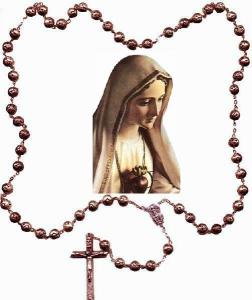
Praying to Mary and other saints is still part of being Catholic.
The Rosary is a lovely prayer, which I loved from a distance for most of my life but have returned to recently. This post is an introduction to a series of posts that includes one for each set of Mysteries.
Table of Contents with links to each post in the series
- Introduction (below)
- The Joyful Mysteries
- The Luminous Mysteries
- The Sorrowful Mysteries
- The Glorious Mysteries
I grew up in a family of regular Rosary pray-ers—every day in May and October. But I stopped praying this prayer regularly when I left that Catholic home to go to the seminary.
Those were days of heady change in the Church. Much needed change, but I was less concerned than I needed to be about the Church’s traditions. Devotion to Mary was one of those traditions.
There was arrogance. I knew about, but cared too little for, the importance Mary held for a large part of the Church. This included the poor and the non-white, especially the poorer South of the globe. I thought I harbored great concern for our neighbors in Latin America, but little for their piety.
There was also the ecumenical movement. I was not confused by Protestant claims that Catholics worship the saints, but I thought the Church’s prayer life exaggerated the saints and Mary. Protestants, I thought, could teach me about relating directly to God. The Rosary seemed like a relic in a bad sense of the word.
Differing theologies of the saints
My wife and I now own a house that is as close to our small downtown as you can get in Springfield, Minnesota. It was an ideal location for a public outdoor Rosary. We were praying the Rosary there with other members of St. Raphael’s Parish, and the pastor of the Lutheran Church walked by on his way to his home across the street. He greeted us cordially and then said, “I hope you don’t mind if I don’t join you.”
Another Lutheran pastor explained to me why Lutherans don’t pray to saints or Mary. He said most Lutherans feel pretty much the same as Catholic about those who have died. They imagine them up in heaven looking down on and being concerned about their loved ones on earth. He said that’s not correct Lutheran theology. Those who have died are “asleep in the Lord,” according to Lutheran teaching. Consciousness, at least wakeful consciousness, for them must wait for the fulfillment of time, when Christ comes and the dead are raised bodily.
It’s a way of stating a very Christian idea – bodies are important. Philosophically, human souls do not exist without a material embodiment. A philosophy professor explained the Catholic view. Souls do indeed need bodies, those in heaven as well as those on earth. We are not Platonists in that sense. In heaven God supplies a kind of substitute material. I suppose that would have to be true even if those souls are “asleep.” And if it is true, then they could as easily be awake, and it does make sense to pray to them.
Returning to the Rosary
I knew all the mysteries of the Rosary, Joyful, Sorrowful, and Glorious, by heart from childhood. I rejoiced when Pope Saint John Paul II added a fourth set. The Luminous Mysteries filled in the neglected space between Jesus’ childhood and passion. But I still didn’t say the Rosary much. I had a hard time getting through such a long prayer without suffering boredom or complete loss of focus.
In the past year two things changed that for me. They work, paradoxically, by making the prayer even longer. First, a relaxation breathing procedure adds four seconds between each prayer and makes the whole more meditative. Second, relevant Scripture verses, which I recite not just once but three times each decade keep bringing my wandering mind back into focus.
Meditative breathing for a meditative prayer
I always thought of the Rosary, with its steady repetitions, as one way Catholics connect with Eastern religions with their traditions of meditative and repetitive prayer. So a meditative breathing technique that I picked up from an online singing coach seemed a natural fit. The technique, in short, is to breathe in deep and slow and breathe out twice as slowly. It’s supposed to quiet the “fight or flight” nervous system and activate a more peaceful accepting attitude.
Applying it to the Rosary, I breathe in to a count of four before each prayer. Then I say the prayer on that one breath, quietly forming all the words with my lip.. (The Our Fathers get two breaths.) This helps me let go and after a while I hardly notice the passage of time. I’m usually surprised when the prayer nears its end.
Using Scripture to focus
I am not a visual thinker so my imagination isn’t much help when it comes to focusing on the mysteries. I like the words of Scripture, but to be useful these need to happen more than once per decade. It works for me to recite a Scripture passage after naming the mystery and after the third and seventh Hail Mary. Several “Scriptural Rosaries” with biblical texts for each of the mysteries are available, but I have made my own selections.
There’s a lot to think about in the mysteries of the Rosary, but thinking a lot doesn’t go well with a meditative prayer. I’ll do some thinking, investigating, and questioning about the mysteries in future posts. I plan on the Joyful Mysteries while it’s still Christmas Season, Luminous Mysteries during Ordinary Time, Sorrowful Mysteries in Lent, and Glorious Mysteries after Easter.
Image credit: Living Bread Radio via Google Images
Previous Post

December 26, 2018
The Creed, a Story that I Tell, Embellished a Bit
Browse Our Archives
Select a Category Advent Christmas Amazon Synod Angels Being Consumed Bible Catholic Modern Creed Ecology Economics Elizabeth Johnson Eucharist Fragments and Filaments Gender and Sex Gospel of Mark Herzog Historical Jesus Liturgy Luke Opening Scriptures on Way to Emmaus Ordinary radicals Parables Pro-Life Reincarnation Rosary Sacraments science Social Justice Souls Stories of Jesus The Creed Torture and Eucharist Tracy Uncategorized War and Peace
Select a Month October 2026 June 2025 April 2025 March 2025 February 2025 January 2025 November 2024 July 2024 March 2024 December 2023 October 2023 September 2023 August 2023 May 2023 April 2023 March 2023 February 2023 January 2023 December 2022 November 2022 October 2022 September 2022 August 2022 July 2022 June 2022 April 2022 March 2022 February 2022 January 2022 December 2021 November 2021 October 2021 August 2021 July 2021 June 2021 April 2021 March 2021 February 2021 December 2020 November 2020 October 2020 August 2020 July 2020 June 2020 May 2020 April 2020 March 2020 February 2020 January 2020 December 2019 November 2019 October 2019 September 2019 August 2019 July 2019 June 2019 May 2019 April 2019 March 2019 February 2019 January 2019 December 2018 November 2018 October 2018 September 2018 August 2018 July 2018 June 2018 May 2018
Follow Us!
TAKE THE
Religious Wisdom Quiz
True or False: Hebrews teaches that Jesus is the same yesterday, today, and forever.
Select your answer to see how you score.
FALSE TRUE
Related posts from Lost in a One-Acre Wood
Jesus’ Second Coming Should Be the Rosary’s Last...
Praying the Glorious Mysteries of the Rosary with Scripture
Praying the Sorrowful Mysteries of the Rosary with Scripture
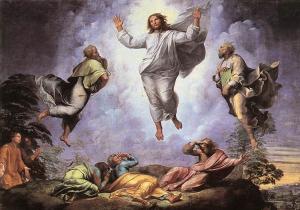
Praying the Luminous Mysteries of the Rosary with Scripture
TRENDING AT PATHEOS Catholic

The Parable Of The Sower And The Word...
One of Christ’s most famous parables is that of the sower who...

Rejecting Doom: Christian Hope And Human Action
Christianity is a religion of hope. We are to have hope and...

Why I Choose the Eucharist Over the Sermon
Choose the Eucharist, Not the Sermon What are we supposed to get...

5 Design Elements Found in Spiritually Rooted Homes
Putting Spirituality Into Home Decor Our homes are more than our living...

Credo: A Story of God Told with the...
About 10 years ago, I began to imagine a personal "Credo" that...

The Anatomy of Divine Revelation in Catholic Thought
The claim that God has made Himself known to human beings is...
view all Catholic blogs
Ad-Free & Subscriber Log-In Subscription Support
- About Us
- 2026 Calendar
- Videos
- Podcasts
- Library of World Religions
- Faith In Media Tracker
- Advertise With Us
- Write for Us
- Privacy Policy
- Terms of Service
- Do Not Sell My Data
- Contact Us
- Radiant Digital
- Manage Newsletter Subscriptions
- Unsubscribe From Notifications
- Sitemap
Copyright 2008-2026, Patheos. All rights reserved.
Subscription Support Ad-Free & Subscriber Log-In
Follow Patheos