
BuddhistCatholicContemplativeEvangelicalGeneral ChristianHinduJewishLatter-day SaintMuslimNew VisionsProgressive Christian
Beliefs
- Buddhist
- Catholic
- Contemplative
- Evangelical
- General Christian
- Hindu
- Jewish
- Latter-day Saint
- More Voices
- Muslim
- New Visions
- Pagan
- Progressive Christian
Topics
- Religion News
- Food and Religion
- Sports and Religion
- Religious Art
- Religious Music and Entertainment
- Religious Events
- History and Religion
- Style and Religion
- Politics and Religion
- Women in Religion
- Recreation Outdoors and Religion
- Business Finance and Religion
- Careers Workplace and Religion
- Education and Religion
- Family Parenting and Religion
- Health Fitness and Religion
- Home and Religion
- Relationships and Religion
- Technology and Religion
- Travel and Religion
Columnists
- Buddhist Columnists
- Business Finance and Religion Columnists
- Careers Workplace and Religion Columnists
- Catholic Columnists
- Contemplative Columnists
- Education and Religion Columnists
- Evangelists Columnists
- Family Parenting and Religion Columnists
- General Christian Columnists
- Health Fitness and Religion Columnists
- Hindu Columnists
- History and Religion Columnists
- Home and Religion Columnists
- Jewish Columnists
- More Voices Columnists
- Latter Day Columnists
- Muslim Columnists
- New Visions Columnists
- Nonreligious Columnists
- Pagan Columnists
- Politics and Religion Columnists
- Progressive Columnists
- Recreation Outdoors and Religion Columnists
- Relationships and Religion Columnists
- Religion News Columnists
- Religious Art Columnists
- Religious Events Columnists
- Religious Music and Entertainment Columnists
- Sports and Religion Columnists
- Style and Religion Columnists
- Technology and Religion Columnists
- Travel and Religion Columnists
- Women in Religion Columnists
Resource Library
- 2026 Calendar
- Library of World Religions
- The 100 Most Holy Places on Earth
- Patheos Answers
- Podcasts
- Videos
- Faith Leaders Database
- Anglican Episcopalian
- Bahai
- Baptist
- Buddhism
- Christianity
- Confucianism
- Eastern Orthodoxy
- Hinduism
- Holiness and Pentecostal
- ISKCON
- Islam
- Judaism
- Lutheran
- Methodist
- The Church of Jesus Christ of Latter-day Saints
- New Age
- Paganism
- Presbytarian and Reformed
- Protestantism
- Religion Behind the Scenes
- Roman Catholic
- Scientology
- Shia Islam
- Sikhism
- Sufism
- Sunni Islam
- Taoism
- Zen
- See all religions
Research Tools
 Ad-Free & Subscriber Log-In Subscription Support
Ad-Free & Subscriber Log-In Subscription Support
Follow Patheos 

- Trending:
- Forgiveness
- |
- Marriage
- |
- Consciousness
- |
- Death Penalty
- |
- Election
- |
- Halloween

- Home
- Catholic
- What’s So Fum About Christmas? Answers to the Christmas Carol Quiz
What’s So Fum About Christmas? Answers to the Christmas Carol Quiz
Last updated on: April 29, 2019 at 8:14 am by Jack Hartjes
What’s So Fum About Christmas? Answers to the Christmas Carol Quiz 2019-04-29T08:14:11-06:00 Jack Hartjes
Patheos Explore the world's faith through different perspectives on religion and spirituality! Patheos has the views of the prevalent religions and spiritualities of the world.
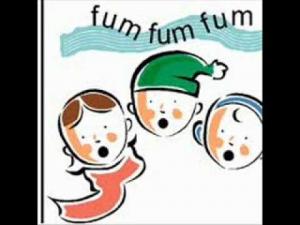
If you sing it, you should know what it means.
Christmas is a serious as well as a joyful season. You can find both feelings in Christmas carols. Today I’m focusing more on the joy, although there is a serious effort to understand as well. For instance, I’ve heard a choir director say that the word “fum” in the Christmas carol is just a nonsense word. The first answer clears up that misunderstanding. I hope you enjoy the Christmas carol quiz and also all the blessings of Christmas.
1. What’s so fum about December five and twenty, and what does “fum” mean anyway?
Everyone knows what’s so fum about December 25, but not everyone knows what “fum” means or even that it means anything. “Fum, Fum, Fum” is the name of the song, and it’s usually called a Catalan carol or maybe Spanish. A friend of mine from days gone by disagrees, however. She is from Majorca and insists the song is Majorcan. She says “fum” in her language means air or sky (related to our word “fume”). The sky is very big, so the word has another meaning — great or wonderful. Makes sense to me. Of course, I don’t have to tell you what’s so fum about December five and twenty.
2. What exactly is frankincense doing when it owns a deity nigh?
Maybe, like me once, you thought the frankincense in “We Three Kings” has a divine-like quality. If so, you were misled by the common meaning of “own.” But the word has another meaning, which we see in the phrase “own up to.” In an older time it meant something like “take to heart.” Incense acknowledges and proclaims to the world that God is near.
I was at a Christmas Eve service when the deacon starting waving smoke at us from the burning incense, and it hit me: He’s not giving us some new grace coming from that incense. He’s proclaiming that God is with us now already. It’s just like in the stable. Incense honors the Deity that is nigh.
3. On what day of what month did good King Wenceslas go to St. Agnes Fountain to help a poor family?
The Feast of Steven is the day after Christmas, December 26. Steven is the first martyr. Except for this little fact ”Good King Wenceslas” really says nothing at all about Christmas. (The first three days after Christmas are all martyrs’ feasts, including the feast of the Holy Innocents.)
4. What do the babel sounds that the blessed angels ever sing o’er sound like?
It came upon the midnight clear, that glorious song of old,
From angels bending near the earth to touch their harps of gold:
“Peace on the earth, good will to men from heaven’s all-gracious King.
The world in solemn stillness lay to hear the angels sing.Still through the cloven skies they come, with peaceful wings unfurled,
And still their heavenly music floats o’er all the weary world.
Above its sad and lowly plains, they bend on hovering wing,
And ever o’er its babel sounds, the blessed angels sing.
This is my favorite Christmas carol. I didn’t always understand the second verse. I used to think the babel sounds were the soft babblings of the babies in Bethlehem accompanying the angel voices above. But Bethlehem of old is in the first verse. The second verse is about today. The babel sounds are the sounds we make when we build our Towers of Babel, all pride and confusion and fighting, clashing with the angel voices above. But …
“Lo, the days are hastening on.” And someday the whole world will “send back the song which now the angels sing.”
5. How can you troll the ancient yuletide carol if you’re not fishing or hiding under a bridge?
OK, I should have asked what “fa la la la la” means. Of course, “troll” means sing with great joy. It has nothing to do with trolls or anglers, and it isn’t the sound of a mournful bell, either.
6. When the nations prove the glories of God’s righteousness, who are the nations; and is that very nice?
In Bible times the Jews called everyone who didn’t believe in Israel’s God “the nations.” So how can you prove something that you don’t believe in? In “Joy to the World,” we’re dealing with an older meaning of “prove” – to experience something in a very convincing way. Some people use the word “convicted,” and it’s the contrast between God’s righteousness and our sinfulness that convicts us. This is a far from pleasant note, but it ends up nice. Jesus was able to see something in us worth coming to earth and dying for; and that’s one of the
….wonders of God’s love. And that’s really fum.
7. Mary is the “mother kind” In “Lo, How a Rose E’er Blooming.” What are we saying about Mary? (Choose one.)
- Mary’s the mothering kind.
- She’s kind of a mother.
- Mary is a mother who is kind.
- She’s some kind of mother!
That last answer is correct. The word “kind” today can mean something like species or something like benevolent. The first of these is earlier, and when something was called “kind” as an adjective, it meant that this thing was an outstanding example of its kind. In this song “Lo, How a Rose E’er Blooming,” we’re singing that Mary is the very best of mothers.
8. What will happen if you go a-wassailing too long?
Don’t go too long a-wassailing or you will get drunk. A “Wassail” is a fermented Christmas drink. The kids came up with another answer: If you go wassailing too long, you’ll be grounded.
9. Name the computing Christmas carol. (Hint: Think the mouse.)
“Up on the Housetop” (click, click, click)
10. Which Christmas carol is not enjoying computer screen time just now?
‘Twas “The Night before Christmas,” and all through the house
Not a creature was stirring, not even the mouse.
A question that wasn’t in the quiz:
What is the “Trisagion” doing in a children’s Christmas Carol?
I was singing “O Come, Little Children” to myself, not expecting there would be anything intellectually puzzling, and came to the phrase “thrice holy night.” Suddenly it occurred to me to wonder, Why does the song say “thrice holy”? Immediately I thought of the song of the heavenly choirs “Holy, holy, holy Lord God of hosts.” Maybe three holy‘s just say the night is extra, extra holy. But I decided to Google “thrice holy” anyway and found some interesting things.
There’s a very old liturgical prayer called the Thrice Holy, Trisagion in Greek. It’s used especially in Eastern churches and has a place in the Latin Church’s Good Friday Liturgy. I remember singing it in Catholic grade school and mispronouncing the Greek! –
Holy God,
Holy and strong,
Holy immortal one, have mercy on us.
I also sang it in the seminary with a more complicated Gregorian Chant melody. Today I like both melodies. I wonder if there’s a deliberate connection with Good Friday in this children’s Christmas song.
There’s a strange legend about the hymn. In the 400’s Constantinople was shaken by violent earthquakes, and while the people prayed for assistance, a child was thrown up into the air. Everybody shouted “Lord, have mercy,” and the child came back down. Then in a loud voice he exhorted people to pray what he had heard angels saying: “Holy God, holy and strong, holy and immortal.” After giving this exhortation, the people prayed the new prayer, the earthquakes stopped, and child died!
Bonus question: Where should the comma go?
“God rest ye merry gentlemen.”
Here’s a merrier note. Obviously, God doesn’t give rest to a bunch of merry gentlemen but gives the gentlemen a merry kind of rest.
And God also rest ye merry, esteemed ones, during this Christmas time.
Next Post

December 24, 2018 Christmas Proclamation Puts Whole World into Jesus’ Story
Browse Our Archives
Select a Category Advent Christmas Amazon Synod Angels Being Consumed Bible Catholic Modern Creed Ecology Economics Elizabeth Johnson Eucharist Fragments and Filaments Gender and Sex Gospel of Mark Herzog Historical Jesus Liturgy Luke Opening Scriptures on Way to Emmaus Ordinary radicals Parables Pro-Life Reincarnation Rosary Sacraments science Social Justice Souls Stories of Jesus The Creed Torture and Eucharist Tracy Uncategorized War and Peace
Select a Month October 2026 June 2025 April 2025 March 2025 February 2025 January 2025 November 2024 July 2024 March 2024 December 2023 October 2023 September 2023 August 2023 May 2023 April 2023 March 2023 February 2023 January 2023 December 2022 November 2022 October 2022 September 2022 August 2022 July 2022 June 2022 April 2022 March 2022 February 2022 January 2022 December 2021 November 2021 October 2021 August 2021 July 2021 June 2021 April 2021 March 2021 February 2021 December 2020 November 2020 October 2020 August 2020 July 2020 June 2020 May 2020 April 2020 March 2020 February 2020 January 2020 December 2019 November 2019 October 2019 September 2019 August 2019 July 2019 June 2019 May 2019 April 2019 March 2019 February 2019 January 2019 December 2018 November 2018 October 2018 September 2018 August 2018 July 2018 June 2018 May 2018
Follow Us!
TAKE THE
Religious Wisdom Quiz
What does "Boaz" mean in Hebrew?
Select your answer to see how you score.
God is my salvation Righteous One Strength Redeemer
Related posts from Lost in a One-Acre Wood

God’s Favor (in the Angel’s Song) Rests on...
Evangelization and a Thought about the Three Kings

Christmas Proclamation Puts Whole World into Jesus’ Story
What’s So Fum about December 5 and 20...
TRENDING AT PATHEOS Catholic

Creation, Preservation, and Teleology in Catholic Theology
As I write this, it is very early Monday morning. Like millions...

The Parable Of The Sower And The Word...
One of Christ’s most famous parables is that of the sower who...

Rejecting Doom: Christian Hope And Human Action
Christianity is a religion of hope. We are to have hope and...

Why I Choose the Eucharist Over the Sermon
Choose the Eucharist, Not the Sermon What are we supposed to get...

5 Design Elements Found in Spiritually Rooted Homes
Putting Spirituality Into Home Decor Our homes are more than our living...

Credo: A Story of God Told with the...
About 10 years ago, I began to imagine a personal "Credo" that...
view all Catholic blogs
Ad-Free & Subscriber Log-In Subscription Support
- About Us
- 2026 Calendar
- Videos
- Podcasts
- Library of World Religions
- Faith In Media Tracker
- Advertise With Us
- Write for Us
- Privacy Policy
- Terms of Service
- Do Not Sell My Data
- Contact Us
- Radiant Digital
- Manage Newsletter Subscriptions
- Unsubscribe From Notifications
- Sitemap
Copyright 2008-2026, Patheos. All rights reserved.
Subscription Support Ad-Free & Subscriber Log-In
Follow Patheos