
BuddhistCatholicContemplativeEvangelicalGeneral ChristianHinduJewishLatter-day SaintMuslimNew VisionsProgressive Christian
Beliefs
- Buddhist
- Catholic
- Contemplative
- Evangelical
- General Christian
- Hindu
- Jewish
- Latter-day Saint
- More Voices
- Muslim
- New Visions
- Pagan
- Progressive Christian
Topics
- Religion News
- Food and Religion
- Sports and Religion
- Religious Art
- Religious Music and Entertainment
- Religious Events
- History and Religion
- Style and Religion
- Politics and Religion
- Women in Religion
- Recreation Outdoors and Religion
- Business Finance and Religion
- Careers Workplace and Religion
- Education and Religion
- Family Parenting and Religion
- Health Fitness and Religion
- Home and Religion
- Relationships and Religion
- Technology and Religion
- Travel and Religion
Columnists
- Buddhist Columnists
- Business Finance and Religion Columnists
- Careers Workplace and Religion Columnists
- Catholic Columnists
- Contemplative Columnists
- Education and Religion Columnists
- Evangelists Columnists
- Family Parenting and Religion Columnists
- General Christian Columnists
- Health Fitness and Religion Columnists
- Hindu Columnists
- History and Religion Columnists
- Home and Religion Columnists
- Jewish Columnists
- More Voices Columnists
- Latter Day Columnists
- Muslim Columnists
- New Visions Columnists
- Nonreligious Columnists
- Pagan Columnists
- Politics and Religion Columnists
- Progressive Columnists
- Recreation Outdoors and Religion Columnists
- Relationships and Religion Columnists
- Religion News Columnists
- Religious Art Columnists
- Religious Events Columnists
- Religious Music and Entertainment Columnists
- Sports and Religion Columnists
- Style and Religion Columnists
- Technology and Religion Columnists
- Travel and Religion Columnists
- Women in Religion Columnists
Resource Library
- 2026 Calendar
- Library of World Religions
- The 100 Most Holy Places on Earth
- Patheos Answers
- Podcasts
- Videos
- Faith Leaders Database
- Anglican Episcopalian
- Bahai
- Baptist
- Buddhism
- Christianity
- Confucianism
- Eastern Orthodoxy
- Hinduism
- Holiness and Pentecostal
- ISKCON
- Islam
- Judaism
- Lutheran
- Methodist
- The Church of Jesus Christ of Latter-day Saints
- New Age
- Paganism
- Presbytarian and Reformed
- Protestantism
- Religion Behind the Scenes
- Roman Catholic
- Scientology
- Shia Islam
- Sikhism
- Sufism
- Sunni Islam
- Taoism
- Zen
- See all religions
Research Tools
 Ad-Free & Subscriber Log-In Subscription Support
Ad-Free & Subscriber Log-In Subscription Support
Follow Patheos 

- Trending:
- Forgiveness
- |
- Marriage
- |
- Consciousness
- |
- Death Penalty
- |
- Election
- |
- Halloween

- Home
- Catholic
- The Story of the Magi and Biblical Historical Criticism
The Story of the Magi and Biblical Historical Criticism
Last updated on: January 2, 2019 at 9:02 am by Jack Hartjes
The Story of the Magi and Biblical Historical Criticism 2019-01-02T09:02:17-06:00 Jack Hartjes
Patheos Explore the world's faith through different perspectives on religion and spirituality! Patheos has the views of the prevalent religions and spiritualities of the world.
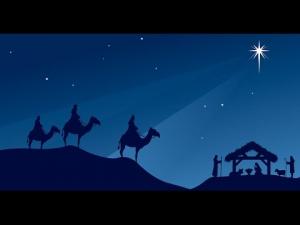
“I think it’s pointing that way.”
Christmas carols tell the story of Jesus that I first loved. Singing about manger, angels, “peace on earth,” shepherds and magi made the meaning of Jesus come alive. I can understand if Christians feel they lose something when a new story that scholars tell takes many of the incidents and characters in the traditional stories of the baby Jesus out of history and places them into another category that is more like fiction. Still, it can hardly be wrong to investigate what the Gospels’ authors were doing.
Fifth in a series of posts that I call “Stories of Jesus and the Character of God.” In this series I probe what historical Jesus scholars can say about the humanness and the earthly career of Jesus—beyond which historical research cannot go. The ultimate objective is to let this Jesus reveal the character of God. Contents and links to other entries in the series here.
Raymond Brown’s The Birth of the Messiah is an extensive study of the “infancy narratives” in Matthew and Luke. He concludes that the stories are a kind of fiction. I’d say historical fiction, but not history. Fiction is a respectable, human way of communicating important ideas. I imagine that the community in which a gospel originated, unlike us often, knew what its author was doing.
Even those early Christians might not always been able to tell fact from fiction. (See this post on parts of the infancy stories that are plausibly historical.) I can’t always tell fact from fiction when I’m reading James Michener. But I don’t worry about that, and I don’t suppose the early Christians worried either.
The Gospel writers followed the literary customs of their age. That means mixing history and ideology (in their case theology) was normal. Brown gives evidence that this mixing, in fact, happens in the Bible. Here I’ll take one part of the story, the visit of the Magi from the Gospel of Matthew, and show some of the evidence that this part may not be historical.
Criteria for historical criticism
There are criteria for judging the historical reliability of stories in the Bible. Skipping the technical vocabulary, there are some stories in the New Testament that an early Christian community would not have wanted to tell. They may fit awkwardly with what the community believes. One of these is Jesus’ baptism by John. This event seems to make John superior to Jesus, and it makes Jesus look like one who needed to repent. Early Christians wouldn’t have made up such a story; so it’s very likely that John really did baptize Jesus. Applying this criterion in reverse is more chancy. If a community would have wanted to tell a story, that doesn’t mean it didn’t happen.
Another criterion is called multiple attestation. If a story appears in more than one independent strand of the traditions that formed the New Testament, it’s more likely to be historical. Putting it into reverse, if it’s in only one strand, it’s only less likely but still not impossible that the story is a memory of something that did happen.
A third factor applies specifically to the nativity stories. Once you get past them and into the rest of the gospel story, it’s like a completely different history. None of the characters in Jesus’ adult career know anything about Jesus’ storied beginning except that he came from Nazareth and his parents were Mary and Joseph. Luke’s book of Acts (Luke 5:37) refers to a revolt that was savagely put down around the time of the census under Quirinius. Luke knew about that and anachronistically made it the cause of Jesus’ birth in Bethlehem. But he apparently doesn’t know about the slaughter of the innocents, a main feature of Matthew’s story. In fact, neither Gospel writer seems to know the other’s infancy stories, although the rest of their Gospels are very similar.
The visit of the magi
The story of the visit of the magi occurs in only one New Testament source, the Gospel of Matthew. Also it turns out that the story of the Magi fits very well with what Matthew believed and was trying to do in his Gospel. Neither of these nor both together automatically discredits the story as history, but they do encourage a close look.
Matthew was a leader in a group of mainly Jewish followers of Jesus. He wanted to present Jesus to this community as the New Israel, the fulfillment of the Jewish Scriptures. This belief informs the whole structure of Matthew’s Gospel as well as some of the particular incidents in it. Here’s how the magi story echoes that belief:
- Matthew shows us magi coming from far off to worship the new baby. One prominent Jewish vision was that in the last days other nations would come streaming to Jerusalem, to the temple, to worship the Jewish God.
- After the Magi leave, the child Jesus narrowly escapes jealous Herod’s command to kill all boys in Bethlehem under age two. This echoes the story of Moses’ rescue from evil pharaoh, who also, in the Exodus story, orders a massacre of Jewish male babies.
- The Holy Family flees to Egypt in Matthew’s story. Later they return to Nazareth. That way Jesus repeats the story of the entire Hebrew people, who also go down from the Promised Land to Egypt in the time of the patriarchs and come back with Moses as leader.
- Joseph has a dream that tells him to flee with the child and his mother (actually this is his second dream). Joseph’s dreams echo an earlier dreamer, Joseph of “Amazing Technicolor Dreamcoat” fame.
With all these parallels in view, it’s much more likely that the author of Matthew would place such echoes in a story than that history would so faithfully echo itself. I think it’s a reasonable conclusion. Not all scholars go along. Pope Emeritus Benedict XVI, and Fr. Dwight Longenecker, no second-rate or fundamentalist scholars, think the magi were real.
Joseph’s dilemma
Here’s a look at Jesus’ story from the inside. What if the magi story as well as the stories of angels and shepherds in Luke really did happen? I’m going to look from the perspective of Joseph:
I know this is a different kind of child (Joseph says to himself). He’s not even my child really, but God’s. I was told in a dream he would be the long-awaited savior, and an angel told Mary pretty much the same thing. Then there’s the prophecy we both heard in the temple—
This child is destined for the fall and the rise of many in Israel, and a sword of sorrow shall pierce your (my Mary’s) heart.
“What should I tell Jesus? Should I tell him about the babies that Herod slaughtered? Sooner or later he’s bound to wonder why we’re in Egypt when all our relatives are in Nazareth. And if we go back to Nazareth, I can just hear the gossip about Mary that’s bound to fly. What will I tell Jesus about that?
If I tell him the truth, what kind of life will he have, knowing how different he is from everybody else? Knowing his destiny? Knowing how much it will hurt his mother? Those three gifts of the magi weren’t just gifts. They were signs. They told of kingship, divinity, and death. Is my son bound to live constantly under the shadow of these prophecies? Is it good for a person to know things about the future that normally we only guess at in fear and hope?
Such, I imagine, would have been Joseph’s questions. (Ann Rice centered the plot of her novel Christ the Lord: Out of Egypt around this dilemma of Joseph’s and Jesus’ desire to discover his own history.)
A Jesus who knows too much
The Holy Family is supposed to be a model for all families. But what kind of parenting would a “Son of God” have had? Surely the “facts” couldn’t be kept from Jesus indefinitely. Sooner or later he would get it out of Joseph or maybe his older half-brother James, or he’d meet up with one of the shepherds. From that point on—or earlier if by divine intelligence he knew all these things without being told—I think it would be impossible for Jesus to lead a genuinely human life, a life at all like mine. He just knows too much.
Brown, the Catholic scholar, has a similar problem with the idea that Jesus knew too much:
A Jesus who walked through the world with unlimited knowledge, knowing exactly what the morrow would bring, knowing with certainty that three days after his death his Father would raise him up, would be a Jesus who could arouse our admiration, but a Jesus still far from … a humankind that can only hope in the future and believe in God’s goodness, far from a humankind that must face the supreme uncertainty of death with faith but without knowledge of what is beyond. On the other hand, a Jesus for whom the detailed future had elements of mystery, dread, and hope … a Jesus who would say, “Not my will but yours”—this would be a Jesus who could effectively teach us how to live, for this Jesus would have gone through life’s real trials.” (An Introduction to New Testament Christology, p. 151)”
I can’t resist an impious, or at least impish, addition to Brown’s eloquent statement. Imagine Jesus on the cross thinking, “Now they’re dividing my clothes among them. That’s straight out of Psalm 22. Pretty soon somebody’ll come along with a sponge and some vinegar. By the sun it looks like I have less than an hour to go on this cross. Then three days in the tomb, and I’ll be up again.”
With too much knowledge Jesus doesn’t really have a human experience of death or life. One thing Christian doctrine is really definite about, since the Council of Chalcedon in 425, is that Jesus is both truly divine and truly human.
Fiction adds, doesn’t subtract, meaning.
To sum up, if the nativity stories are history, then Jesus becomes a problem. First of all, for Mary and Joseph—how would you parent such a child? Second, Jesus’ knowledge of himself and his future, coming as it does from “heaven” (dreams, or angels, or gifts from mysterious strangers, or prophets in the temple) without any effort on his part, makes him too different from the rest of us, too far off from what I can think of as human.
But if infancy narratives are fictional creations in one sense or another, then we can think about what the stories meant for Matthew and Luke and their communities and what they can mean for us. That doesn’t have to exclude any of the rich meaning Christians have always found in these stories. But it can add new meanings.
Previous Post

December 7, 2018
Kurt Vonnegut’s Christmas Carol
Next Post
December 12, 2018 The Impossible Becoming Possible and Stories of the Christ Child
Browse Our Archives
Select a Category Advent Christmas Amazon Synod Angels Being Consumed Bible Catholic Modern Creed Ecology Economics Elizabeth Johnson Eucharist Fragments and Filaments Gender and Sex Gospel of Mark Herzog Historical Jesus Liturgy Luke Opening Scriptures on Way to Emmaus Ordinary radicals Parables Pro-Life Reincarnation Rosary Sacraments science Social Justice Souls Stories of Jesus The Creed Torture and Eucharist Tracy Uncategorized War and Peace
Select a Month October 2026 June 2025 April 2025 March 2025 February 2025 January 2025 November 2024 July 2024 March 2024 December 2023 October 2023 September 2023 August 2023 May 2023 April 2023 March 2023 February 2023 January 2023 December 2022 November 2022 October 2022 September 2022 August 2022 July 2022 June 2022 April 2022 March 2022 February 2022 January 2022 December 2021 November 2021 October 2021 August 2021 July 2021 June 2021 April 2021 March 2021 February 2021 December 2020 November 2020 October 2020 August 2020 July 2020 June 2020 May 2020 April 2020 March 2020 February 2020 January 2020 December 2019 November 2019 October 2019 September 2019 August 2019 July 2019 June 2019 May 2019 April 2019 March 2019 February 2019 January 2019 December 2018 November 2018 October 2018 September 2018 August 2018 July 2018 June 2018 May 2018
Follow Us!
TAKE THE
Religious Wisdom Quiz
What is the longest chapter in the Bible?
Select your answer to see how you score.
Isaiah 53 Genesis 1 Psalm 119 Psalm 23
Related posts from Lost in a One-Acre Wood
Resurrection: For the Apostles, It Took a While...
CRUCIFY HIM! -- What the Jews Did or...
Faith that can Move Mountains … or Not
The Misunderstood Messiah: Jesus’ Friends Don’t Get It
TRENDING AT PATHEOS Catholic

Creation, Preservation, and Teleology in Catholic Theology
As I write this, it is very early Monday morning. Like millions...

The Parable Of The Sower And The Word...
One of Christ’s most famous parables is that of the sower who...

Rejecting Doom: Christian Hope And Human Action
Christianity is a religion of hope. We are to have hope and...

Why I Choose the Eucharist Over the Sermon
Choose the Eucharist, Not the Sermon What are we supposed to get...

5 Design Elements Found in Spiritually Rooted Homes
Putting Spirituality Into Home Decor Our homes are more than our living...

Credo: A Story of God Told with the...
About 10 years ago, I began to imagine a personal "Credo" that...
view all Catholic blogs
Ad-Free & Subscriber Log-In Subscription Support
- About Us
- 2026 Calendar
- Videos
- Podcasts
- Library of World Religions
- Faith In Media Tracker
- Advertise With Us
- Write for Us
- Privacy Policy
- Terms of Service
- Do Not Sell My Data
- Contact Us
- Radiant Digital
- Manage Newsletter Subscriptions
- Unsubscribe From Notifications
- Sitemap
Copyright 2008-2026, Patheos. All rights reserved.
Subscription Support Ad-Free & Subscriber Log-In
Follow Patheos