
BuddhistCatholicContemplativeEvangelicalGeneral ChristianHinduJewishLatter-day SaintMuslimNew VisionsProgressive Christian
Beliefs
- Buddhist
- Catholic
- Contemplative
- Evangelical
- General Christian
- Hindu
- Jewish
- Latter-day Saint
- More Voices
- Muslim
- New Visions
- Pagan
- Progressive Christian
Topics
- Religion News
- Food and Religion
- Sports and Religion
- Religious Art
- Religious Music and Entertainment
- Religious Events
- History and Religion
- Style and Religion
- Politics and Religion
- Women in Religion
- Recreation Outdoors and Religion
- Business Finance and Religion
- Careers Workplace and Religion
- Education and Religion
- Family Parenting and Religion
- Health Fitness and Religion
- Home and Religion
- Relationships and Religion
- Technology and Religion
- Travel and Religion
Columnists
- Buddhist Columnists
- Business Finance and Religion Columnists
- Careers Workplace and Religion Columnists
- Catholic Columnists
- Contemplative Columnists
- Education and Religion Columnists
- Evangelists Columnists
- Family Parenting and Religion Columnists
- General Christian Columnists
- Health Fitness and Religion Columnists
- Hindu Columnists
- History and Religion Columnists
- Home and Religion Columnists
- Jewish Columnists
- More Voices Columnists
- Latter Day Columnists
- Muslim Columnists
- New Visions Columnists
- Nonreligious Columnists
- Pagan Columnists
- Politics and Religion Columnists
- Progressive Columnists
- Recreation Outdoors and Religion Columnists
- Relationships and Religion Columnists
- Religion News Columnists
- Religious Art Columnists
- Religious Events Columnists
- Religious Music and Entertainment Columnists
- Sports and Religion Columnists
- Style and Religion Columnists
- Technology and Religion Columnists
- Travel and Religion Columnists
- Women in Religion Columnists
Resource Library
- 2026 Calendar
- Library of World Religions
- The 100 Most Holy Places on Earth
- Patheos Answers
- Podcasts
- Videos
- Faith Leaders Database
- Anglican Episcopalian
- Bahai
- Baptist
- Buddhism
- Christianity
- Confucianism
- Eastern Orthodoxy
- Hinduism
- Holiness and Pentecostal
- ISKCON
- Islam
- Judaism
- Lutheran
- Methodist
- The Church of Jesus Christ of Latter-day Saints
- New Age
- Paganism
- Presbytarian and Reformed
- Protestantism
- Religion Behind the Scenes
- Roman Catholic
- Scientology
- Shia Islam
- Sikhism
- Sufism
- Sunni Islam
- Taoism
- Zen
- See all religions
Research Tools
 Ad-Free & Subscriber Log-In Subscription Support
Ad-Free & Subscriber Log-In Subscription Support
Follow Patheos 

- Trending:
- Forgiveness
- |
- Marriage
- |
- Consciousness
- |
- Death Penalty
- |
- Election
- |
- Halloween

- Home
- Catholic
- Infancy Stories in Matthew and Luke: Credible History?
Infancy Stories in Matthew and Luke: Credible History?
Last updated on: January 2, 2019 at 9:00 am by Jack Hartjes
Infancy Stories in Matthew and Luke: Credible History? 2019-01-02T09:00:06-06:00 Jack Hartjes
Patheos Explore the world's faith through different perspectives on religion and spirituality! Patheos has the views of the prevalent religions and spiritualities of the world.
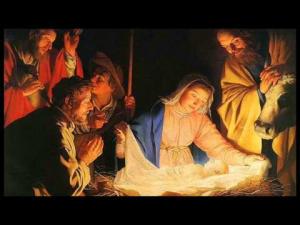
Infancy stories tell of Jesus’ birth of the virgin Mary in Bethlehem. What is the historical evidence?
The infancy stories that we find in the Gospels of Matthew and Luke pose two problems. One is for the historian, who wants to distinguish the historical Jesus from the evangelists’ theological interpretations. The more important problem is for the theologian who wants from Jesus a way into some understanding of God and world. The stories tell of a very human and very divine Jesus. It may just be that the humanity of Jesus, as historians can discern it, is the better clue to God’s character, while non-historical features of the stories tell more of what we need to know about the history of the world.
Another post will introduce some historical skepticism and temper the miraculous and other-worldly feel of the stories. Jesus may be less obviously supernatural than the infancy stories appear to make him. If that theme continues into Jesus adulthood, one encounters the challenge of understanding God anew through the humanity of Jesus?
In this post I will make some claims about what may be historical, even if unexpected, in the infancy stories. I will follow N. T. Wright’s reasoning in The Meaning of Jesus about the historical plausibility of the birth in Bethlehem and the virginal conception. A few parts of the Bible stories of Jesus’ beginning are uncontroversial. Mary is Jesus’ mother. Joseph is his father. He grew up in Nazareth. Scholars find controversial the Bible’s claim that Jesus was born in Bethlehem. Naturally Mary’s virginity becomes a primary subject of both historical critique and defense.
Fourth in a series of posts that I call “Stories of Jesus and the Character of God.” In this series I probe what historical Jesus scholars can say about the humanness and the earthly career of Jesus—beyond which historical research cannot go. The ultimate objective is to let this Jesus reveal the character of God. Contents and links to other entries in the series here.
Bethlehem, the City of David.
At first glance, the birth in Bethlehem looks suspicious because of the saying in Micah 5:1,
But you, Bethlehem Ephrathah, too small to be among the clans of Judah from you shall come forth for me one who is to be ruler in Israel; whose origin is from of old….
Matthew quotes this verse, originally not about a distant Messiah, and applies it to Jesus. A central theme in Matthew’s Gospel is that Jesus incorporates in himself and fulfills Jewish history. Mightn’t Matthew have placed Jesus’ birth in Bethlehem simply because it was fitting for such a figure to be born there? Or, couldn’t one say the birth in Bethlehem, David’s city, is Matthew’s symbol for what he wants to say–that Jesus is the promised heir to David’s throne?
If we had only Matthew for a source, we might have to leave it at that. But Luke places Jesus’ birth in Bethlehem too, and he doesn’t quote the verse from Micah. Luke takes some trouble, in his story, to get pregnant Mary to Bethlehem. A historically non-existent (or temporally misplaced) census requires Joseph to leave Nazareth for his ancestral city. Others have commented about the implausibility of such a requirement—the administrative nightmare that would have resulted. Luke seems to have taken rather too much trouble without the same theological need as Matthew to symbolize Jesus’ as Son of David. Unless, that is, Luke is dealing with an actual memory of Jesus birth in Bethlehem.
Many scholars put Jesus’ birth in Nazareth. They rely on the historical probability that that’s where Jesus was raised. But Wright’s argument, it seems to me, makes a Bethlehem birth place plausible. “Jesus’ birth at Bethlehem seems to have been a puzzle to Luke (which he explains by the census), rather than something he has invented to make some other point.” (Meaning, p. 175)
The virginal conception.
Virginal conception is not a possibility that this world offers. In a scientific frame of mind one might see belief in the Bible’s account of Mary’s motherhood as a product of mythical thinking. Wright says equally mythological is the thinking that rules out in advance anything that doesn’t conform to a “closed continuum of cause and effect.” That is our Enlightenment/modernist myth. (Meaning, p. 173)
Then Wright outlines the historical plausibility that Matthew and Luke were doing something other than repeating a myth. To summarize:
- There is no virgin birth in Jewish lore. Isaiah 7:14 says, in the New American Bible’s translation, “The virgin shall be with child.” But no one before Matthew, says Wright, thought that this young woman would conceive in anything other than the normal way. (176)
- So if Matthew or Luke were borrowing a myth it would have to have been from Paganism. Alexander, Augustus, and others were said to have been born of virgins.
- But Matthew wrote a completely Jewish story, and Luke makes a point of opposing Jesus to Caesar as the one who really rules the world. On the supposition of borrowing from Paganism,
the evangelists would then have thoroughly deconstructed their own deep intentions, suggesting that the climax of YHWH’s purpose for Israel took place through none other than a pagan-style miraculous birth. (177)
Wright’s argument is hardly a historical proof of a virgin birth, but it does, I think, sweep aside historical objections.
The scientific objection
I don’t believe scientific objections fall away just because some of the modern world’s confidence in science can be termed mythological. It takes a much longer rebuttal than that. Briefly, I think we have some experience of the limitations of science’s reach. It seems unlikely, for example, that science could ever encompass love, beauty, morality, or even its own orientation toward truth.
On the other side of the coin, God may have more in store for the world than science can dream of. But then theology needs to come up with a way of naming God’s relation to the world other than through science-like categories of cause and effect. That’s like rethinking the whole idea of creation—a larger discussion than I have in view at the moment.
The present series will continue with features of the infancy stories that some bible scholars consider non-historical
Previous Post

December 3, 2018
The Quest of the Historical Jesus
Next Post
December 7, 2018 Kurt Vonnegut’s Christmas Carol
Browse Our Archives
Select a Category Advent Christmas Amazon Synod Angels Being Consumed Bible Catholic Modern Creed Ecology Economics Elizabeth Johnson Eucharist Fragments and Filaments Gender and Sex Gospel of Mark Herzog Historical Jesus Liturgy Luke Opening Scriptures on Way to Emmaus Ordinary radicals Parables Pro-Life Reincarnation Rosary Sacraments science Social Justice Souls Stories of Jesus The Creed Torture and Eucharist Tracy Uncategorized War and Peace
Select a Month October 2026 June 2025 April 2025 March 2025 February 2025 January 2025 November 2024 July 2024 March 2024 December 2023 October 2023 September 2023 August 2023 May 2023 April 2023 March 2023 February 2023 January 2023 December 2022 November 2022 October 2022 September 2022 August 2022 July 2022 June 2022 April 2022 March 2022 February 2022 January 2022 December 2021 November 2021 October 2021 August 2021 July 2021 June 2021 April 2021 March 2021 February 2021 December 2020 November 2020 October 2020 August 2020 July 2020 June 2020 May 2020 April 2020 March 2020 February 2020 January 2020 December 2019 November 2019 October 2019 September 2019 August 2019 July 2019 June 2019 May 2019 April 2019 March 2019 February 2019 January 2019 December 2018 November 2018 October 2018 September 2018 August 2018 July 2018 June 2018 May 2018
Follow Us!
TAKE THE
Religious Wisdom Quiz
What does "Pentecost" mean in Greek?
Select your answer to see how you score.
Fortieth First Fiftieth Seventh
Related posts from Lost in a One-Acre Wood
Resurrection: For the Apostles, It Took a While...
CRUCIFY HIM! -- What the Jews Did or...
Faith that can Move Mountains … or Not
The Misunderstood Messiah: Jesus’ Friends Don’t Get It
TRENDING AT PATHEOS Catholic

The Parable Of The Sower And The Word...
One of Christ’s most famous parables is that of the sower who...

Rejecting Doom: Christian Hope And Human Action
Christianity is a religion of hope. We are to have hope and...

Why I Choose the Eucharist Over the Sermon
Choose the Eucharist, Not the Sermon What are we supposed to get...

5 Design Elements Found in Spiritually Rooted Homes
Putting Spirituality Into Home Decor Our homes are more than our living...

Credo: A Story of God Told with the...
About 10 years ago, I began to imagine a personal "Credo" that...

The Anatomy of Divine Revelation in Catholic Thought
The claim that God has made Himself known to human beings is...
view all Catholic blogs
Ad-Free & Subscriber Log-In Subscription Support
- About Us
- 2026 Calendar
- Videos
- Podcasts
- Library of World Religions
- Faith In Media Tracker
- Advertise With Us
- Write for Us
- Privacy Policy
- Terms of Service
- Do Not Sell My Data
- Contact Us
- Radiant Digital
- Manage Newsletter Subscriptions
- Unsubscribe From Notifications
- Sitemap
Copyright 2008-2026, Patheos. All rights reserved.
Subscription Support Ad-Free & Subscriber Log-In
Follow Patheos