
BuddhistCatholicContemplativeEvangelicalGeneral ChristianHinduJewishLatter-day SaintMuslimNew VisionsProgressive Christian
Beliefs
- Buddhist
- Catholic
- Contemplative
- Evangelical
- General Christian
- Hindu
- Jewish
- Latter-day Saint
- More Voices
- Muslim
- New Visions
- Pagan
- Progressive Christian
Topics
- Religion News
- Food and Religion
- Sports and Religion
- Religious Art
- Religious Music and Entertainment
- Religious Events
- History and Religion
- Style and Religion
- Politics and Religion
- Women in Religion
- Recreation Outdoors and Religion
- Business Finance and Religion
- Careers Workplace and Religion
- Education and Religion
- Family Parenting and Religion
- Health Fitness and Religion
- Home and Religion
- Relationships and Religion
- Technology and Religion
- Travel and Religion
Columnists
- Buddhist Columnists
- Business Finance and Religion Columnists
- Careers Workplace and Religion Columnists
- Catholic Columnists
- Contemplative Columnists
- Education and Religion Columnists
- Evangelists Columnists
- Family Parenting and Religion Columnists
- General Christian Columnists
- Health Fitness and Religion Columnists
- Hindu Columnists
- History and Religion Columnists
- Home and Religion Columnists
- Jewish Columnists
- More Voices Columnists
- Latter Day Columnists
- Muslim Columnists
- New Visions Columnists
- Nonreligious Columnists
- Pagan Columnists
- Politics and Religion Columnists
- Progressive Columnists
- Recreation Outdoors and Religion Columnists
- Relationships and Religion Columnists
- Religion News Columnists
- Religious Art Columnists
- Religious Events Columnists
- Religious Music and Entertainment Columnists
- Sports and Religion Columnists
- Style and Religion Columnists
- Technology and Religion Columnists
- Travel and Religion Columnists
- Women in Religion Columnists
Resource Library
- 2026 Calendar
- Library of World Religions
- The 100 Most Holy Places on Earth
- Patheos Answers
- Podcasts
- Videos
- Faith Leaders Database
- Anglican Episcopalian
- Bahai
- Baptist
- Buddhism
- Christianity
- Confucianism
- Eastern Orthodoxy
- Hinduism
- Holiness and Pentecostal
- ISKCON
- Islam
- Judaism
- Lutheran
- Methodist
- The Church of Jesus Christ of Latter-day Saints
- New Age
- Paganism
- Presbytarian and Reformed
- Protestantism
- Religion Behind the Scenes
- Roman Catholic
- Scientology
- Shia Islam
- Sikhism
- Sufism
- Sunni Islam
- Taoism
- Zen
- See all religions
Research Tools
 Ad-Free & Subscriber Log-In Subscription Support
Ad-Free & Subscriber Log-In Subscription Support
Follow Patheos 

- Trending:
- Forgiveness
- |
- Marriage
- |
- Consciousness
- |
- Death Penalty
- |
- Election
- |
- Halloween

- Home
- Catholic
- Silence Honors a Work Well-Done and Makes Other Contributions to Liturgy
Silence Honors a Work Well-Done and Makes Other Contributions to Liturgy
Last updated on: April 29, 2019 at 8:13 am by Jack Hartjes
Silence Honors a Work Well-Done and Makes Other Contributions to Liturgy 2019-04-29T08:13:24-06:00 Jack Hartjes
Patheos Explore the world's faith through different perspectives on religion and spirituality! Patheos has the views of the prevalent religions and spiritualities of the world.
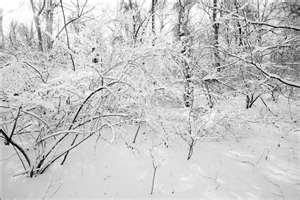
Silence after snow makes me think something is about to happen. Silence in Liturgy works on me that way too.
I was nearing the end of a presentation on the Mass to a Confirmation class. I got to the period of silence after Communion. How to explain the purpose of this moment after having emphasized repeatedly that Liturgy is the work of the people? It’s like the case of a difficult job that’s finally done. Tool belts come off. Before you open up the cooler, or maybe between gulps of liquid refreshment, you stand and stare at the completed project. It’s a kind of silent honor that you pay to a foe that almost, but not quite, had you beat.
I told the students that the work Jesus expects us to accomplish in each Mass can be a similarly formidable challenge. I didn’t mean our everyday work, for which the grace of the Mass gives us strength and courage. I meant the work that occurs when we participate meaningfully in the Liturgy itself. The work of giving all honor and glory to God and keeping for ourselves none of that glory we pursue to separates ourselves from others. The work of forgiving those who trespass against us and offering them peace. Finally the work of joining—all unworthy—in procession to be united mystically with the Body of Christ, with Head and members, the ones we so easily and often wall off from ourselves.
That work accomplished and the Communion Procession over, we sit in silence. It’s that moment of the long and loud exhale. My words never measure up to the occasion. But I’ve been on the receiving end of praise for my small contribution to some project from a more experienced builder. And here I can faintly discern praise from the Master Liturgist, in whose work I was privileged to take my part.
Making silence in the Liturgy work a little better
Silence in the Liturgy needs to be purposeful and clearly meant as silence. Fr. David Friel, a blogger on Views from the Choir Loft, says liturgical silence is not
a mere pause between one moment of celebration and another that follows. Rather, it is to be considered a true and proper ritual moment, complementary to the proclamation of the Word, to vocal prayer, to song, to gesture, and so on. (“Silence in the Liturgy ”)
The General Instructions of the Roman Missal calls for silence:
- before the prayers of the Penitential Rite
- After the Scripture readings and after the Homily
- After “Let us pray” introducing the Opening and Post-Communion Prayers
Of these, in my experience of Liturgies, the first seems to work fairly well. The second works when the presider pauses before rising for the Gospel Acclamation and when he pauses after the Homily. Not working so well are the silences after the First Reading and after the Psalm. Neither does the silence after “Let us pray” introducing the prayers work.
In the latter cases there is a brief moment without sound, but it’s not a silence that is purposeful and actually looks like silence. Always something is going on. A reader or singer is moving toward the microphone. A server is approaching the presider and carrying a big book. We see these movements and it looks like that’s what the pause is for!
In a truly silent time nothing else but silence would be happening. It wouldn’t be hard. Simply have the server come with the book before “Let us pray.” Let there be a pause before the cantor gets up to sing the Psalm and before the lector moves to the ambo for the Second Reading.
Silence of anticipation
The General Instructions says there are various types of silence. The silence after a reading is supposed to be a time of reflection on what one has just heard. I have to admit that I find that hard to do. When I have been able to do it, it seems that I have turned the Liturgy of the Word into a study time rather than a celebration. I wonder if it wouldn’t be more helpful to think of this silence as a time of looking forward rather than back.
When I read stories to my children, and now my grandchildren, I don’t find that they think back on a story I’ve just read. They say, “Read me another.” It’s no lack of appreciation for something to be hoping for more of the same. It might be profitable to think about the silent periods during the Liturgy of the Word as silence of anticipation. It’s also realistic. We look forward to another reading after the first one, after the Psalm, and after the Second Reading. We look forward to the Homily after the Gospel. And, if we thought about it, we would look forward to our common Profession of Faith after the Homily has done its part to encourage us to manifest our faith.
The silence during the Penitential Rite could be very much the same. We know we are sinners, but even more we look forward to the mercy of God, which we name during this part of the Mass and experience in the rest.
Before and after Mass
In my parish it’s usually quiet, after the Rosary, before Mass starts; and it’s noisy when Mass is over. I think that’s appropriate. Before Mass, among the thoughts coursing through our heads may be some whisper of anticipation of the mystery about to unfold. At the completion of that mystery, well, there was that quiet post-Communion time. After that the Liturgy itself doesn’t call for any silence. Some do remain quiet for a time, and I don’t think the surrounding noise bothers them. Some parishes make almost a requirement of quiet time after Mass. It’s a respectful gesture to Jesus present in the Tabernacle. On the other hand, I don’t think happy noise ever bothered Jesus.
The stillness of a pre-winter snowfall and approaching Advent’s quiet waiting are what have turned my mind to thoughts of silence in the Liturgy. I wish for you a happy, peaceful season of preparing the way of the Lord.
Image credit: Classic Body’s Brain Food via Google Images
Previous Post

November 28, 2018
History and the Historical Jesus
Next Post
December 3, 2018 The Quest of the Historical Jesus
Browse Our Archives
Select a Category Advent Christmas Amazon Synod Angels Being Consumed Bible Catholic Modern Creed Ecology Economics Elizabeth Johnson Eucharist Fragments and Filaments Gender and Sex Gospel of Mark Herzog Historical Jesus Liturgy Luke Opening Scriptures on Way to Emmaus Ordinary radicals Parables Pro-Life Reincarnation Rosary Sacraments science Social Justice Souls Stories of Jesus The Creed Torture and Eucharist Tracy Uncategorized War and Peace
Select a Month October 2026 June 2025 April 2025 March 2025 February 2025 January 2025 November 2024 July 2024 March 2024 December 2023 October 2023 September 2023 August 2023 May 2023 April 2023 March 2023 February 2023 January 2023 December 2022 November 2022 October 2022 September 2022 August 2022 July 2022 June 2022 April 2022 March 2022 February 2022 January 2022 December 2021 November 2021 October 2021 August 2021 July 2021 June 2021 April 2021 March 2021 February 2021 December 2020 November 2020 October 2020 August 2020 July 2020 June 2020 May 2020 April 2020 March 2020 February 2020 January 2020 December 2019 November 2019 October 2019 September 2019 August 2019 July 2019 June 2019 May 2019 April 2019 March 2019 February 2019 January 2019 December 2018 November 2018 October 2018 September 2018 August 2018 July 2018 June 2018 May 2018
Follow Us!
TAKE THE
Religious Wisdom Quiz
Which tribe first accepted David as king after Saul's death?
Select your answer to see how you score.
Judah Dan Ephraim Benjamin
Related posts from Lost in a One-Acre Wood

“Drink the Cup” – Liturgy Teaches Us Eucharistic...

Kneeling Through the Communion Rite: Now I Get...
Ministries in the Church, Momentum for Change, Again
Address the Prayer of the Faithful to God,...
TRENDING AT PATHEOS Catholic

The Parable Of The Sower And The Word...
One of Christ’s most famous parables is that of the sower who...

Rejecting Doom: Christian Hope And Human Action
Christianity is a religion of hope. We are to have hope and...

Why I Choose the Eucharist Over the Sermon
Choose the Eucharist, Not the Sermon What are we supposed to get...

5 Design Elements Found in Spiritually Rooted Homes
Putting Spirituality Into Home Decor Our homes are more than our living...

Credo: A Story of God Told with the...
About 10 years ago, I began to imagine a personal "Credo" that...

The Anatomy of Divine Revelation in Catholic Thought
The claim that God has made Himself known to human beings is...
view all Catholic blogs
Ad-Free & Subscriber Log-In Subscription Support
- About Us
- 2026 Calendar
- Videos
- Podcasts
- Library of World Religions
- Faith In Media Tracker
- Advertise With Us
- Write for Us
- Privacy Policy
- Terms of Service
- Do Not Sell My Data
- Contact Us
- Radiant Digital
- Manage Newsletter Subscriptions
- Unsubscribe From Notifications
- Sitemap
Copyright 2008-2026, Patheos. All rights reserved.
Subscription Support Ad-Free & Subscriber Log-In
Follow Patheos