
BuddhistCatholicContemplativeEvangelicalGeneral ChristianHinduJewishLatter-day SaintMuslimNew VisionsProgressive Christian
Beliefs
- Buddhist
- Catholic
- Contemplative
- Evangelical
- General Christian
- Hindu
- Jewish
- Latter-day Saint
- More Voices
- Muslim
- New Visions
- Pagan
- Progressive Christian
Topics
- Religion News
- Food and Religion
- Sports and Religion
- Religious Art
- Religious Music and Entertainment
- Religious Events
- History and Religion
- Style and Religion
- Politics and Religion
- Women in Religion
- Recreation Outdoors and Religion
- Business Finance and Religion
- Careers Workplace and Religion
- Education and Religion
- Family Parenting and Religion
- Health Fitness and Religion
- Home and Religion
- Relationships and Religion
- Technology and Religion
- Travel and Religion
Columnists
- Buddhist Columnists
- Business Finance and Religion Columnists
- Careers Workplace and Religion Columnists
- Catholic Columnists
- Contemplative Columnists
- Education and Religion Columnists
- Evangelists Columnists
- Family Parenting and Religion Columnists
- General Christian Columnists
- Health Fitness and Religion Columnists
- Hindu Columnists
- History and Religion Columnists
- Home and Religion Columnists
- Jewish Columnists
- More Voices Columnists
- Latter Day Columnists
- Muslim Columnists
- New Visions Columnists
- Nonreligious Columnists
- Pagan Columnists
- Politics and Religion Columnists
- Progressive Columnists
- Recreation Outdoors and Religion Columnists
- Relationships and Religion Columnists
- Religion News Columnists
- Religious Art Columnists
- Religious Events Columnists
- Religious Music and Entertainment Columnists
- Sports and Religion Columnists
- Style and Religion Columnists
- Technology and Religion Columnists
- Travel and Religion Columnists
- Women in Religion Columnists
Resource Library
- 2026 Calendar
- Library of World Religions
- The 100 Most Holy Places on Earth
- Patheos Answers
- Podcasts
- Videos
- Faith Leaders Database
- Anglican Episcopalian
- Bahai
- Baptist
- Buddhism
- Christianity
- Confucianism
- Eastern Orthodoxy
- Hinduism
- Holiness and Pentecostal
- ISKCON
- Islam
- Judaism
- Lutheran
- Methodist
- The Church of Jesus Christ of Latter-day Saints
- New Age
- Paganism
- Presbytarian and Reformed
- Protestantism
- Religion Behind the Scenes
- Roman Catholic
- Scientology
- Shia Islam
- Sikhism
- Sufism
- Sunni Islam
- Taoism
- Zen
- See all religions
Research Tools
 Ad-Free & Subscriber Log-In Subscription Support
Ad-Free & Subscriber Log-In Subscription Support
Follow Patheos 

- Trending:
- Forgiveness
- |
- Marriage
- |
- Consciousness
- |
- Death Penalty
- |
- Election
- |
- Halloween

- Home
- Catholic
- Getting Acquainted with the Historical Jesus and Getting to Know about God
Getting Acquainted with the Historical Jesus and Getting to Know about God
Last updated on: January 7, 2019 at 1:52 pm by Jack Hartjes
Getting Acquainted with the Historical Jesus and Getting to Know about God 2019-01-07T13:52:05-06:00 Jack Hartjes
Patheos Explore the world's faith through different perspectives on religion and spirituality! Patheos has the views of the prevalent religions and spiritualities of the world.
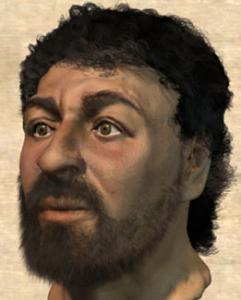
Does knowing God help us understand who Jesus is, or does Getting to know the historical Jesus help us understand who God is?
On an intellectual level, God is marvelously hard to know. On the same level New Testament scholars have had a hard time getting to know and agree on facts about the historical Jesus. Even so, of the two, God and Jesus, getting to know Jesus is much easier. Unfortunately, when Christians say “Jesus is God,” it seems to say, “We know God first, and Jesus is that.”
Love and the sufferings and joys of one’s own life are keys to accurately understanding another. For Christians that applies to Jesus as well. Such knowledge of Jesus is one safe guide to understanding God. But intellectual questions also arise, and in a modern age may be quite puzzling. When that happens Catholics and other Christians have found it necessary to take historical Jesus scholarship seriously. What can historians confidently say about Jesus’ life in first-century Palestine? How does what they learn affirm, influence, or change our understanding of God?
First in a series of posts that I call “Stories of Jesus and the Character of God.” In this series I probe what historical Jesus scholars can say about the humanness and the earthly career of Jesus—beyond which historical research cannot go. The ultimate objective is to let this Jesus reveal the character of God. Contents and links to other entries in the series here.
N. T. Wright tells a story that happened often in his days as the prof who conducted welcoming interviews with new students at Worcester College. A student professes not to believe in God. The professor asks the student to talk about this god that you don’t believe in. After listening to the student, Wright responds, “I don’t believe in that God either.” Wright believes in the God of Jesus, and I’m guessing the student disbelieved in a concept of a god that Jesus wouldn’t have known.
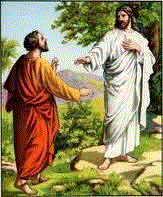
Jesus reveals “the very face of God.”
Scottish theologian, T. F. Torrance was an army chaplain, h0lding the hand of a young, dying soldier during World War I. After the war, as a pastor, he was holding the hand of an elderly woman in his congregation. Both asked the same question: “Is God really like Jesus?” He assured them both, “To see the Lord Jesus is to see the very face of God.” (from William C. Placher, The Triune God, p. 139)
Seeing the face of Jesus has been difficult and controversial. Historical Jesus scholarship in the last 100 or so years has quit and started over a number of times. It hasn’t been easy to get from pre-conceived notions to the life that Jesus actually (probably) led on earth. What that life means for a believer or a non-believer today is equally controversial. Was—or is—Jesus God, or was God acting in some way in him? Historical investigation can’t prove that. It’s possible that even an eyewitness to the course of Jesus’ life might not get the kind of proof that today’s believer or skeptic might ask for.
As a Catholic I believe that Jesus is God. I believe that knowing what Jesus was like is the first step on the way to knowing what God is like. For someone who is not Christian it might not be the first step, but it could be a step nevertheless. Even one who does not believe in God, whom we cannot see, can look to Jesus for clues to what the reality we do see is all about.
A look ahead
This first step, knowing Jesus through modern biblical scholarship, shows me that Jesus didn’t either look or act much like God. That is, the God as I and many Christians have long imagined. So, was that traditional God hiding in Jesus, or do our ideas about God change in any real encounter with Jesus? I’m going with the latter. That has been the case for me, anyway.
Several themes will take turns at center stage in the course of this series of posts.
- Some thoughts about the necessity and the strangeness of looking to history for ultimate meaning.
- A look at the infancy stories with which Matthew and Luke begin their Gospels. These stories are introductions to the Gospel writers’ main concerns. They set the tone for what comes later. Several posts during the season of Advent take up this theme.
- A critical, but not dismissive, look at the miracle stories present throughout the Gospels. The issue of God’s power comes into play here. One often thinks of power as a central quality of God, but how central is power to the life of the historical Jesus?
- Who did Jesus think he was? If Jesus is God, it seems that his awareness of himself would be a clue to what God is like. Of course, we’re not going to enter into Jesus’ mind, but his self concept does show up in his words and actions.
- Stories of Jesus. This theme tries to find a center that animates the stories the early Church told about Jesus.
- The series wrap up with an attempt to say something about the Trinity in the light of what we see in Jesus.
Something borrowed, not much new
I need to mention sources that I rely on. Besides N. T. Wright, Bible scholars Raymond E. Brown and Walter Kasper helped me portray the humanity of Jesus. Hans Urs von Balthasar helped me put the story of Jesus in the context of the Trinity. Contributors to the multi-faith discussion in The Emptying God: A Buddhist-Jewish-Christian Conversation also helped me relate Jesus to the Trinity. Of these I want to mention especially Masao Abe, Buddhist, and David Tracy, Catholic. Of course, I have benefited by a much larger field of scholars.
Image credit: Christianity Disproved via Google Images
Previous Post

November 23, 2018
An Advent Calendar and a Story World in a Skeptical Time
Next Post
November 28, 2018 History and the Historical Jesus
Browse Our Archives
Select a Category Advent Christmas Amazon Synod Angels Being Consumed Bible Catholic Modern Creed Ecology Economics Elizabeth Johnson Eucharist Fragments and Filaments Gender and Sex Gospel of Mark Herzog Historical Jesus Liturgy Luke Opening Scriptures on Way to Emmaus Ordinary radicals Parables Pro-Life Reincarnation Rosary Sacraments science Social Justice Souls Stories of Jesus The Creed Torture and Eucharist Tracy Uncategorized War and Peace
Select a Month October 2026 June 2025 April 2025 March 2025 February 2025 January 2025 November 2024 July 2024 March 2024 December 2023 October 2023 September 2023 August 2023 May 2023 April 2023 March 2023 February 2023 January 2023 December 2022 November 2022 October 2022 September 2022 August 2022 July 2022 June 2022 April 2022 March 2022 February 2022 January 2022 December 2021 November 2021 October 2021 August 2021 July 2021 June 2021 April 2021 March 2021 February 2021 December 2020 November 2020 October 2020 August 2020 July 2020 June 2020 May 2020 April 2020 March 2020 February 2020 January 2020 December 2019 November 2019 October 2019 September 2019 August 2019 July 2019 June 2019 May 2019 April 2019 March 2019 February 2019 January 2019 December 2018 November 2018 October 2018 September 2018 August 2018 July 2018 June 2018 May 2018
Follow Us!
TAKE THE
Religious Wisdom Quiz
Which book comes last in the New Testament?
Select your answer to see how you score.
Jude Acts Revelation 2 Peter
Related posts from Lost in a One-Acre Wood
Resurrection: For the Apostles, It Took a While...
CRUCIFY HIM! -- What the Jews Did or...
Faith that can Move Mountains … or Not
The Misunderstood Messiah: Jesus’ Friends Don’t Get It
TRENDING AT PATHEOS Catholic

The Parable Of The Sower And The Word...
One of Christ’s most famous parables is that of the sower who...

Rejecting Doom: Christian Hope And Human Action
Christianity is a religion of hope. We are to have hope and...

Why I Choose the Eucharist Over the Sermon
Choose the Eucharist, Not the Sermon What are we supposed to get...

5 Design Elements Found in Spiritually Rooted Homes
Putting Spirituality Into Home Decor Our homes are more than our living...

Credo: A Story of God Told with the...
About 10 years ago, I began to imagine a personal "Credo" that...

The Anatomy of Divine Revelation in Catholic Thought
The claim that God has made Himself known to human beings is...
view all Catholic blogs
Ad-Free & Subscriber Log-In Subscription Support
- About Us
- 2026 Calendar
- Videos
- Podcasts
- Library of World Religions
- Faith In Media Tracker
- Advertise With Us
- Write for Us
- Privacy Policy
- Terms of Service
- Do Not Sell My Data
- Contact Us
- Radiant Digital
- Manage Newsletter Subscriptions
- Unsubscribe From Notifications
- Sitemap
Copyright 2008-2026, Patheos. All rights reserved.
Subscription Support Ad-Free & Subscriber Log-In
Follow Patheos