
BuddhistCatholicContemplativeEvangelicalGeneral ChristianHinduJewishLatter-day SaintMuslimNew VisionsProgressive Christian
Beliefs
- Buddhist
- Catholic
- Contemplative
- Evangelical
- General Christian
- Hindu
- Jewish
- Latter-day Saint
- More Voices
- Muslim
- New Visions
- Pagan
- Progressive Christian
Topics
- Religion News
- Food and Religion
- Sports and Religion
- Religious Art
- Religious Music and Entertainment
- Religious Events
- History and Religion
- Style and Religion
- Politics and Religion
- Women in Religion
- Recreation Outdoors and Religion
- Business Finance and Religion
- Careers Workplace and Religion
- Education and Religion
- Family Parenting and Religion
- Health Fitness and Religion
- Home and Religion
- Relationships and Religion
- Technology and Religion
- Travel and Religion
Columnists
- Buddhist Columnists
- Business Finance and Religion Columnists
- Careers Workplace and Religion Columnists
- Catholic Columnists
- Contemplative Columnists
- Education and Religion Columnists
- Evangelists Columnists
- Family Parenting and Religion Columnists
- General Christian Columnists
- Health Fitness and Religion Columnists
- Hindu Columnists
- History and Religion Columnists
- Home and Religion Columnists
- Jewish Columnists
- More Voices Columnists
- Latter Day Columnists
- Muslim Columnists
- New Visions Columnists
- Nonreligious Columnists
- Pagan Columnists
- Politics and Religion Columnists
- Progressive Columnists
- Recreation Outdoors and Religion Columnists
- Relationships and Religion Columnists
- Religion News Columnists
- Religious Art Columnists
- Religious Events Columnists
- Religious Music and Entertainment Columnists
- Sports and Religion Columnists
- Style and Religion Columnists
- Technology and Religion Columnists
- Travel and Religion Columnists
- Women in Religion Columnists
Resource Library
- 2026 Calendar
- Library of World Religions
- The 100 Most Holy Places on Earth
- Patheos Answers
- Podcasts
- Videos
- Faith Leaders Database
- Anglican Episcopalian
- Bahai
- Baptist
- Buddhism
- Christianity
- Confucianism
- Eastern Orthodoxy
- Hinduism
- Holiness and Pentecostal
- ISKCON
- Islam
- Judaism
- Lutheran
- Methodist
- The Church of Jesus Christ of Latter-day Saints
- New Age
- Paganism
- Presbytarian and Reformed
- Protestantism
- Religion Behind the Scenes
- Roman Catholic
- Scientology
- Shia Islam
- Sikhism
- Sufism
- Sunni Islam
- Taoism
- Zen
- See all religions
Research Tools
 Ad-Free & Subscriber Log-In Subscription Support
Ad-Free & Subscriber Log-In Subscription Support
Follow Patheos 

- Trending:
- Forgiveness
- |
- Marriage
- |
- Consciousness
- |
- Death Penalty
- |
- Election
- |
- Halloween

- Home
- Catholic
- Good News on the Way to Emmaus: Why the Messiah had to Suffer
Good News on the Way to Emmaus: Why the Messiah had to Suffer
Last updated on: November 24, 2018 at 8:13 am by Jack Hartjes
Good News on the Way to Emmaus: Why the Messiah had to Suffer 2018-11-24T08:13:44-06:00 Jack Hartjes
Patheos Explore the world's faith through different perspectives on religion and spirituality! Patheos has the views of the prevalent religions and spiritualities of the world.
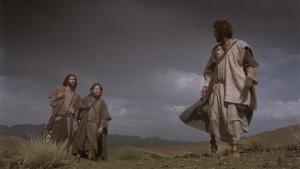
The disciples hearts were “burning within them” as Jesus gave them some”good news.” What was this good news?
I’ve been imagining which Scriptures Jesus “opened up” for the two disciples on the way to Emmaus. He was explaining to them why the Messiah had to suffer. I had always thought that Jesus meant to convince the disciples that he really was the Messiah. For that purpose it seemed he would have referred to some of the 300 passages with predictions Jesus supposedly fulfilled. Now it occurs to me that that would not have been very good news.
Conclusion of the series Opening the Scriptures on the Way to Emmaus: Why Messiah had to Suffer. Introduction and links to other posts in the series here.
Imagine Jesus walking incognito with two disciples on the way to Emmaus. He convinces them that the one they knew as Jesus really was the Messiah. His reasoning: The things Jesus endured had been predicted. Scriptures predicted his birth in Bethlehem and the exact nature of his sufferings and any number of other things, mostly bad things for the Messiah. That’s hardly enough to make their hearts “burn within them,” as Luke tells it. More likely they would begin to see messiahship as a big disappointment. Remember, they didn’t yet know about the Resurrection or that Jesus was with them at that moment.
Christians have always seen Jesus’ death on the cross paradoxically as part of the Good News, and the two disciples must have learned from Jesus to believe the same. Do the Scriptures that in this series we’ve imagined Jesus interpreting help us understand the story as good news?
Good news for oppressed people
The disciples, along with all common folk in Jewish Palestine, were part of a world of oppressed people. The Romans imposed oppressive taxes, and so did the Temple. Soldiers could at any time make demands like “Carry my pack for one mile.” Debt was an ever-present threat, if not reality. There were burdensome purity codes orchestrated by priest, scribe, and Pharisee. Oppression took the form of a world divided hierarchically into many classes with varying degrees of honor in the first-century Mediterranean world, where honor was all-important.
Now imagine the two on the way to Emmaus hearing stories that in every case lifted up people in unexpected ways, especially oppressed people, and put down others, again contrary to expectations:
- the sinners Adam and Eve, for whom God sews new clothes;
- the murderer Cain, whom God protects;
- the sinner Achan, who is so much like the rest of us;
- the proud Jephthah, who needs to be taken down a peg;
- David’s soldiers, holy enough and just as deserving of a drink as David;
- The punishment of exile and God’s mercy, after all;
- the foreigner Ruth;
- the hated Ninevites and Jonah, who needed a change of heart.
I have sometimes wondered what the world would be like if Adam and Eve, i.e. the human race, had never sinned. Lately my wondering extends to whether or not the Incarnation would have occurred in that case. In the Easter Proclamation we sing, “Oh happy fault. Oh necessary sin of Adam, that gained for us so great a Redeemer.” Are we actually saying it’s good news that our first parents sinned, otherwise Jesus couldn’t have come?
Would the Incarnation have happened anyway?
I have no inside information on this question, but some theologians believe the Incarnation would have happened anyway. God would have made the same identification with humanity, only it would have been a lot easier.
Where am I going with this? Well, if we can guess that Jesus, the fully divine and fully human one, would have come even if we had never fallen from grace, we can also guess that God’s purpose and Jesus’ mission was more than saving us from sin. We get a clue from Scripture and the Fathers and Doctors of the Church. The Catechism of the Catholic Church, #460, quotes:
The Word became flesh to make us “partakers of the divine nature.” (2 Peter 1:4) “For this is why the Word became man and the Son of God became the Son of man: so that man, by entering into communion with the Word and thus receiving divine sonship, might become a son of God. (St Irenaeus) “For the Son of God became man so that we might become God.” (St. Athanasius) “The only-begotten Son of God, wanting to make us sharers in his divinity, assumed our nature, so that he, made man, might make men gods.” (St. Thomas Aquinas)
Here is good news that does not depend on anyone’s sin. Sin makes it harder, but the mission was there in God’s sights from the very beginning. God wanted to share not just a second-rate level of existence but the divine life itself with another who is not God. God would do this by taking to himself the creatureliness which is ours by nature and raising it to share in divinity, which becomes ours by grace.
A story of rivals or a story that is true
Sin made that hard. Sin made it necessary for God to go pretty much against the grain of what we make of our existence. God couldn’t simply identify with us because we don’t identify with each other. We make ourselves rivals. We separate ourselves into hostile groups and justify it with religion. The powerful ones tell a story that hides the real nature of our sacred violence.
Through the long age leading to Jesus, God gradually revealed the hidden mechanism that set us at odds with each other. The history and Scriptures of the Jews show us God’s favor to the poor, the outsiders. They tell the story from the point of view of the weak ones, the victims, the excluded and marginalized ones. God owns their story and begs us to join.
Finally God comes among us as victim. If we are among the oppressors or among those who have lost hope, God invites us to a change of mind and heart. In Jesus God accepts the lot of the oppressed even to the point of the kind of death reserved for the most reviled of all in that age. God invites us to be part of that story, the story that becomes God’s story.
The disciples on the way to Emmaus hear that story and that call; and it is good news for them. The story does indeed go against the grain. Even the disciples, members of an oppressed class, come to see how easy it is to slip into the pattern of the oppressors. But Jesus shows us how to put aside the myths, the enticing lies and enchantments. We can stand against a world gone berserk with sin and enter fully into a story that is true.
That’s why the disciples’ hearts were “burning within them” even before they knew that resurrection was astir in the world.
Opening Scriptures on Way to Emmaus
Previous Post

November 19, 2018
The Sign of Jonah and a Tall Tale about a Prophet who Fails, Like Us
Next Post
November 23, 2018 An Advent Calendar and a Story World in a Skeptical Time
Browse Our Archives
Select a Category Advent Christmas Amazon Synod Angels Being Consumed Bible Catholic Modern Creed Ecology Economics Elizabeth Johnson Eucharist Fragments and Filaments Gender and Sex Gospel of Mark Herzog Historical Jesus Liturgy Luke Opening Scriptures on Way to Emmaus Ordinary radicals Parables Pro-Life Reincarnation Rosary Sacraments science Social Justice Souls Stories of Jesus The Creed Torture and Eucharist Tracy Uncategorized War and Peace
Select a Month October 2026 June 2025 April 2025 March 2025 February 2025 January 2025 November 2024 July 2024 March 2024 December 2023 October 2023 September 2023 August 2023 May 2023 April 2023 March 2023 February 2023 January 2023 December 2022 November 2022 October 2022 September 2022 August 2022 July 2022 June 2022 April 2022 March 2022 February 2022 January 2022 December 2021 November 2021 October 2021 August 2021 July 2021 June 2021 April 2021 March 2021 February 2021 December 2020 November 2020 October 2020 August 2020 July 2020 June 2020 May 2020 April 2020 March 2020 February 2020 January 2020 December 2019 November 2019 October 2019 September 2019 August 2019 July 2019 June 2019 May 2019 April 2019 March 2019 February 2019 January 2019 December 2018 November 2018 October 2018 September 2018 August 2018 July 2018 June 2018 May 2018
Follow Us!
TAKE THE
Religious Wisdom Quiz
What does the name "Samuel" mean?
Select your answer to see how you score.
Saved by God Sent by God Heard by God Gifted by God
Related posts from Lost in a One-Acre Wood
The Sign of Jonah and a Tall Tale...
Ruth, a Romantic Tale of a Victim who...
Ezra and Nehemiah: Tribal Identity vs. Compassion
Nothing is holy now. More Kings and Prophets
TRENDING AT PATHEOS Catholic

Creation, Preservation, and Teleology in Catholic Theology
As I write this, it is very early Monday morning. Like millions...

The Parable Of The Sower And The Word...
One of Christ’s most famous parables is that of the sower who...

Rejecting Doom: Christian Hope And Human Action
Christianity is a religion of hope. We are to have hope and...

Why I Choose the Eucharist Over the Sermon
Choose the Eucharist, Not the Sermon What are we supposed to get...

5 Design Elements Found in Spiritually Rooted Homes
Putting Spirituality Into Home Decor Our homes are more than our living...

Credo: A Story of God Told with the...
About 10 years ago, I began to imagine a personal "Credo" that...
view all Catholic blogs
Ad-Free & Subscriber Log-In Subscription Support
- About Us
- 2026 Calendar
- Videos
- Podcasts
- Library of World Religions
- Faith In Media Tracker
- Advertise With Us
- Write for Us
- Privacy Policy
- Terms of Service
- Do Not Sell My Data
- Contact Us
- Radiant Digital
- Manage Newsletter Subscriptions
- Unsubscribe From Notifications
- Sitemap
Copyright 2008-2026, Patheos. All rights reserved.
Subscription Support Ad-Free & Subscriber Log-In
Follow Patheos