
BuddhistCatholicContemplativeEvangelicalGeneral ChristianHinduJewishLatter-day SaintMuslimNew VisionsProgressive Christian
Beliefs
- Buddhist
- Catholic
- Contemplative
- Evangelical
- General Christian
- Hindu
- Jewish
- Latter-day Saint
- More Voices
- Muslim
- New Visions
- Pagan
- Progressive Christian
Topics
- Religion News
- Food and Religion
- Sports and Religion
- Religious Art
- Religious Music and Entertainment
- Religious Events
- History and Religion
- Style and Religion
- Politics and Religion
- Women in Religion
- Recreation Outdoors and Religion
- Business Finance and Religion
- Careers Workplace and Religion
- Education and Religion
- Family Parenting and Religion
- Health Fitness and Religion
- Home and Religion
- Relationships and Religion
- Technology and Religion
- Travel and Religion
Columnists
- Buddhist Columnists
- Business Finance and Religion Columnists
- Careers Workplace and Religion Columnists
- Catholic Columnists
- Contemplative Columnists
- Education and Religion Columnists
- Evangelists Columnists
- Family Parenting and Religion Columnists
- General Christian Columnists
- Health Fitness and Religion Columnists
- Hindu Columnists
- History and Religion Columnists
- Home and Religion Columnists
- Jewish Columnists
- More Voices Columnists
- Latter Day Columnists
- Muslim Columnists
- New Visions Columnists
- Nonreligious Columnists
- Pagan Columnists
- Politics and Religion Columnists
- Progressive Columnists
- Recreation Outdoors and Religion Columnists
- Relationships and Religion Columnists
- Religion News Columnists
- Religious Art Columnists
- Religious Events Columnists
- Religious Music and Entertainment Columnists
- Sports and Religion Columnists
- Style and Religion Columnists
- Technology and Religion Columnists
- Travel and Religion Columnists
- Women in Religion Columnists
Resource Library
- 2026 Calendar
- Library of World Religions
- The 100 Most Holy Places on Earth
- Patheos Answers
- Podcasts
- Videos
- Faith Leaders Database
- Anglican Episcopalian
- Bahai
- Baptist
- Buddhism
- Christianity
- Confucianism
- Eastern Orthodoxy
- Hinduism
- Holiness and Pentecostal
- ISKCON
- Islam
- Judaism
- Lutheran
- Methodist
- The Church of Jesus Christ of Latter-day Saints
- New Age
- Paganism
- Presbytarian and Reformed
- Protestantism
- Religion Behind the Scenes
- Roman Catholic
- Scientology
- Shia Islam
- Sikhism
- Sufism
- Sunni Islam
- Taoism
- Zen
- See all religions
Research Tools
 Ad-Free & Subscriber Log-In Subscription Support
Ad-Free & Subscriber Log-In Subscription Support
Follow Patheos 

- Trending:
- Forgiveness
- |
- Marriage
- |
- Consciousness
- |
- Death Penalty
- |
- Election
- |
- Halloween

- Home
- Catholic
- The Sign of Jonah and a Tall Tale about a Prophet who Fails, Like Us
The Sign of Jonah and a Tall Tale about a Prophet who Fails, Like Us
Last updated on: November 19, 2018 at 9:31 am by Jack Hartjes
The Sign of Jonah and a Tall Tale about a Prophet who Fails, Like Us 2018-11-19T09:31:47-06:00 Jack Hartjes
Patheos Explore the world's faith through different perspectives on religion and spirituality! Patheos has the views of the prevalent religions and spiritualities of the world.
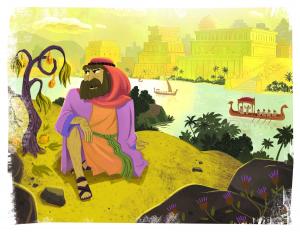
What is the message of the Sign of Jonah for us?
There are different opinions on whether the story of Jonah was a criticism of Jewish exclusivism after the Exile. (See this post) But that’s the way an early Christian community (and the Jesus of Luke’s Gospel) interpreted it. God’s favor goes to a foreign, even hostile, people, regardless of what Jonah wants. I imagine Jesus using this story in the discussion on the way to Emmaus and interpreting it the same way. I’ll get to Jesus and the Sign of Jonah after the story.
Episode 11 in Opening the Scriptures on the Way to Emmaus: Why Messiah had to Suffer. Introduction and links to other posts in the series here.
The Book of Jonah, in the tense situation of post-Exile Jerusalem, is the Bible’s comic relief. For humorous effect I’d say it even tops the fig leaves that Adam and Eve tried to cover themselves with in the garden. But the story includes a sharp dig. The author must have known he was touching on some sore points, especially with Ezra pursuing a kind of identity politics. He deliberately used humor and the style of a tall tale to bemuse his audience and then tell of God’s compassion..
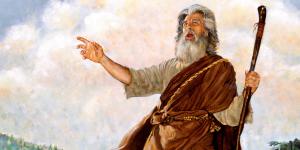
Jonah, the contrary prophet
Jonah is a prophet whom God commissions to warn the citizens of Nineveh that God is about to destroy them for bad behavior. In the story, Nineveh is the larger-than-life-size capital of Assyria. The time had long passed (but no Jew could forget) when the Assyrians demolished the Northern Kingdom of Israel. They also exacted exorbitant tribute from Judah in the South as a price for its survival. To the Jews Assyria was a hated Evil Empire.
Jonah feels the same way. Rather than take a chance that the Ninevites might repent and God would spare them, he takes off in the opposite direction on a ship bound for Spain. God whips up a storm, and the ship’s captain has everybody draw straws to see which one has offended his god. (It was a big storm so it needed a big explanation.) Jonah gets the short straw and lets the others throw him into the sea. Immediately the storm calms. A big fish swallows Jonah at God’s command and three days later vomits him out on the shore.
Much chastened, Jonah goes and starts the three-day walk across Nineveh. (Everything’s big in this story.) “Forty days more and Nineveh shall be destroyed.” As Jonah feared, the people do repent. Everyone from the king to the lowest peasant puts on sackcloth and sits in ashes—which is a lot of sackcloth and ashes. Everybody fasts, including the animals; and God relents from the punishment he threatened.
Jonah goes off in a huff and sits down in the hot sun outside the city and waits to die. But God gives him shade with a giant cucumber plant that grows up overnight. (I told you it’s a tall tale.) Jonah is happy about the plant, but then God destroys it with a voracious worm. Again Jonah wants to die. Finally God speaks:
You are concerned over the plant which cost you no labor and which you did not raise; it came up in one night and in one night it perished. And should I not be concerned over Nineveh, the great city, in which there are more than a hundred and twenty thousand persons who cannot distinguish their right hand from their left, not to mention the many cattle?” (Jonah 4:10-11)
Jesus and the Sign of Jonah
Authorities have been dogging Jesus to show them a sign from heaven. Does this make any sense? Jesus has just cured a man of his inability to speak by casting out a dumb demon. What better sign could you want? But they insist, “By the power of Beelzebul he casts out demons.” (Matthew 12:24)
Jesus knows what is bugging the questioners. A healing miracle isn’t just a kind deed of extraordinary power. It’s a challenge to anyone who wields power in the ordinary way. It de-centers authority—not the kind of sign Jesus’ critics are hoping for. Jesus’ signs might very well seem to them to be the work of the devil, sowing seeds of chaos into a system that’s hard enough to keep going as it is. They challenge Jesus to give a sign like the one the devil holds out to Jesus in the temptation story. Jesus could throw himself down from the top of the Temple and have the angels bear him up.
Jesus has no intention of giving any sign from heaven. He says point blank in the Gospel of Mark, “No sign will be given this generation.” That much, I’m guessing, is an accurately preserved memory. By the time we get to the Gospels of Luke and Matthew, some early Christians have added to Jesus’ words: “Except the sign of Jonah.” Both Gospels go on to describe the sign. (Matthew 12:38-42; Luke 11:29-32)
Deciding between Matthew and Luke
Here the interpreter has a problem because the Jonah story has three major scenes; and Matthew and Luke interpret differently. Matthew has Jesus referring to two of the episodes:
- the storm at sea with the three days in the belly of the fish and
- the preaching to Nineveh with the repentance of its people.
Luke only mentions the events in Nineveh. Which of these is the actual sign of Jonah?
The “sign of Jonah” part of the story comes to us, some scholars say, by way of the early Christian community that wrote Q, a hypothetical lost source of Jesus’ sayings that both Matthew and Luke relied on. The same scholars tell us that Luke’s version is probably closer to the original Q than Matthew’s. (See Richard A. Edwards, The Sign of Jonah.)
In Matthew Jesus connects Jonah’s three days in the fish to his own predicted three days in the tomb. Jesus rises from the tomb as Jonah “rose”out of the belly of the fist. That part doesn’t occur in Luke. For Luke the sign of Jonah is God’s favor to the Ninevites after Jonah’s preaching.
To my mind this latter makes more sense than Jesus’ rising as a sign “to this generation.” After all, only a few of Jesus’ followers saw Jesus after the resurrection (well, more than a few according to Paul). But anyone could see – and more than a few objected to – the way Christians were extending God’s favor. They welcomed Gentiles as well as Jews into their communities.
Luke quotes Jesus:
At the judgment the men of Nineveh will arise with this generation and condemn it, because at the preaching of Jonah they repented, and there is something greater than Jonah here. (Luke 11:32)
Placing ourselves in the story
We can read the Jonah story and take comfort: God is always ready to forgive us “Ninevites.” But what if, instead of reading the story, we heard the story from Jesus’ lips? What if this were one of the stories Jesus interpreted on the way to Emmaus? Would Jesus put himself in the role of the forgiving God in the story?
Jesus is more than the Great Comforter. God is more than one who forgives always. Jesus, in this story, actually identifies with all the sinners of this world, especially the most hated, to lift them up. The Ninevites will rise up at the judgment and condemn “this generation.” They will rise up with Jesus. So we really have to place Jesus with the people of Nineveh. And Jesus isn’t giving comfort at this point, certainly not to Jonah.
The real trick in interpreting this story is to place ourselves in it. The apostles had to figure that out, too. I’m guessing that they, like us, would have preferred to see themselves as the Ninevites, sinners who repent and receive God’s mercy. Thinking about their cowardly behavior during Jesus’ trial and crucifixion, they would have been very aware of their own failure, and hoping for God’s forgiveness.
At some point, I think, the apostles had to look deeper—to see themselves as “Jonah”s. They had acted like Jonah when they tried to keep children away from Jesus or wanted to stop someone from driving out demons because “he was not following us” or argued about who would be greatest in Jesus’ kingdom. Not so different from the Pharisees—or us, imagining God makes the same distinctions we do. In this story Jesus is the Ninevites, and we are Jonah.
Jesus identified with the “Ninevites” of his day, those rejected by the self-righteous “Jonah”s. For this, I believe, Jesus was sent, and for this he was executed. It could hardly have been different.
If that’s what Jesus explained to the disciples on the way to Emmaus, there is still one thing missing: How does this amount to good news, as it must have done for the disciples? Their hearts were burning within them even before they knew that it was Jesus risen from the dead. The next post will conclude the series with some guesses about this last question.
Image credit: Tenthill Baptist church via Google Images
Opening Scriptures on Way to Emmaus
Previous Post

November 16, 2018
Cheating Death, Cheating Extinction
Next Post
November 21, 2018 Good News on the Way to Emmaus: Why the Messiah had to Suffer
Browse Our Archives
Select a Category Advent Christmas Amazon Synod Angels Being Consumed Bible Catholic Modern Creed Ecology Economics Elizabeth Johnson Eucharist Fragments and Filaments Gender and Sex Gospel of Mark Herzog Historical Jesus Liturgy Luke Opening Scriptures on Way to Emmaus Ordinary radicals Parables Pro-Life Reincarnation Rosary Sacraments science Social Justice Souls Stories of Jesus The Creed Torture and Eucharist Tracy Uncategorized War and Peace
Select a Month October 2026 June 2025 April 2025 March 2025 February 2025 January 2025 November 2024 July 2024 March 2024 December 2023 October 2023 September 2023 August 2023 May 2023 April 2023 March 2023 February 2023 January 2023 December 2022 November 2022 October 2022 September 2022 August 2022 July 2022 June 2022 April 2022 March 2022 February 2022 January 2022 December 2021 November 2021 October 2021 August 2021 July 2021 June 2021 April 2021 March 2021 February 2021 December 2020 November 2020 October 2020 August 2020 July 2020 June 2020 May 2020 April 2020 March 2020 February 2020 January 2020 December 2019 November 2019 October 2019 September 2019 August 2019 July 2019 June 2019 May 2019 April 2019 March 2019 February 2019 January 2019 December 2018 November 2018 October 2018 September 2018 August 2018 July 2018 June 2018 May 2018
Follow Us!
TAKE THE
Religious Wisdom Quiz
True or False: Joseph's brothers sold him to traders for thirty pieces of silver.
Select your answer to see how you score.
TRUE FALSE
Related posts from Lost in a One-Acre Wood
Good News on the Way to Emmaus: Why...
Ruth, a Romantic Tale of a Victim who...
Ezra and Nehemiah: Tribal Identity vs. Compassion
Nothing is holy now. More Kings and Prophets
TRENDING AT PATHEOS Catholic

Creation, Preservation, and Teleology in Catholic Theology
As I write this, it is very early Monday morning. Like millions...

The Parable Of The Sower And The Word...
One of Christ’s most famous parables is that of the sower who...

Rejecting Doom: Christian Hope And Human Action
Christianity is a religion of hope. We are to have hope and...

Why I Choose the Eucharist Over the Sermon
Choose the Eucharist, Not the Sermon What are we supposed to get...

5 Design Elements Found in Spiritually Rooted Homes
Putting Spirituality Into Home Decor Our homes are more than our living...

Credo: A Story of God Told with the...
About 10 years ago, I began to imagine a personal "Credo" that...
view all Catholic blogs
Ad-Free & Subscriber Log-In Subscription Support
- About Us
- 2026 Calendar
- Videos
- Podcasts
- Library of World Religions
- Faith In Media Tracker
- Advertise With Us
- Write for Us
- Privacy Policy
- Terms of Service
- Do Not Sell My Data
- Contact Us
- Radiant Digital
- Manage Newsletter Subscriptions
- Unsubscribe From Notifications
- Sitemap
Copyright 2008-2026, Patheos. All rights reserved.
Subscription Support Ad-Free & Subscriber Log-In
Follow Patheos