
BuddhistCatholicContemplativeEvangelicalGeneral ChristianHinduJewishLatter-day SaintMuslimNew VisionsProgressive Christian
Beliefs
- Buddhist
- Catholic
- Contemplative
- Evangelical
- General Christian
- Hindu
- Jewish
- Latter-day Saint
- More Voices
- Muslim
- New Visions
- Pagan
- Progressive Christian
Topics
- Religion News
- Food and Religion
- Sports and Religion
- Religious Art
- Religious Music and Entertainment
- Religious Events
- History and Religion
- Style and Religion
- Politics and Religion
- Women in Religion
- Recreation Outdoors and Religion
- Business Finance and Religion
- Careers Workplace and Religion
- Education and Religion
- Family Parenting and Religion
- Health Fitness and Religion
- Home and Religion
- Relationships and Religion
- Technology and Religion
- Travel and Religion
Columnists
- Buddhist Columnists
- Business Finance and Religion Columnists
- Careers Workplace and Religion Columnists
- Catholic Columnists
- Contemplative Columnists
- Education and Religion Columnists
- Evangelists Columnists
- Family Parenting and Religion Columnists
- General Christian Columnists
- Health Fitness and Religion Columnists
- Hindu Columnists
- History and Religion Columnists
- Home and Religion Columnists
- Jewish Columnists
- More Voices Columnists
- Latter Day Columnists
- Muslim Columnists
- New Visions Columnists
- Nonreligious Columnists
- Pagan Columnists
- Politics and Religion Columnists
- Progressive Columnists
- Recreation Outdoors and Religion Columnists
- Relationships and Religion Columnists
- Religion News Columnists
- Religious Art Columnists
- Religious Events Columnists
- Religious Music and Entertainment Columnists
- Sports and Religion Columnists
- Style and Religion Columnists
- Technology and Religion Columnists
- Travel and Religion Columnists
- Women in Religion Columnists
Resource Library
- 2026 Calendar
- Library of World Religions
- The 100 Most Holy Places on Earth
- Patheos Answers
- Podcasts
- Videos
- Faith Leaders Database
- Anglican Episcopalian
- Bahai
- Baptist
- Buddhism
- Christianity
- Confucianism
- Eastern Orthodoxy
- Hinduism
- Holiness and Pentecostal
- ISKCON
- Islam
- Judaism
- Lutheran
- Methodist
- The Church of Jesus Christ of Latter-day Saints
- New Age
- Paganism
- Presbytarian and Reformed
- Protestantism
- Religion Behind the Scenes
- Roman Catholic
- Scientology
- Shia Islam
- Sikhism
- Sufism
- Sunni Islam
- Taoism
- Zen
- See all religions
Research Tools
 Ad-Free & Subscriber Log-In Subscription Support
Ad-Free & Subscriber Log-In Subscription Support
Follow Patheos 

- Trending:
- Forgiveness
- |
- Marriage
- |
- Consciousness
- |
- Death Penalty
- |
- Election
- |
- Halloween

- Home
- Catholic
- Ezra and Nehemiah: Tribal Identity vs. Compassion
Ezra and Nehemiah: Tribal Identity vs. Compassion
Last updated on: November 14, 2018 at 6:03 am by Jack Hartjes
Ezra and Nehemiah: Tribal Identity vs. Compassion 2018-11-14T06:03:50-06:00 Jack Hartjes
Patheos Explore the world's faith through different perspectives on religion and spirituality! Patheos has the views of the prevalent religions and spiritualities of the world.
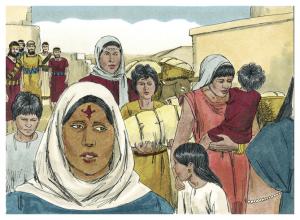
The priest Ezra, solicitous of Jewish identity, orders the men to send away wives they had taken from the People of the Land.
Two books in the Old Testament are ones I like least, and two are my favorites. All four may have been written about the same time, although that is not certain.. The least liked are Ezra and Nehemiah. My favorites are Ruth and Jonah. The two pairs are like point and counterpoint. I imagine Jesus liked the stories of Ruth and Jonah, but not Ezra and Nehemiah. The latter two, however, provide background for Ruth and Jonah. My favorite stories will have to wait until the next posts.
Episode 9 in Opening the Scriptures on the Way to Emmaus: Why Messiah had to Suffer. Introduction and links to other posts in the series here.
We pick up the story when the Babylonian Captivity is ending. Babylon, the great empire, had conquered what was left of Israel’s descendants after an earlier empire, Assyria, had vanquished the Northern Kingdom. Jerusalem and Solomon’s temple are ruins, the Jews are in exile. But another power will rise to replace Babylon.
After about 50 years of exile the Jewish people get permission to return to Jerusalem. The new Persian overlords have a different, more accommodating, policy toward their subject peoples. Probably they see the advantage of having client buffers around their empire whom they can cow into being more or less friendly. The Jews rebuild Jerusalem, and the temple stands again—a much smaller version. A sacrificial regimen again takes its place in the temple.
Would the Jews remember the lesson of the prophets, that God desires mercy and justice more than sacrifice? What would become of David’s kind of holiness, which does not foster divisions among groups of people? What kind of identity would God’s people pursue? Did the people look for the best in another after their own experience of being of least regard? The picture is fuzzy, and the Bible itself is struggling to find its way. Given the historical circumstances, we might understand if most Jews clung to their identity in difference from others rather than in compassion.
Ezra and Nehemiah dominate the picture.
The return of the exiles to Jerusalem led to conflict with the “People of the Land.” Some of these were descendants of the ones left behind by the deportation of 50 years previous. The opposition stemmed partly from the returnees’ exclusionary attitude toward those who had not undergone exile and, perhaps, had not been privy to the new theological developments of the exiles’ synagogue culture.
The situation right away provokes two judgments. First, the theology of the returning exiles was probably closer to what we consider true monotheism than that of the People of the Land, although both groups worshiped the same God. Second, if we look for where Jesus might locate himself, I’d say it’s with the rejected People of the Land.
There are friendlier times, as at the completion of the new temple under the leadership of Nehemiah. Both groups join in the celebration with massive sacrifices of livestock. The least compassionate point comes about 50 years later when the priest Ezra arrives, having researched the purity codes of the scriptures. He demands that all Jewish men who have taken wives from among the People of the Land send them away. The biblical books of Ezra and Nehemiah tell this story.
Another biblical point of view
But Ezra’s exclusiveness was not the Bible’s only point of view. The books of Ruth and Jonah show quite a different attitude toward foreigners and may have been a rebuttal to the Ezra faction. These latter two are stories. One’s a sweet romance and the other’s a humorous tall tale. Both are set in the past so they also qualify as historical fiction.
Whoever wrote these last two books must have known they were shaking up some religious sensibilities. They tell of God’s favor toward foreigners, even enemies of Israel. They tell us where Jesus’ sympathies lie, where he would have seen himself. The next two posts, as we near the end of this Emmaus series, are about Ruth and Jonah.
Image credit: Kevin Pendergrass via Google Images
Opening Scriptures on Way to Emmaus
Previous Post

November 9, 2018
Single-Use is Word of the Year as Election Mostly Ignores Environment
Next Post
November 14, 2018 Ruth, a Romantic Tale of a Victim who Wins Out in the End, Like Jesus
Browse Our Archives
Select a Category Advent Christmas Amazon Synod Angels Being Consumed Bible Catholic Modern Creed Ecology Economics Elizabeth Johnson Eucharist Fragments and Filaments Gender and Sex Gospel of Mark Herzog Historical Jesus Liturgy Luke Opening Scriptures on Way to Emmaus Ordinary radicals Parables Pro-Life Reincarnation Rosary Sacraments science Social Justice Souls Stories of Jesus The Creed Torture and Eucharist Tracy Uncategorized War and Peace
Select a Month October 2026 June 2025 April 2025 March 2025 February 2025 January 2025 November 2024 July 2024 March 2024 December 2023 October 2023 September 2023 August 2023 May 2023 April 2023 March 2023 February 2023 January 2023 December 2022 November 2022 October 2022 September 2022 August 2022 July 2022 June 2022 April 2022 March 2022 February 2022 January 2022 December 2021 November 2021 October 2021 August 2021 July 2021 June 2021 April 2021 March 2021 February 2021 December 2020 November 2020 October 2020 August 2020 July 2020 June 2020 May 2020 April 2020 March 2020 February 2020 January 2020 December 2019 November 2019 October 2019 September 2019 August 2019 July 2019 June 2019 May 2019 April 2019 March 2019 February 2019 January 2019 December 2018 November 2018 October 2018 September 2018 August 2018 July 2018 June 2018 May 2018
Follow Us!
TAKE THE
Religious Wisdom Quiz
What did Jesus say was the greatest commandment?
Select your answer to see how you score.
Follow rules Love God Pray always Attend temple
Related posts from Lost in a One-Acre Wood
Good News on the Way to Emmaus: Why...

The Sign of Jonah and a Tall Tale...
Ruth, a Romantic Tale of a Victim who...

Nothing is holy now. More Kings and Prophets
TRENDING AT PATHEOS Catholic

Creation, Preservation, and Teleology in Catholic Theology
As I write this, it is very early Monday morning. Like millions...

The Parable Of The Sower And The Word...
One of Christ’s most famous parables is that of the sower who...

Rejecting Doom: Christian Hope And Human Action
Christianity is a religion of hope. We are to have hope and...

Why I Choose the Eucharist Over the Sermon
Choose the Eucharist, Not the Sermon What are we supposed to get...

5 Design Elements Found in Spiritually Rooted Homes
Putting Spirituality Into Home Decor Our homes are more than our living...

Credo: A Story of God Told with the...
About 10 years ago, I began to imagine a personal "Credo" that...
view all Catholic blogs
Ad-Free & Subscriber Log-In Subscription Support
- About Us
- 2026 Calendar
- Videos
- Podcasts
- Library of World Religions
- Faith In Media Tracker
- Advertise With Us
- Write for Us
- Privacy Policy
- Terms of Service
- Do Not Sell My Data
- Contact Us
- Radiant Digital
- Manage Newsletter Subscriptions
- Unsubscribe From Notifications
- Sitemap
Copyright 2008-2026, Patheos. All rights reserved.
Subscription Support Ad-Free & Subscriber Log-In
Follow Patheos