
BuddhistCatholicContemplativeEvangelicalGeneral ChristianHinduJewishLatter-day SaintMuslimNew VisionsProgressive Christian
Beliefs
- Buddhist
- Catholic
- Contemplative
- Evangelical
- General Christian
- Hindu
- Jewish
- Latter-day Saint
- More Voices
- Muslim
- New Visions
- Pagan
- Progressive Christian
Topics
- Religion News
- Food and Religion
- Sports and Religion
- Religious Art
- Religious Music and Entertainment
- Religious Events
- History and Religion
- Style and Religion
- Politics and Religion
- Women in Religion
- Recreation Outdoors and Religion
- Business Finance and Religion
- Careers Workplace and Religion
- Education and Religion
- Family Parenting and Religion
- Health Fitness and Religion
- Home and Religion
- Relationships and Religion
- Technology and Religion
- Travel and Religion
Columnists
- Buddhist Columnists
- Business Finance and Religion Columnists
- Careers Workplace and Religion Columnists
- Catholic Columnists
- Contemplative Columnists
- Education and Religion Columnists
- Evangelists Columnists
- Family Parenting and Religion Columnists
- General Christian Columnists
- Health Fitness and Religion Columnists
- Hindu Columnists
- History and Religion Columnists
- Home and Religion Columnists
- Jewish Columnists
- More Voices Columnists
- Latter Day Columnists
- Muslim Columnists
- New Visions Columnists
- Nonreligious Columnists
- Pagan Columnists
- Politics and Religion Columnists
- Progressive Columnists
- Recreation Outdoors and Religion Columnists
- Relationships and Religion Columnists
- Religion News Columnists
- Religious Art Columnists
- Religious Events Columnists
- Religious Music and Entertainment Columnists
- Sports and Religion Columnists
- Style and Religion Columnists
- Technology and Religion Columnists
- Travel and Religion Columnists
- Women in Religion Columnists
Resource Library
- 2026 Calendar
- Library of World Religions
- The 100 Most Holy Places on Earth
- Patheos Answers
- Podcasts
- Videos
- Faith Leaders Database
- Anglican Episcopalian
- Bahai
- Baptist
- Buddhism
- Christianity
- Confucianism
- Eastern Orthodoxy
- Hinduism
- Holiness and Pentecostal
- ISKCON
- Islam
- Judaism
- Lutheran
- Methodist
- The Church of Jesus Christ of Latter-day Saints
- New Age
- Paganism
- Presbytarian and Reformed
- Protestantism
- Religion Behind the Scenes
- Roman Catholic
- Scientology
- Shia Islam
- Sikhism
- Sufism
- Sunni Islam
- Taoism
- Zen
- See all religions
Research Tools
 Ad-Free & Subscriber Log-In Subscription Support
Ad-Free & Subscriber Log-In Subscription Support
Follow Patheos 

- Trending:
- Forgiveness
- |
- Marriage
- |
- Consciousness
- |
- Death Penalty
- |
- Election
- |
- Halloween

- Home
- Catholic
- Mankato, Minnesota, Puts Indigenous Peoples Day on the Calendar
Mankato, Minnesota, Puts Indigenous Peoples Day on the Calendar
Last updated on: October 12, 2018 at 4:47 am by Jack Hartjes
Mankato, Minnesota, Puts Indigenous Peoples Day on the Calendar 2018-10-12T04:47:59-06:00 Jack Hartjes
Patheos Explore the world's faith through different perspectives on religion and spirituality! Patheos has the views of the prevalent religions and spiritualities of the world.
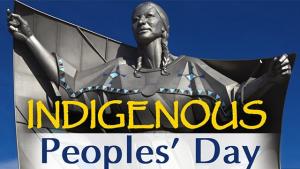
It’s October 12, the day an Italian explorer made landfall in what would become the Americas. It’s also a good day to commend the citizens of Mankato, Minnesota. Mankato’s City Council last June voted to name the second Monday in October Indigenous Peoples Day instead of Columbus Day. “Nearly 50 people broke out in applause,” the Mankato Free Press reported*.*
Mankato, a medium-size city in Southeastern part of the state, joins other Minnesota cities, including Minneapolis, St. Paul, Red Wing, and two Harbors. Nationally, Los Angeles, Seattle, Denver, Cleveland, and Phoenix are among cities that changed Columbus Day to Indigenous Peoples Day.
The Free Press states:
Council President Mike Laven, who made the motion to officially recognize the day in Mankato, said Monday’s action is only a piece of a decades-long effort that must continue.
The new holiday for Mankato was especially significant because the city had a part in one of darker episodes in the relations between native tribes and white occupiers. On December 26, 1862, 38 Dakota men were hanged in the aftermath of a six-week war. It was the largest mass execution in United States history. The hanging scaffold was “about 500 feet from the City Council chambers,” according to the Free Press. President Abraham Lincoln’s intervention reduced the number hanged to only (?) 38.
Indian War of 1862
The 1862 Dakota uprising was the largest of the Indian wars. It included massive attacks on a fort and a city, twice for each. For Indian wars that was very unusual.
A thorough account of the war and its causes appears on the website “Exploring Off the Beaten Path.” The article “1862 Dakota War” opines:
For over 100 years, the people of Minnesota celebrated the Dakota War as a victory of pure good over pure evil, i.e., the settlers defeating the treacherous blood thirsty savages. It was called the Sioux Massacre. That view has changed in recent years, especially with the commemoration of the 150th anniversary of the conflict in 2012. As it turns out, there was enough blame and blood to go around for everyone.
The violence of the attackers – farms burned, 500 killed, mostly civilians, including women and children – was over-matched by whites’ deceit and corruption before the war.
The lead-up to war
“Off the Beaten Path” gives several examples of provocative white behavior that precipitated the war:
- Dakota tribes had sold 30 million acres to the United States for 10 cents an acre, or $3 million. Of this amount almost half a million went immediately to traders, agents, and politicians. Ostensibly it was for “debts in arrears, resettlement costs and expenses.” Recipients of this “pork” included Henry Hastings Sibley and Alexander Ramsey, famous names in Minnesota history. Respectively, they are the state’s first and second governors. Ramsey was governor during the war.
- The tribe was to receive annual annuities from the remaining $2.5 million. Two “Sioux Agencies,” Upper and Lower on the Minnesota River, set up Warehouses of food, seed, and other necessities. The Dakota could purchase from them with the annuities. These annual payments were “sporadic at best and habitually late.” When the money showed up, often merchants, bureaucrats, and politicians had their hands in it first.
- “Goods were often shoddy and food unfit to eat. Merchants and traders charged exorbitant rates of interest for credit purchases. When government payments didn’t show up, they repossessed the plows, tools and firearms they had sold on credit. Then they filed for payment of ‘debts in arrears’ against the annuity. “It was a corrupt, incestuous system and it had been like that since the first day of the first treaty.”
- On the eve of the war the Dakota were starving due to the previous year’s crop failure and a brutal winter. No annuity payment was coming. Warehouses were full of food, but agents refused to distribute any on credit.
“Let them eat grass.”
The same article includes these details about the progress of the war:
- The head of the Lower Sioux Agency, Andrew Jackson Myrick, was an ill-tempered alcoholic married to a Dakota woman. After listening to Dakota pleas for help, he is supposed to have said, “Let them eat grass.” He was one of the first government casualties of the war. His killers stuffed his mouth with grass.
- The war lasted from August 18 to September 26. The Dakota were habitually long on council and in this instance short on execution. Their style did not include coordinated attack. That plus the determination and skill of the ill-prepared whites and some lucky torrential rains contributed to the Dakotas’ defeat.
- Little Crow, a reluctant warrior, had said in council that for every white killed, 10 more will pop up. He knew from the start that the cause was hopeless. Eventually desperation led him to “take back their homeland by force or die trying.”
An immigrant from Bohemia with my wife’s mother’s maiden name, Pelzl, died in the attack on the young city of New Ulm. Another of my wife’s relatives lived on a farm outside New Ulm. The family would share food with Indians in need. Bands of Dakota, pillaging and burning on their way to New Ulm, bypassed that farmstead.
Less than unanimous agreement in Mankato on Indigenous Peoples Day
The Free Press article noted that there was some controversy in the Mankato City Council chambers. The original Indigenous Peoples Day resolution proposed at the Council meeting in June included the following clause:
Whereas, starting in 1492, Christopher Columbus and his men committed untold atrocities against Indigenous Peoples and thus began the exploitation and dispossession of Indigenous Peoples, whose lands were taken for the formation of the United States, of which Mankato, Minnesota is a part.
During the debate proponents of the resolution removed this clause.
Still the city’s Mayor, Eric Anderson, wouldn’t support the Indigenous Peoples Day resolution because it specifically mentioned Columbus Day. “I’m not here to support, condemn or condone…,” Anderson said. “Human beings make mistakes.” Dennis Dieken, a Council member, also objected to replacing Columbus Day. He wanted Indigenous Peoples Day on a different date.
Another Council member, Mark Frost, said Mankatoans may still remember the Italian explorer:
It you want to talk about Columbus, talk about him… If you want to talk about Indigenous Peoples, we live with them. We don’t live with Columbus anymore.
Image credit: LEX18.com via Google Images
Next Post

October 15, 2018 Achan Suffers for the Israelites
Browse Our Archives
Select a Category Advent Christmas Amazon Synod Angels Being Consumed Bible Catholic Modern Creed Ecology Economics Elizabeth Johnson Eucharist Fragments and Filaments Gender and Sex Gospel of Mark Herzog Historical Jesus Liturgy Luke Opening Scriptures on Way to Emmaus Ordinary radicals Parables Pro-Life Reincarnation Rosary Sacraments science Social Justice Souls Stories of Jesus The Creed Torture and Eucharist Tracy Uncategorized War and Peace
Select a Month October 2026 June 2025 April 2025 March 2025 February 2025 January 2025 November 2024 July 2024 March 2024 December 2023 October 2023 September 2023 August 2023 May 2023 April 2023 March 2023 February 2023 January 2023 December 2022 November 2022 October 2022 September 2022 August 2022 July 2022 June 2022 April 2022 March 2022 February 2022 January 2022 December 2021 November 2021 October 2021 August 2021 July 2021 June 2021 April 2021 March 2021 February 2021 December 2020 November 2020 October 2020 August 2020 July 2020 June 2020 May 2020 April 2020 March 2020 February 2020 January 2020 December 2019 November 2019 October 2019 September 2019 August 2019 July 2019 June 2019 May 2019 April 2019 March 2019 February 2019 January 2019 December 2018 November 2018 October 2018 September 2018 August 2018 July 2018 June 2018 May 2018
Follow Us!
TAKE THE
Religious Wisdom Quiz
Who said, "Choose for yourselves this day whom you will serve"?
Select your answer to see how you score.
Joshua Solomon Moses Gideon
Related posts from Lost in a One-Acre Wood

Credo: A Story of God Told with the...

With Carbon Dioxide, 0.014 is a big number
Crucifixion as Breakthrough, Horsley’s Nerviest Claim

Jesus’ Politics of Resistance and Renewal
TRENDING AT PATHEOS Catholic

Creation, Preservation, and Teleology in Catholic Theology
As I write this, it is very early Monday morning. Like millions...

The Parable Of The Sower And The Word...
One of Christ’s most famous parables is that of the sower who...

Rejecting Doom: Christian Hope And Human Action
Christianity is a religion of hope. We are to have hope and...

Why I Choose the Eucharist Over the Sermon
Choose the Eucharist, Not the Sermon What are we supposed to get...

5 Design Elements Found in Spiritually Rooted Homes
Putting Spirituality Into Home Decor Our homes are more than our living...

Credo: A Story of God Told with the...
About 10 years ago, I began to imagine a personal "Credo" that...
view all Catholic blogs
Ad-Free & Subscriber Log-In Subscription Support
- About Us
- 2026 Calendar
- Videos
- Podcasts
- Library of World Religions
- Faith In Media Tracker
- Advertise With Us
- Write for Us
- Privacy Policy
- Terms of Service
- Do Not Sell My Data
- Contact Us
- Radiant Digital
- Manage Newsletter Subscriptions
- Unsubscribe From Notifications
- Sitemap
Copyright 2008-2026, Patheos. All rights reserved.
Subscription Support Ad-Free & Subscriber Log-In
Follow Patheos