
BuddhistCatholicContemplativeEvangelicalGeneral ChristianHinduJewishLatter-day SaintMuslimNew VisionsProgressive Christian
Beliefs
- Buddhist
- Catholic
- Contemplative
- Evangelical
- General Christian
- Hindu
- Jewish
- Latter-day Saint
- More Voices
- Muslim
- New Visions
- Pagan
- Progressive Christian
Topics
- Religion News
- Food and Religion
- Sports and Religion
- Religious Art
- Religious Music and Entertainment
- Religious Events
- History and Religion
- Style and Religion
- Politics and Religion
- Women in Religion
- Recreation Outdoors and Religion
- Business Finance and Religion
- Careers Workplace and Religion
- Education and Religion
- Family Parenting and Religion
- Health Fitness and Religion
- Home and Religion
- Relationships and Religion
- Technology and Religion
- Travel and Religion
Columnists
- Buddhist Columnists
- Business Finance and Religion Columnists
- Careers Workplace and Religion Columnists
- Catholic Columnists
- Contemplative Columnists
- Education and Religion Columnists
- Evangelists Columnists
- Family Parenting and Religion Columnists
- General Christian Columnists
- Health Fitness and Religion Columnists
- Hindu Columnists
- History and Religion Columnists
- Home and Religion Columnists
- Jewish Columnists
- More Voices Columnists
- Latter Day Columnists
- Muslim Columnists
- New Visions Columnists
- Nonreligious Columnists
- Pagan Columnists
- Politics and Religion Columnists
- Progressive Columnists
- Recreation Outdoors and Religion Columnists
- Relationships and Religion Columnists
- Religion News Columnists
- Religious Art Columnists
- Religious Events Columnists
- Religious Music and Entertainment Columnists
- Sports and Religion Columnists
- Style and Religion Columnists
- Technology and Religion Columnists
- Travel and Religion Columnists
- Women in Religion Columnists
Resource Library
- 2026 Calendar
- Library of World Religions
- The 100 Most Holy Places on Earth
- Patheos Answers
- Podcasts
- Videos
- Faith Leaders Database
- Anglican Episcopalian
- Bahai
- Baptist
- Buddhism
- Christianity
- Confucianism
- Eastern Orthodoxy
- Hinduism
- Holiness and Pentecostal
- ISKCON
- Islam
- Judaism
- Lutheran
- Methodist
- The Church of Jesus Christ of Latter-day Saints
- New Age
- Paganism
- Presbytarian and Reformed
- Protestantism
- Religion Behind the Scenes
- Roman Catholic
- Scientology
- Shia Islam
- Sikhism
- Sufism
- Sunni Islam
- Taoism
- Zen
- See all religions
Research Tools
 Ad-Free & Subscriber Log-In Subscription Support
Ad-Free & Subscriber Log-In Subscription Support
Follow Patheos 

- Trending:
- Forgiveness
- |
- Marriage
- |
- Consciousness
- |
- Death Penalty
- |
- Election
- |
- Halloween

- Home
- Catholic
- Bookends to the Transfiguration, Hope in the Dark, and a Guess about Jesus at Prayer
Bookends to the Transfiguration, Hope in the Dark, and a Guess about Jesus at Prayer
Last updated on: September 3, 2018 at 6:26 am by Jack Hartjes
Bookends to the Transfiguration, Hope in the Dark, and a Guess about Jesus at Prayer 2018-09-03T06:26:58-06:00 Jack Hartjes
Patheos Explore the world's faith through different perspectives on religion and spirituality! Patheos has the views of the prevalent religions and spiritualities of the world.

The healing of the blind man of Bethsaida becomes a complicated symbol of hope in Mark’s telling.
Jesus’ path gets increasingly dangerous as we move through Mark’s Gospel. At the same time he seems to be more and more isolated from his own disciples. Here we’ll see how Mark gives his readers a little hope. He provides some symbolic clues about a more hopeful direction for Jesus’ story.
Thirteenth in a series on “The Worldly Spirituality of Mark’s Gospel” with help from Ched Myers’ Binding the Strongman: A Political Reading of Mark’s Story of Jesus. The Introduction and, looking ahead, a Table of Contents are HERE.
You have to sympathize with Mark’s first readers. Hope is a precious commodity. They live in an unsafe time for Christians. Their new ideas and ways spark opposition from many sides—Romans, establishment Jews, even the rebels. Mark’s community could use an uplifting story of heroes triumphing against the odds, like Judith or Esther of old, or even like the seven brothers of 2 Maccabees, defiant to the end and confident of eventual victory. I always figured the story of the Transfiguration was that kind of story.
But Mark’s story, which has now reached the halfway point, is nothing like an assurance of triumph. Ched Myers locates the Transfiguration solidly within the kind of story Mark has been telling. We see Jesus winning skirmishes with scribes and Pharisees, but we sense also growing danger. Jesus’ followers should be of one mind with Jesus, should be among the heroes of the story. Repeatedly they fail to understand. And there’s an uncomfortable suspicion that Mark’s audience, which includes us, shares that misunderstanding.
From where we stand, we “know” the story ends with the triumph of Jesus’ resurrection. Myers questions whether we are hearing the story the way Mark wants to tell it. Christian triumphalism seems far from what Mark offers his audience.
Our hope fulfilled, or the Cross?
We’re heading toward the Transfiguration, but are we ready for it? Are the disciples, and Peter especially? In a triumphant spirit Peter confesses Jesus as the Messiah, but that triumphalism has to be quashed. At the Transfiguration Jesus’ identity comes brilliantly into focus, but is that one of victorious Messiah or the cross? The disciples lean toward the former, Jesus insists on the latter.
Two miracles surround the section that includes Peter’s “confession” and the Transfiguration. They are a healing and an exorcism. In different ways they help to soften the impact of Mark’s narrative of misunderstanding. These miracles serve as introduction and conclusion to a chapter in Mark’s story, Myers says. In this post I will look at the two bookends, the two signs of hope. I’ll save the events from Peter’s confession to the Transfiguration for the next post.
The healing of the blind man of Bethsaida.
The first of these bookends seems like just another one of those odd events of which history is full. I never read it expecting any special meaning. But with Mark that’s not a safe bet. Jesus cures a blind man from Bethsaida. (8:22-26)
The odd thing is it doesn’t go right at first:
Putting spittle on is eyes he laid his hands on him and asked, “Do you see anything?
Jesus doesn’t seem very confident at this point.
The man does see but not very well. People look like trees walking about. It takes a second zap from Jesus for the man to see clearly.
No explanation is given. It apparently wasn’t any lack of faith in the man and not likely any weakening of Jesus’ powers. But Mark often uses sight as a metaphor for understanding, and this complicated incident becomes a complicated metaphor. It signals both the disciples’ poor grasp of what Jesus is about and the hope that in the end they will understand more completely. It also signals that the overcoming of the disciples’ blindness won’t be easy.
The exorcism of the boy with a demon
Now we’ll skip to the second bookend and see how Mark again gives his reader a signal that there is hope for Jesus’ followers. (Mark 9:14-27) He does, after all want us to keep reading.
We’re coming down from the mountain of the Transfiguration; that is, Jesus is, with Peter, James, and John. There is a commotion. Jesus’ other disciples have been trying and failing to cast out a devil. Some scribes are making much of that fact. Jesus bemoans a “faithless generation” for a while and then asks for the possessed boy. The boy’s father enters a desperate plea for help: “if you can do anything.” “IFF!” says Jesus, and then follow two famous lines:
Everything is possible to one who has faith.
and
I do believe, help my unbelief.
The father doesn’t understand any better than the disciples, but at least he knows it, and he knows where to go for help. Jesus is able to cast out the devil where the disciples failed, and Mark’s readers get another little dose of hope. At least somebody may be open to what Jesus is about.
A more difficult devil?
This episode concludes with another challenge to understanding, at least for me.
The disciples ask Jesus why they couldn’t drive the demon out. He answers, “This kind can only come out through prayer.” (Mark 9:28-29)
It seems odd to me. The apostles had already cast out several demons. Why was this one different? Jesus mentions prayer, and that seems reasonable. But we didn’t notice that Jesus was praying as he cast out the devil. In fact, the idea of praying has been absent up to this time in Mark’s Gospel. Prayer seems to come out of the blue.
A guess about the Transfiguration and prayer
Or does it? Mark doesn’t say that Jesus was praying in the desert, where the devil tempted him. We can assume that he was, and that’s one connection between prayer and the demonic. I’d like to make another assumption about Jesus praying and risk a guess about history and the Transfiguration.
The Transfiguration story could be an accurate memory or it could be merely symbolic, anticipating the post-resurrection Jesus. Both positions have their scholarly defenders. My guess is somewhere between. I’d like to imagine the Transfiguration as an event in Jesus’ life that may not have looked like the picture in the Gospels. I imagine Jesus at prayer. He’s experiencing a kind of rapture. He looks like one who hardly belongs to this world. This may have happened many times. It becomes a story that undergoes a normal process of exaggeration through retelling. Mark adds some symbolic elements, including Moses and Elijah and a voice from heaven. We’ll see those in the next post.
That’s a guess, of course. It enables another guess. Mark has a story about an exorcism. The disciples were not able to accomplish it, but Jesus could. My guess is that Mark consciously placed this exorcism right after an embellished episode of Jesus at prayer.
Looking ahead
My next post will deal with what that “prayer,” that is, the conversation Jesus had with Moses and Elijah on the mountain, may have been about. It will cover the events in the middle between the bookends of the healing miracle that took two tries and the exorcism that only Jesus could do. Those events are Peter’s declaration about Jesus’ identity, the first prediction of the Passion, some teaching by Jesus about discipleship, and the Transfiguration.
Previous Post

August 31, 2018
World Day of Prayer for Creation
Next Post
September 5, 2018 The Transfiguration, Dazzling but not Triumphant
Browse Our Archives
Select a Category Advent Christmas Amazon Synod Angels Being Consumed Bible Catholic Modern Creed Ecology Economics Elizabeth Johnson Eucharist Fragments and Filaments Gender and Sex Gospel of Mark Herzog Historical Jesus Liturgy Luke Opening Scriptures on Way to Emmaus Ordinary radicals Parables Pro-Life Reincarnation Rosary Sacraments science Social Justice Souls Stories of Jesus The Creed Torture and Eucharist Tracy Uncategorized War and Peace
Select a Month October 2026 June 2025 April 2025 March 2025 February 2025 January 2025 November 2024 July 2024 March 2024 December 2023 October 2023 September 2023 August 2023 May 2023 April 2023 March 2023 February 2023 January 2023 December 2022 November 2022 October 2022 September 2022 August 2022 July 2022 June 2022 April 2022 March 2022 February 2022 January 2022 December 2021 November 2021 October 2021 August 2021 July 2021 June 2021 April 2021 March 2021 February 2021 December 2020 November 2020 October 2020 August 2020 July 2020 June 2020 May 2020 April 2020 March 2020 February 2020 January 2020 December 2019 November 2019 October 2019 September 2019 August 2019 July 2019 June 2019 May 2019 April 2019 March 2019 February 2019 January 2019 December 2018 November 2018 October 2018 September 2018 August 2018 July 2018 June 2018 May 2018
Follow Us!
TAKE THE
Religious Wisdom Quiz
Why did Jesus often use parables?
Select your answer to see how you score.
To confuse listeners To entertain only To show off To reveal truths to those open to God
Related posts from Lost in a One-Acre Wood
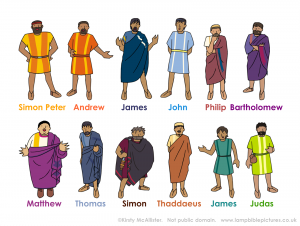
Atonement and Some Odd Hypothetical Questions about Disciples
Civil Disobedience and the Puzzle that was Thursday:...

The Sacrament of Touch: We Touch Jesus’ Body...

Apocalypse: A Plague (or is it Stars Falling)...
TRENDING AT PATHEOS Catholic

Rejecting Doom: Christian Hope And Human Action
Christianity is a religion of hope. We are to have hope and...

It’s What Comes From Within Which Matters
One of the most difficult things for us to understand is why...

Why I Choose the Eucharist Over the Sermon
Choose the Eucharist, Not the Sermon What are we supposed to get...

5 Design Elements Found in Spiritually Rooted Homes
Putting Spirituality Into Home Decor Our homes are more than our living...

Credo: A Story of God Told with the...
About 10 years ago, I began to imagine a personal "Credo" that...

The Anatomy of Divine Revelation in Catholic Thought
The claim that God has made Himself known to human beings is...
view all Catholic blogs
Ad-Free & Subscriber Log-In Subscription Support
- About Us
- 2026 Calendar
- Videos
- Podcasts
- Library of World Religions
- Faith In Media Tracker
- Advertise With Us
- Write for Us
- Privacy Policy
- Terms of Service
- Do Not Sell My Data
- Contact Us
- Radiant Digital
- Manage Newsletter Subscriptions
- Unsubscribe From Notifications
- Sitemap
Copyright 2008-2026, Patheos. All rights reserved.
Subscription Support Ad-Free & Subscriber Log-In
Follow Patheos