
BuddhistCatholicContemplativeEvangelicalGeneral ChristianHinduJewishLatter-day SaintMuslimNew VisionsProgressive Christian
Beliefs
- Buddhist
- Catholic
- Contemplative
- Evangelical
- General Christian
- Hindu
- Jewish
- Latter-day Saint
- More Voices
- Muslim
- New Visions
- Pagan
- Progressive Christian
Topics
- Religion News
- Food and Religion
- Sports and Religion
- Religious Art
- Religious Music and Entertainment
- Religious Events
- History and Religion
- Style and Religion
- Politics and Religion
- Women in Religion
- Recreation Outdoors and Religion
- Business Finance and Religion
- Careers Workplace and Religion
- Education and Religion
- Family Parenting and Religion
- Health Fitness and Religion
- Home and Religion
- Relationships and Religion
- Technology and Religion
- Travel and Religion
Columnists
- Buddhist Columnists
- Business Finance and Religion Columnists
- Careers Workplace and Religion Columnists
- Catholic Columnists
- Contemplative Columnists
- Education and Religion Columnists
- Evangelists Columnists
- Family Parenting and Religion Columnists
- General Christian Columnists
- Health Fitness and Religion Columnists
- Hindu Columnists
- History and Religion Columnists
- Home and Religion Columnists
- Jewish Columnists
- More Voices Columnists
- Latter Day Columnists
- Muslim Columnists
- New Visions Columnists
- Nonreligious Columnists
- Pagan Columnists
- Politics and Religion Columnists
- Progressive Columnists
- Recreation Outdoors and Religion Columnists
- Relationships and Religion Columnists
- Religion News Columnists
- Religious Art Columnists
- Religious Events Columnists
- Religious Music and Entertainment Columnists
- Sports and Religion Columnists
- Style and Religion Columnists
- Technology and Religion Columnists
- Travel and Religion Columnists
- Women in Religion Columnists
Resource Library
- 2026 Calendar
- Library of World Religions
- The 100 Most Holy Places on Earth
- Patheos Answers
- Podcasts
- Videos
- Faith Leaders Database
- Anglican Episcopalian
- Bahai
- Baptist
- Buddhism
- Christianity
- Confucianism
- Eastern Orthodoxy
- Hinduism
- Holiness and Pentecostal
- ISKCON
- Islam
- Judaism
- Lutheran
- Methodist
- The Church of Jesus Christ of Latter-day Saints
- New Age
- Paganism
- Presbytarian and Reformed
- Protestantism
- Religion Behind the Scenes
- Roman Catholic
- Scientology
- Shia Islam
- Sikhism
- Sufism
- Sunni Islam
- Taoism
- Zen
- See all religions
Research Tools
 Ad-Free & Subscriber Log-In Subscription Support
Ad-Free & Subscriber Log-In Subscription Support
Follow Patheos 

- Trending:
- Forgiveness
- |
- Marriage
- |
- Consciousness
- |
- Death Penalty
- |
- Election
- |
- Halloween

- Home
- Catholic
- Kneeling, Sitting, Standing, Walking – We Use our Bodies in Catholic Liturgy
Kneeling, Sitting, Standing, Walking – We Use our Bodies in Catholic Liturgy
Last updated on: April 15, 2023 at 8:18 am by Jack Hartjes
Kneeling, Sitting, Standing, Walking – We Use our Bodies in Catholic Liturgy 2023-04-15T08:18:50-06:00 Jack Hartjes
Patheos Explore the world's faith through different perspectives on religion and spirituality! Patheos has the views of the prevalent religions and spiritualities of the world.
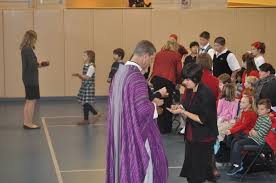
The Communion Procession, with the option of standing or kneeling to receive Communion, is one of the many ways we use our bodies to pray at Mass.
A Japanese foreign exchange student went to Sunday Mass with us and gave me most of the title of this piece. I asked her what it was like, and she responded, “We sit, we stand, we kneel; we sit, we stand, we kneel.” Catholic worship does tend more toward exercise than some others. Each of these postures, sitting, standing, kneeling, and walking, has its own meaning to lend to the Liturgy.
Whenever I read something about postures in liturgy, kneeling gets its fair share of commentary, especially kneeling at the reception of Communion. The writer beautifully sets out the meaningfulness of kneeling. In this post I intend to make up for the neglect of some other postures—sitting, standing, and walking, while paying due attention to kneeling as well. All are important; each expresses its part of the meaning of the whole liturgy.
When it comes to Communion, I believe the current majority practice of standing to receive is a good fit for what is happening at this point. I don’t recall ever hearing that case made for standing. That is what I will attempt, inviting your response, especially if your current preference is inclining toward kneeling.
Sitting, Standing, Kneeling
Switching rather often among these three postures is a hallmark of Catholic Liturgies. We get some exercise that way, but seldom do we talk about what the postures mean. I’m convinced that even though we don’t think about it the postures do add in important ways to the meaning of Liturgy.
Consider sitting. It’s mostly, though not entirely, a passive posture. It’s a good time for receiving something like the Word of God in an Old Testament reading or a letter from the New Testament. It’s a good position for listening to the presider or deacon explain and apply the meaning of the Mass readings. Sitting is also a good posture for waiting. Waiting is the thing to do during the rite called the Preparation, when we get the altar and the gifts ready for the offering.
We sit for most of the readings, but we stand for the Gospel. What gives here? Isn’t this also something we receive in a mostly, again not entirely, passive mode? Well, no. The Gospel is different. You can tell by the way we honor it, perhaps with a special Book of the Gospels. We carry it in procession, sometimes with incense. The Gospel is the Word that has made us who we are. We are Gospel people. At this part of the Liturgy of the Word, we don’t just receive the good news; we are this good news and have been since our Baptism. No hesitating or pretending we aren’t what God made us to be. No trying like Moses to get out of God’s call. We absolutely have to stand as we are able. We stand up to be this Gospel.
Standing is the posture in which we are ready to throw ourselves into a project. We are ready to move. Liturgy means “work of the people,” and standing is a posture for working. Most of the assembly’s short responses are sung or spoken while standing. We give the gesture of peace, an important work, standing.
Kneeling, we hear often, is a posture for reverence and awe in the presence of God’s majesty. I’d like to add another note that I think is very appropriate for Liturgy. Kneeling is what a person did in olden days when devoting oneself to the service of the king. You would kneel to hear the words “I hereby dub thee knight”; and you’d be officially enrolled into the king’s service. That aura of devotion to service, I hope, still lingers in the back of our minds when we kneel at various parts of the Liturgy. It is part of the meaning of kneeling for me.
The Communion Rite
That last point could almost make the case for kneeling during reception of Communion. If it helps anyone to move in that direction, I’m happy. Kneeling is a beautiful symbol and I don’t want to speak against it. But I do want to continue where I left off when I spoke about the meaning of standing. I want to add the beauty and meaningfulness of the Communion procession. In short, walking and standing are beautiful symbols and, I think, just right for Communion.
The Liturgy is, once again, the work of the people. It is not just refueling station for real work of being God’s people after Mass is over. It is that, of course, refueling, re-energizing, recommitting us. We know how often we tire and slide backwards in doing God’s work. But first and foremost the Liturgy is God’s work right now, at that work’s highest point. Liturgy reconciles humanity with God and people with each other in Christ. The Communion Rite is the very peak of that summit.
Think of all the work that is done in the parts of that rite leading up to Communion. We hallow God’s name in the first part of the Lord’s Prayer. “Hallowed be thy name” echoes the offering of glory and honor to the Father, which climaxed the Eucharistic Prayer. Having done that with and through and in Jesus, we are better able to abandon the glory that we habitually seek for ourselves. Our favorite fictions that so effectively divide us one from another–we let go of them. We offer forgiveness in hope that our trespasses are also forgiven, as Jesus taught us to pray.
That mutual reconciliation continues in the Sign of Peace. The Lamb of God combines our appeal for mercy and peace with one of the earliest signs of the Eucharistic community, the Breaking of the Bread. Though many, we are one loaf. Then follows our confession of both our unworthiness and our hope for healing. Finally we rise and join together in the Communion Procession.
The Communion Procession
I review all these symbols to emphasize that they are not just symbols but actual work. These signs are now putting into effect what they signify. A lot has been said about reverence during the Communion Procession, but not much about the fact that it is a procession, something that we actively do. It’s not just a preparation for something we will do later. It’s not just getting something. We walk in a procession—actually there are a number of processions during Liturgy. It’s work that we do together while singing a hymn.
During the Communion procession each of us receives, kneeling or standing, the Body and Blood of our Lord and Savior. Least of all here should we imagine that we are merely passive. This is a huge undertaking, throwing open the borders of self to a Body that includes all those around us. Those people would likely include some with whom we have disagreements that haven’t been resolved yet.
Some years back the Church decided to end the practice of letting the people receive Communion before the priest. I think that’s right. Communion is a leap of faith into unknown territory. Sometimes I imagine it’s the Catholic version of the TV evangelist’s Altar Call. We can do it only by grace and in Christ. It’s hardly fitting, certainly not polite, for the priest, our leader, to say, “You jump first. I’m right behind you.”
Communion is many things. It’s love, joy, peace, renewal. It’s also hard work and a bit frightening. That’s why I think standing, with empty hands bravely held out, is a very appropriate posture when we arrive at the goal of this procession.
Sitting again
After the Communion Procession and any extra hosts are in the Tabernacle, we sit. You can almost hear, “Ahh, we get to relax finally.” Is there a deeper meaning to sitting at this point than that? Actually, I suggest that is the deep meaning.
I’m thinking about times when I’ve engaged in a difficult project, usually with a partner or a small group. The work is finished. It’s a time to relax and just honor the work that has been done. We praise the finished project, maybe with a drink and a snack. Thank God, it’s over! But also, Thank God, we did it! We accomplished something needed and beautiful in its way. These words may not occur, but the feeling is there.
After Communion we sit. What are we doing during this time? We say a prayer of thanks for the gift of the closest union with Jesus we will ever have in this life. But I’m thinking that at this time a big project is finished. It’s like some of those other times when you sat back and honored a good piece of work. In this case it’s a work that Jesus has done in and with this whole worshiping assembly. That pleasant, perhaps wordless “Ahh” feeling seems exactly right for this moment.
Staying till the end
Before Vatican II I learned a rule about the minimum requirements for fulfilling the Sunday Mass obligation. You had to be present from the Presentation of the Gifts (misnamed the Offertory) until the priest’s communion. It was, I think, an unfortunate teaching, and rightly forgotten for the most part. The Liturgy of the Word is not just a lesson which, if we miss it, we can make up for later on. It’s a real presence of Christ. And, on the other end, if there’s a reason you need to leave church early, I don’t think you need a rule to tell you it’s OK.
Today I don’t see people leaving after the priest’s Communion. A few do leave after their personal Communion. Are these folks still remembering that old rule? Do they think Communion is something to get. Once they have it, they’re set to go, like shoppers at the grocery store? I wish they could see what they’re missing.
The joy of Communion isn’t just, or even mainly, in getting. It’s the privilege of participating in meaningful work with others in the Lord. It includes relishing and giving thanks for that finished work for a short space. And it includes one last act, for which we stand, appropriately. We take on the commission to continue God’s work in the world. “Thanks be to God.”
Previous Post

August 15, 2018
The Twelve Apostles, Start of a Community of Resistance
Next Post
August 20, 2018 Beelzebul -- Who or What, Exactly, is in Service to this Demon?
Browse Our Archives
Select a Category Advent Christmas Amazon Synod Angels Being Consumed Bible Catholic Modern Creed Ecology Economics Elizabeth Johnson Eucharist Fragments and Filaments Gender and Sex Gospel of Mark Herzog Historical Jesus Liturgy Luke Opening Scriptures on Way to Emmaus Ordinary radicals Parables Pro-Life Reincarnation Rosary Sacraments science Social Justice Souls Stories of Jesus The Creed Torture and Eucharist Tracy Uncategorized War and Peace
Select a Month October 2026 June 2025 April 2025 March 2025 February 2025 January 2025 November 2024 July 2024 March 2024 December 2023 October 2023 September 2023 August 2023 May 2023 April 2023 March 2023 February 2023 January 2023 December 2022 November 2022 October 2022 September 2022 August 2022 July 2022 June 2022 April 2022 March 2022 February 2022 January 2022 December 2021 November 2021 October 2021 August 2021 July 2021 June 2021 April 2021 March 2021 February 2021 December 2020 November 2020 October 2020 August 2020 July 2020 June 2020 May 2020 April 2020 March 2020 February 2020 January 2020 December 2019 November 2019 October 2019 September 2019 August 2019 July 2019 June 2019 May 2019 April 2019 March 2019 February 2019 January 2019 December 2018 November 2018 October 2018 September 2018 August 2018 July 2018 June 2018 May 2018
Follow Us!
TAKE THE
Religious Wisdom Quiz
Who was Hezekiah's prophet counselor?
Select your answer to see how you score.
Jeremiah Nathan Ezekiel Isaiah
Related posts from Lost in a One-Acre Wood

“Drink the Cup” – Liturgy Teaches Us Eucharistic...

Holy Thursday Theology and the Scientific Quest for...

Kneeling Through the Communion Rite: Now I Get...
Ministries in the Church, Momentum for Change, Again
TRENDING AT PATHEOS Catholic

The Parable Of The Sower And The Word...
One of Christ’s most famous parables is that of the sower who...

Rejecting Doom: Christian Hope And Human Action
Christianity is a religion of hope. We are to have hope and...

Why I Choose the Eucharist Over the Sermon
Choose the Eucharist, Not the Sermon What are we supposed to get...

5 Design Elements Found in Spiritually Rooted Homes
Putting Spirituality Into Home Decor Our homes are more than our living...

Credo: A Story of God Told with the...
About 10 years ago, I began to imagine a personal "Credo" that...

The Anatomy of Divine Revelation in Catholic Thought
The claim that God has made Himself known to human beings is...
view all Catholic blogs
Ad-Free & Subscriber Log-In Subscription Support
- About Us
- 2026 Calendar
- Videos
- Podcasts
- Library of World Religions
- Faith In Media Tracker
- Advertise With Us
- Write for Us
- Privacy Policy
- Terms of Service
- Do Not Sell My Data
- Contact Us
- Radiant Digital
- Manage Newsletter Subscriptions
- Unsubscribe From Notifications
- Sitemap
Copyright 2008-2026, Patheos. All rights reserved.
Subscription Support Ad-Free & Subscriber Log-In
Follow Patheos