
BuddhistCatholicContemplativeEvangelicalGeneral ChristianHinduJewishLatter-day SaintMuslimNew VisionsProgressive Christian
Beliefs
- Buddhist
- Catholic
- Contemplative
- Evangelical
- General Christian
- Hindu
- Jewish
- Latter-day Saint
- More Voices
- Muslim
- New Visions
- Pagan
- Progressive Christian
Topics
- Religion News
- Food and Religion
- Sports and Religion
- Religious Art
- Religious Music and Entertainment
- Religious Events
- History and Religion
- Style and Religion
- Politics and Religion
- Women in Religion
- Recreation Outdoors and Religion
- Business Finance and Religion
- Careers Workplace and Religion
- Education and Religion
- Family Parenting and Religion
- Health Fitness and Religion
- Home and Religion
- Relationships and Religion
- Technology and Religion
- Travel and Religion
Columnists
- Buddhist Columnists
- Business Finance and Religion Columnists
- Careers Workplace and Religion Columnists
- Catholic Columnists
- Contemplative Columnists
- Education and Religion Columnists
- Evangelists Columnists
- Family Parenting and Religion Columnists
- General Christian Columnists
- Health Fitness and Religion Columnists
- Hindu Columnists
- History and Religion Columnists
- Home and Religion Columnists
- Jewish Columnists
- More Voices Columnists
- Latter Day Columnists
- Muslim Columnists
- New Visions Columnists
- Nonreligious Columnists
- Pagan Columnists
- Politics and Religion Columnists
- Progressive Columnists
- Recreation Outdoors and Religion Columnists
- Relationships and Religion Columnists
- Religion News Columnists
- Religious Art Columnists
- Religious Events Columnists
- Religious Music and Entertainment Columnists
- Sports and Religion Columnists
- Style and Religion Columnists
- Technology and Religion Columnists
- Travel and Religion Columnists
- Women in Religion Columnists
Resource Library
- 2026 Calendar
- Library of World Religions
- The 100 Most Holy Places on Earth
- Patheos Answers
- Podcasts
- Videos
- Faith Leaders Database
- Anglican Episcopalian
- Bahai
- Baptist
- Buddhism
- Christianity
- Confucianism
- Eastern Orthodoxy
- Hinduism
- Holiness and Pentecostal
- ISKCON
- Islam
- Judaism
- Lutheran
- Methodist
- The Church of Jesus Christ of Latter-day Saints
- New Age
- Paganism
- Presbytarian and Reformed
- Protestantism
- Religion Behind the Scenes
- Roman Catholic
- Scientology
- Shia Islam
- Sikhism
- Sufism
- Sunni Islam
- Taoism
- Zen
- See all religions
Research Tools
 Ad-Free & Subscriber Log-In Subscription Support
Ad-Free & Subscriber Log-In Subscription Support
Follow Patheos 

- Trending:
- Forgiveness
- |
- Marriage
- |
- Consciousness
- |
- Death Penalty
- |
- Election
- |
- Halloween

- Home
- Catholic
- Meals, Fasting, and Sabbath: Taking on the Pharisees
Meals, Fasting, and Sabbath: Taking on the Pharisees
Last updated on: August 25, 2018 at 1:25 pm by Jack Hartjes
Meals, Fasting, and Sabbath: Taking on the Pharisees 2018-08-25T13:25:27-06:00 Jack Hartjes
Patheos Explore the world's faith through different perspectives on religion and spirituality! Patheos has the views of the prevalent religions and spiritualities of the world.
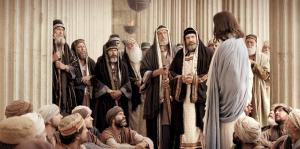
Jesus challenges the Pharisees on behalf of the poor.
Jesus challenges the three basic elements in the symbolic order that the Pharisees cherished. Perhaps they meant well, but in effect it was an oppressive symbolic order. Seventh in a series on “The Worldly Spirituality of Mark’s Gospel” with help from Ched Myers’ Binding the Strongman: A Political Reading of Mark’s Story of Jesus. The Introduction a Table of Contents are HERE.
Jesus’ ministry of healing and exorcism has led to conflict with the powers that be, the way things just are. Now the attention turns to the Pharisees and their three main concerns.
Pharisees observed a strict regimen and hoped to extend this regimen of salvation to as many people as possible. Their practices and the codes they attempted to enforce had three major concerns—meals, fasting, and the Sabbath. Jesus takes on all three of these.
Pharisees object to Jesus’ “laxity” around Meals
The Pharisaic code imposed all sorts of rules and restrictions on eating. One of these specified the classes of people that the upstanding sort shouldn’t eat with. These included the poor (sinners), foreigners, and those vile cooperators with the Roman occupiers, the tax collectors.
Jesus is walking along and spies Levi at the customs post, collecting a variety of taxes. Jesus says, “Follow me,” and like the others Jesus called, Levi quits his job and follows. Then comes a festive meal at Levi’s house, where “many tax collectors and sinners sat with Jesus and his disciples.” (Mark 2:15) Jesus seems to purposely mix with “sinners,” having established that everyone is equal before God. (See this post, where Jesus repudiates the debt code.) The Pharisees, object. In answer Jesus calls everyone (at least of his followers) sinners. “I did not come to call the righteous but sinners.” (Mark 2:17)
Typically one sees in this saying Jesus’ special concern for sinners, especially repentant ones. I detect something else, a sort of “in your face” attitude by Mark. He’s distinguishing his community from a group that claimed, even sincerely, to be righteous. These Pharisees tried to attract followers by stressing how much better they were than the common folk, the “sinners.” Mark seems to wear the label “sinner” as a badge of honor (or at least an accepted ID). I imagine it’s like the patriots in the U.S. Revolutionary War. They proudly called themselves “Yankees,” a term British soldiers first used in derision.
Jesus’ disciples don’t fast, yet
Another important part of the Pharisees’ identity and distinctiveness was fasting. Mark’s community may have been in competition with the Pharisees and also with a remnant who followed John the Baptist. The next episode contrasts Jesus’ disciples with those two groups. These latter fast, following a regimen considerably beyond what the Law strictly required. Jesus’ disciples don’t.
People came to him [Jesus] and objected, “Why do the disciples of John and the disciples of the Pharisees fast, but your disciples do not fast?” (Mark 2:18)
In answer, Jesus gives his longest teaching yet, full of apocalyptic imagery about an age ending and another beginning. The disciples can’t fast while the Bridegroom is here. But the Bridegroom will be taken away. “On that day” (an apocalyptic phrase) they will fast. Jesus follows with two images that “articulate the traditional apocalyptic dualism of ‘two ages.’” (Myers, p. 159) You don’t sew new cloth on an old cloak, and you don’t pour new wine into old wine skins. Jesus’ young discipleship movement must not conform to the old dominant symbolic order.
Jesus and the Sabbath.
The most important aspect of the Pharisaic program, says Myers, is Sabbath observance. (p. 160) In the next scene shows the Pharisees complaining again. Jesus’ disciples are making a way through a grain field and stripping some plants to eat the grain. It’s the Sabbath and Pharisees consider that a violation of the Sabbath work taboo.
What has always struck me about this incident is how trivial it seems. The disciples were hungry. Obviously they knew the day before that the Sabbath was coming. They could have prepared for it like everybody else and avoided breaking the Sabbath rule. Or on the Sabbath they could have gone hungry like decent Jews.
Myers says that for Jesus it wasn’t just this particular rule. Jesus hated the excessive amount of control that one privileged group in Israel exercised over the rest. In this case it’s in relation to the food economy, the production, the marketing, and the consuming.
Jesus is engaging here in an act of civil disobedience. I’m thinking he may have set his disciples to breaking the law deliberately. It would have been all the more noticeable and irksome to the Pharisees because the issue is so small and the disciples’ act so unnecessary.
Jesus answers the Pharisees by taking a page out of one of their’ favorite books. He appeals to what we call 1 Samuel 21:1-7:
“Have you not heard,” Jesus says, about the time when David and his soldiers were hungry. They had to leave Jerusalem in a hurry and couldn’t get adequate provisions. They came to a “house of God when Abiathar was high priest” and ate the holy bread that only priests were allowed to eat. (Mark 2:23-26)
Jesus isn’t telling the story exactly correctly, and he gets the name of the priest in that house of God wrong. But the point is that he’s making a daring, apparently absurd, comparison. His disciples walking through a grain field are like David’s men in a desperate military campaign. That’s exactly the way Jesus thinks of his whole mission. Jesus is “going on the offensive,” Myers says. (p. 161) He takes on the oppression that he finds everywhere, with decisive, non-violent, political action on the side of the poor.
Jesus concludes with the famous line, “The Sabbath was made for man, not man for the Sabbath. That is why the Son of Man is lord even of the Sabbath.” (2:27-28) This line, like an earlier one, especially the last part, must have been an aside to Mark’s readers rather than part of the event recorded. It’s hard to imagine Jesus claiming to be lord quite yet. It does put the reader on notice that very high stakes are involved in Jesus’ showdown with the authorities. Jesus intentionally transgresses, with the intent of demolishing, the boundaries they have set up between people.
Previous Post

August 10, 2018
Mark Braverman and others Urge Justice for Palestinians
Next Post
August 15, 2018 The Twelve Apostles, Start of a Community of Resistance
Browse Our Archives
Select a Category Advent Christmas Amazon Synod Angels Being Consumed Bible Catholic Modern Creed Ecology Economics Elizabeth Johnson Eucharist Fragments and Filaments Gender and Sex Gospel of Mark Herzog Historical Jesus Liturgy Luke Opening Scriptures on Way to Emmaus Ordinary radicals Parables Pro-Life Reincarnation Rosary Sacraments science Social Justice Souls Stories of Jesus The Creed Torture and Eucharist Tracy Uncategorized War and Peace
Select a Month October 2026 June 2025 April 2025 March 2025 February 2025 January 2025 November 2024 July 2024 March 2024 December 2023 October 2023 September 2023 August 2023 May 2023 April 2023 March 2023 February 2023 January 2023 December 2022 November 2022 October 2022 September 2022 August 2022 July 2022 June 2022 April 2022 March 2022 February 2022 January 2022 December 2021 November 2021 October 2021 August 2021 July 2021 June 2021 April 2021 March 2021 February 2021 December 2020 November 2020 October 2020 August 2020 July 2020 June 2020 May 2020 April 2020 March 2020 February 2020 January 2020 December 2019 November 2019 October 2019 September 2019 August 2019 July 2019 June 2019 May 2019 April 2019 March 2019 February 2019 January 2019 December 2018 November 2018 October 2018 September 2018 August 2018 July 2018 June 2018 May 2018
Follow Us!
TAKE THE
Religious Wisdom Quiz
What does Paul say happens when we are baptized into Christ Jesus?
Select your answer to see how you score.
We are baptized into his death We are saved We become children of God We receive the Holy Spirit
Related posts from Lost in a One-Acre Wood
Atonement and Some Odd Hypothetical Questions about Disciples

Civil Disobedience and the Puzzle that was Thursday:...

The Sacrament of Touch: We Touch Jesus’ Body...

Apocalypse: A Plague (or is it Stars Falling)...
TRENDING AT PATHEOS Catholic

The Parable Of The Sower And The Word...
One of Christ’s most famous parables is that of the sower who...

Rejecting Doom: Christian Hope And Human Action
Christianity is a religion of hope. We are to have hope and...

Why I Choose the Eucharist Over the Sermon
Choose the Eucharist, Not the Sermon What are we supposed to get...

5 Design Elements Found in Spiritually Rooted Homes
Putting Spirituality Into Home Decor Our homes are more than our living...

Credo: A Story of God Told with the...
About 10 years ago, I began to imagine a personal "Credo" that...

The Anatomy of Divine Revelation in Catholic Thought
The claim that God has made Himself known to human beings is...
view all Catholic blogs
Ad-Free & Subscriber Log-In Subscription Support
- About Us
- 2026 Calendar
- Videos
- Podcasts
- Library of World Religions
- Faith In Media Tracker
- Advertise With Us
- Write for Us
- Privacy Policy
- Terms of Service
- Do Not Sell My Data
- Contact Us
- Radiant Digital
- Manage Newsletter Subscriptions
- Unsubscribe From Notifications
- Sitemap
Copyright 2008-2026, Patheos. All rights reserved.
Subscription Support Ad-Free & Subscriber Log-In
Follow Patheos