
BuddhistCatholicContemplativeEvangelicalGeneral ChristianHinduJewishLatter-day SaintMuslimNew VisionsProgressive Christian
Beliefs
- Buddhist
- Catholic
- Contemplative
- Evangelical
- General Christian
- Hindu
- Jewish
- Latter-day Saint
- More Voices
- Muslim
- New Visions
- Pagan
- Progressive Christian
Topics
- Religion News
- Food and Religion
- Sports and Religion
- Religious Art
- Religious Music and Entertainment
- Religious Events
- History and Religion
- Style and Religion
- Politics and Religion
- Women in Religion
- Recreation Outdoors and Religion
- Business Finance and Religion
- Careers Workplace and Religion
- Education and Religion
- Family Parenting and Religion
- Health Fitness and Religion
- Home and Religion
- Relationships and Religion
- Technology and Religion
- Travel and Religion
Columnists
- Buddhist Columnists
- Business Finance and Religion Columnists
- Careers Workplace and Religion Columnists
- Catholic Columnists
- Contemplative Columnists
- Education and Religion Columnists
- Evangelists Columnists
- Family Parenting and Religion Columnists
- General Christian Columnists
- Health Fitness and Religion Columnists
- Hindu Columnists
- History and Religion Columnists
- Home and Religion Columnists
- Jewish Columnists
- More Voices Columnists
- Latter Day Columnists
- Muslim Columnists
- New Visions Columnists
- Nonreligious Columnists
- Pagan Columnists
- Politics and Religion Columnists
- Progressive Columnists
- Recreation Outdoors and Religion Columnists
- Relationships and Religion Columnists
- Religion News Columnists
- Religious Art Columnists
- Religious Events Columnists
- Religious Music and Entertainment Columnists
- Sports and Religion Columnists
- Style and Religion Columnists
- Technology and Religion Columnists
- Travel and Religion Columnists
- Women in Religion Columnists
Resource Library
- 2026 Calendar
- Library of World Religions
- The 100 Most Holy Places on Earth
- Patheos Answers
- Podcasts
- Videos
- Faith Leaders Database
- Anglican Episcopalian
- Bahai
- Baptist
- Buddhism
- Christianity
- Confucianism
- Eastern Orthodoxy
- Hinduism
- Holiness and Pentecostal
- ISKCON
- Islam
- Judaism
- Lutheran
- Methodist
- The Church of Jesus Christ of Latter-day Saints
- New Age
- Paganism
- Presbytarian and Reformed
- Protestantism
- Religion Behind the Scenes
- Roman Catholic
- Scientology
- Shia Islam
- Sikhism
- Sufism
- Sunni Islam
- Taoism
- Zen
- See all religions
Research Tools
 Ad-Free & Subscriber Log-In Subscription Support
Ad-Free & Subscriber Log-In Subscription Support
Follow Patheos 

- Trending:
- Forgiveness
- |
- Marriage
- |
- Consciousness
- |
- Death Penalty
- |
- Election
- |
- Halloween

- Home
- Catholic
- Chosen People, Part Two: Paul’s Vision, a New Tribe?
Chosen People, Part Two: Paul’s Vision, a New Tribe?
Last updated on: February 20, 2020 at 6:34 am by Jack Hartjes
Chosen People, Part Two: Paul’s Vision, a New Tribe? 2020-02-20T06:34:56-06:00 Jack Hartjes
Patheos Explore the world's faith through different perspectives on religion and spirituality! Patheos has the views of the prevalent religions and spiritualities of the world.
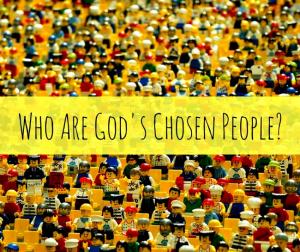
St. Paul was the great apostle to the Gentiles. He didn’t require circumcision of his converts. That’s something I can easily appreciate, but I found I needed more work to understand it. What was Paul’s vision of God’s chosen people. Episode 16-2 of the Rowing with Michael Series: A journey through the Jewish/Christian Scriptures in Verse and Commentary. Introduction and Contents for this series HERE.
The Jews knew something about why God chose them. It’s in God’s promise to Abraham:
In your seed all the communities of earth shall find blessing. (Genesis 12:2-3)
But they didn’t believe that should be happening yet—not while Judah was subject to a foreign power. They expected the nations to be blessed through them, and they meant through a restored and renewed and finally faithful Israel, like dead bones come to life in Ezekiel’s vision. They had visions of foreigners streaming into a mighty and prosperous Jerusalem to worship in their temple.
Part One of this Chosen People episode saw Jonah upset with God. He had committed himself to this vision, and God apparently hadn’t. God could bless the Ninevites without their having to come anywhere near Jerusalem.
Paul, Peter, and eating with Gentiles
Here’s the same issue as the early followers of Jesus experienced it:
In the years after Jesus’ death a group grew within Judaism with some new beliefs. There was nothing unusual about that, but this one was quite a bit more open to non-Jews than any Israel had seen before. There were people like Paul going out and actively encouraging Gentiles to join the new community. Soon the very identity of the group was at stake. Should the foreigners have to accept the provisions of the Jewish law, the Torah, especially the law about circumcision?
Paul had been preaching a non-circumcision gospel—Gentiles could be followers of Jesus without becoming Jews. He was working without the knowledge or approval of the “pillars” of the Church in Jerusalem, mainly Peter and James. So fourteen years or so after he started this ministry Paul and his Gentile coworker Barnabas went to Jerusalem to explain themselves. The “pillars” agreed to let Paul and Barnabas carry on with their message to the Gentiles while they ministered to the Jews.
Peter, who had given “the right hand of fellowship” to Paul and Barnabas at this meeting, some time later found himself enjoying “table fellowship,” with Paul’s Gentile converts in Galatia. The significance of mealtime goes way back in Jewish history and in memories of Jesus’ life and death. People from James, the head of the church in Jerusalem, came with some message that Peter perhaps misunderstood. He had been having second thoughts about this new gospel of Paul’s anyway. Now suddenly he withdrew from the table fellowship with the Gentiles. In a further shock to Paul, a wavering Barnabas followed Peter. (It’s not known whether Barnabas went through with circumcision.)
Paul laid into Peter on the spot, calling him a hypocrite; but the issue wasn’t settled in the minds of the Galatians yet. After Paul left Galatia others from Jerusalem continued to insist on circumcision and following the whole Jewish law. The Christian Bible preseerves Paul’s answer as the “Letter to the Galatians.” You can tell Paul gets pretty worked up about this. Eventually Paul’s view won out.
The real issue about chosen people
As a Christian learning about this argument 2000 years later, I always knew which side I was rooting for. But that doesn’t mean I knew what the fight was all about. I assumed that Paul wanted to make it easier for more people to join the new church. Victor Stendahl, in Paul Among Jews and Gentiles, helped me see better. Paul was concerned about a very different problem. Among the religiously excitable Greeks and Romans, many were enjoying the strange oriental feel of this new religion with exotic new practices. The harder the holier, they thought.
Paul warned his Galatian converts that the Jewish law would be a curse for them. It seems a strange statement coming from a strict observer of that law, which Paul was. But Paul knew well, from the example of some of the Pharisees and, especially, the wealthier Sadducees, how the law could separate people from each other, the “holier than thou’s” from the rest. He also saw what he had been doing in his own misguided zeal for the law, namely, persecuting the followers of Jesus.
Paul’s lesson was that God wants to be the God of all people, but not by making them all the same. Jews always believed the first part. The story of the blessing of Abraham shows God’s intention to bless all peoples. But they didn’t understand the second part. When Peter wanted to force the Jewish law on the gentiles, he was not just limiting who could join the Jesus movement. In Paul’s view he was limiting God’s reign. Peter wanted to enlarge God’s tribe but still keep it a tribe.
Curiously, God did choose a tribe of Jews. And then Paul says to the Galatians, “Don’t follow the Jewish law, at least not the part that divides people.” Christians have said that they are the new Israel, the new chosen ones. That can’t mean we have a new and better law, a new way of dividing people. Only lately have we realized—officially in Catholicism since the Second Vatican Council—that God’s covenant with the Jewish people, our older brothers and sisters, is still active.
I think it’s fair to say that both Jews and Christians are God’s chosen people. I think the Catholic Church’s claim to be the “one true church” is best understood as another way of saying “chosen.” It certainly doesn’t mean we have all the truth—we’re still learning. It doesn’t mean having an inside track on the race to heaven.
God has a reason for coming in a special way to the rest of the world through a chosen group, Catholics or Christians or Jews. That reason, or my attempts to glimpse it anyway, is the subject of the next post in this reflection on Jonah, Ezekiel, Paul, and chosen people.
Previous Post

July 16, 2018
Jonah Learns a Lesson: Chosen People, Part One
Next Post
July 20, 2018 Liberation and the Bible: Chosen People, Part Three
Browse Our Archives
Select a Category Advent Christmas Amazon Synod Angels Being Consumed Bible Catholic Modern Creed Ecology Economics Elizabeth Johnson Eucharist Fragments and Filaments Gender and Sex Gospel of Mark Herzog Historical Jesus Liturgy Luke Opening Scriptures on Way to Emmaus Ordinary radicals Parables Pro-Life Reincarnation Rosary Sacraments science Social Justice Souls Stories of Jesus The Creed Torture and Eucharist Tracy Uncategorized War and Peace
Select a Month October 2026 June 2025 April 2025 March 2025 February 2025 January 2025 November 2024 July 2024 March 2024 December 2023 October 2023 September 2023 August 2023 May 2023 April 2023 March 2023 February 2023 January 2023 December 2022 November 2022 October 2022 September 2022 August 2022 July 2022 June 2022 April 2022 March 2022 February 2022 January 2022 December 2021 November 2021 October 2021 August 2021 July 2021 June 2021 April 2021 March 2021 February 2021 December 2020 November 2020 October 2020 August 2020 July 2020 June 2020 May 2020 April 2020 March 2020 February 2020 January 2020 December 2019 November 2019 October 2019 September 2019 August 2019 July 2019 June 2019 May 2019 April 2019 March 2019 February 2019 January 2019 December 2018 November 2018 October 2018 September 2018 August 2018 July 2018 June 2018 May 2018
Follow Us!
TAKE THE
Religious Wisdom Quiz
Which prophet was told to eat a scroll in a vision?
Select your answer to see how you score.
Ezekiel Obadiah Joel Daniel
Related posts from Lost in a One-Acre Wood

Credo: A Story of God Told with the...

Richard A. Horsley Sees Jesus in the Context...
“Jesus Wept.” Don’t Take the Humanity out of...

Holy Thursday Theology and the Scientific Quest for...
TRENDING AT PATHEOS Catholic

The Parable Of The Sower And The Word...
One of Christ’s most famous parables is that of the sower who...

Rejecting Doom: Christian Hope And Human Action
Christianity is a religion of hope. We are to have hope and...

Why I Choose the Eucharist Over the Sermon
Choose the Eucharist, Not the Sermon What are we supposed to get...

5 Design Elements Found in Spiritually Rooted Homes
Putting Spirituality Into Home Decor Our homes are more than our living...

Credo: A Story of God Told with the...
About 10 years ago, I began to imagine a personal "Credo" that...

The Anatomy of Divine Revelation in Catholic Thought
The claim that God has made Himself known to human beings is...
view all Catholic blogs
Ad-Free & Subscriber Log-In Subscription Support
- About Us
- 2026 Calendar
- Videos
- Podcasts
- Library of World Religions
- Faith In Media Tracker
- Advertise With Us
- Write for Us
- Privacy Policy
- Terms of Service
- Do Not Sell My Data
- Contact Us
- Radiant Digital
- Manage Newsletter Subscriptions
- Unsubscribe From Notifications
- Sitemap
Copyright 2008-2026, Patheos. All rights reserved.
Subscription Support Ad-Free & Subscriber Log-In
Follow Patheos