
BuddhistCatholicContemplativeEvangelicalGeneral ChristianHinduJewishLatter-day SaintMuslimNew VisionsProgressive Christian
Beliefs
- Buddhist
- Catholic
- Contemplative
- Evangelical
- General Christian
- Hindu
- Jewish
- Latter-day Saint
- More Voices
- Muslim
- New Visions
- Pagan
- Progressive Christian
Topics
- Religion News
- Food and Religion
- Sports and Religion
- Religious Art
- Religious Music and Entertainment
- Religious Events
- History and Religion
- Style and Religion
- Politics and Religion
- Women in Religion
- Recreation Outdoors and Religion
- Business Finance and Religion
- Careers Workplace and Religion
- Education and Religion
- Family Parenting and Religion
- Health Fitness and Religion
- Home and Religion
- Relationships and Religion
- Technology and Religion
- Travel and Religion
Columnists
- Buddhist Columnists
- Business Finance and Religion Columnists
- Careers Workplace and Religion Columnists
- Catholic Columnists
- Contemplative Columnists
- Education and Religion Columnists
- Evangelists Columnists
- Family Parenting and Religion Columnists
- General Christian Columnists
- Health Fitness and Religion Columnists
- Hindu Columnists
- History and Religion Columnists
- Home and Religion Columnists
- Jewish Columnists
- More Voices Columnists
- Latter Day Columnists
- Muslim Columnists
- New Visions Columnists
- Nonreligious Columnists
- Pagan Columnists
- Politics and Religion Columnists
- Progressive Columnists
- Recreation Outdoors and Religion Columnists
- Relationships and Religion Columnists
- Religion News Columnists
- Religious Art Columnists
- Religious Events Columnists
- Religious Music and Entertainment Columnists
- Sports and Religion Columnists
- Style and Religion Columnists
- Technology and Religion Columnists
- Travel and Religion Columnists
- Women in Religion Columnists
Resource Library
- 2026 Calendar
- Library of World Religions
- The 100 Most Holy Places on Earth
- Patheos Answers
- Podcasts
- Videos
- Faith Leaders Database
- Anglican Episcopalian
- Bahai
- Baptist
- Buddhism
- Christianity
- Confucianism
- Eastern Orthodoxy
- Hinduism
- Holiness and Pentecostal
- ISKCON
- Islam
- Judaism
- Lutheran
- Methodist
- The Church of Jesus Christ of Latter-day Saints
- New Age
- Paganism
- Presbytarian and Reformed
- Protestantism
- Religion Behind the Scenes
- Roman Catholic
- Scientology
- Shia Islam
- Sikhism
- Sufism
- Sunni Islam
- Taoism
- Zen
- See all religions
Research Tools
 Ad-Free & Subscriber Log-In Subscription Support
Ad-Free & Subscriber Log-In Subscription Support
Follow Patheos 

- Trending:
- Forgiveness
- |
- Marriage
- |
- Consciousness
- |
- Death Penalty
- |
- Election
- |
- Halloween

- Home
- Catholic
- The Problem of Suffering, Part 2: An Impatient Job
The Problem of Suffering, Part 2: An Impatient Job
Last updated on: February 20, 2020 at 8:01 am by Jack Hartjes
The Problem of Suffering, Part 2: An Impatient Job 2020-02-20T08:01:27-06:00 Jack Hartjes
Patheos Explore the world's faith through different perspectives on religion and spirituality! Patheos has the views of the prevalent religions and spiritualities of the world.
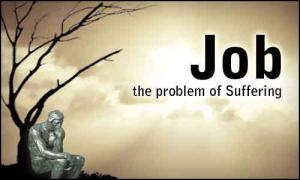 A creative editor changed an old story about a character named Job. This editor challenged, through Job’s new voice , the Jews’ traditional explanation of suffering. No new explanation, only courage and hope in the face of suffering, is given. Episode 15-2 of the Rowing with Michael Series: A journey through the Jewish/Christian Scriptures in Verse and Commentary. Part One of this Episode is here. Introduction and Contents for this series HERE.
Michael, row the boat ashore. Alleluia….
Job had money and life was good. Alleluia.
Surely he was living the way he should. Alleluia.
He lost it all and they said he’d sinned. Alleluia.
But the answer is blowin’ in the wind. Alleluia.
Jews at one time (and, I think a lot of people today) explained suffering as God’s punishment for sin. The Babylonian Captivity in the middle years of the 6th century BCE was a pivotal moment of Jewish suffering and Jewish thinking about the problem of suffering. Cyrus, the Persian king who conquered the Babylonians, allowed the Jews to return to their homeland. Many Jews stayed behind, and soon the Jews were suffering again. Cyrus’ successors on the Persian throne were not kindly disposed toward foreigners who remained. Would this old explanation satisfy their needs?
A poetic genius among the Jews in Babylon didn’t think so. He found and changed an old story about a man named Job. (Reference: “The Book of Job and the Origins of Judaism,” Biblical Theology Bulletin) In the old story Job bears his suffering patiently until God, satisfied that he had atoned for his sins, shows mercy. Already this story was a change from traditional belief. Israelites had long found consolation in the hope that the nation would live through hard times. They would atone for their sin, and experience God’s favor once again. Job’s story, first edition, located relief from suffering in individual rather than in the nation.
The Bible’s new insight
Now a new author makes several additions to the old story. There are dialogues between Job and his friends, who came, they say, to comfort him in his suffering. “Comfort” consists in insisting that Job must have sinned to deserve all this punishment. The solution is for Job to admit it and repent like the Job of the first story. Then God will once more show mercy.
In the new story, Job suffers like the original Job. But, unlike that original, he rebels against his lot. He rejects all the rationalizations of the “friends” who come to comfort him. They assume he must be guilty of something or he wouldn’t be suffering like this. He knows he doesn’t deserve it. There’s no justice to it, nothing good at all in this suffering. He even challenges God to give him a hearing. This Job is anything but patient. God, finally rising to the challenge, speaks out of a whirlwind and gives no answer at all. Just as the song says, the answer is “blowin’ in the wind.”
This story tells Jewish people not to put the burden of solving the problem of suffering on God. Suffering doesn’t just go away when we do all that we imagine God wants. It’s something to deal with as best we can. Job eventually recovers from the disasters that claimed him for a while. That part belonged to the original story, and the new author simply repeats it at the end. In the new story, though, it’s not patience or contrition that wins the victory. It’s Job’s dogged determination not to give in, not to deny what he absolutely knows: this suffering is wrong. God tells Job’s friends, “You have not spoken rightly about me as has my servant Job.”
Where the Bible is not strong
Once in a while the Bible comes up with a theory or hypothesis to explain some puzzling phenomenon, but that’s not the Bible’s strong suit. The theory that suffering is punishment from God is a case in point. The final author of Job wants us to know just how inadequate that theory is. He would have had some pretty scathing retorts to today’s Christians who explain natural catastrophes or unnatural horrors that people impose on each other as God’s punishment for some favorite “sin”—homosexuality, taking God out of schools, or whatever.
All through the Book of Job the reader is expecting to find some new theory to replace the old, but no such theory is provided. I think that’s exactly right. Evil doesn’t deserve an explanation. When you hear some supposedly wise saying about suffering, stop and think if it’s just making evil things out to be not really so bad after all. Here are some examples:
- Evil is just the other side of the coin.
- Dark times are the shadow that makes the light all the brighter.
- Suffering is the necessary contrast. How could we know how good we have it without some suffering to compare?
- Suffering is an illusion and so is the whole material world. Enlightenment will put us above all that.
- Suffering stirs up the virtue of compassion and the fighting spirit that leads to great accomplishments.
- It’s only temporary and it just gives us a “higher” place in heaven.
Job actually has something to say about that last theory. He doesn’t believe it. (Job, Chapter 14) Though belief in an afterlife was common among surrounding peoples, it didn’t gain acceptance among Jews until very late. The afterlife appears in Jewish writing only the one or two centuries before Jesus’ time. Even then not all believed it.
Why does God allow suffering, especially suffering of the innocent? I don’t think the Bible gives a definitive answer. I find encouragement in the Bible as a whole because of its realism in the face of the problem, the courage of the people on its pages who resist suffering, and the honesty of the writers who tried to make sense of it without excusing themselves and without blaming God. And they didn’t fall for the pessimistic philosophy that all we can look forward to is an unending cycle of good and evil, peace and war, prosperity and want, suffering and relief. Well, most of the time they didn’t fall for it, but that sentiment also is found in the Bible.
Previous Post

July 11, 2018
Job and the Problem of Suffering, Part One: The Bible Tries Explaining
Next Post
July 13, 2018 Eye Contact for Lectors and the Assembly: Two Lessons Never Taught
Browse Our Archives
Select a Category Advent Christmas Amazon Synod Angels Being Consumed Bible Catholic Modern Creed Ecology Economics Elizabeth Johnson Eucharist Fragments and Filaments Gender and Sex Gospel of Mark Herzog Historical Jesus Liturgy Luke Opening Scriptures on Way to Emmaus Ordinary radicals Parables Pro-Life Reincarnation Rosary Sacraments science Social Justice Souls Stories of Jesus The Creed Torture and Eucharist Tracy Uncategorized War and Peace
Select a Month October 2026 June 2025 April 2025 March 2025 February 2025 January 2025 November 2024 July 2024 March 2024 December 2023 October 2023 September 2023 August 2023 May 2023 April 2023 March 2023 February 2023 January 2023 December 2022 November 2022 October 2022 September 2022 August 2022 July 2022 June 2022 April 2022 March 2022 February 2022 January 2022 December 2021 November 2021 October 2021 August 2021 July 2021 June 2021 April 2021 March 2021 February 2021 December 2020 November 2020 October 2020 August 2020 July 2020 June 2020 May 2020 April 2020 March 2020 February 2020 January 2020 December 2019 November 2019 October 2019 September 2019 August 2019 July 2019 June 2019 May 2019 April 2019 March 2019 February 2019 January 2019 December 2018 November 2018 October 2018 September 2018 August 2018 July 2018 June 2018 May 2018
Follow Us!
TAKE THE
Religious Wisdom Quiz
How many years between the exodus of the Children of Israel and construction of the temple?
Select your answer to see how you score.
480 years 400 years 450 years 500 years
Related posts from Lost in a One-Acre Wood

Credo: A Story of God Told with the...

Richard A. Horsley Sees Jesus in the Context...
“Jesus Wept.” Don’t Take the Humanity out of...

Holy Thursday Theology and the Scientific Quest for...
TRENDING AT PATHEOS Catholic

The Parable Of The Sower And The Word...
One of Christ’s most famous parables is that of the sower who...

Rejecting Doom: Christian Hope And Human Action
Christianity is a religion of hope. We are to have hope and...

Why I Choose the Eucharist Over the Sermon
Choose the Eucharist, Not the Sermon What are we supposed to get...

5 Design Elements Found in Spiritually Rooted Homes
Putting Spirituality Into Home Decor Our homes are more than our living...

Credo: A Story of God Told with the...
About 10 years ago, I began to imagine a personal "Credo" that...

The Anatomy of Divine Revelation in Catholic Thought
The claim that God has made Himself known to human beings is...
view all Catholic blogs
Ad-Free & Subscriber Log-In Subscription Support
- About Us
- 2026 Calendar
- Videos
- Podcasts
- Library of World Religions
- Faith In Media Tracker
- Advertise With Us
- Write for Us
- Privacy Policy
- Terms of Service
- Do Not Sell My Data
- Contact Us
- Radiant Digital
- Manage Newsletter Subscriptions
- Unsubscribe From Notifications
- Sitemap
Copyright 2008-2026, Patheos. All rights reserved.
Subscription Support Ad-Free & Subscriber Log-In
Follow Patheos