
BuddhistCatholicContemplativeEvangelicalGeneral ChristianHinduJewishLatter-day SaintMuslimNew VisionsProgressive Christian
Beliefs
- Buddhist
- Catholic
- Contemplative
- Evangelical
- General Christian
- Hindu
- Jewish
- Latter-day Saint
- More Voices
- Muslim
- New Visions
- Pagan
- Progressive Christian
Topics
- Religion News
- Food and Religion
- Sports and Religion
- Religious Art
- Religious Music and Entertainment
- Religious Events
- History and Religion
- Style and Religion
- Politics and Religion
- Women in Religion
- Recreation Outdoors and Religion
- Business Finance and Religion
- Careers Workplace and Religion
- Education and Religion
- Family Parenting and Religion
- Health Fitness and Religion
- Home and Religion
- Relationships and Religion
- Technology and Religion
- Travel and Religion
Columnists
- Buddhist Columnists
- Business Finance and Religion Columnists
- Careers Workplace and Religion Columnists
- Catholic Columnists
- Contemplative Columnists
- Education and Religion Columnists
- Evangelists Columnists
- Family Parenting and Religion Columnists
- General Christian Columnists
- Health Fitness and Religion Columnists
- Hindu Columnists
- History and Religion Columnists
- Home and Religion Columnists
- Jewish Columnists
- More Voices Columnists
- Latter Day Columnists
- Muslim Columnists
- New Visions Columnists
- Nonreligious Columnists
- Pagan Columnists
- Politics and Religion Columnists
- Progressive Columnists
- Recreation Outdoors and Religion Columnists
- Relationships and Religion Columnists
- Religion News Columnists
- Religious Art Columnists
- Religious Events Columnists
- Religious Music and Entertainment Columnists
- Sports and Religion Columnists
- Style and Religion Columnists
- Technology and Religion Columnists
- Travel and Religion Columnists
- Women in Religion Columnists
Resource Library
- 2026 Calendar
- Library of World Religions
- The 100 Most Holy Places on Earth
- Patheos Answers
- Podcasts
- Videos
- Faith Leaders Database
- Anglican Episcopalian
- Bahai
- Baptist
- Buddhism
- Christianity
- Confucianism
- Eastern Orthodoxy
- Hinduism
- Holiness and Pentecostal
- ISKCON
- Islam
- Judaism
- Lutheran
- Methodist
- The Church of Jesus Christ of Latter-day Saints
- New Age
- Paganism
- Presbytarian and Reformed
- Protestantism
- Religion Behind the Scenes
- Roman Catholic
- Scientology
- Shia Islam
- Sikhism
- Sufism
- Sunni Islam
- Taoism
- Zen
- See all religions
Research Tools
 Ad-Free & Subscriber Log-In Subscription Support
Ad-Free & Subscriber Log-In Subscription Support
Follow Patheos 

- Trending:
- Forgiveness
- |
- Marriage
- |
- Consciousness
- |
- Death Penalty
- |
- Election
- |
- Halloween

- Home
- Catholic
- The Exodus Story and Israel’s Pre-history, Part 1
The Exodus Story and Israel’s Pre-history, Part 1
Last updated on: February 1, 2020 at 3:51 pm by Jack Hartjes
The Exodus Story and Israel’s Pre-history, Part 1 2020-02-01T15:51:34-06:00 Jack Hartjes
Patheos Explore the world's faith through different perspectives on religion and spirituality! Patheos has the views of the prevalent religions and spiritualities of the world.
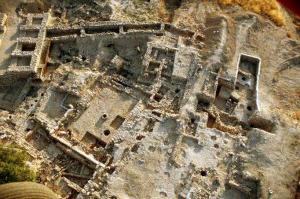
Hatzor excavated. City occupied by early Israelites.
How did the nation of Israel begin? Can we trust the Bible to tell us how it really happened? Was there an Exodus from Egypt? Did Moses exist? Did a million slaves wander for 40 years in the desert? Does it matter for Christians and Jews? This post and the next will dig into these controversial historical questions.
Episode 10-1 of the Rowing with Michael Series: A journey through the Jewish/Christian Scriptures in Verse and Commentary. Introduction and Contents for this series HERE.
Michael, row the boat ashore. Alleluia….
Another Pharaoh had a heart of stone, Alleluia.
Worked God’s people to the bone. Alleluia.
He should’ve listened to Moses’ plan. Alleluia.
Ten plagues later he’s a wiser man. Alleluia.
This is the time to think critically about the Bible and real history. The Bible writers didn’t know history as we do, but that doesn’t mean there’s no history at all in the Bible. It’s especially important to examine the Exodus story for the history that it might contain because for Jews that story is the center of the Bible. It’s the story that more than any other interprets who they are and who God is. Israel begins with the miraculous work of God, pulling a bunch of slaves out of Egypt amidst signs and wonders, forming them into a nation, and leading them to the Promised Land—the Exodus.
That’s the story. But what was the Exodus really? Did it even happen? Is there a way to find out?
Archaeology and history
Historians, anthropologists, and archaeologists have gotten involved in the quest alongside Bible scholars. Many of them have no connection to any biblical faith. And why shouldn’t non-believers be interested? It’s everybody’s history. But for believers in the line of Abraham understanding this particular history is important. Judaism and Christianity are “historical” faiths. They’re not just ideas about God and what’s expected of us or something philosophy can dream up. Buddhism would get along just fine if it turned out that Buddha never existed. But Judaism and Christianity depend on real history.
Christianity and Judaism proclaim God’s actions in this world. They do so with stories that have developed over more than a thousand years in a very human way in a culture very different from ours. This makes it hard to get at the events behind the stories, but that there are such actual historical events is an important part of these two unique faiths—at least when you come to such central parts of the story as the Exodus and, for Christians, the life Jesus.
Troubled times
The region east of the Mediterranean Sea in the late 1200s BCE, when the Exodus would have occurred, was ripe for something new. The 3,500 year old Bronze Age culture had been declining slowly since about 1500 and now was falling apart. Petty kings ruled small territories and fought with each other over land. The land was nominally part of the Egyptian empire, so the kings wrote letters to Pharaoh, complaining about each other and sending bribes in return for Pharaoh’s assistance. Help never came; Egypt itself was growing weaker. Those bribes meant only that the local peasants, already burdened with the weight of a bunch of elite, immoderately wealthy leaders and bureaucrats, had to pony up even more.
Soon the letters began speaking of rebels. They called them “Hapiru,” which sounds like it could be related to the word “Hebrew,” but we don’t know that. They were probably a lot like what we call highwaymen. “Sea Peoples” also were invading. Trade, which had been rather far-ranging and efficient was deteriorating. The Hapiru and the Sea Peoples were perhaps just nails in the coffin. A once-thriving Middle Bronze Age economy with even a vibrant trade sector fell apart. Once-powerful myths that supported an authoritarian, agrarian culture no longer seemed credible. A cultural and social vacuum had to be filled.
Israel as a country did not exist, but the people who would become the Israelites must have been around somewhere. The Bible tells the story of an invasion into a “Promised Land” by escaped slaves from Egypt—hundreds of thousands or even millions wandering in the desert, fighting battles, conquering kings and laying waste to cities on the way. Miraculous plagues, miracles of food and water in the desert, God speaking from a mountaintop, tablets of stone, divine punishment when the people fell into idolatry—these things are not to be found in any archaeological findings or historical records outside the Bible. But history can say something about what did happen. People found a way to go on, to form a new community with a new story. How they may have done that is the theme of the next post, Part 2 of this episode.
Image credit: The Jewish Magazine
Previous Post

June 15, 2018
A Renewal of Baptismal Promises in Horrible Times
Next Post
June 20, 2018 Exodus and History, Israel's and Ours
Browse Our Archives
Select a Category Advent Christmas Amazon Synod Angels Being Consumed Bible Catholic Modern Creed Ecology Economics Elizabeth Johnson Eucharist Fragments and Filaments Gender and Sex Gospel of Mark Herzog Historical Jesus Liturgy Luke Opening Scriptures on Way to Emmaus Ordinary radicals Parables Pro-Life Reincarnation Rosary Sacraments science Social Justice Souls Stories of Jesus The Creed Torture and Eucharist Tracy Uncategorized War and Peace
Select a Month October 2026 June 2025 April 2025 March 2025 February 2025 January 2025 November 2024 July 2024 March 2024 December 2023 October 2023 September 2023 August 2023 May 2023 April 2023 March 2023 February 2023 January 2023 December 2022 November 2022 October 2022 September 2022 August 2022 July 2022 June 2022 April 2022 March 2022 February 2022 January 2022 December 2021 November 2021 October 2021 August 2021 July 2021 June 2021 April 2021 March 2021 February 2021 December 2020 November 2020 October 2020 August 2020 July 2020 June 2020 May 2020 April 2020 March 2020 February 2020 January 2020 December 2019 November 2019 October 2019 September 2019 August 2019 July 2019 June 2019 May 2019 April 2019 March 2019 February 2019 January 2019 December 2018 November 2018 October 2018 September 2018 August 2018 July 2018 June 2018 May 2018
Follow Us!
TAKE THE
Religious Wisdom Quiz
What does the name "Samuel" mean?
Select your answer to see how you score.
Saved by God Sent by God Heard by God Gifted by God
Related posts from Lost in a One-Acre Wood

Credo: A Story of God Told with the...

Richard A. Horsley Sees Jesus in the Context...
“Jesus Wept.” Don’t Take the Humanity out of...

Holy Thursday Theology and the Scientific Quest for...
TRENDING AT PATHEOS Catholic

Creation, Preservation, and Teleology in Catholic Theology
As I write this, it is very early Monday morning. Like millions...

The Parable Of The Sower And The Word...
One of Christ’s most famous parables is that of the sower who...

Rejecting Doom: Christian Hope And Human Action
Christianity is a religion of hope. We are to have hope and...

Why I Choose the Eucharist Over the Sermon
Choose the Eucharist, Not the Sermon What are we supposed to get...

5 Design Elements Found in Spiritually Rooted Homes
Putting Spirituality Into Home Decor Our homes are more than our living...

Credo: A Story of God Told with the...
About 10 years ago, I began to imagine a personal "Credo" that...
view all Catholic blogs
Ad-Free & Subscriber Log-In Subscription Support
- About Us
- 2026 Calendar
- Videos
- Podcasts
- Library of World Religions
- Faith In Media Tracker
- Advertise With Us
- Write for Us
- Privacy Policy
- Terms of Service
- Do Not Sell My Data
- Contact Us
- Radiant Digital
- Manage Newsletter Subscriptions
- Unsubscribe From Notifications
- Sitemap
Copyright 2008-2026, Patheos. All rights reserved.
Subscription Support Ad-Free & Subscriber Log-In
Follow Patheos