
BuddhistCatholicContemplativeEvangelicalGeneral ChristianHinduJewishLatter-day SaintMuslimNew VisionsProgressive Christian
Beliefs
- Buddhist
- Catholic
- Contemplative
- Evangelical
- General Christian
- Hindu
- Jewish
- Latter-day Saint
- More Voices
- Muslim
- New Visions
- Pagan
- Progressive Christian
Topics
- Religion News
- Food and Religion
- Sports and Religion
- Religious Art
- Religious Music and Entertainment
- Religious Events
- History and Religion
- Style and Religion
- Politics and Religion
- Women in Religion
- Recreation Outdoors and Religion
- Business Finance and Religion
- Careers Workplace and Religion
- Education and Religion
- Family Parenting and Religion
- Health Fitness and Religion
- Home and Religion
- Relationships and Religion
- Technology and Religion
- Travel and Religion
Columnists
- Buddhist Columnists
- Business Finance and Religion Columnists
- Careers Workplace and Religion Columnists
- Catholic Columnists
- Contemplative Columnists
- Education and Religion Columnists
- Evangelists Columnists
- Family Parenting and Religion Columnists
- General Christian Columnists
- Health Fitness and Religion Columnists
- Hindu Columnists
- History and Religion Columnists
- Home and Religion Columnists
- Jewish Columnists
- More Voices Columnists
- Latter Day Columnists
- Muslim Columnists
- New Visions Columnists
- Nonreligious Columnists
- Pagan Columnists
- Politics and Religion Columnists
- Progressive Columnists
- Recreation Outdoors and Religion Columnists
- Relationships and Religion Columnists
- Religion News Columnists
- Religious Art Columnists
- Religious Events Columnists
- Religious Music and Entertainment Columnists
- Sports and Religion Columnists
- Style and Religion Columnists
- Technology and Religion Columnists
- Travel and Religion Columnists
- Women in Religion Columnists
Resource Library
- 2026 Calendar
- Library of World Religions
- The 100 Most Holy Places on Earth
- Patheos Answers
- Podcasts
- Videos
- Faith Leaders Database
- Anglican Episcopalian
- Bahai
- Baptist
- Buddhism
- Christianity
- Confucianism
- Eastern Orthodoxy
- Hinduism
- Holiness and Pentecostal
- ISKCON
- Islam
- Judaism
- Lutheran
- Methodist
- The Church of Jesus Christ of Latter-day Saints
- New Age
- Paganism
- Presbytarian and Reformed
- Protestantism
- Religion Behind the Scenes
- Roman Catholic
- Scientology
- Shia Islam
- Sikhism
- Sufism
- Sunni Islam
- Taoism
- Zen
- See all religions
Research Tools
 Ad-Free & Subscriber Log-In Subscription Support
Ad-Free & Subscriber Log-In Subscription Support
Follow Patheos 

- Trending:
- Forgiveness
- |
- Marriage
- |
- Consciousness
- |
- Death Penalty
- |
- Election
- |
- Halloween

- Home
- Catholic
- Joseph of the Bible’s Dysfunctional Families
Joseph of the Bible’s Dysfunctional Families
Last updated on: February 1, 2020 at 3:34 pm by Jack Hartjes
Joseph of the Bible’s Dysfunctional Families 2020-02-01T15:34:28-06:00 Jack Hartjes
Patheos Explore the world's faith through different perspectives on religion and spirituality! Patheos has the views of the prevalent religions and spiritualities of the world.
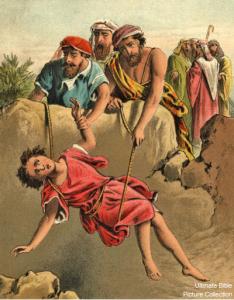 The Joseph saga in the last third of Genesis tells us something about how God works. It’s not the way we’d expect. God accomplishes great things with flawed human material, even through the flaws themselves. Instead of the tragic flaw of Greek plays, the Bible gives us the “happy fault.”
Episode 9 of the Rowing with Michael Series: A journey through the Jewish/Christian Scriptures in Verse and Commentary. Introduction and Contents for this series HERE.
Michael, row the boat ashore. Alleluia….
- Joseph wanted to weep and wail. Alleluia.
- First in the pit and then in jail. Alleluia.
- He knew what Pharaoh’s nightmares meant. Alleluia.
- Next thing he’s practically president. Alleluia.
If you had been one of Joseph’s brothers in this story, you would have found many things to dislike about him, starting with the fact that he was the favorite of his father, Jacob.
Dysfunctional families
That puts the spotlight on Jacob so let’s look at him first. He is the grasping twin who came out of his mother Rebecca’s womb second grabbing onto his slightly older brother Esau’s heal. He’s the mean-spirited brother who wouldn’t feed his starving twin unless he gave up his birthright. He’s the liar who pretended to be Esau to get his blind father Isaac’s blessing. There would be nothing left for Esau.
This Jacob later on has no idea of the dissension he’s causing among his own children by playing favorites. He gives Joseph, the only child of his favorite wife, Rachel, a fancy coat. He lets him stay home while his 10 brothers work the fields. Abraham even lets Joseph revel in his grandiose dreams of being worshiped by his brothers. Jacob and Joseph are two of my favorite Bible characters; they’re so human.
Grandfather Abraham has his share of human frailty, too. First he’s the model of the true believer. He doesn’t waiver in his faith in God’s promise to make of him a great nation even when God tells him to sacrifice his only son, the son of his extremely old age. Then he goes down to Egypt, and, because his wife is pretty, he instructs her to lie to Pharaoh and tell him she’s Abraham’s sister. That way Pharaoh can have her for his wife without necessarily killing Abraham. A wee bit of a lapse of faith in God’s promise there, if you ask me. And what is God’s response? He punishes Pharaoh instead of Abraham. Abraham gets rewarded with rich gifts from none other than Pharaoh himself. Abraham learns his lessons well. He goes and finds another occasion to do the same thing, and his son Isaac does it once as well.
Flawed heroes and providence
Whoever gave us these stories was pretty intent on spelling out the ancestral heroes’ flaws. There is a theme here that runs through the Bible. Being God’s choice is no reason to brag. It’s hardly ever based on merit. God chooses in a way that goes against our expectation. We’d expect God to choose the top of the line. Instead it’s a couple too old to have children. It’s the second or the youngest son. It’s the flawed character and even the flaw itself. God looks squarely at all human things and settles down right in the midst of them.
Israelites considered themselves to be under a strict obligation to give glory to God. There could be no such thing as hero worship for them. I don’t think you would have found among them a great concern for positive self-image. Their favorite image was of times when God was with his people, faults and all.
The Joseph story takes up about the last third of the book of Genesis. It’s not history but great literature. Maybe a couple hundred years after this story was set down, Greek playwrights were coming up with some great literature, too. (It could have been a couple hundred years before—there’s disagreement about when these Bible stories were written.) Greek heroes also had flaws, tragic flaws that always led to their downfall. The Fates would see to that. But the Bible introduces us to the “happy fault,” the flaws through which God is pleased to work. Because of Joseph’s insufferable dreams and his brothers’ violent response and even because of the wiles of Potiphar’s wife that landed Joseph in jail, a nation is able to survive through famine. The story moves Israel’s imagined ancestors to Egypt, where further turns of fortune await them. But it’s providence, not fate that moves the world.
- God has work for me and you.
- We’re not perfect, but we’ll have to do.
Image credit: Bible Encyclopedia
Previous Post

June 11, 2018
Isaac’s Near-Death Experience: Did an Editor Save Him?
Next Post
June 15, 2018 A Renewal of Baptismal Promises in Horrible Times
Browse Our Archives
Select a Category Advent Christmas Amazon Synod Angels Being Consumed Bible Catholic Modern Creed Ecology Economics Elizabeth Johnson Eucharist Fragments and Filaments Gender and Sex Gospel of Mark Herzog Historical Jesus Liturgy Luke Opening Scriptures on Way to Emmaus Ordinary radicals Parables Pro-Life Reincarnation Rosary Sacraments science Social Justice Souls Stories of Jesus The Creed Torture and Eucharist Tracy Uncategorized War and Peace
Select a Month October 2026 June 2025 April 2025 March 2025 February 2025 January 2025 November 2024 July 2024 March 2024 December 2023 October 2023 September 2023 August 2023 May 2023 April 2023 March 2023 February 2023 January 2023 December 2022 November 2022 October 2022 September 2022 August 2022 July 2022 June 2022 April 2022 March 2022 February 2022 January 2022 December 2021 November 2021 October 2021 August 2021 July 2021 June 2021 April 2021 March 2021 February 2021 December 2020 November 2020 October 2020 August 2020 July 2020 June 2020 May 2020 April 2020 March 2020 February 2020 January 2020 December 2019 November 2019 October 2019 September 2019 August 2019 July 2019 June 2019 May 2019 April 2019 March 2019 February 2019 January 2019 December 2018 November 2018 October 2018 September 2018 August 2018 July 2018 June 2018 May 2018
Follow Us!
TAKE THE
Religious Wisdom Quiz
In Revelation, what does the rider on the white horse have coming out of his mouth?
Select your answer to see how you score.
A sharp sword The word of God Fire Words of judgment
Related posts from Lost in a One-Acre Wood

Credo: A Story of God Told with the...

Richard A. Horsley Sees Jesus in the Context...
“Jesus Wept.” Don’t Take the Humanity out of...

Holy Thursday Theology and the Scientific Quest for...
TRENDING AT PATHEOS Catholic

Creation, Preservation, and Teleology in Catholic Theology
As I write this, it is very early Monday morning. Like millions...

The Parable Of The Sower And The Word...
One of Christ’s most famous parables is that of the sower who...

Rejecting Doom: Christian Hope And Human Action
Christianity is a religion of hope. We are to have hope and...

Why I Choose the Eucharist Over the Sermon
Choose the Eucharist, Not the Sermon What are we supposed to get...

5 Design Elements Found in Spiritually Rooted Homes
Putting Spirituality Into Home Decor Our homes are more than our living...

Credo: A Story of God Told with the...
About 10 years ago, I began to imagine a personal "Credo" that...
view all Catholic blogs
Ad-Free & Subscriber Log-In Subscription Support
- About Us
- 2026 Calendar
- Videos
- Podcasts
- Library of World Religions
- Faith In Media Tracker
- Advertise With Us
- Write for Us
- Privacy Policy
- Terms of Service
- Do Not Sell My Data
- Contact Us
- Radiant Digital
- Manage Newsletter Subscriptions
- Unsubscribe From Notifications
- Sitemap
Copyright 2008-2026, Patheos. All rights reserved.
Subscription Support Ad-Free & Subscriber Log-In
Follow Patheos