
BuddhistCatholicContemplativeEvangelicalGeneral ChristianHinduJewishLatter-day SaintMuslimNew VisionsProgressive Christian
Beliefs
- Buddhist
- Catholic
- Contemplative
- Evangelical
- General Christian
- Hindu
- Jewish
- Latter-day Saint
- More Voices
- Muslim
- New Visions
- Pagan
- Progressive Christian
Topics
- Religion News
- Food and Religion
- Sports and Religion
- Religious Art
- Religious Music and Entertainment
- Religious Events
- History and Religion
- Style and Religion
- Politics and Religion
- Women in Religion
- Recreation Outdoors and Religion
- Business Finance and Religion
- Careers Workplace and Religion
- Education and Religion
- Family Parenting and Religion
- Health Fitness and Religion
- Home and Religion
- Relationships and Religion
- Technology and Religion
- Travel and Religion
Columnists
- Buddhist Columnists
- Business Finance and Religion Columnists
- Careers Workplace and Religion Columnists
- Catholic Columnists
- Contemplative Columnists
- Education and Religion Columnists
- Evangelists Columnists
- Family Parenting and Religion Columnists
- General Christian Columnists
- Health Fitness and Religion Columnists
- Hindu Columnists
- History and Religion Columnists
- Home and Religion Columnists
- Jewish Columnists
- More Voices Columnists
- Latter Day Columnists
- Muslim Columnists
- New Visions Columnists
- Nonreligious Columnists
- Pagan Columnists
- Politics and Religion Columnists
- Progressive Columnists
- Recreation Outdoors and Religion Columnists
- Relationships and Religion Columnists
- Religion News Columnists
- Religious Art Columnists
- Religious Events Columnists
- Religious Music and Entertainment Columnists
- Sports and Religion Columnists
- Style and Religion Columnists
- Technology and Religion Columnists
- Travel and Religion Columnists
- Women in Religion Columnists
Resource Library
- 2026 Calendar
- Library of World Religions
- The 100 Most Holy Places on Earth
- Patheos Answers
- Podcasts
- Videos
- Faith Leaders Database
- Anglican Episcopalian
- Bahai
- Baptist
- Buddhism
- Christianity
- Confucianism
- Eastern Orthodoxy
- Hinduism
- Holiness and Pentecostal
- ISKCON
- Islam
- Judaism
- Lutheran
- Methodist
- The Church of Jesus Christ of Latter-day Saints
- New Age
- Paganism
- Presbytarian and Reformed
- Protestantism
- Religion Behind the Scenes
- Roman Catholic
- Scientology
- Shia Islam
- Sikhism
- Sufism
- Sunni Islam
- Taoism
- Zen
- See all religions
Research Tools
 Ad-Free & Subscriber Log-In Subscription Support
Ad-Free & Subscriber Log-In Subscription Support
Follow Patheos 

- Trending:
- Forgiveness
- |
- Marriage
- |
- Consciousness
- |
- Death Penalty
- |
- Election
- |
- Halloween

- Home
- Catholic
- Teilhard Blesses this World of Matter, and So do I
Teilhard Blesses this World of Matter, and So do I
Last updated on: April 29, 2019 at 8:22 am by Jack Hartjes
Teilhard Blesses this World of Matter, and So do I 2019-04-29T08:22:11-06:00 Jack Hartjes
Patheos Explore the world's faith through different perspectives on religion and spirituality! Patheos has the views of the prevalent religions and spiritualities of the world.
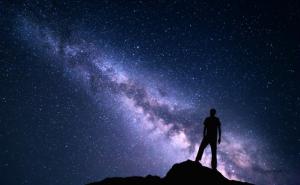
A prayer from Teilhard de Chardin reveals the material world as a true companion on the road to meaning and morality. I ponder my own relationship to matter and my feelings about God.
Among the surprises preacher Bishop Michael Curry had for his worldwide audience at Prince Harry and Megan Markle’s wedding was a quote from priest, scientist, and theologian Pierre Teilhard de Chardin. I’ll repeat those words of Teilhard at the end of this post. My favorite Teilhard quote is a bit longer. I’ll go with that first and add with some of my thoughts along the same line.
Teilhard’s “Hymn to Matter”:
“Blessed be you, universal matter, immeasurable time, boundless ether, triple abyss of stars and atoms and generations: you who by overflowing and dissolving our narrow standards of measurement reveal to us the dimensions of God. Blessed be you, impenetrable matter: you who, interposed between our minds and the world of essences, cause us to languish with the desire to pierce through the seamless veil of phenomena.
Blessed be you, mortal matter: you who one day will undergo the process of dissolution within us and will thereby take us forcibly into the very heart of that which exists.
Without you, without your onslaughts, without your uprootings of us, we should remain all our lives inert, stagnant, puerile, ignorant both of ourselves and of God. You who batter us and then dress our wounds, you who resist us and yield to us, you who wreck and build, you who shackle and liberate, the sap of our souls, the hand of God, the flesh of Christ: it is you, matter, that I bless.
I bless you, matter, and you I acclaim: not as the pontiffs of science or the moralizing preachers depict you, debased, disfigured–a mass of brute forces and base appetites–but as you reveal yourself to me today, in your totality and your true nature.
I acclaim you as the divine milieu, charged with creative power, as the ocean stirred by the Spirit, as the clay molded and infused with life by the incarnate Word.”
Random thoughts about matter.
As a student and teacher I have been fascinated with words and ideas, but I’ve always been in love with matter. As a child I would read and read and read, and most avidly I read about real, substantial things—dinosaurs, rocks, galaxies. Besides reading I spent time with things, collecting and getting to recognize different kinds of minerals and fossils, getting to know the strength and weakness of tree branches so I’d know where I could climb and where I couldn’t. I wanted to be close to things. When I walked down the hall at school, I would drag my fingers against the wall. Later I learned the importance of keeping some distance from things, not making too much of a mark, as it became clear that many of the beautiful things of this world are in danger from the activities of people like me. That distance too is a part of my love for material things.
……..
I was enjoying the place in this material world that I love best, the mountains of Glacier National Park, when the conversation with my hiking partner turned to my writing about the Bible. She asked me a question that had me stumped for a while: How do you feel about God? She’s not a believer. She is an organic farmer and is in love with this same good material thing that I call creation. She’s also a writer and insisted that I put myself and my feelings into my writing; otherwise, it wouldn’t mean anything to anybody.
But I had trouble identifying any feeling about God at all. I knew that gratitude, love, and respect are some attitudes that a person should have toward God, but it was hard to identify these as feelings toward a God whom I couldn’t see. As I continued hiking, I began to think about the feelings I have toward the things around me—the rocks that I met on the way, the streams of water that first sounded and then gleamed in my awareness, the wind that sometimes cooled, sometimes chilled, and sometimes struck with determined force and provoked an equal and opposite determination from me. It occurred to me that all these things are in the Bible as symbols of God, and the feelings I have toward them are feelings about God as well.
I feel most familiar with rocks. They are dependable. I know them well. I know whether they will support me or not–usually. They can be a firm foundation on which to stand but also a challenge—to climb over or build upon. With water I feel a kind of peaceful longing, especially with moving water. I imagine how fine it would feel just to flow along to an unforeseen destination. But I don’t take that plunge. With water I always hold back a little; after all, water’s a bit scary, so the longing remains a longing, unfulfilled. Wind is the most unavoidable challenge. It’s easy enough to go around a big rock. It’s very easy to watch the flowing mountain stream for a while and then move on. But you can’t very well get out of the wind when you’re on a hike. The wind won’t leave you alone. When it’s strong, you have to like it or hate it. I like it. I like God in all of these ways.
………
In many ways our world despises material things. It likes consuming rather than the things that it consumes. It uses sex for power or financial profit (I’m thinking of advertisers, not prostitutes) or for security more than it likes sex. It teaches people they can’t be happy with their own bodies but must “improve” them according to the latest fashion. In comparison to this the Church comes off as positively in love with bodily things even when it asks us to make sacrifices and not be caught up in material pursuits.
………
After each day of creation in the story God pronounces everything “good.” Humans aren’t even around until the sixth day, so this goodness has nothing to do with being good for us. Things are good in themselves. The psalms tell us the natural world sings God’s praise. Worship didn’t start when people invented religion. We just joined the song that was going on all along. God rejoices in all God’s creatures, including, Psalm 104 says, the sea monster Leviathon, of no benefit at all to us, “whom you formed to play with.” (I like that translation.)
………
The material world is good, but is it good to our souls? Our planet home provides all the material things we need to survive and flourish, but does it also give us meaning? Does it support our attempts to be moral? Are we alone in the world when it comes to what makes us precisely human?
We can no longer say, “Look at the industrious ant,” and find a reason not to be a sluggard. After all, look at the lion. She sleeps 22 hours a day. In nature there is no “supposed to,” nothing that tells us how to behave. But nature may be a partner on our moral path. It will not determine our story, but it makes stories possible.
Teilhard de Chardin imagines a paradoxical kind of companionship we get from the matter of the universe in his “Hymn to Matter. He addresses and blesses matter:
You who batter us and then dress our wounds, you who resist us and yield to us, you who wreck and build, you who shackle and liberate…. Without you, without your uprootings of us, we should remain all our lives inert, stagnant, puerile…..
This is not an easy partner to live with, but partner it is; and only because we live with such a partner can our actions have any meaning.
Imagine a world without the stubborn resistance that matter, whether of our bodies or anything else, offers—a world in which anything is possible, knowledge is easy and always perfect, mere thought accomplishes every purpose. All you have to do is will it to make it so.
In such a world nothing a person does makes any difference. Nobody’s action interacts with anybody else’s. There is no connection between past, present, and future. Each new moment has its own possibilities. Actions do not have consequences. There is no movement, either forward or backward, since nothing builds on anything else. Hence, no life and no story.
Medieval theologians imagined every angel to be its own species. Without matter and its limitations, that’s the way we would be—everyone isolated in his or her own world. We need to rejoice that we live with limits, that actions have consequences, that we can’t be anything we want to be or do anything we can imagine doing. Science doesn’t work miracles. Matter remembers. Matter forces us into stories and moral situations. .Matter connects present with past and future, actions with consequences, and—most blessedly—one person with another and people with a world.
………
Now for the quote that Bishop Curry used to close his fiery sermon—a different side of Teilhard from my first quote.
Someday, after mastering the winds, the waves, the tides and gravity, we shall harness for God the energies of love, and then, for a second time in the history of the world, man will have discovered fire.
Previous Post

May 23, 2018
Sibling Rivalry and the sin of Abel (!)
Next Post
May 28, 2018 Genealogies in the Bible: Old Folks, Hopeful People
Browse Our Archives
Select a Category Advent Christmas Amazon Synod Angels Being Consumed Bible Catholic Modern Creed Ecology Economics Elizabeth Johnson Eucharist Fragments and Filaments Gender and Sex Gospel of Mark Herzog Historical Jesus Liturgy Luke Opening Scriptures on Way to Emmaus Ordinary radicals Parables Pro-Life Reincarnation Rosary Sacraments science Social Justice Souls Stories of Jesus The Creed Torture and Eucharist Tracy Uncategorized War and Peace
Select a Month October 2026 June 2025 April 2025 March 2025 February 2025 January 2025 November 2024 July 2024 March 2024 December 2023 October 2023 September 2023 August 2023 May 2023 April 2023 March 2023 February 2023 January 2023 December 2022 November 2022 October 2022 September 2022 August 2022 July 2022 June 2022 April 2022 March 2022 February 2022 January 2022 December 2021 November 2021 October 2021 August 2021 July 2021 June 2021 April 2021 March 2021 February 2021 December 2020 November 2020 October 2020 August 2020 July 2020 June 2020 May 2020 April 2020 March 2020 February 2020 January 2020 December 2019 November 2019 October 2019 September 2019 August 2019 July 2019 June 2019 May 2019 April 2019 March 2019 February 2019 January 2019 December 2018 November 2018 October 2018 September 2018 August 2018 July 2018 June 2018 May 2018
Follow Us!
TAKE THE
Religious Wisdom Quiz
I am the first to fall asleep in death for following Jesus. I saw heaven opened as stones struck me. Who am I?
Select your answer to see how you score.
James John Stephen Peter
Related posts from Lost in a One-Acre Wood

Global Warming, Glaciers, and Nearly Silent Catholic Wisdom
Norman Wirzba Roots Humanity in a Sacred World
Faith Leaders on Climate Change: “Future Generations Will...
BirthStrike Movement to Dissolve Next Week
TRENDING AT PATHEOS Catholic

The Parable Of The Sower And The Word...
One of Christ’s most famous parables is that of the sower who...

Rejecting Doom: Christian Hope And Human Action
Christianity is a religion of hope. We are to have hope and...

Why I Choose the Eucharist Over the Sermon
Choose the Eucharist, Not the Sermon What are we supposed to get...

5 Design Elements Found in Spiritually Rooted Homes
Putting Spirituality Into Home Decor Our homes are more than our living...

Credo: A Story of God Told with the...
About 10 years ago, I began to imagine a personal "Credo" that...

The Anatomy of Divine Revelation in Catholic Thought
The claim that God has made Himself known to human beings is...
view all Catholic blogs
Ad-Free & Subscriber Log-In Subscription Support
- About Us
- 2026 Calendar
- Videos
- Podcasts
- Library of World Religions
- Faith In Media Tracker
- Advertise With Us
- Write for Us
- Privacy Policy
- Terms of Service
- Do Not Sell My Data
- Contact Us
- Radiant Digital
- Manage Newsletter Subscriptions
- Unsubscribe From Notifications
- Sitemap
Copyright 2008-2026, Patheos. All rights reserved.
Subscription Support Ad-Free & Subscriber Log-In
Follow Patheos