
BuddhistCatholicContemplativeEvangelicalGeneral ChristianHinduJewishLatter-day SaintMuslimNew VisionsProgressive Christian
Beliefs
- Buddhist
- Catholic
- Contemplative
- Evangelical
- General Christian
- Hindu
- Jewish
- Latter-day Saint
- More Voices
- Muslim
- New Visions
- Pagan
- Progressive Christian
Topics
- Religion News
- Food and Religion
- Sports and Religion
- Religious Art
- Religious Music and Entertainment
- Religious Events
- History and Religion
- Style and Religion
- Politics and Religion
- Women in Religion
- Recreation Outdoors and Religion
- Business Finance and Religion
- Careers Workplace and Religion
- Education and Religion
- Family Parenting and Religion
- Health Fitness and Religion
- Home and Religion
- Relationships and Religion
- Technology and Religion
- Travel and Religion
Columnists
- Buddhist Columnists
- Business Finance and Religion Columnists
- Careers Workplace and Religion Columnists
- Catholic Columnists
- Contemplative Columnists
- Education and Religion Columnists
- Evangelists Columnists
- Family Parenting and Religion Columnists
- General Christian Columnists
- Health Fitness and Religion Columnists
- Hindu Columnists
- History and Religion Columnists
- Home and Religion Columnists
- Jewish Columnists
- More Voices Columnists
- Latter Day Columnists
- Muslim Columnists
- New Visions Columnists
- Nonreligious Columnists
- Pagan Columnists
- Politics and Religion Columnists
- Progressive Columnists
- Recreation Outdoors and Religion Columnists
- Relationships and Religion Columnists
- Religion News Columnists
- Religious Art Columnists
- Religious Events Columnists
- Religious Music and Entertainment Columnists
- Sports and Religion Columnists
- Style and Religion Columnists
- Technology and Religion Columnists
- Travel and Religion Columnists
- Women in Religion Columnists
Resource Library
- 2026 Calendar
- Library of World Religions
- The 100 Most Holy Places on Earth
- Patheos Answers
- Podcasts
- Videos
- Faith Leaders Database
- Anglican Episcopalian
- Bahai
- Baptist
- Buddhism
- Christianity
- Confucianism
- Eastern Orthodoxy
- Hinduism
- Holiness and Pentecostal
- ISKCON
- Islam
- Judaism
- Lutheran
- Methodist
- The Church of Jesus Christ of Latter-day Saints
- New Age
- Paganism
- Presbytarian and Reformed
- Protestantism
- Religion Behind the Scenes
- Roman Catholic
- Scientology
- Shia Islam
- Sikhism
- Sufism
- Sunni Islam
- Taoism
- Zen
- See all religions
Research Tools
 Ad-Free & Subscriber Log-In Subscription Support
Ad-Free & Subscriber Log-In Subscription Support
Follow Patheos 

- Trending:
- Forgiveness
- |
- Marriage
- |
- Consciousness
- |
- Death Penalty
- |
- Election
- |
- Halloween

- Home
- Catholic
- People Tell Stories, and God’s OK with That: Stories in the Old Testament
People Tell Stories, and God’s OK with That: Stories in the Old Testament
Last updated on: July 3, 2022 at 7:44 am by Jack Hartjes
People Tell Stories, and God’s OK with That: Stories in the Old Testament 2022-07-03T07:44:18-06:00 Jack Hartjes
Patheos Explore the world's faith through different perspectives on religion and spirituality! Patheos has the views of the prevalent religions and spiritualities of the world.
This post is an introduction to a series of posts on Old Testament stories. The posts will appear on Mondays, Wednesdays, and Fridays, although Friday will often be a day to break from the series and consider something else. I call the series “Rowing with Michael: A Voyage through the Hebrew Bible in Rhymes and Commentary.” The reason for the title is at the end of this post. A Table of Contents with links to each post, which I insert here, was added after the series was complete. The Introduction follows the
Table of Contents.
- Introduction (below)
- The Bible’s First Leaders Weren’t Human
- New Clothes for Adam and Eve
- Sibling Rivalry and Abel’s (!) Sin
- Genealogies in the Bible: Old Folks, Hopeful People
- Noah’s Story: A World Saved and All the More Precious
- Babel’s Ecological Warning
- Abraham: What Kind of Story is He Father Of?
- Isaac’s Near-Death Experience: Did an Editor Save Him?
- Joseph of the Bible’s Dysfunctional Families
- The Exodus Story and Israel’s Pre-history, Part 1
- Exodus and History, Israel’s and Ours
- A Journey for People Away from Home or for People Already in their ‘Promised Land’
- Four Amazing Women in the Genealogy of Jesus
- The Problem of Biblical Violence, Part One
- Joshua Didn’t Destroy Jericho: The Problem of Biblical Violence, Part Two
- Revelation is a Dialogue with God’s Word: Biblical Violence, Part Three
- Solomon and Embracing the Symbol King
- Job and the Problem of Suffering, Part One: The Bible Tries Explaining
- The Problem of Suffering, Part 2: An Impatient Job
- Jonah Learns a Lesson: Chosen People, Part One
- Chosen People, Part Two: Paul’s Vision, a New Tribe?
- Liberation and the Bible: Chosen People, Part Three
Introduction: Stories in the Old Testament
I was attending a social gathering with some of philosophy professors and one of my teachers started telling this story:
My college senior class was voting on a class motto. Two choices were offered: “Knowledge is power” and “Knowledge for its own sake.” The votes were tallied and “Knowledge is power” won.
At this point, thinking I was very clever, I chimed in: “Which just goes to show knowledge isn’t power.” I got a dirty look from my professor, and it dawned on me that he was telling a joke. People tell stories, and normally we know what kind of story it is, but sometimes we don’t, and we can end up feeling foolish. I had just stolen my professors’ punch line.
When we read the Old Testament, occasionally we don’t know what kind of literature it is; but we do know one thing – it’s literature.
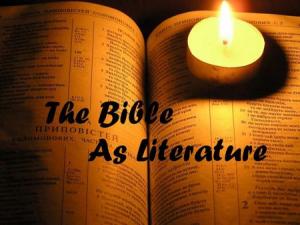
The Old Testament is literature.
God made human beings, and God likes all the good that he put in us. Literature is one of the very good things. Let’s continue with literature for a bit.
No errors in the Biblel?
William Shakespeare wrote historical plays, and sometimes produced them in the royal palace for Queen Elizabeth I. After one such production the queen was especially pleased. She went to William and said, “I am King Richard II, am I not?” Shakespeare had written about long-ago King Richard II in such a way that the present queen could see herself.
An honored technique in literature is to write ostensibly about a historical person or event, but the reader knows the author is really making a statement about current events. (The TV series M.A.S.H. is a perfect example: stories set in Korean War times but with the 60’s and the Vietnam War in mind.) Sometimes stories are the best way for authors to say what they want to say about their world. Details are changed or made up. When that happens, we don’t put down the book and say, “This is lies.” It’s literature and sometimes good literature, and God is pleased.
Let’s imagine that happening in the Old Testament. I’m thinking of the story of Joseph and his 11 brothers. Imagine you’re a member of the tribe of Judah and you’re reading this story about the “olden days.” You notice that Judah, one of Joseph’s brothers, not only has the name of your tribe but he also seems to possess qualities you associate with your tribe. Let’s say that the author of the story did it deliberately, changing or making up details to make the story apply to today. Now do we say that the Bible contains errors? Or do we say people tell stories and God is OK with having stories in his book? Do we close the Bible in frustration? Or do we say the Bible is literature, sometimes very good literature, as in the case of the Joseph saga; and literature serves many purposes.
The Catholic Church says that Sacred Scripture teaches without error the truths necessary for our salvation. She doesn’t say that accurate historical or scientific information is necessary for our salvation. The Church says that God worked with human authors and their human characteristics and abilities. She doesn’t say that this procedure led to a perfect product in every respect. So we can rephrase the title of this piece:
People, with their human, imperfect, creative, sometimes odd (especially to us modern folk) ways, wrote the Bible, and God is OK with that.
Rowing with Michael
In this space for a while I will tell and comment on some stories from Jewish/Christian Scripture, aka the Old Testament. The commentary is meant to be a way of thinking about the Bible with some challenging questions in mind. These are questions that I imagine readers might ask if they take seriously the modern scientific worldview and matters of contemporary concern. Among these concerns I count the need for an environmental ethic, the moral claims of the world’s many and diverse cultures, war and peace, the claims of poor people, women, people of color, and so on. I do believe that the entire Bible applies to today and every age, whether its human authors intended it that way or not. I also believe that we approach the Bible not with an empty slate but with our human concerns in mind. Revelation occurs in the interaction between these concerns of ours and the literary legacy of the Bible.
Some might wonder: If the Bible applies to today, is its contribution positive or negative? The negative answer to that question is less likely if one pays attention to the way modern scholars deal with puzzling or troubling parts of the Old Testament. There are passages expressing a very high and challenging kind of justice right next to commands that don’t make any sense today. In the Old Testament God’s people fight wars that fail to meet church or even internationally agreed criteria for justice. There’s that famous passage in which God tells the humans to “have dominion” over the earth, which today suffers from far too much domination.
In the course of these commentaries, I pay attention to what modern scholarship on the Old Testament has to say. My acquaintance with this kind of study is that of a lifelong student and an amateur (and a lover as that word’s etymology has it). I necessarily risk mistaking a minority view for a consensus. I ask pardon further for compounding the risk by occasionally offering my own ideas. The Catholic Church tolerates a rather broad range of views on the Bible. I hope and intend to stay within that range.
Another pardon needs begging as I introduce each story in the coming series with a verse that you could sing, if you chose, to the melody of “Michael, Row the Boat Ashore.” That explains why I call the series “Rowing with Michael: A Voyage through the Hebrew Bible in Rhymes and Commentary.” You can decide whether the intentionally quirky verses or the attempt at serious commentary has the greater value.
Previous Post

May 11, 2018
Introduction to “Lost in a One-Acre Wood”
Next Post
May 16, 2018 The Bible’s First Leaders Weren’t Human
Browse Our Archives
Select a Category Advent Christmas Amazon Synod Angels Being Consumed Bible Catholic Modern Creed Ecology Economics Elizabeth Johnson Eucharist Fragments and Filaments Gender and Sex Gospel of Mark Herzog Historical Jesus Liturgy Luke Opening Scriptures on Way to Emmaus Ordinary radicals Parables Pro-Life Reincarnation Rosary Sacraments science Social Justice Souls Stories of Jesus The Creed Torture and Eucharist Tracy Uncategorized War and Peace
Select a Month October 2026 June 2025 April 2025 March 2025 February 2025 January 2025 November 2024 July 2024 March 2024 December 2023 October 2023 September 2023 August 2023 May 2023 April 2023 March 2023 February 2023 January 2023 December 2022 November 2022 October 2022 September 2022 August 2022 July 2022 June 2022 April 2022 March 2022 February 2022 January 2022 December 2021 November 2021 October 2021 August 2021 July 2021 June 2021 April 2021 March 2021 February 2021 December 2020 November 2020 October 2020 August 2020 July 2020 June 2020 May 2020 April 2020 March 2020 February 2020 January 2020 December 2019 November 2019 October 2019 September 2019 August 2019 July 2019 June 2019 May 2019 April 2019 March 2019 February 2019 January 2019 December 2018 November 2018 October 2018 September 2018 August 2018 July 2018 June 2018 May 2018
Follow Us!
TAKE THE
Religious Wisdom Quiz
What is the name of the great final battle in Revelation?
Select your answer to see how you score.
The Great Tribulation Babylon’s Fall Apocalypse Armageddon
Related posts from Lost in a One-Acre Wood

Credo: A Story of God Told with the...

Richard A. Horsley Sees Jesus in the Context...
“Jesus Wept.” Don’t Take the Humanity out of...

Holy Thursday Theology and the Scientific Quest for...
TRENDING AT PATHEOS Catholic

Creation, Preservation, and Teleology in Catholic Theology
As I write this, it is very early Monday morning. Like millions...

The Parable Of The Sower And The Word...
One of Christ’s most famous parables is that of the sower who...

Rejecting Doom: Christian Hope And Human Action
Christianity is a religion of hope. We are to have hope and...

Why I Choose the Eucharist Over the Sermon
Choose the Eucharist, Not the Sermon What are we supposed to get...

5 Design Elements Found in Spiritually Rooted Homes
Putting Spirituality Into Home Decor Our homes are more than our living...

Credo: A Story of God Told with the...
About 10 years ago, I began to imagine a personal "Credo" that...
view all Catholic blogs
Ad-Free & Subscriber Log-In Subscription Support
- About Us
- 2026 Calendar
- Videos
- Podcasts
- Library of World Religions
- Faith In Media Tracker
- Advertise With Us
- Write for Us
- Privacy Policy
- Terms of Service
- Do Not Sell My Data
- Contact Us
- Radiant Digital
- Manage Newsletter Subscriptions
- Unsubscribe From Notifications
- Sitemap
Copyright 2008-2026, Patheos. All rights reserved.
Subscription Support Ad-Free & Subscriber Log-In
Follow Patheos