
BuddhistCatholicContemplativeEvangelicalGeneral ChristianHinduJewishLatter-day SaintMuslimNew VisionsProgressive Christian
Beliefs
- Buddhist
- Catholic
- Contemplative
- Evangelical
- General Christian
- Hindu
- Jewish
- Latter-day Saint
- More Voices
- Muslim
- New Visions
- Pagan
- Progressive Christian
Topics
- Religion News
- Food and Religion
- Sports and Religion
- Religious Art
- Religious Music and Entertainment
- Religious Events
- History and Religion
- Style and Religion
- Politics and Religion
- Women in Religion
- Recreation Outdoors and Religion
- Business Finance and Religion
- Careers Workplace and Religion
- Education and Religion
- Family Parenting and Religion
- Health Fitness and Religion
- Home and Religion
- Relationships and Religion
- Technology and Religion
- Travel and Religion
Columnists
- Buddhist Columnists
- Business Finance and Religion Columnists
- Careers Workplace and Religion Columnists
- Catholic Columnists
- Contemplative Columnists
- Education and Religion Columnists
- Evangelists Columnists
- Family Parenting and Religion Columnists
- General Christian Columnists
- Health Fitness and Religion Columnists
- Hindu Columnists
- History and Religion Columnists
- Home and Religion Columnists
- Jewish Columnists
- More Voices Columnists
- Latter Day Columnists
- Muslim Columnists
- New Visions Columnists
- Nonreligious Columnists
- Pagan Columnists
- Politics and Religion Columnists
- Progressive Columnists
- Recreation Outdoors and Religion Columnists
- Relationships and Religion Columnists
- Religion News Columnists
- Religious Art Columnists
- Religious Events Columnists
- Religious Music and Entertainment Columnists
- Sports and Religion Columnists
- Style and Religion Columnists
- Technology and Religion Columnists
- Travel and Religion Columnists
- Women in Religion Columnists
Resource Library
- 2026 Calendar
- Library of World Religions
- The 100 Most Holy Places on Earth
- Patheos Answers
- Podcasts
- Videos
- Faith Leaders Database
- Anglican Episcopalian
- Bahai
- Baptist
- Buddhism
- Christianity
- Confucianism
- Eastern Orthodoxy
- Hinduism
- Holiness and Pentecostal
- ISKCON
- Islam
- Judaism
- Lutheran
- Methodist
- The Church of Jesus Christ of Latter-day Saints
- New Age
- Paganism
- Presbytarian and Reformed
- Protestantism
- Religion Behind the Scenes
- Roman Catholic
- Scientology
- Shia Islam
- Sikhism
- Sufism
- Sunni Islam
- Taoism
- Zen
- See all religions
Research Tools
 Ad-Free & Subscriber Log-In Subscription Support
Ad-Free & Subscriber Log-In Subscription Support
Follow Patheos 

- Trending:
- Forgiveness
- |
- Marriage
- |
- Consciousness
- |
- Death Penalty
- |
- Election
- |
- Halloween

- Home
- Catholic
- Introduction to “Lost in a One-Acre Wood”
Introduction to “Lost in a One-Acre Wood”
Last updated on: May 12, 2018 at 8:49 pm by Jack Hartjes
Introduction to “Lost in a One-Acre Wood” 2018-05-12T20:49:43-06:00 Jack Hartjes
Patheos Explore the world's faith through different perspectives on religion and spirituality! Patheos has the views of the prevalent religions and spiritualities of the world.
 In this first post on Patheos Catholic, I tell you about myself and how I happen to be writing about the sorts of things you will find on this blog. You can read brief facts about Jack Hartjes on the “About Jack” tab.
I was raised in a devout Catholic family. Typical for Catholics in the 1950’s, I knew about the Bible but I didn’t read the Bible. I did read lots of things as a youngster and was especially interested in science. My days as a seminarian in high school and early college were filled with the excitement of Catholic Church renewal envisioned by the Second Vatican Council. I still didn’t read the Bible. My later college years found me wrapped in the study of philosophy and rubbing shoulders with theology students, who were excited about new developments in their field. I still didn’t pay much attention to the Bible.
I guess I must have thought that whatever wisdom God put in the Bible could be divided up and summarized under headings I was already familiar with—The Trinity, the Incarnation, The Church, social justice and personal morality, Mass and sacraments, heaven and hell. The Bible was to me a mine that had been mined already.
I need to add that I disliked history immensely. I was no good at it. That dislike changed to fascination when I discovered that there was an important history to the Bible—the way it came to be. The Bible suddenly became personal. I fell in love. (I even started liking history, though as a discipline it’s still a struggle for me.)
When I say I fell in love with the Bible, I mean that I loved the Bible for being as human as I am as well as for being God’s own word. I learned to think of the Bible incarnationally—like Jesus, both fully divine and fully human. I found out that this is the Catholic view of revelation. The Catechism of the Catholic Church ( #106) says it was as “true authors,” using “their own faculties and powers” that God used Jewish poets, storytellers, historians, sages, compilers, and editors to give us the Bible. They were not taking dictation or copying a manuscript from heaven but in a human way trying to understand and put into words what God was doing in their history. It was a struggle for God’s people.
I always believed that the Bible throws light on our experiences and challenges, but I learned that the other way around is crucial. We interpret the Bible from where we are. And that place doesn’t stay the same from one age to another or even within a person’s lifetime. So the Bible never stops speaking to us, and that contemporaneous speaking in the community of the Church, not a book from long ago, is revelation.
The point of this long introduction is to let you know that you will find a lot of wrestling with the Bible on this blog and a certain amount of fun with the Bible’s stories as well. I understand and write from the point of view of a person with two feet in the modern world. I accept what modern science says about the world – its make-up and its history, the Big Bang and evolution, the fragile condition of our planet home, and the danger posed to it by my own lifestyle. I rejoice in the variety of peoples and cultures, with all their gifts and trials, brought close to me by instant communication and rapid transportation. I regret the accompanying but, I believe, unnecessary weakening of small-community and neighborhood belonging. I participate in my small, distant way in the cause of justice for oppressed and marginalized people at home and abroad. I believe that a Christian’s place is in this world of joys and woes and competing visions. I believe the Bible has always supported that belonging and participation.
I’m convinced also that modern methods of Bible interpretation, in which I guess I’m a fairly well-versed amateur, are necessary if Christians are to recommend to this world the Bible’s vision of human and divine things. I expect that conviction will become obvious in many of the posts to come.
If you are a person of great, little, or no religious belief, if you have answers to share and questions that keep pace with the answers, I would feel honored to have your company on this blog and to have your voice in conversation.
Previous Post

May 10, 2018
Hello World
Next Post
May 14, 2018 People Tell Stories, and God’s OK with That: Stories in the Old Testament
Browse Our Archives
Select a Category Advent Christmas Amazon Synod Angels Being Consumed Bible Catholic Modern Creed Ecology Economics Elizabeth Johnson Eucharist Fragments and Filaments Gender and Sex Gospel of Mark Herzog Historical Jesus Liturgy Luke Opening Scriptures on Way to Emmaus Ordinary radicals Parables Pro-Life Reincarnation Rosary Sacraments science Social Justice Souls Stories of Jesus The Creed Torture and Eucharist Tracy Uncategorized War and Peace
Select a Month October 2026 June 2025 April 2025 March 2025 February 2025 January 2025 November 2024 July 2024 March 2024 December 2023 October 2023 September 2023 August 2023 May 2023 April 2023 March 2023 February 2023 January 2023 December 2022 November 2022 October 2022 September 2022 August 2022 July 2022 June 2022 April 2022 March 2022 February 2022 January 2022 December 2021 November 2021 October 2021 August 2021 July 2021 June 2021 April 2021 March 2021 February 2021 December 2020 November 2020 October 2020 August 2020 July 2020 June 2020 May 2020 April 2020 March 2020 February 2020 January 2020 December 2019 November 2019 October 2019 September 2019 August 2019 July 2019 June 2019 May 2019 April 2019 March 2019 February 2019 January 2019 December 2018 November 2018 October 2018 September 2018 August 2018 July 2018 June 2018 May 2018
Follow Us!
TAKE THE
Religious Wisdom Quiz
What does "Jabez" mean in Hebrew?
Select your answer to see how you score.
The Lord Saves Strength Victory Sorrow
Related posts from Lost in a One-Acre Wood

Credo: A Story of God Told with the...

With Carbon Dioxide, 0.014 is a big number
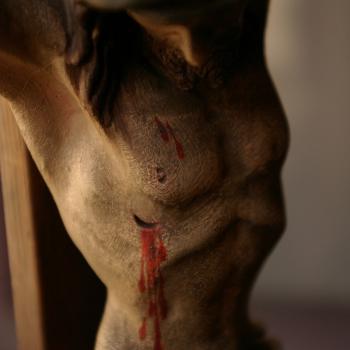
Crucifixion as Breakthrough, Horsley’s Nerviest Claim

Jesus’ Politics of Resistance and Renewal
TRENDING AT PATHEOS Catholic

Creation, Preservation, and Teleology in Catholic Theology
As I write this, it is very early Monday morning. Like millions...

The Parable Of The Sower And The Word...
One of Christ’s most famous parables is that of the sower who...

Rejecting Doom: Christian Hope And Human Action
Christianity is a religion of hope. We are to have hope and...

Why I Choose the Eucharist Over the Sermon
Choose the Eucharist, Not the Sermon What are we supposed to get...

5 Design Elements Found in Spiritually Rooted Homes
Putting Spirituality Into Home Decor Our homes are more than our living...

Credo: A Story of God Told with the...
About 10 years ago, I began to imagine a personal "Credo" that...
view all Catholic blogs
Ad-Free & Subscriber Log-In Subscription Support
- About Us
- 2026 Calendar
- Videos
- Podcasts
- Library of World Religions
- Faith In Media Tracker
- Advertise With Us
- Write for Us
- Privacy Policy
- Terms of Service
- Do Not Sell My Data
- Contact Us
- Radiant Digital
- Manage Newsletter Subscriptions
- Unsubscribe From Notifications
- Sitemap
Copyright 2008-2026, Patheos. All rights reserved.
Subscription Support Ad-Free & Subscriber Log-In
Follow Patheos