
BuddhistCatholicContemplativeEvangelicalGeneral ChristianHinduJewishLatter-day SaintMuslimNew VisionsProgressive Christian
Beliefs
- Buddhist
- Catholic
- Contemplative
- Evangelical
- General Christian
- Hindu
- Jewish
- Latter-day Saint
- More Voices
- Muslim
- New Visions
- Pagan
- Progressive Christian
Topics
- Religion News
- Food and Religion
- Sports and Religion
- Religious Art
- Religious Music and Entertainment
- Religious Events
- History and Religion
- Style and Religion
- Politics and Religion
- Women in Religion
- Recreation Outdoors and Religion
- Business Finance and Religion
- Careers Workplace and Religion
- Education and Religion
- Family Parenting and Religion
- Health Fitness and Religion
- Home and Religion
- Relationships and Religion
- Technology and Religion
- Travel and Religion
Columnists
- Buddhist Columnists
- Business Finance and Religion Columnists
- Careers Workplace and Religion Columnists
- Catholic Columnists
- Contemplative Columnists
- Education and Religion Columnists
- Evangelists Columnists
- Family Parenting and Religion Columnists
- General Christian Columnists
- Health Fitness and Religion Columnists
- Hindu Columnists
- History and Religion Columnists
- Home and Religion Columnists
- Jewish Columnists
- More Voices Columnists
- Latter Day Columnists
- Muslim Columnists
- New Visions Columnists
- Nonreligious Columnists
- Pagan Columnists
- Politics and Religion Columnists
- Progressive Columnists
- Recreation Outdoors and Religion Columnists
- Relationships and Religion Columnists
- Religion News Columnists
- Religious Art Columnists
- Religious Events Columnists
- Religious Music and Entertainment Columnists
- Sports and Religion Columnists
- Style and Religion Columnists
- Technology and Religion Columnists
- Travel and Religion Columnists
- Women in Religion Columnists
Resource Library
- 2026 Calendar
- Library of World Religions
- The 100 Most Holy Places on Earth
- Patheos Answers
- Podcasts
- Videos
- Faith Leaders Database
- Anglican Episcopalian
- Bahai
- Baptist
- Buddhism
- Christianity
- Confucianism
- Eastern Orthodoxy
- Hinduism
- Holiness and Pentecostal
- ISKCON
- Islam
- Judaism
- Lutheran
- Methodist
- The Church of Jesus Christ of Latter-day Saints
- New Age
- Paganism
- Presbytarian and Reformed
- Protestantism
- Religion Behind the Scenes
- Roman Catholic
- Scientology
- Shia Islam
- Sikhism
- Sufism
- Sunni Islam
- Taoism
- Zen
- See all religions
Research Tools
 Ad-Free & Subscriber Log-In Subscription Support
Ad-Free & Subscriber Log-In Subscription Support
Follow Patheos 

- Trending:
- Forgiveness
- |
- Marriage
- |
- Consciousness
- |
- Death Penalty
- |
- Election
- |
- Halloween
 Looking Closer
- Home
- Religious Music & Entertainment
- Inside Out (2015)
Inside Out (2015)
Last updated on: June 20, 2015 at 12:22 pm by Jeffrey Overstreet
Inside Out (2015) 2015-06-20T12:22:38-06:00 Jeffrey Overstreet
Patheos Explore the world's faith through different perspectives on religion and spirituality! Patheos has the views of the prevalent religions and spiritualities of the world.
Take a deep dive into your own head. Do an archaeological dig. Work your way all the way to the center. What do you find?
Core memories. Foundational impressions. The moments that made you.
Me? Mine are almost all related to creativity:
– Reading books — fairy tales and fantasy, mostly.
– Writing and illustrating my own fantasy stories with crayons, and then learning how to type out the words with my index finger on a typewriter.
– Drawing pictures on church bulletins during church while my mom softly shushed me.
– Opening presents on Christmas morning at my grandparents’ house, and discovering that my grandfather has built me my very own puppet stage.
– Hanging out with my dad while he read theology books and graded high school students’ papers all evening.
– Playing basketball in the backyard all by myself, inventing new variations on the game, and pretending to be every player on opposing teams as I acted out whole games.
– Watching Disney’s Snow White and the Seven Dwarfs on the big screen, and The Muppet Show on our temperamental black and white TV.
– Listening to long-playing Disney records based on their animated feature films.
All of these memories have a significant influence on who I am today.
I wasn’t thinking about core memories at the time. I was just experiencing life, making choices, and learning. I wonder how things might have been different if I, at that young age, had understood the tremendous value of the memories I was forming, of how they would shape my life in years to come.
I did, however, think about emotions a lot. I was generally happy, and bursting with creative energy. I don’t remember much sadness. Disgust? I hated lima beans and the ammonia smell of my grandmother’s hair perm chemicals. Anger? My family has always had a way of suppressing anger, so that I have only the faintest traces of memories related to anger, and have never learned very well how to express it.
What would I have thought of Disney/Pixar’s Inside Out if it had opened when I was a kid?
 This summer, thanks to director Pete Docter, kids are going to be thinking about core memories and about how those impressions are forged in the furnaces of their minds and hearts. And I guarantee you that many of those kids will feel the magic hands of Disney’s artists holding dramatic influence over their own foundational impressions. Inside Out announces itself as a movie about emotions — and it is — but it’s also about the making of our minds. And the minds that made it are among the wildest imaginations making movies today.
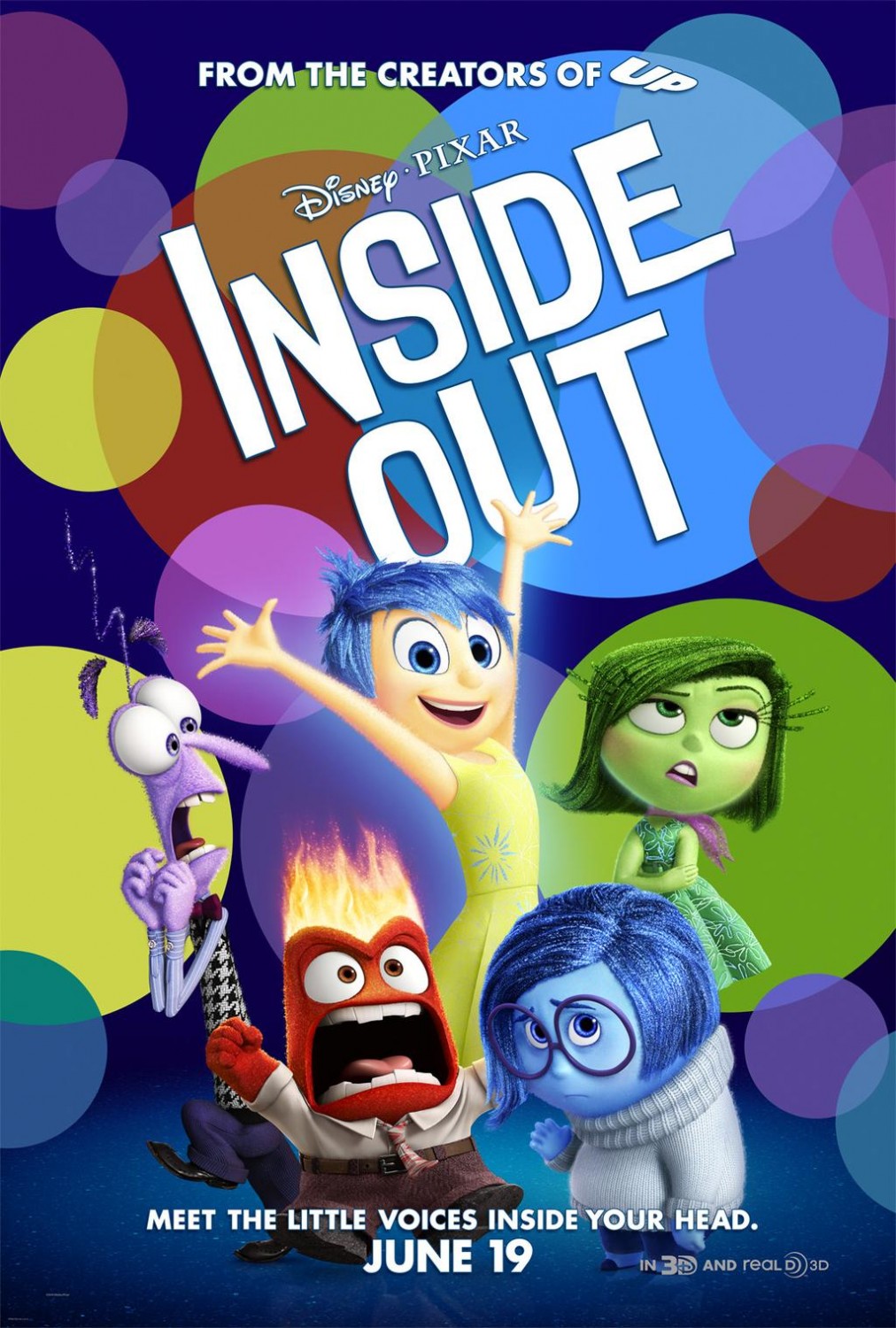
Inside Out tracks a world inside the mind of 11-year-old Riley, who is growing up, trying to cope with fear, sadness, anger, disgust, and joy as her loving family makes a major life change that requires an intense process of change.
To help us navigate this territory, Docter and his team of first-class storytellers have imagined Joy, Sadness, Anger, Fear, and Disgust as characters who run the command center — “Headquarters” (pun intended) — of Riley’s mind. They are the crew of her own personal Starship Enterprise, charting her course through new worlds (like school), seeking out discovery and wonder and excitement (on the hockey rink), helping her process strange new sensations (like… the attention of boys), and taking her where no young girl has gone before.
Inside Out‘s Emotions are a technicolor dream team — luminous, hyper-charged for action, and perfectly voice-cast so that we could slap emotional name tags on them just by the sounds of their voices. And they’re perfectly illustrated so that the youngest viewers can tell them apart, older viewers can appreciate nuances in their characters, and merchandisers can invent innumerable toys bearing their distinct likenesses.
Let’s line ’em up:
1. Joy (voiced ebulliently by Amy Poehler) has the upper hand in Riley’s head. She’s enthusiastic, giddy, and made of a sort of Hostess Twinkie material (in close ups, her edges seem spongey, effervescent, and ephemeral, as if she’s an energy field). She’s a sort of carbonated Tinkerbell inspired by a Coldplay song: She’s all yellow.
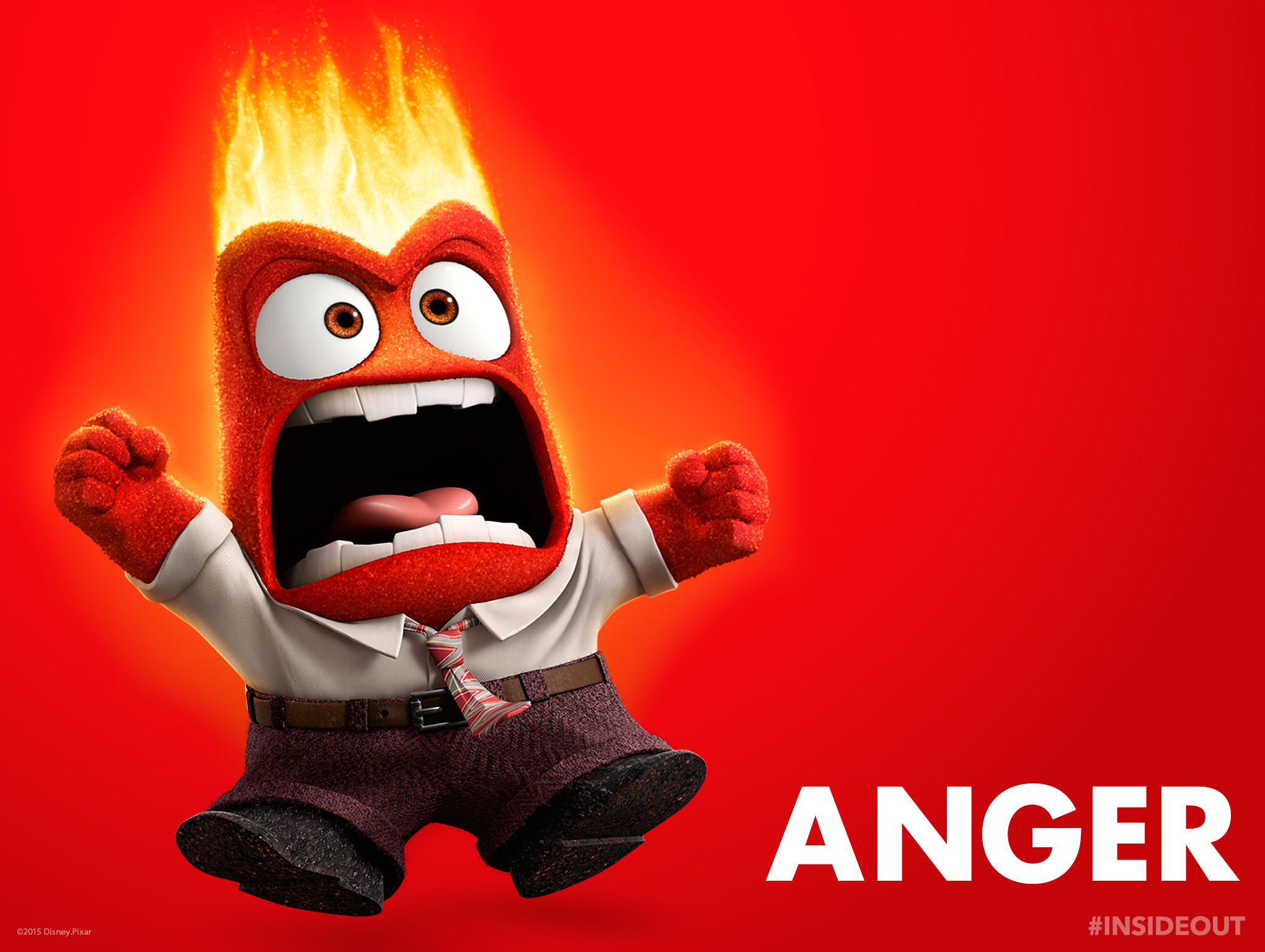
2. Anger (Lewis Black) is as short and stout as Roger Ebert’s thumb’s up and red as a bursting blood vessel; expect to see his face used as an emoji for blinding rage.
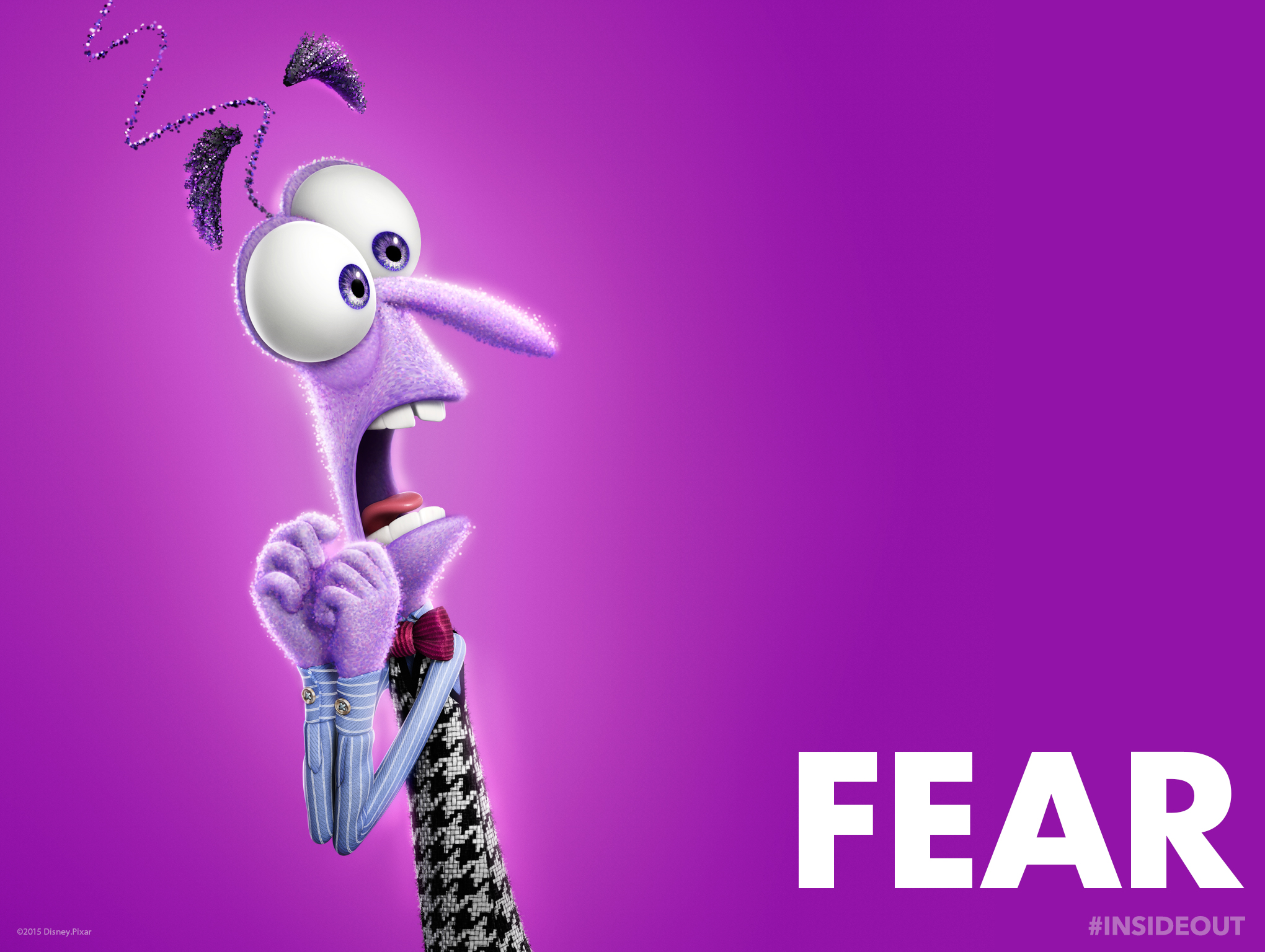
3. Fear (Bill Hader) is skinny, purple, and bendy as spaghetti al dente — and it’s his job to set off alarms regarding Riley’s safety.
4. Disgust (Mindy Kaling) strives to save Riley from dangerous substances like… broccoli.
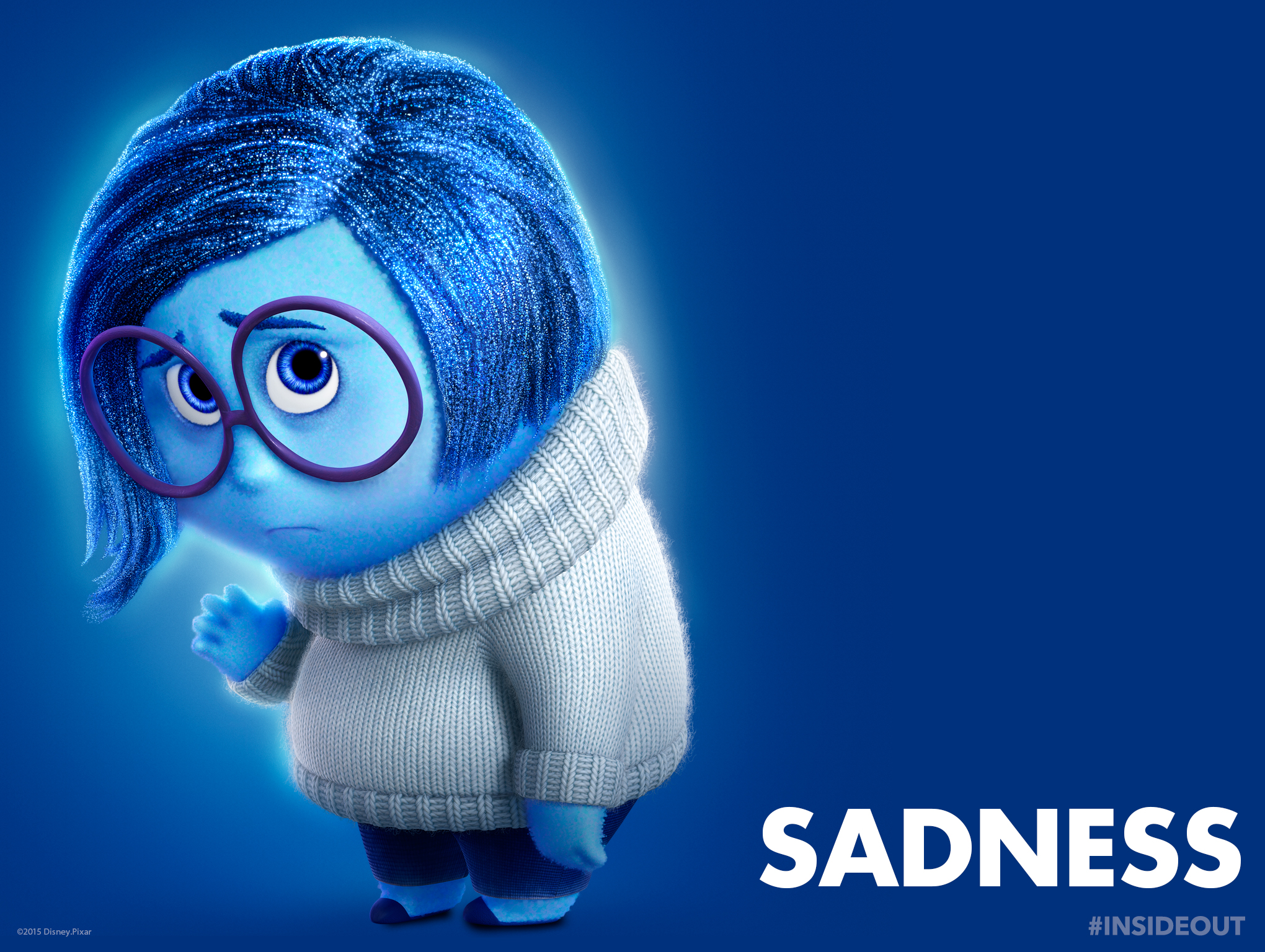
And 5. Sadness (Phyllis Smith), a gloomy gumdrop who literally has the blues… well, what good is she? Suppress her! Resist her! Try to lock her up! She’ll still taint memories, she’ll still spoil moods, and eventually she’ll threaten to wreck all of Joy’s endeavors to keep Riley happy.
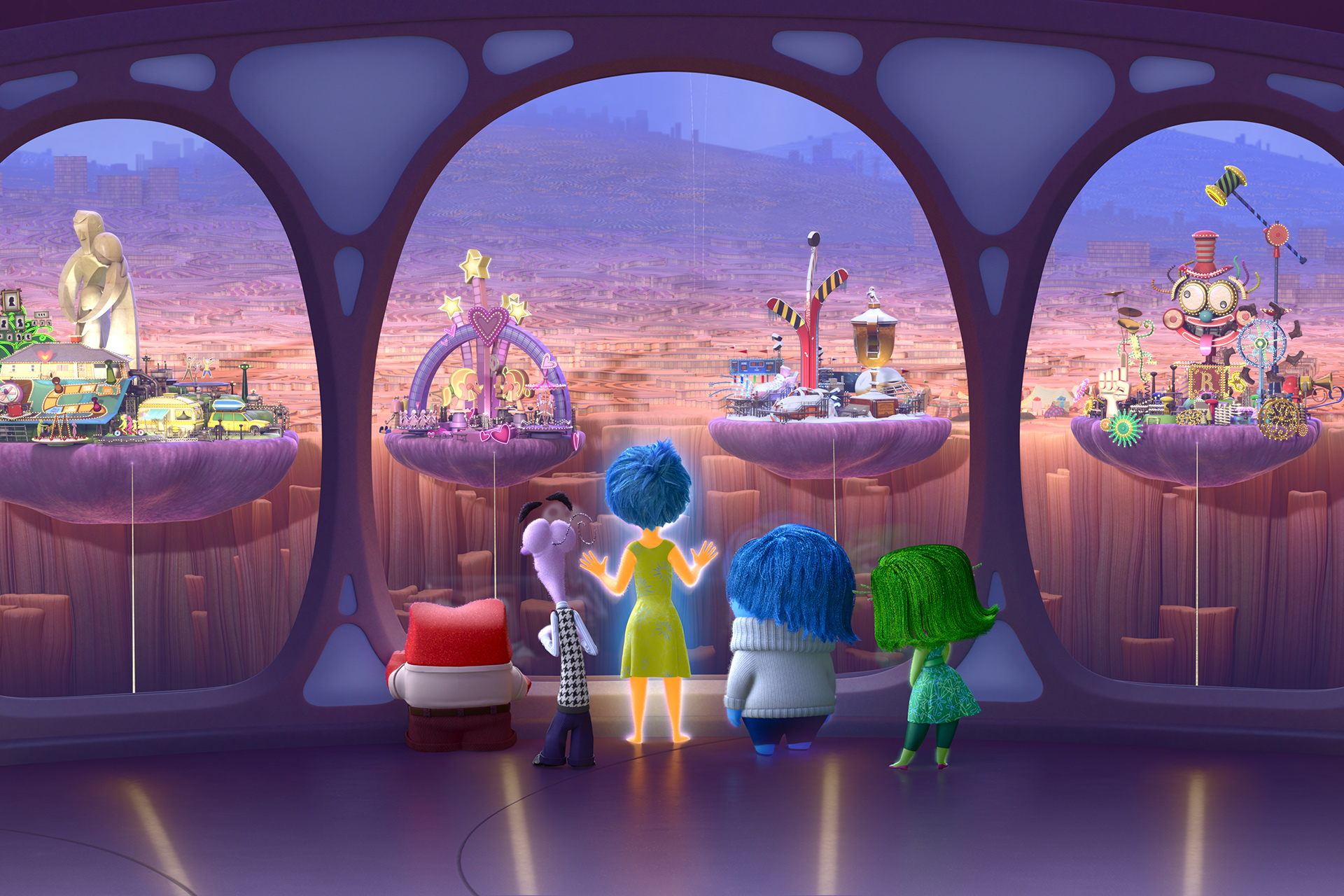
 The emotions work together like the best sitcom teams — from The Mary Tyler Moore Show to Seinfeld to 30 Rock — as they move through a glorious wonderland from Headquarters to the vast library of Long Term Memory to the all-important Memory Islands under construction: islands that represent categories of memory that determine Riley’s identity — family, play, imagination, sports, and more. And while you’re on the dizzying bridges from Headquarters to the islands, don’t look down! There are darker and more disturbing realms to be found deep in the canyons of memory. But I’ll let you discover for yourself what’s waiting there, what sleepers might awaken from the shadows. For now I’ll just say this: Remember that fantastic scene in Toy Story 2 when Woody climbs around on a sleeping giant and tries not to wake him? There’s another version of that scene here… and it’s kind of terrifying.
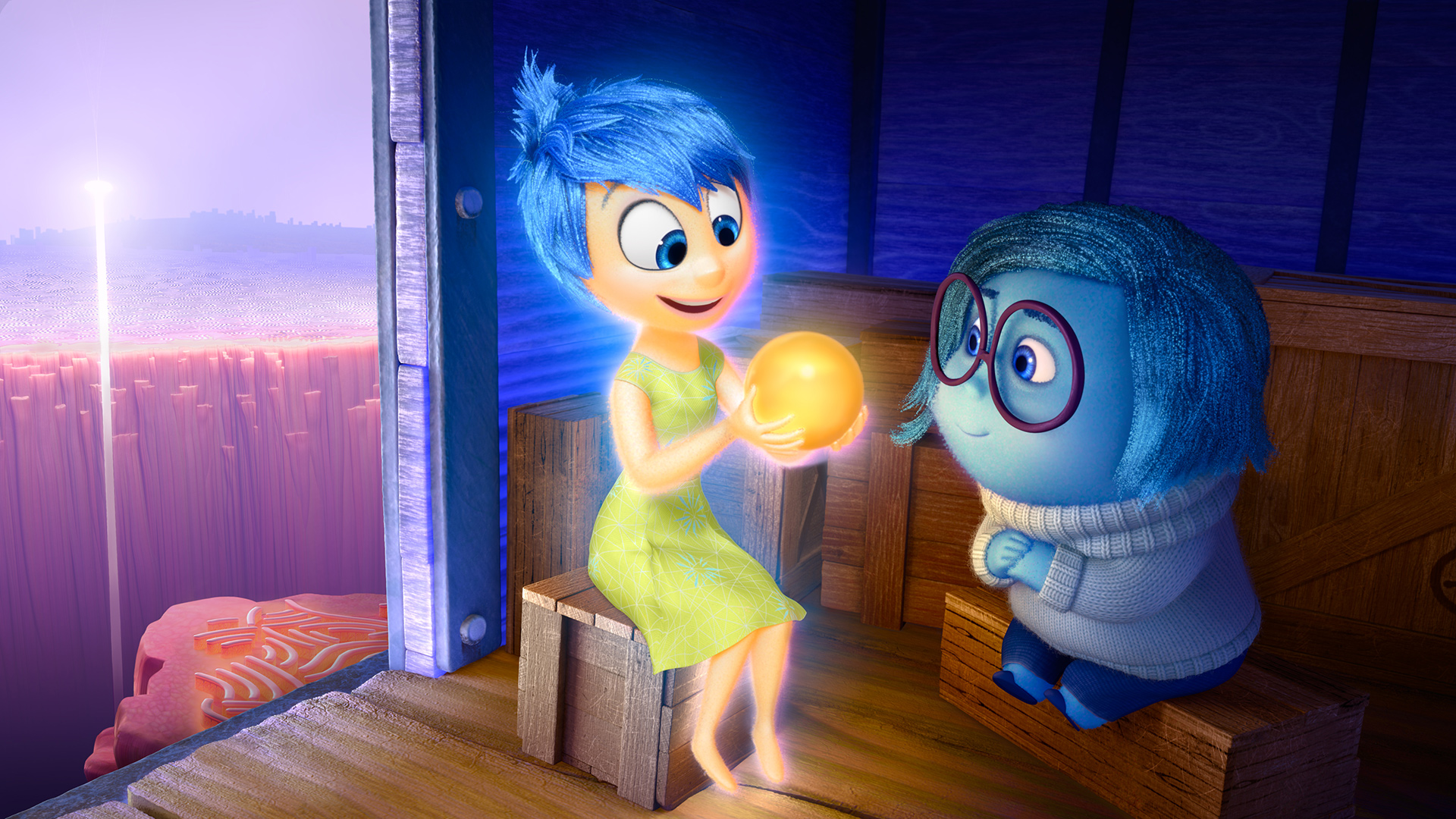
The less you know from this point on, the better. This this — more than any other Pixar movie — is an experience of constant and joyous surprise. Suffice it to say that the hardships Riley suffers end up catapulting Joy and Sadness out of Headquarters, leaving Anger, Disgust, and Fear to rule her roost. Most of the film is concerned with Joy and Sadness learning to get along as they try to make their way back to headquarters while the troubles that separated them in the first place continue to devastate Riley’s psychological cosmos.
 And who hasn’t experienced such things? Director Pete Docter, who proved himself a virtuoso of emotional storytelling when he made Monsters Inc and Up — has found a phenomenal visual vocabulary for helping us understand what happens to so many of us when we find ourselves in situations where we have lost control our circumstances.
In fact, every beat of this story rings true, and what’s more — this time, Docter paces the story’s emotional stages so that things intensify brilliantly. We become so swiftly acquainted with the beauty of the landscape of Riley’s mind that we can feel what’s at stake right away. And so we can feel regions of our own minds resonating in empathy for Riley as she suffers various crises. We can sense that her whole future, her passions, her talents, and her loves could all come crumbling down in a matter of moments if she is not surrounded by love and care.
I don’t think I’ve ever seen a film that more powerfully portrays the fierce intelligence, but also the fragility, of a child’s mind for moviegoing audiences. Your mileage may vary, but I was moved to tears within the first 15 minutes — not by sentimentality, but by that rare experience of imagining things I had never thought about before, recognizing them as true, and then realizing the implications for me and for those I love. So many names of friends and family members went through my mind at different points in this journey, as I thought of survivors of emotional abuse, of children dealing with catastrophic loss, of adults still burdened by the lasting effects of childhood trauma.
 And yet — don’t get me wrong — the overwhelming mode of this movie is joy.
Lest I give the impression that I’m one of those raving Pixar fanboys, I will say this: I would have written the last act of the film a little differently. And I was not surprised to find that my good friend Steven Greydanus, film critic for DecentFilms.com, and I agreed on what storytelling points could have used some strengthening. Let’s just say that they involve the ways in which Riley’s Memory Islands — the fragile “national parks” of her experience geography — prove to be vulnerable to trauma and calamity, and how the film ends up resolving the problems that occur there. That last act resolves very, very quickly when it seems to me that a more patient depiction of the conclusion might have felt more true and persuasive.
But that’s a minor storytelling quibble. Make no mistake: This is another standard-setting achievement for Pixar. Their methods for crafting movies are legendary, but this may be the greatest triumph of their process: The story, according to Pete Docter and his producer Jonas Rivera, went through so many drafts, and so many drastic revisions, that they didn’t even know the basic plot until several years into the project. Now, audiences get to reap the rewards of their courage, their high standards, and their willingness to keep trying. Beyond the story, everything else is perfectly calibrated: the cast, the animation, the sound, Michael Giacchino’s musical score. This is the work of artists in peak form, working collaboratively, with all of their priorities in the right places. It has the cosmic scope of WALL-E, the big beating heart of Up, the indelible personalities of Toy Story, and a storytelling arc as strong as Finding Nemo.
 It also has the funniest end-credits surprises of the whole Pixar catalog, so stay in your seat.
I can’t help but wonder how the ideas presented in this movie will affect the way children think about their own minds, their own memories, their own emotions. What a strange thing for a child — to begin imagining these forces of emotion and energy as individual identities, a community of little angels running around inside her head trying to hold her together through hardships.
I wouldn’t be surprised if Inside Out becomes the most socially influential work of this studio’s library of exemplary motion pictures. It’s a story that will prove to contribute meaningfully to conversations between parents and children, spouses, friends, and even communities for many years to come. For all of the technical skill on display, what makes this movie live is its marriage of head and heart, science and spirit, imagination and love. It’s the kind of movie that will promote the healing of psychological and relational wounds, prevent injuries, increase empathy, and strengthen bonds of relationship. Any meaningful film-recognition event at the end of 2015 — Are there any meaningful film-recognition events? — would give this serious top-honors consideration.
 What’s more — I want sequels. Docter and Company have only scratched the surface of the possibilities that this new storytelling geography opens up for us. I want to visit other characters minds. I want to see how this paradigm allows us to consider challenges such as the formation and dissolution of prejudice; differences in people’s formations of faith; how anger leads to violence and the damage that this does in the mind of the one carrying out that violence. The vocabulary offered here is so promising in helping us recognize what ails our hearts and minds.
So I cannot recommend Inside Out highly enough for moviegoers of all ages. When I think about it, I find my own emotions having a shouting match: Anger rages about just how much mediocrity families must endure at the movies before they find something innovative and meaningful that all ages can enjoy. Fear frets about whether moviegoers will give this film a warm welcome, or if they’ll all just choose the familiar routines of rampaging dinosaurs and scenes of urban destruction. Sadness watches the world of mainstream movies devolve into merchandise-driven franchise-building and stories of fighting our fears with violence.
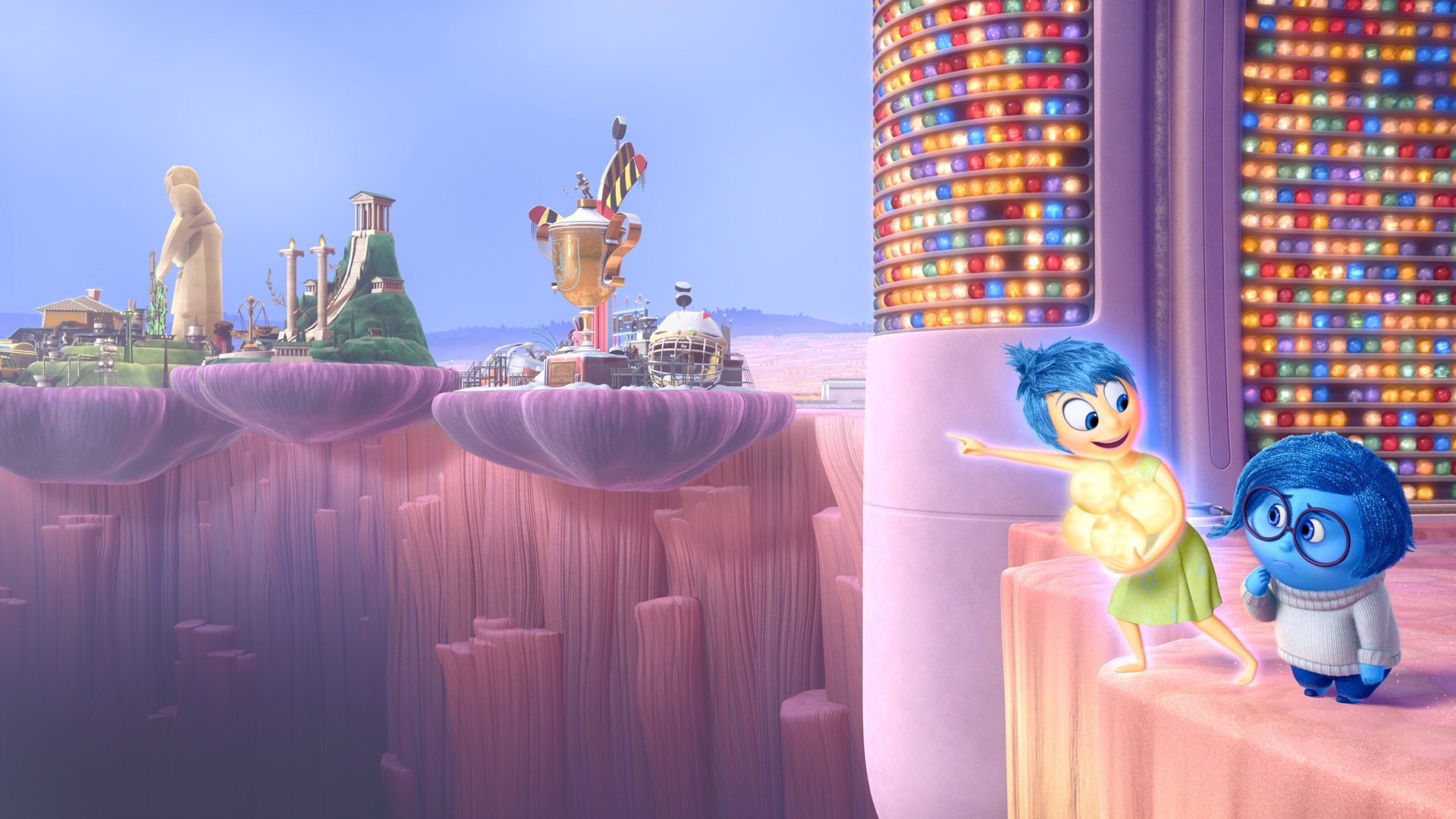 But Joy… Joy celebrates that we live in the age of Pixar, which has — time and time again — overcome the odds to deliver works of lasting, love-filled animation and imagination.
I’ll let others rush to decide how Pixar’s movies stack up now. I’m content to welcome them back, and thank them for reminding me of what is possible when artists have the freedom to follow their imaginations into undiscovered worlds… both outside and inside.
Previous Post

June 18, 2015
Mourn With Those Who Mourn
Next Post
June 24, 2015 This Is Not Goodbye. But It is... See You Elsewhere!
Browse Our Archives
Select a Category Blog Bloggers on "Through a Screen Darkly" Browser Coming Soon Endorsements Fiction Books Film Forum Film Reviews Inspirations Interviews Journal Kindlings Muse Movie buzz Music Reviews Non-Fiction Books radio Reviewers on "Through a Screen Darkly" The Auralia Thread Through a Screen Darkly Through a Screen Darkly - Bonus Materials Top 10 (or 20 or 100) lists Uncategorized
Select a Month June 2015 May 2015 April 2015 March 2015 February 2015 January 2015 December 2014 November 2014 October 2014 September 2014 August 2014 July 2014 June 2014 May 2014 April 2014 March 2014 February 2014 January 2014 December 2013 November 2013 October 2013 September 2013 August 2013 July 2013 June 2013 May 2013 April 2013 March 2013 February 2013 January 2013 December 2012 November 2012 October 2012 September 2012 August 2012 July 2012 June 2012 May 2012 April 2012 March 2012 February 2012 January 2012 December 2011 November 2011 October 2011 September 2011 August 2011 July 2011 June 2011 May 2011 April 2011 March 2011 February 2011 January 2011 December 2010 November 2010 October 2010 September 2010 August 2010 July 2010 June 2010 May 2010 April 2010 March 2010 February 2010 January 2010 December 2009 November 2009 October 2009 September 2009 August 2009 July 2009 June 2009 May 2009 April 2009 March 2009 February 2009 January 2009 December 2008 November 2008 October 2008 September 2008 August 2008 July 2008 June 2008 May 2008 April 2008 March 2008 February 2008 January 2008 December 2007 November 2007 October 2007 September 2007 August 2007 July 2007 June 2007 May 2007 April 2007 March 2007 February 2007 January 2007 December 2006 November 2006 October 2006 September 2006 August 2006 July 2006 June 2006 May 2006 April 2006 March 2006 February 2006 January 2006 December 2005 November 2005 October 2005 September 2005 August 2005 July 2005 June 2005 May 2005 April 2005 March 2005 February 2005 January 2005 December 2004 November 2004 October 2004 September 2004 August 2004 July 2004 June 2004 May 2004 April 2004 July 2003 May 2003 March 2003 September 1999
Follow Us!
TAKE THE
Religious Wisdom Quiz
Who did God give the Ten Commandments to?
Select your answer to see how you score.
Abraham Joshua Noah Moses
Related posts from Looking Closer


Tomorrowland? Or Tomorrow-bland?


My Favorite Film of 2014: The Strange Little...
TRENDING AT PATHEOS Religious Music & Entertainment

"Les Diabolique" and Transgression
Alongside something like Arrival, Vertigo, or Charade, Les Diaboliques is a...

"The Plague Dogs" and Mortality
So, flashback to the late 70s, early 80s. Walt Disney Studios is...

With the recent and highly successful release of Christopher Nolan’s epic film,...

"L'avventura" and Human Weakness
Today's piece is going to be a little different for a few...

I first want to apologize for not posting or writing anything. I'm...

I've engaged in the multi-year project of reading through the Church Fathers,...
view all Religious Music & Entertainment blogs
Ad-Free & Subscriber Log-In Subscription Support
- About Us
- 2026 Calendar
- Videos
- Podcasts
- Library of World Religions
- Faith In Media Tracker
- Advertise With Us
- Write for Us
- Privacy Policy
- Terms of Service
- Do Not Sell My Data
- Contact Us
- Radiant Digital
- Manage Newsletter Subscriptions
- Unsubscribe From Notifications
- Sitemap
Copyright 2008-2026, Patheos. All rights reserved.
Subscription Support Ad-Free & Subscriber Log-In
Follow Patheos