
BuddhistCatholicContemplativeEvangelicalGeneral ChristianHinduJewishLatter-day SaintMuslimNew VisionsProgressive Christian
Beliefs
- Buddhist
- Catholic
- Contemplative
- Evangelical
- General Christian
- Hindu
- Jewish
- Latter-day Saint
- More Voices
- Muslim
- New Visions
- Pagan
- Progressive Christian
Topics
- Religion News
- Food and Religion
- Sports and Religion
- Religious Art
- Religious Music and Entertainment
- Religious Events
- History and Religion
- Style and Religion
- Politics and Religion
- Women in Religion
- Recreation Outdoors and Religion
- Business Finance and Religion
- Careers Workplace and Religion
- Education and Religion
- Family Parenting and Religion
- Health Fitness and Religion
- Home and Religion
- Relationships and Religion
- Technology and Religion
- Travel and Religion
Columnists
- Buddhist Columnists
- Business Finance and Religion Columnists
- Careers Workplace and Religion Columnists
- Catholic Columnists
- Contemplative Columnists
- Education and Religion Columnists
- Evangelists Columnists
- Family Parenting and Religion Columnists
- General Christian Columnists
- Health Fitness and Religion Columnists
- Hindu Columnists
- History and Religion Columnists
- Home and Religion Columnists
- Jewish Columnists
- More Voices Columnists
- Latter Day Columnists
- Muslim Columnists
- New Visions Columnists
- Nonreligious Columnists
- Pagan Columnists
- Politics and Religion Columnists
- Progressive Columnists
- Recreation Outdoors and Religion Columnists
- Relationships and Religion Columnists
- Religion News Columnists
- Religious Art Columnists
- Religious Events Columnists
- Religious Music and Entertainment Columnists
- Sports and Religion Columnists
- Style and Religion Columnists
- Technology and Religion Columnists
- Travel and Religion Columnists
- Women in Religion Columnists
Resource Library
- 2026 Calendar
- Library of World Religions
- The 100 Most Holy Places on Earth
- Patheos Answers
- Podcasts
- Videos
- Faith Leaders Database
- Anglican Episcopalian
- Bahai
- Baptist
- Buddhism
- Christianity
- Confucianism
- Eastern Orthodoxy
- Hinduism
- Holiness and Pentecostal
- ISKCON
- Islam
- Judaism
- Lutheran
- Methodist
- The Church of Jesus Christ of Latter-day Saints
- New Age
- Paganism
- Presbytarian and Reformed
- Protestantism
- Religion Behind the Scenes
- Roman Catholic
- Scientology
- Shia Islam
- Sikhism
- Sufism
- Sunni Islam
- Taoism
- Zen
- See all religions
Research Tools
 Ad-Free & Subscriber Log-In Subscription Support
Ad-Free & Subscriber Log-In Subscription Support
Follow Patheos 

- Trending:
- Forgiveness
- |
- Marriage
- |
- Consciousness
- |
- Death Penalty
- |
- Election
- |
- Halloween
 Looking Closer
- Home
- Religious Music & Entertainment
- The Bard on the Big Screen: Much Ado About “Much Ado,” “Shakespeare in Love,” and More
The Bard on the Big Screen: Much Ado About “Much Ado,” “Shakespeare in Love,” and More
Last updated on: June 9, 2013 at 1:20 pm by Jeffrey Overstreet
The Bard on the Big Screen: Much Ado About “Much Ado,” “Shakespeare in Love,” and More 2013-06-09T13:20:10-06:00 Jeffrey Overstreet
Patheos Explore the world's faith through different perspectives on religion and spirituality! Patheos has the views of the prevalent religions and spiritualities of the world.
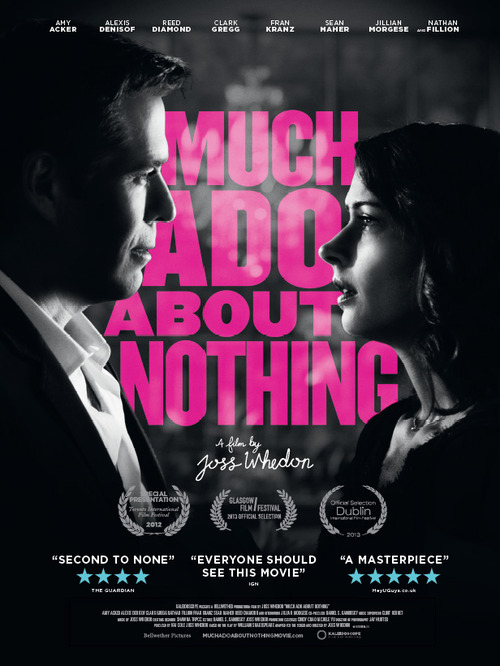 Joss Whedon’s Much Ado About Nothing is winning high praise at film festivals, promising moviegoers an infusion of intelligence, romance, and sophistication during summertime’s typically juvenile program of explosions.
Glenn Kenny, for example, writes,
The entire cast, indeed, revels not just in Shakespeare’s language but in the clever way this play both conforms, in its plot points, to the now-antiquated gender roles of its time but also subverts them, giving acute but not overemphatic stresses on the subversions. It’s a take on the play that purists can certainly respect, and that novices may well find seductive or at least engaging.
And A.O. Scott says,
From its very first scenes, Mr. Whedon’s film crackles with a busy, slightly wayward energy that recalls the classic romantic sparring of the studio era.
I want to believe.
The last time I saw an adaptation of Much Ado About Nothing at the movies, I was disappointed. Kenneth Branagh’s enthusiastic production gave us some wonderful scenes, but the cast was a distracting mix of celebrities, some of them excellent, some miscast.
Due to the difficulty of adapting Shakespeare’s complex period pieces for the screen, I suspect that you, like me, have a personal opinion about which attempts were mishandled and which turned out to be magnificent.
So tell us.
What’s your favorite big-screen blast of the Bard? Is there some Shakespeare on the big screen that deserves more attention than it’s received?
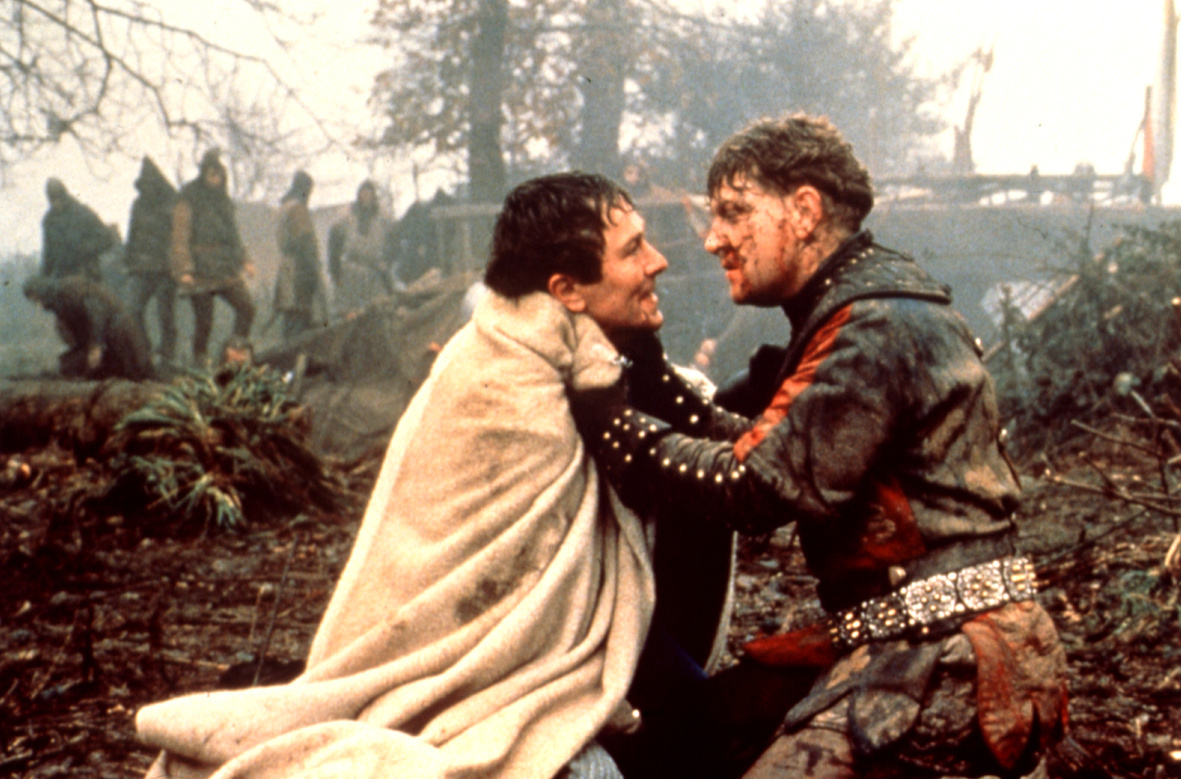 For me, there is one that stands out from the rest: Kenneth Branagh’s Henry V, a work that made Branagh’s future on the big screen seem incredibly promising… perhaps too promising. Nothing he’s done since then has captured and inspired me like that.
Then, of course, there are Shakespeare movies and then there are Shakespeare-related films.
I’ve found Rosencrantz and Guildenstern are Dead, based on the Tom Stoppard play, to be worth revisiting time and time again.
But for every admirable title, I can think of several that frustrate me. I avoided Anonymous, for example It turned out to be a crowd-pleaser, but it was based on a preposterous premise that will provoke the perpetuation of silly conspiracy theories for generations to come.
And then there’s Shakespeare in Love.
That’s a film that… well… maybe it’s time for me to restore my original review to the online archive.
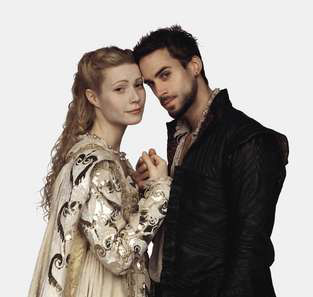 This review was originally published at one of the earliest versions of this blog, way back in 1998. Although I have always made it a practice to revise reviews from time to time, reading it feels a little like looking at snapshots from my childhood. Here it is, such as it is…
–
To see Shakespeare in Love, or not to see it… that is the question.
Proceed with caution. Shakespeare in Love boasts a brilliant screenplay by Tom Stoppard and a spirited cast, including a scene-stealing Judi Dench, and what is, by my lights, the finest acting of Gwyneth Paltrow short, luminous career.
Cast off your idea that Shakespeare films are stuffy. This one’s as lusty as movies come.
Lust. We’ll get back to that word in a while.
Shakespeare in Love proves once and for all that the Fiennes family must have put something spicy in the baby food. Joseph Fiennes as Shakespeare demonstrates as much… nay, even more intensity than his melodramatic brother Ralph (Schindler’s List, Quiz Show, Prince of Egypt). You get the feeling that if this Shakespeare had a fight over a woman with that man behind the mask in The English Patient, we’d see the screen’s most spectacularly bitter duel… and it would be fought with Ralph and Joseph’s stares.
Eyes intent as blowtorches, Fiennes plays Shakespeare as a man so hot-blooded that, before he can sit down and write a word, he has to go out, intoxicate himself with lust, dawdle with tawdry mistresses, then return to his desk, spin around three times, spit on the ground, clap his hands, and rub his quill pen between his sweaty palms. (If that sounds like a euphemism, well, it almost is.) He writes as if he’s a wrestler in the ring. If writing were this much fun, people would buy tickets to a rough draft and shout, “Go, Playwright! Fill those pages! Pin this play to the ground!”
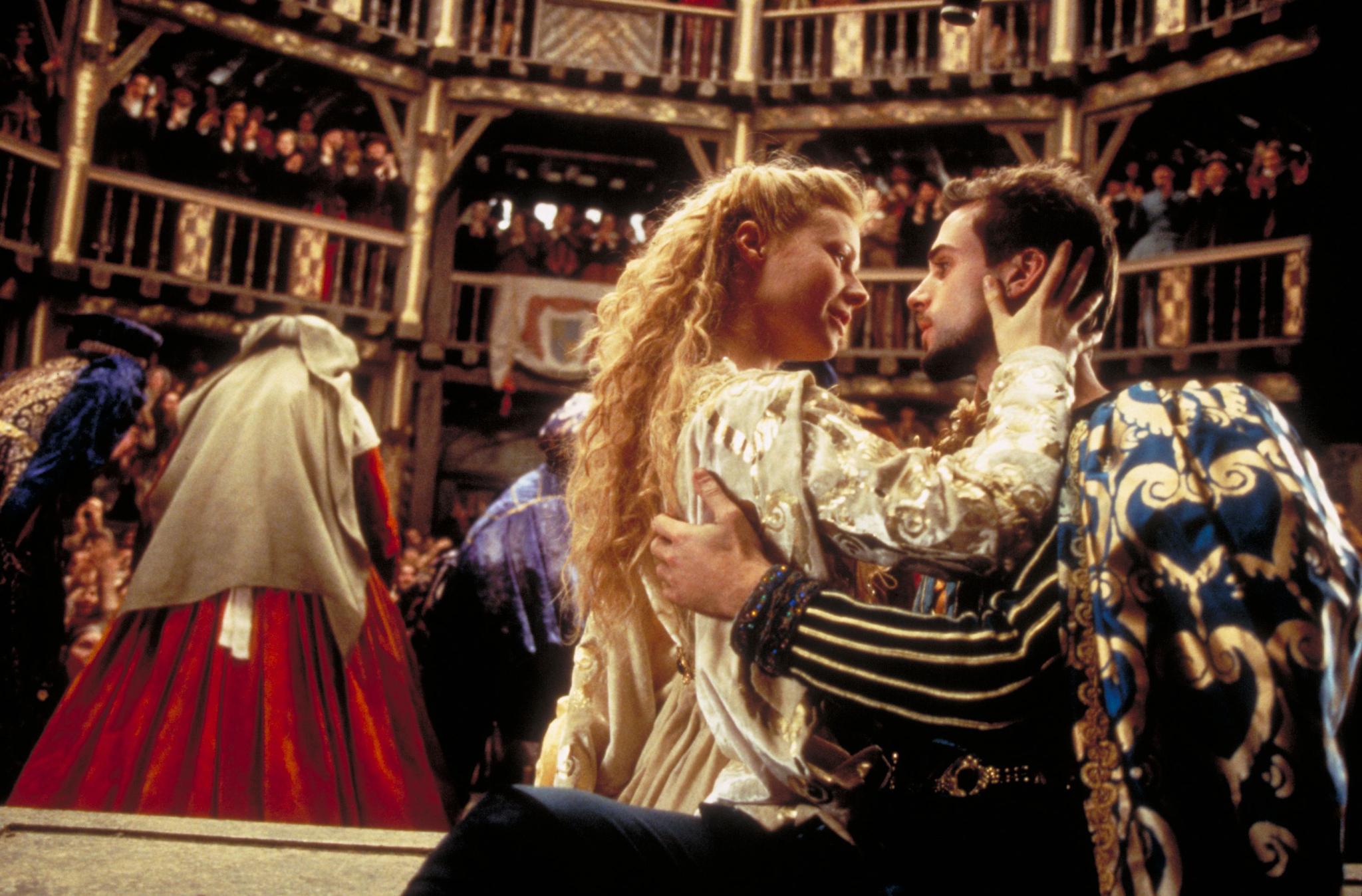
If it weren’t for Gwyneth Paltrow as Viola, Shakespeare’s dream girl, this play would burn itself out with overacting. With Fiennes about ready to explode, Gwyneth provides the cool. She is graceful, subtle, practically glowing as she moves from the elaborate ballroom dances to a secret rendezvous in the shadows. When she hears Shakespeare’s latest verse, she sighs, “I will have poetry in my life, adventure, and love… love as there has never been in a play….” (She seems here far more eloquent at spontaneous speech than Shakespeare, who is left stammering about his play’s premise: “Well, there’s this pirate…”.)
Viola seems honestly enraptured by the language… the language, not the man. Even when she’s trapped by Shakespeare’s Death Star Tractor Beam stare, it is clear that she is thinking of the plays, and thus allows herself to be swept away by the great creator, somehow blind to the fact that he’s a womanizing fool as well as an eloquent scribe. Before they’ve even had an honest-to-goodness “Hi, How are you?” conversation, they’re rolling in the sheets. It’s as though they’re stuck in one of those movies where a meteor is coming to destroy the world, and they’re “seizing the day.”
But alas those difficult times. Viola must marry Lord Wessex, a Disney-esque villain (Colin Firth) who is an investor in tobacco (Tobacco: Investment of Villains). Wessex cares only about Viola’s fortune and seems indifferent to her beauty, grace, and rumored virtue. Seriously, what is wrong with this dude?
Speaking of virtue — is this play about virtue? We are compelled to be repulsed by the idea of this forced mismatch of Viola and Wessex. We must, of course, desire Viola to wed her heart’s true love, Shakespeare. The movie certainly makes one wonder which God will smile on more; her “arranged” marriage or her hasty carnal revelry with the guy who sweet-talked her into the sheets. I was leaning towards thinking that her “true” marriage was with Shakespeare… until I thought about one fact that the movie hopes we’ll forget.
Shakespeare is already married.
He’s abandoned his wife and children to run around winning the hearts of young Viola’s.
We are given a moment to ponder the gravity of this, and for a moment I was excited the movie was going to tackle a seriously messy moral dilemma. But alas, no such luck. After the moment of tension, we’re supposed to accept that marriage means nothing when the hormones move. We’re expected to laugh off the bard’s past errors and applaud his latest passionate mistake. We never see the wife he left behind. We never see his children. This movie is as much in denial of the value of responsibility and faithfulness as this Shakespeare himself. The filmmakers seem to shrug their shoulders and say, “That’s tough, but here’s Gwyneth Paltrow, and what married man in his right mind wouldn’t abandon wife and children to jump into the sack with her?”
It is this “love” inconvenienced by a greedy suitor that supposedly drives Shakespeare to his greatest work, Romeo and Juliet, and the play’s debut provides the stage for the movie’s brilliantly executed (if thoroughly implausible and predictable) resolution.
Still, for all advocacy of unfaithfulness and self-destructive behavior, the artful screenplay does offer a thousand true delights, witty turns of phrase, and truly stirring speeches.
Geoffrey Rush, who has proven that he can play everything from a disabled genius composer (Shine) to a malevolent comic book villain (Mystery Men), here creates another engaging character. A clumsy bankrupt theater manager, he’ll do anything to host Shakespeare’s next play. Judi Dench’s Queen is a cross between another of her great chacters — Mrs. Brown — and a character that I now suspect she could have played if she’d put her mind to it… Jabba the Hutt. She’s as intimidating, awe-inspiring and ornate as any character on the screen this year.
Ben Affleck works hard to fit in with all of these classically trained Brits, and he doesn’t embarrass himself, but one does pity him as he watches his real-life girlfriend get hot and heavy with Fiennes over and over again. Rupert Everett is a welcome sight as Christopher Marlowe, vital to the film’s most brilliant subplot and twists. Even Simon Callow, one of my favorite period-piece regulars (the lovable Mr. Beebe in A Room With a View) storms in a few times to add some muscle.
But why, oh why, did they have to pour so much syrup on what might have been the year’s finest confection? With its heavy dose of gratuitous nudity, rumors of which will be sure to draw in males viewers who are otherwise allergic to Shakespeare, the film violates its own high-minded talk of true love with fuel for adolescent fantasies. Thus, for this moviegoer, Shakespeare in Love falls far short of Tom Stoppard’s other bard-related production: Rosencrantz and Guildenstern are Dead.
This film is wrongfully named. It has powerful language and a wealth of talent as its distinguishing marks, but it shies away, curiously, from poetry, subtlety, and art whenever the lovers embrace, and we’re left with no heroes or heroines worth swooning for.
In truth, this is Shakespeare in Lust.
•
Director – John Madden; writers – Marc Norman and Tom Stoppard; director of photography – Richard Greatrex; editor – David Gamble; music – Stephen Warbeck; costumes – Sandy Powell; production designer – Martin Childs; producers – David Parritt, Donna Gigliotti, Harvey Weinstein, Edward Zwick and Marc Norman. Starring – Gwyneth Paltrow (Viola de Lesseps), Joseph Fiennes (Will Shakespeare), Geoffrey Rush (Philip Henslowe), Colin Firth (Lord Wessex), Ben Affleck (Ned Alleyn), Judi Dench (Queen Elizabeth), Rupert Everett (Christopher Marlowe), Simon Callow (Tilney, Master of the Revels), Jim Carter (Ralph Bashford), Martin Clunes (Richard Burbage), Antony Sher (Dr. Moth), Imelda Staunton (Nurse), Tom Wilkinson (Hugh Fennyman) and Mark Williams (Wabash). Miramax Films. 113 minutes.
Rosencrantz and Guildenstern are Dead
Previous Post

June 6, 2013
Warm Bodies (2013)
Next Post

June 11, 2013 Finding Nemo: This Fish is Still Fresh
Browse Our Archives
Select a Category Blog Bloggers on "Through a Screen Darkly" Browser Coming Soon Endorsements Fiction Books Film Forum Film Reviews Inspirations Interviews Journal Kindlings Muse Movie buzz Music Reviews Non-Fiction Books radio Reviewers on "Through a Screen Darkly" The Auralia Thread Through a Screen Darkly Through a Screen Darkly - Bonus Materials Top 10 (or 20 or 100) lists Uncategorized
Select a Month June 2015 May 2015 April 2015 March 2015 February 2015 January 2015 December 2014 November 2014 October 2014 September 2014 August 2014 July 2014 June 2014 May 2014 April 2014 March 2014 February 2014 January 2014 December 2013 November 2013 October 2013 September 2013 August 2013 July 2013 June 2013 May 2013 April 2013 March 2013 February 2013 January 2013 December 2012 November 2012 October 2012 September 2012 August 2012 July 2012 June 2012 May 2012 April 2012 March 2012 February 2012 January 2012 December 2011 November 2011 October 2011 September 2011 August 2011 July 2011 June 2011 May 2011 April 2011 March 2011 February 2011 January 2011 December 2010 November 2010 October 2010 September 2010 August 2010 July 2010 June 2010 May 2010 April 2010 March 2010 February 2010 January 2010 December 2009 November 2009 October 2009 September 2009 August 2009 July 2009 June 2009 May 2009 April 2009 March 2009 February 2009 January 2009 December 2008 November 2008 October 2008 September 2008 August 2008 July 2008 June 2008 May 2008 April 2008 March 2008 February 2008 January 2008 December 2007 November 2007 October 2007 September 2007 August 2007 July 2007 June 2007 May 2007 April 2007 March 2007 February 2007 January 2007 December 2006 November 2006 October 2006 September 2006 August 2006 July 2006 June 2006 May 2006 April 2006 March 2006 February 2006 January 2006 December 2005 November 2005 October 2005 September 2005 August 2005 July 2005 June 2005 May 2005 April 2005 March 2005 February 2005 January 2005 December 2004 November 2004 October 2004 September 2004 August 2004 July 2004 June 2004 May 2004 April 2004 July 2003 May 2003 March 2003 September 1999
Follow Us!
TAKE THE
Religious Wisdom Quiz
What Christian group worships on Saturday instead of Sunday?
Select your answer to see how you score.
Pentecostals Presbyterians Seventh-day Adventists Baptists
Related posts from Looking Closer

This Is Not Goodbye. But It is... See...



What Specialists Are Saying About Jurassic World
TRENDING AT PATHEOS Religious Music & Entertainment

"Les Diabolique" and Transgression
Alongside something like Arrival, Vertigo, or Charade, Les Diaboliques is a...

"The Plague Dogs" and Mortality
So, flashback to the late 70s, early 80s. Walt Disney Studios is...

With the recent and highly successful release of Christopher Nolan’s epic film,...

"L'avventura" and Human Weakness
Today's piece is going to be a little different for a few...

I first want to apologize for not posting or writing anything. I'm...

I've engaged in the multi-year project of reading through the Church Fathers,...
view all Religious Music & Entertainment blogs
Ad-Free & Subscriber Log-In Subscription Support
- About Us
- 2026 Calendar
- Videos
- Podcasts
- Library of World Religions
- Faith In Media Tracker
- Advertise With Us
- Write for Us
- Privacy Policy
- Terms of Service
- Do Not Sell My Data
- Contact Us
- Radiant Digital
- Manage Newsletter Subscriptions
- Unsubscribe From Notifications
- Sitemap
Copyright 2008-2026, Patheos. All rights reserved.
Subscription Support Ad-Free & Subscriber Log-In
Follow Patheos