
BuddhistCatholicContemplativeEvangelicalGeneral ChristianHinduJewishLatter-day SaintMuslimNew VisionsProgressive Christian
Beliefs
- Buddhist
- Catholic
- Contemplative
- Evangelical
- General Christian
- Hindu
- Jewish
- Latter-day Saint
- More Voices
- Muslim
- New Visions
- Pagan
- Progressive Christian
Topics
- Religion News
- Food and Religion
- Sports and Religion
- Religious Art
- Religious Music and Entertainment
- Religious Events
- History and Religion
- Style and Religion
- Politics and Religion
- Women in Religion
- Recreation Outdoors and Religion
- Business Finance and Religion
- Careers Workplace and Religion
- Education and Religion
- Family Parenting and Religion
- Health Fitness and Religion
- Home and Religion
- Relationships and Religion
- Technology and Religion
- Travel and Religion
Columnists
- Buddhist Columnists
- Business Finance and Religion Columnists
- Careers Workplace and Religion Columnists
- Catholic Columnists
- Contemplative Columnists
- Education and Religion Columnists
- Evangelists Columnists
- Family Parenting and Religion Columnists
- General Christian Columnists
- Health Fitness and Religion Columnists
- Hindu Columnists
- History and Religion Columnists
- Home and Religion Columnists
- Jewish Columnists
- More Voices Columnists
- Latter Day Columnists
- Muslim Columnists
- New Visions Columnists
- Nonreligious Columnists
- Pagan Columnists
- Politics and Religion Columnists
- Progressive Columnists
- Recreation Outdoors and Religion Columnists
- Relationships and Religion Columnists
- Religion News Columnists
- Religious Art Columnists
- Religious Events Columnists
- Religious Music and Entertainment Columnists
- Sports and Religion Columnists
- Style and Religion Columnists
- Technology and Religion Columnists
- Travel and Religion Columnists
- Women in Religion Columnists
Resource Library
- 2026 Calendar
- Library of World Religions
- The 100 Most Holy Places on Earth
- Patheos Answers
- Podcasts
- Videos
- Faith Leaders Database
- Anglican Episcopalian
- Bahai
- Baptist
- Buddhism
- Christianity
- Confucianism
- Eastern Orthodoxy
- Hinduism
- Holiness and Pentecostal
- ISKCON
- Islam
- Judaism
- Lutheran
- Methodist
- The Church of Jesus Christ of Latter-day Saints
- New Age
- Paganism
- Presbytarian and Reformed
- Protestantism
- Religion Behind the Scenes
- Roman Catholic
- Scientology
- Shia Islam
- Sikhism
- Sufism
- Sunni Islam
- Taoism
- Zen
- See all religions
Research Tools
 Ad-Free & Subscriber Log-In Subscription Support
Ad-Free & Subscriber Log-In Subscription Support
Follow Patheos 

- Trending:
- Forgiveness
- |
- Marriage
- |
- Consciousness
- |
- Death Penalty
- |
- Election
- |
- Halloween
 Looking Closer
- Home
- Religious Music & Entertainment
- Pan’s Labyrinth (2006)
Pan’s Labyrinth (2006)
Last updated on: January 26, 2013 at 2:57 pm by Jeffrey Overstreet
Pan’s Labyrinth (2006) 2013-01-26T14:57:52-07:00 Jeffrey Overstreet
Patheos Explore the world's faith through different perspectives on religion and spirituality! Patheos has the views of the prevalent religions and spiritualities of the world.
 When Guillermo Del Toro was announced as the director of a big-screen adaptation of The Hobbit, Tolkien fans rejoiced.
Del Toro has a marvelous way of bringing to life both the childlike and the frightful, and that story needs both. Moreover, he is a master of hand-crafted cinema. Since Peter Jackson’s Lord of the Rings series set a new standard for digital animation, now Del Toro would have a chance to set a new standard for elaborate puppetry and handmade special effects. (He made it clear that he intended to use a lot of “creature shop” imagination for the film.
But then he and producer Peter Jackson ended up parting ways due to production delays (and, some say, over creative differences). Del Toro described it as his career’s most heartbreaking experience. And the world will probably never see much of what Del Toro had in mind.
And alas, the big-screen version of The Hobbit is not going well (unless you count box office success as a sign of quality). Many are complaining about the “video game” style of the first installment, and describing the adaptation (or rather, the embellishment) as “bloated” and excessive and contradictory to the spirit of the original.
So, as Del Toro is returning to the big screen soon with Pacific Rim, perhaps it’s time to revisit one of Del Toro’s great fantasy films to appreciate his strengths. His feature film The Devil’s Backbone is a masterfully crafted ghost story, full of imagination, compassion, and terror. This is also true of Pan’s Labyrinth, which has become one of my all-time favorite fantasy films.
This review of Pan’s Labyrinth was originally published at Christianity Today in December 2006.
–
“You’re too old to be filling your head with such nonsense.”
So says Carmen (Ariadna Gil), whose 12-year old daughter Ofelia (Ivana Baquero) is reading a fairy tale storybook in the car, early in Guillermo Del Toro’s film Pan’s Labyrinth.
Are fairy tales just a waste of time? Should children be allowed to read such stuff? And what about adults? Should we bother with movies about magic and enchantment—like Pan’s Labyrinth? Or is it all just childish madness and reckless escapism?
Clearly, Del Toro believes that fairy tales have something to say to grownups. Otherwise, he would not have crafted an R-rated story about make-believe monsters. Don’t take your kids to this bloody, nightmarish tale. It’s disturbing and often terrifying.
But it’s also heartfelt and deeply meaningful. By contrasting the conflict of good and evil in the realworld with the dramas that take place in fantasy land, Del Toro reminds us that children’s stories—especially those dark and twisted fables from the Grimm Brothers and Hans Christian Andersen—can give us rewarding perspectives on troubling realities. Sometimes, grownups need fairy tales as badly as children do.
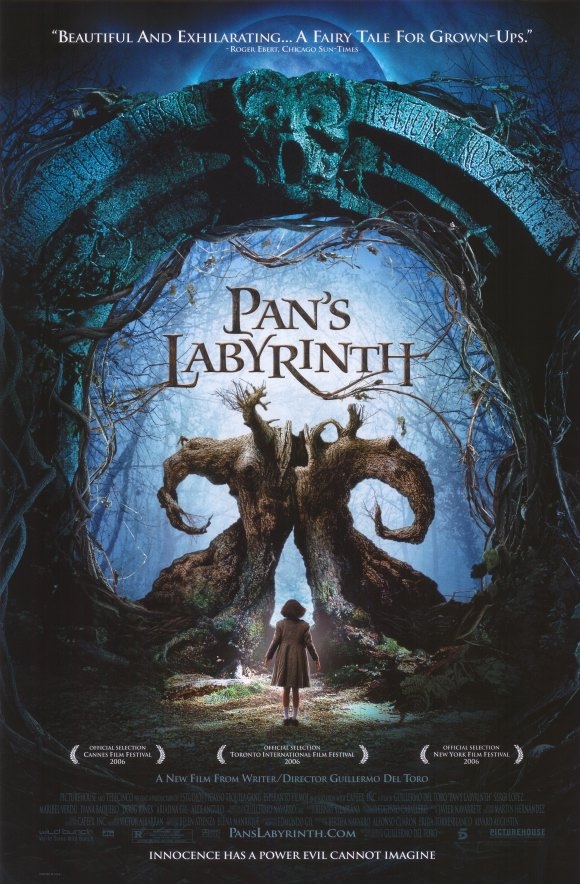 It’s easy to see what’s sending Ofelia off to wonderland. Her pregnant mother is moving them into the Spanish countryside so they can live under the protection of the unborn baby’s father, Vidal (Sergi López), a monstrous captain in Spain’s civil guard. But Vidal doesn’t have much care for his family, outside of his desire for a son. He’s more intent on crushing a force of rebels who are resisting the government’s oppression. While the Spanish Civil War fades and World War II intensifies, Ofelia’s world seems to be spiraling out of control.
As J.R.R. Tolkien once told C.S. Lewis, those who are most hostile to the idea of escape tend to be jailers. Ofelia wants to be—no, needs to be—elsewhere, and her parents are in no mood to help her.
Like Chihiro at the beginning of Spirited Away, Ofelia discovers a gateway to wonderland just beyond a stone guardian who stands in the trees near the village where Vidal is stationed. Then, a curious creature with wings guides her into the most intriguing labyrinth we’ve seen on the big screen since, well, Labyrinth, twenty years ago.
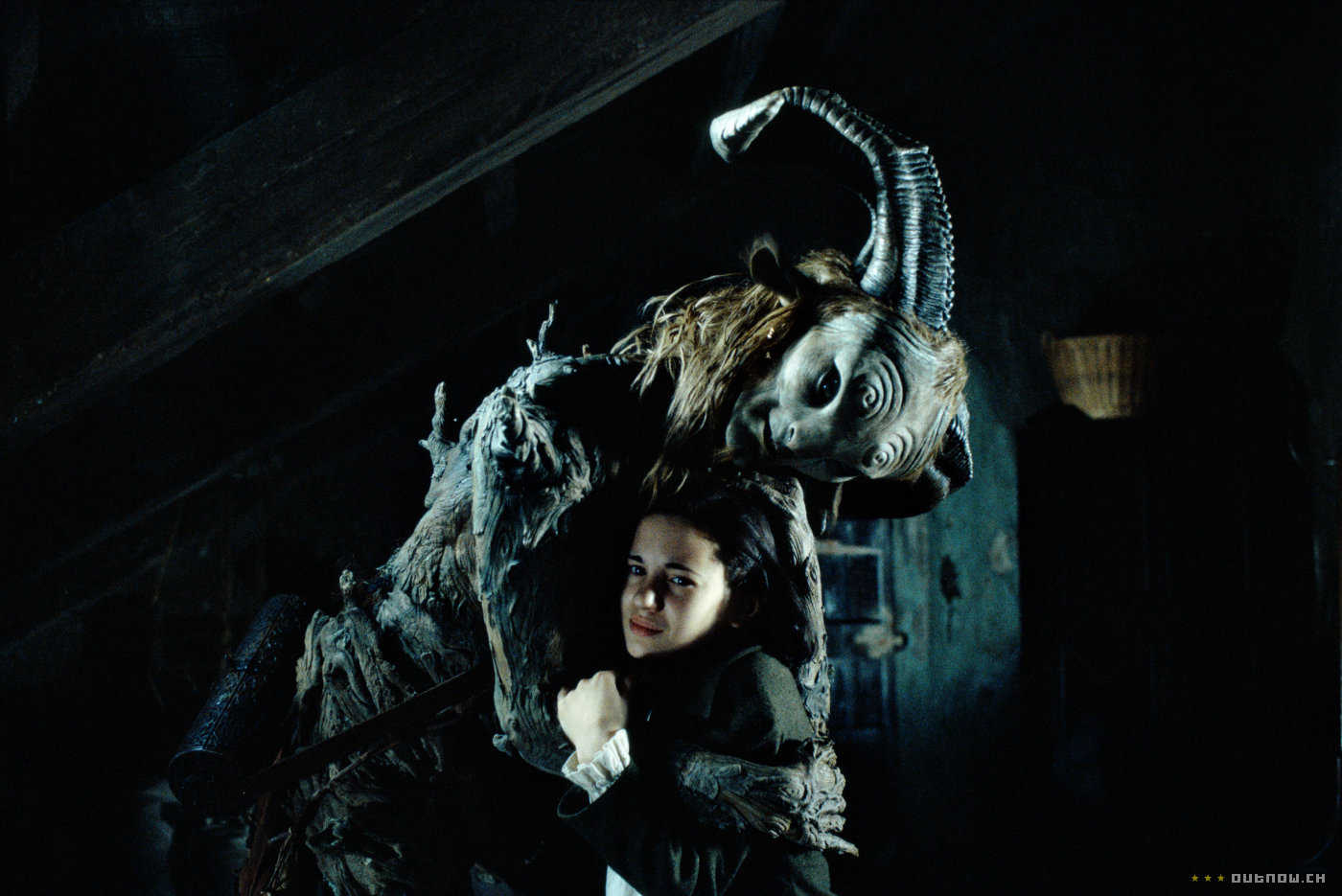
And when Ofelia meets the host of this mysterious maze, he’s even more otherworldly than David Bowie, who ruled the netherworld of Jim Henson’s 1986 film. He’s a faun with massive horns and a menacing stride. Thanks to the title, some moviegoers will worry that he is a representation of the “Horned God” born of Greek mythology who goes by the name of Pan. But no, this isn’t a figure meant to represent male sexuality. The English-language title of the film was chosen for marketing purposes — it “sounded better” than the proper translation of the Spanish title, The Labyrinth of the Faun.
The faun (played with a spooky beastliness by Hellboy’s Doug Jones) is not a gentle Yoda, but he’s not the Devil either. Instead, this unpredictable creature manifests the untrustworthy aspects of the natural world. “I am the mountain, the woods, the earth,” he explains. “I’m a faun.” Don’t worry, this isn’t a pantheistic story. The faun doesn’t demand worship, although he clearly enjoys his power. He prefers to bless, punish, and issue unreasonable demands.
And so he informs Ofelia that she is, in fact, an ancient princess who has forgotten her true home—news that would undoubtedly delight an imaginative girl. In order to find that home, Ofelia must complete three tasks (of course). She must confront a giant toad. She must steal a dagger from the chambers of the Pale Man (a ghastly devil played, again, by Doug Jones). And then, she must employ the dagger per the faun’s instructions to break the enemy’s power.
Back in “the real world,” Vidal is beginning to realize that he may have a traitor in his camp. And so he begins a campaign of interrogation and torture to root out those who sympathize with the rebels. All suspects are presumed guilty until proven innocent — and either way, he’s likely to kill them.
A slave to his superiors, Vidal is an automaton of evil, a man who has silenced his conscience. He represents the opposite of Ofelia, whose decisions reflect a healthy conscience. His choices are not choices at all, but merely blind obedience. “To obey without questions,” says a defiant rebel to Vidal, “that’s something only people like you can do.”
What is Ofelia’s secret? It is her capacity for believing in the “nonsense” of storytelling. Again and again, the films of 2006 — Stranger than Fiction, Flags of Our Fathers, The Fountain, The Science of Sleep — have illustrated this. Story can help us endure chaos and suffering. Narrative gives us a framework for our lives in which we are able to apprehend meaning. Even Todd Field’s Little Children suggests we’ll understand our world better if we consider it through the lens of “grim” fairy tales.
Ofelia finds no comfort or help from religion, for the clergy in Vidal’s company are clearly corrupt. She turns instead to another source of understanding — the light of imagination. And there, we see that the greatest power in her world is not fascism, nor a faun, but love itself.
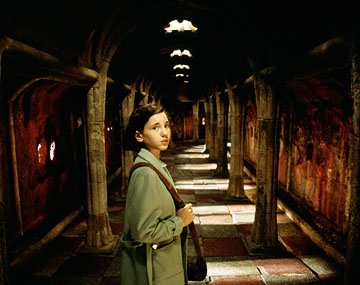 The story comes to vivid life in shadowy worlds — both realistic and fantastic — that merge seamlessly through Eugenio Cabellero’s production design, captured by Guillermo Navarro’s expert cinematography. Enhanced by a lush, resonant score that recalls Howard Shore’s themes for The Lord of the Rings, Del Toro’s wonderland is populated by some of the most lifelike fantasy creatures ever created. There is a wondrous quality to the faun and his netherworld neighbors, who resemble figures from Arthur Rackham’s storybook illustrations.
The cast members refuse to let their make-believe co-stars steal the spotlight. Ivana Baquero is unnervingly convincing as a child caught in a traumatic situation. Maribel Verdú (Y Tu Mama Tambien) is affecting as Mercedes, the housekeeper who watches over Ofelia. Sergi Lopez, who has portrayed unforgettable villains in With a Friend Like Harry and Dirty Pretty Things, is rather one-dimensionally wicked here; but as he represents the hard-heartedness of a brutal regime, he’s not meant to be a complicated character.
Del Toro directs this tale with the confidence of a master storyteller. Pan’s Labyrinth further develops a unique blend of fantasy and history that he introduced in his extraordinary 2001 film, The Devil’s Backbone. It succeeds because of Del Toro’s uncompromising dedication to his vision. When financiers lost their courage and bailed, Del Toro gave up his salary in order to finish it. As a result, he’s given us one of the best fantasy films ever made.
But Pan’s Labyrinth is more than just a fantasy. It’s an important film about the power of childlike faith to guide us through a darkening world.
Thus, it’s disappointing that Del Toro’s film writes off the church with one broad stroke, casting the Christian clergyman as hand-in-hand with the devil. It’s true that many evils have been committed in the name of Christ, and the Spanish Civil War raises questions about the relationship of the Catholic church and a fascist regime.
In an article in Sight and Sound, Del Toro said that the Pale Man, a devil who has a face without eyes, represents the evil committed by “faceless institutions” like the church. (He also describes himself as a “lapsed Catholic,” and tells us that he turned down an offer to direct The Chronicles of Narnia: The Lion, the Witch and the Wardrobe because he “wasn’t interested in the lion resurrecting.”) But it seems rather extreme to equate Christians and Nazis. And it’s a shame that Del Toro can’t make a distinction between the message of Christ and the distortion of that message by corrupt and misguided churchmen.
Still, whether he knows it or not, Del Toro has given us a story resonant with echoes of Christianity. Consider the fairy tale about the rose of redemption, which was abandoned by those who feared the rose’s thorns. Consider the suggestion that those who become too focused on their own suffering will forget their true heritage and home. Consider the reminder that innocent blood has been shed for the salvation of the world.
This film would probably have delighted Tolkien and Lewis, who believed that fairy tales—even dark and troubling myths like this one—serve to help us explore spiritual mysteries and apprehend the reality of grace as it glimmers through a glass, or in this case a screen, darkly. Pan’s Labyrinthis a parable so profound it’s like the gospel masquerading in a mysterious disguise.
–
Other Critical Responses, from my Film Forum column at Christianity Today:
[from Film Forum, 01/04/07]
Critics are, for the most part, enraptured by Del Toro’s work, and several have rated it among the very best films of 2006.
But Greg Wright (Past the Popcorn) isn’t so impressed. “It’s fine to emphasize that fantasy can often be more real than reality; but for me, the deliberate unreality of del Toro’s Spain undermines the effort. We don’t long to escape to another world because reality is too fake; we long to escape because the place we live is unbearably real. And as for me, I couldn’t wait to escape from fully half of del Toro’s movie. At least the fantasy sequences provided satisfying relief.”
He concludes, “Sadly, del Toro’s flawed reality also undermines whatever political and social commentary he might have in mind. … Pan’s Labyrinth convinces me that del Toro is a master of fantasy, but leads me to question his grip on reality.”
[from Film Forum, 01/25/07]
Christian Hamaker (Crosswalk) raves, “It’s a reminder that not all fairy tales are for children, and that the power of the imagination is something that can be kindled and reawakened in adults, given the right material. Pan’s Labyrinth is, in a word, breathtaking. … Its images are strange and, at times, frightening, but I found its message of strength through sacrifice deeply spiritual and profoundly Christian.”
Harry Forbes (Catholic News Service) calls it “a cinematically stunning adult tale. … Though the main story outline is familiar in its classic structure, it is given new life by Del Toro’s deft balancing of the harsh real world with the girl’s mysterious parallel universe which sheds light on the former, and there are poignant elements of sacrifice and redemption.”
J. Robert Parks (Framing Device) is slightly disappointed, but only because it falls short of Del Toro’s previous masterpiece, The Devil’s Backbone. “The movie isn’t quite as strong as Devil’s Backbone … in part because the fantastic and historical modes never quite mesh. The fairy tale aspect doesn’t have the payoff that you’d expect (not like the ghost story of Devil’s Backbone). The finale … is somewhat anti-climactic, and, unlike many fairy tales, the story isn’t an allegory for the real world. Furthermore, we don’t spend enough time with the historical characters to understand their situation.”
But Marcus Yoars (Plugged In) writes that the movie is excessively, gratuitously violent, and definitely not for children. He adds, “Even most adults won’t want to (and shouldn’t) indulge its grim excesses.”
Previous Post

January 25, 2013
Will These Books "Grab You By the Throat"?
Next Post

January 26, 2013 In Honor of Sister Rose Pacatte
Browse Our Archives
Select a Category Blog Bloggers on "Through a Screen Darkly" Browser Coming Soon Endorsements Fiction Books Film Forum Film Reviews Inspirations Interviews Journal Kindlings Muse Movie buzz Music Reviews Non-Fiction Books radio Reviewers on "Through a Screen Darkly" The Auralia Thread Through a Screen Darkly Through a Screen Darkly - Bonus Materials Top 10 (or 20 or 100) lists Uncategorized
Select a Month June 2015 May 2015 April 2015 March 2015 February 2015 January 2015 December 2014 November 2014 October 2014 September 2014 August 2014 July 2014 June 2014 May 2014 April 2014 March 2014 February 2014 January 2014 December 2013 November 2013 October 2013 September 2013 August 2013 July 2013 June 2013 May 2013 April 2013 March 2013 February 2013 January 2013 December 2012 November 2012 October 2012 September 2012 August 2012 July 2012 June 2012 May 2012 April 2012 March 2012 February 2012 January 2012 December 2011 November 2011 October 2011 September 2011 August 2011 July 2011 June 2011 May 2011 April 2011 March 2011 February 2011 January 2011 December 2010 November 2010 October 2010 September 2010 August 2010 July 2010 June 2010 May 2010 April 2010 March 2010 February 2010 January 2010 December 2009 November 2009 October 2009 September 2009 August 2009 July 2009 June 2009 May 2009 April 2009 March 2009 February 2009 January 2009 December 2008 November 2008 October 2008 September 2008 August 2008 July 2008 June 2008 May 2008 April 2008 March 2008 February 2008 January 2008 December 2007 November 2007 October 2007 September 2007 August 2007 July 2007 June 2007 May 2007 April 2007 March 2007 February 2007 January 2007 December 2006 November 2006 October 2006 September 2006 August 2006 July 2006 June 2006 May 2006 April 2006 March 2006 February 2006 January 2006 December 2005 November 2005 October 2005 September 2005 August 2005 July 2005 June 2005 May 2005 April 2005 March 2005 February 2005 January 2005 December 2004 November 2004 October 2004 September 2004 August 2004 July 2004 June 2004 May 2004 April 2004 July 2003 May 2003 March 2003 September 1999
Follow Us!
TAKE THE
Religious Wisdom Quiz
What tree were Adam and Eve told not to eat from?
Select your answer to see how you score.
Tree of Knowledge of Good and Evil Tree of Life Olive Tree Fig Tree
Related posts from Looking Closer

This Is Not Goodbye. But It is... See...



What Specialists Are Saying About Jurassic World
TRENDING AT PATHEOS Religious Music & Entertainment

"Les Diabolique" and Transgression
Alongside something like Arrival, Vertigo, or Charade, Les Diaboliques is a...

"The Plague Dogs" and Mortality
So, flashback to the late 70s, early 80s. Walt Disney Studios is...

With the recent and highly successful release of Christopher Nolan’s epic film,...

"L'avventura" and Human Weakness
Today's piece is going to be a little different for a few...

I first want to apologize for not posting or writing anything. I'm...

I've engaged in the multi-year project of reading through the Church Fathers,...
view all Religious Music & Entertainment blogs
Ad-Free & Subscriber Log-In Subscription Support
- About Us
- 2026 Calendar
- Videos
- Podcasts
- Library of World Religions
- Faith In Media Tracker
- Advertise With Us
- Write for Us
- Privacy Policy
- Terms of Service
- Do Not Sell My Data
- Contact Us
- Radiant Digital
- Manage Newsletter Subscriptions
- Unsubscribe From Notifications
- Sitemap
Copyright 2008-2026, Patheos. All rights reserved.
Subscription Support Ad-Free & Subscriber Log-In
Follow Patheos