
BuddhistCatholicContemplativeEvangelicalGeneral ChristianHinduJewishLatter-day SaintMuslimNew VisionsProgressive Christian
Beliefs
- Buddhist
- Catholic
- Contemplative
- Evangelical
- General Christian
- Hindu
- Jewish
- Latter-day Saint
- More Voices
- Muslim
- New Visions
- Pagan
- Progressive Christian
Topics
- Religion News
- Food and Religion
- Sports and Religion
- Religious Art
- Religious Music and Entertainment
- Religious Events
- History and Religion
- Style and Religion
- Politics and Religion
- Women in Religion
- Recreation Outdoors and Religion
- Business Finance and Religion
- Careers Workplace and Religion
- Education and Religion
- Family Parenting and Religion
- Health Fitness and Religion
- Home and Religion
- Relationships and Religion
- Technology and Religion
- Travel and Religion
Columnists
- Buddhist Columnists
- Business Finance and Religion Columnists
- Careers Workplace and Religion Columnists
- Catholic Columnists
- Contemplative Columnists
- Education and Religion Columnists
- Evangelists Columnists
- Family Parenting and Religion Columnists
- General Christian Columnists
- Health Fitness and Religion Columnists
- Hindu Columnists
- History and Religion Columnists
- Home and Religion Columnists
- Jewish Columnists
- More Voices Columnists
- Latter Day Columnists
- Muslim Columnists
- New Visions Columnists
- Nonreligious Columnists
- Pagan Columnists
- Politics and Religion Columnists
- Progressive Columnists
- Recreation Outdoors and Religion Columnists
- Relationships and Religion Columnists
- Religion News Columnists
- Religious Art Columnists
- Religious Events Columnists
- Religious Music and Entertainment Columnists
- Sports and Religion Columnists
- Style and Religion Columnists
- Technology and Religion Columnists
- Travel and Religion Columnists
- Women in Religion Columnists
Resource Library
- 2026 Calendar
- Library of World Religions
- The 100 Most Holy Places on Earth
- Patheos Answers
- Podcasts
- Videos
- Faith Leaders Database
- Anglican Episcopalian
- Bahai
- Baptist
- Buddhism
- Christianity
- Confucianism
- Eastern Orthodoxy
- Hinduism
- Holiness and Pentecostal
- ISKCON
- Islam
- Judaism
- Lutheran
- Methodist
- The Church of Jesus Christ of Latter-day Saints
- New Age
- Paganism
- Presbytarian and Reformed
- Protestantism
- Religion Behind the Scenes
- Roman Catholic
- Scientology
- Shia Islam
- Sikhism
- Sufism
- Sunni Islam
- Taoism
- Zen
- See all religions
Research Tools
 Ad-Free & Subscriber Log-In Subscription Support
Ad-Free & Subscriber Log-In Subscription Support
Follow Patheos 

- Trending:
- Forgiveness
- |
- Marriage
- |
- Consciousness
- |
- Death Penalty
- |
- Election
- |
- Halloween
 Looking Closer
- Home
- Religious Music & Entertainment
- The Son (2004)
The Son (2004)
Last updated on: September 12, 2012 at 11:30 am by Jeffrey Overstreet
The Son (2004) 2012-09-12T11:30:58-06:00 Jeffrey Overstreet
Patheos Explore the world's faith through different perspectives on religion and spirituality! Patheos has the views of the prevalent religions and spiritualities of the world.
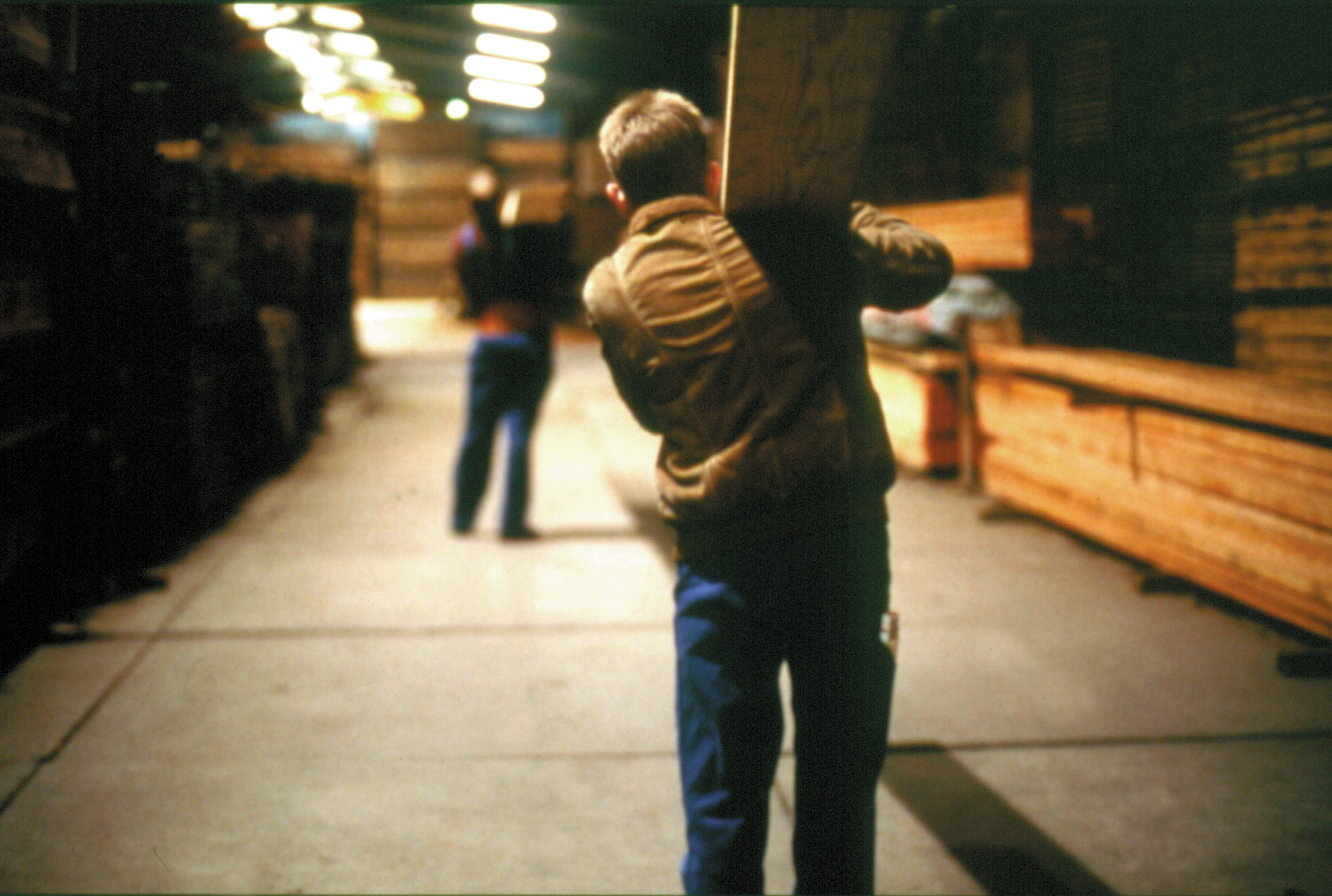 2012 UPDATE: Ten years ago today, Le Fils (The Son) played at the Toronto International Film Festival, sending a second wave of rave reviews around the globe. A few months earlier, the film had inspired audiences at the Cannes Film Festival; it was nominated for the Palme d’Or, won the Ecumenical Jury prize, and lead actor Olivier Gourmet won Best Actor.
I saw The Son at Seattle’s Grand Illusion theater in 2003, and knew immediately that I had enjoyed a film that would become a personal landmark for me in my moviegoing journeys. I was right. I look back to that day as the day I fell in love with the work of the Dardenne brothers, and a day when I lost my appetite for the excess of commercial American cinema. I had been losing that appetite for a while, but the strength of emotion that this film provoked in me, and the spaciousness it offered for questions, for exploration, for contemplation, and for interpretation was exhilarating. I have grown to love the film more every time I’ve seen it, and it’s among my all-time favorites.
Here’s my original review.
–
It’s tricky to review the Dardennes brothers’ new film The Son without raising viewers’ expectations. If I rave about the film’s artistry, suspense, and acting, I’m likely to instill certain expectations in readers’ minds. The fact is, The Son — and all of the Dardennes brothers’ films, for that matter — are the antithesis of what most Americans consider “amusement” or “entertainment.” They are, rather, works of fine art, worthy of repeated viewings and close study.
The filmmakers have looked closely at a seemingly ordinary character and built a frame around him. We are invited to look at the picture. We are offered an opportunity to discover a profoundly moving story. But if we are to solve its mysteries, we must pay close attention, walk away, and then return to look at it again. “The truth must dazzle gradually,” said Emily Dickinson. The Son will dazzle you if you wait, patiently, thinking it through and discussing it. The effort you put into it will determine how much it rewards you in the end.
Olivier Gourmet won the Best Actor award at the Cannes Film Festival in 2002 (winning over Adrian Brody for The Pianist) for his role as Olivier the carpentry teacher in this latest film. He deserved it, just as the Dardennes Brothers have deserved widespread acclaim for their previous films, Rosetta and La Promesse. Gourmet’s performance is not striking , but it is exceedingly complex. And it comes across naturally. Olivier seems so real that the film takes on the feel of a documentary, and we wonder what is going on in his head during long silences as he washes dishes, does his daily sit-ups, and drives around the town.
This may sound tedious, but it is not. Right away, we sense Olivier has secrets. In his carpentry shop in the mundane Belgian city of Liège, he is teaching young boys how to measure, cut, and construct simple but solid things. He certainly does not look suspicious, blinking behind thick glasses, his expression opaque and unrevealing, his blue overalls as ordinary as they come. But he seems agitated. The handheld-video wavers, jumping anxiously from his shoulder where it shares his view, to across the room where we can see him observing his class. When a new boy named Francis (Morgan Marinne) arrives at the school, Olivier begins behaving strangely indeed, dashing down hallways so he can spy on the newcomer. Viewers may well begin to suspect that Olivier is a sexual predator, or perhaps a criminal fearing to be recognized.
But no, the truth is much more interesting. To say more about it would be to rob you of the reward of investigating for yourself. Suffice to say that there is a connection between the man and the boy. He knows it. The boy does not. And as they begin to work together and get to know each other, we begin picking up hints, slowly putting the puzzle together in our heads.
The Dardennes Brothers’ technique is to try and capture things without enhancement, without directing our attention to details. And yet, by giving us this extreme-close-up view of Olivier, by following him through routines again and again, the filmmakers begin to reveal what is important to him—accuracy, craftsmanship, discipline, second chances, kindness—and the elements of his daily life take on heavy metaphoric significance.
It seems a very deliberate choice of the storytellers that Olivier is a carpenter. As he carefully trains the boys in the importance of exactness, of cutting things “just so” and making sure the lines are straight, he is really speaking to them about their lives. As he carries heavy beams around the shop, he is giving us a picture of the hard work of bearing one’s moral responsibility, and of going beyond that, to take and bear someone else’s cross. In fact, the Dardennes have commented that the film could just as well have been titled “The Father”, a remark that argues further for a religious interpretation of the events depicted.
If we must call anything “Christian filmmaking” (and I would prefer that we didn’t), then I would recommend that we erase its current definition — which is associated with shoddy propaganda films for Jesus — and associate it instead with films that share the mysterious nature of Christ’s own parables. No one in this film professes to be a Christian, but actions speak louder than words. Even if the Dardennes were to insist that their characters have no religious affiliation, Olivier’s choices still add up to a passion play. This is as pure a “movie parable” as you’re likely to find.
Jean-Pierre and Luc Dardennes got started in filmmaking much the same way that Kryzysztof Kieslowski did — making political documentaries. As they have graduated into fiction, they have maintained that sense of realism, that avoidance of the adornments we have come to expect from big screen films. This film probably qualifies as a Dogma 95 film in its avoidance of external lighting enhancements, makeup, soundtrack, and special effects. But where Kieslowski’s themes were more questioning and philosophical, the Dardennes Brothers seem preoccupied with the routines of the working class, with the demands of survival. Rosetta’s story seemed to be one of survival over morality. But here, there is a deeper spiritual exploration at work. Rosetta was a journey of determination and practicality. The Son is a story of the spirit, of extraordinary courage and forgiveness.
Hold on, though. I’m concerned that when I say the film is about forgiveness, you will decide right away what kind of ending it has. You will be wrong. There is no “moral to the story.” There is no teary-eyed breakdown, no embrace, no swelling of the soundtrack. We don’t see Happily Ever After. Instead, we come to a deeper understanding of the difficulty involved with real forgiveness. We learn precisely because the film refuses to satisfy our desire for unrealistic emotional closure. We come away unsure whether the outcome of Olivier’s choice will cause him further difficulty, or whether he will be rewarded with peace and joy. Just like in real life.
I wish I could talk to you about the last moment in The Son. It is a perfect example of the artists’ genius. It is a seemingly arbitrary moment. And yet, in view of all that has come before, what we see onscreen is loaded with significance. It is meaningful in what we see the characters choosing to do. It is meaningful also in what the picture resembles. Watching them go about a simple task, I suddenly felt a chill run down my spine as what they carried suddenly seemed loaded with symbolic significance. This came without a single word from the actors. It happened because I was thinking about what I had observed, not what I had been told.
This is as fine an example as the cinema has to offer regarding the power of showing rather than telling. It is a manifestation of the first, most challenging, most rewarding rule of art.
I hate to end this review on such a vague claim, but perhaps you will see the film, and perhaps you will think to drop me a note and tell me what you think about the significance of that last image. I’ll be interested to see if you’re thinking what I’m thinking. Or if you have discovered something even more exciting.
–
Writers-directors – Jean-Pierre and Luc Dardenne; producers – Jean-Pierre and Luc Dardenne, Denis Freyd; director of photography – Alain Marcoen; editor – Marie-Hélène Dozo; set designer – Igor Gabriel; costumes – Monic Parelle. Starring – Olivier Gourmet (Olivier), Morgan Marinne (Francis), Isabella Soupart (Magali), Rémy Renaud (Philippo), Nassim Hassaïni (Omar). A Belgian-French co-production, Les Films du Fleuve, Archipel 35, RTBF (Belgian TV), with support from Centre du Cinéma et de l’Audiovisuel de la Communauté Française de Belgique et des Télédistributeurs Wallons, Eurimages, Loteri Nationale de Belgique and with the participation of Canal +, Centre National de la Cinématographie (CNC), Wallimage, released by New Yorker Films. 103 minutes.

Next Post

September 12, 2012 From the Wisdom of St. Cinemas, Excerpt 2: Contentious Criticism
Browse Our Archives
Select a Category Blog Bloggers on "Through a Screen Darkly" Browser Coming Soon Endorsements Fiction Books Film Forum Film Reviews Inspirations Interviews Journal Kindlings Muse Movie buzz Music Reviews Non-Fiction Books radio Reviewers on "Through a Screen Darkly" The Auralia Thread Through a Screen Darkly Through a Screen Darkly - Bonus Materials Top 10 (or 20 or 100) lists Uncategorized
Select a Month June 2015 May 2015 April 2015 March 2015 February 2015 January 2015 December 2014 November 2014 October 2014 September 2014 August 2014 July 2014 June 2014 May 2014 April 2014 March 2014 February 2014 January 2014 December 2013 November 2013 October 2013 September 2013 August 2013 July 2013 June 2013 May 2013 April 2013 March 2013 February 2013 January 2013 December 2012 November 2012 October 2012 September 2012 August 2012 July 2012 June 2012 May 2012 April 2012 March 2012 February 2012 January 2012 December 2011 November 2011 October 2011 September 2011 August 2011 July 2011 June 2011 May 2011 April 2011 March 2011 February 2011 January 2011 December 2010 November 2010 October 2010 September 2010 August 2010 July 2010 June 2010 May 2010 April 2010 March 2010 February 2010 January 2010 December 2009 November 2009 October 2009 September 2009 August 2009 July 2009 June 2009 May 2009 April 2009 March 2009 February 2009 January 2009 December 2008 November 2008 October 2008 September 2008 August 2008 July 2008 June 2008 May 2008 April 2008 March 2008 February 2008 January 2008 December 2007 November 2007 October 2007 September 2007 August 2007 July 2007 June 2007 May 2007 April 2007 March 2007 February 2007 January 2007 December 2006 November 2006 October 2006 September 2006 August 2006 July 2006 June 2006 May 2006 April 2006 March 2006 February 2006 January 2006 December 2005 November 2005 October 2005 September 2005 August 2005 July 2005 June 2005 May 2005 April 2005 March 2005 February 2005 January 2005 December 2004 November 2004 October 2004 September 2004 August 2004 July 2004 June 2004 May 2004 April 2004 July 2003 May 2003 March 2003 September 1999
Follow Us!
TAKE THE
Religious Wisdom Quiz
Who did Jesus call the "greatest among those born of women"?
Select your answer to see how you score.
Moses Elijah John the Baptist Peter
Related posts from Looking Closer



Tomorrowland? Or Tomorrow-bland?

TRENDING AT PATHEOS Religious Music & Entertainment

"Les Diabolique" and Transgression
Alongside something like Arrival, Vertigo, or Charade, Les Diaboliques is a...

"The Plague Dogs" and Mortality
So, flashback to the late 70s, early 80s. Walt Disney Studios is...

With the recent and highly successful release of Christopher Nolan’s epic film,...

"L'avventura" and Human Weakness
Today's piece is going to be a little different for a few...

I first want to apologize for not posting or writing anything. I'm...

I've engaged in the multi-year project of reading through the Church Fathers,...
view all Religious Music & Entertainment blogs
Ad-Free & Subscriber Log-In Subscription Support
- About Us
- 2026 Calendar
- Videos
- Podcasts
- Library of World Religions
- Faith In Media Tracker
- Advertise With Us
- Write for Us
- Privacy Policy
- Terms of Service
- Do Not Sell My Data
- Contact Us
- Radiant Digital
- Manage Newsletter Subscriptions
- Unsubscribe From Notifications
- Sitemap
Copyright 2008-2026, Patheos. All rights reserved.
Subscription Support Ad-Free & Subscriber Log-In
Follow Patheos