
BuddhistCatholicContemplativeEvangelicalGeneral ChristianHinduJewishLatter-day SaintMuslimNew VisionsProgressive Christian
Beliefs
- Buddhist
- Catholic
- Contemplative
- Evangelical
- General Christian
- Hindu
- Jewish
- Latter-day Saint
- More Voices
- Muslim
- New Visions
- Pagan
- Progressive Christian
Topics
- Religion News
- Food and Religion
- Sports and Religion
- Religious Art
- Religious Music and Entertainment
- Religious Events
- History and Religion
- Style and Religion
- Politics and Religion
- Women in Religion
- Recreation Outdoors and Religion
- Business Finance and Religion
- Careers Workplace and Religion
- Education and Religion
- Family Parenting and Religion
- Health Fitness and Religion
- Home and Religion
- Relationships and Religion
- Technology and Religion
- Travel and Religion
Columnists
- Buddhist Columnists
- Business Finance and Religion Columnists
- Careers Workplace and Religion Columnists
- Catholic Columnists
- Contemplative Columnists
- Education and Religion Columnists
- Evangelists Columnists
- Family Parenting and Religion Columnists
- General Christian Columnists
- Health Fitness and Religion Columnists
- Hindu Columnists
- History and Religion Columnists
- Home and Religion Columnists
- Jewish Columnists
- More Voices Columnists
- Latter Day Columnists
- Muslim Columnists
- New Visions Columnists
- Nonreligious Columnists
- Pagan Columnists
- Politics and Religion Columnists
- Progressive Columnists
- Recreation Outdoors and Religion Columnists
- Relationships and Religion Columnists
- Religion News Columnists
- Religious Art Columnists
- Religious Events Columnists
- Religious Music and Entertainment Columnists
- Sports and Religion Columnists
- Style and Religion Columnists
- Technology and Religion Columnists
- Travel and Religion Columnists
- Women in Religion Columnists
Resource Library
- 2026 Calendar
- Library of World Religions
- The 100 Most Holy Places on Earth
- Patheos Answers
- Podcasts
- Videos
- Faith Leaders Database
- Anglican Episcopalian
- Bahai
- Baptist
- Buddhism
- Christianity
- Confucianism
- Eastern Orthodoxy
- Hinduism
- Holiness and Pentecostal
- ISKCON
- Islam
- Judaism
- Lutheran
- Methodist
- The Church of Jesus Christ of Latter-day Saints
- New Age
- Paganism
- Presbytarian and Reformed
- Protestantism
- Religion Behind the Scenes
- Roman Catholic
- Scientology
- Shia Islam
- Sikhism
- Sufism
- Sunni Islam
- Taoism
- Zen
- See all religions
Research Tools
 Ad-Free & Subscriber Log-In Subscription Support
Ad-Free & Subscriber Log-In Subscription Support
Follow Patheos 

- Trending:
- Forgiveness
- |
- Marriage
- |
- Consciousness
- |
- Death Penalty
- |
- Election
- |
- Halloween
 Looking Closer
- Home
- Religious Music & Entertainment
- The Secret of Kells (2010)
The Secret of Kells (2010)
Last updated on: May 31, 2015 at 10:50 pm by Jeffrey Overstreet
The Secret of Kells (2010) 2015-05-31T22:50:46-06:00 Jeffrey Overstreet
Patheos Explore the world's faith through different perspectives on religion and spirituality! Patheos has the views of the prevalent religions and spiritualities of the world.
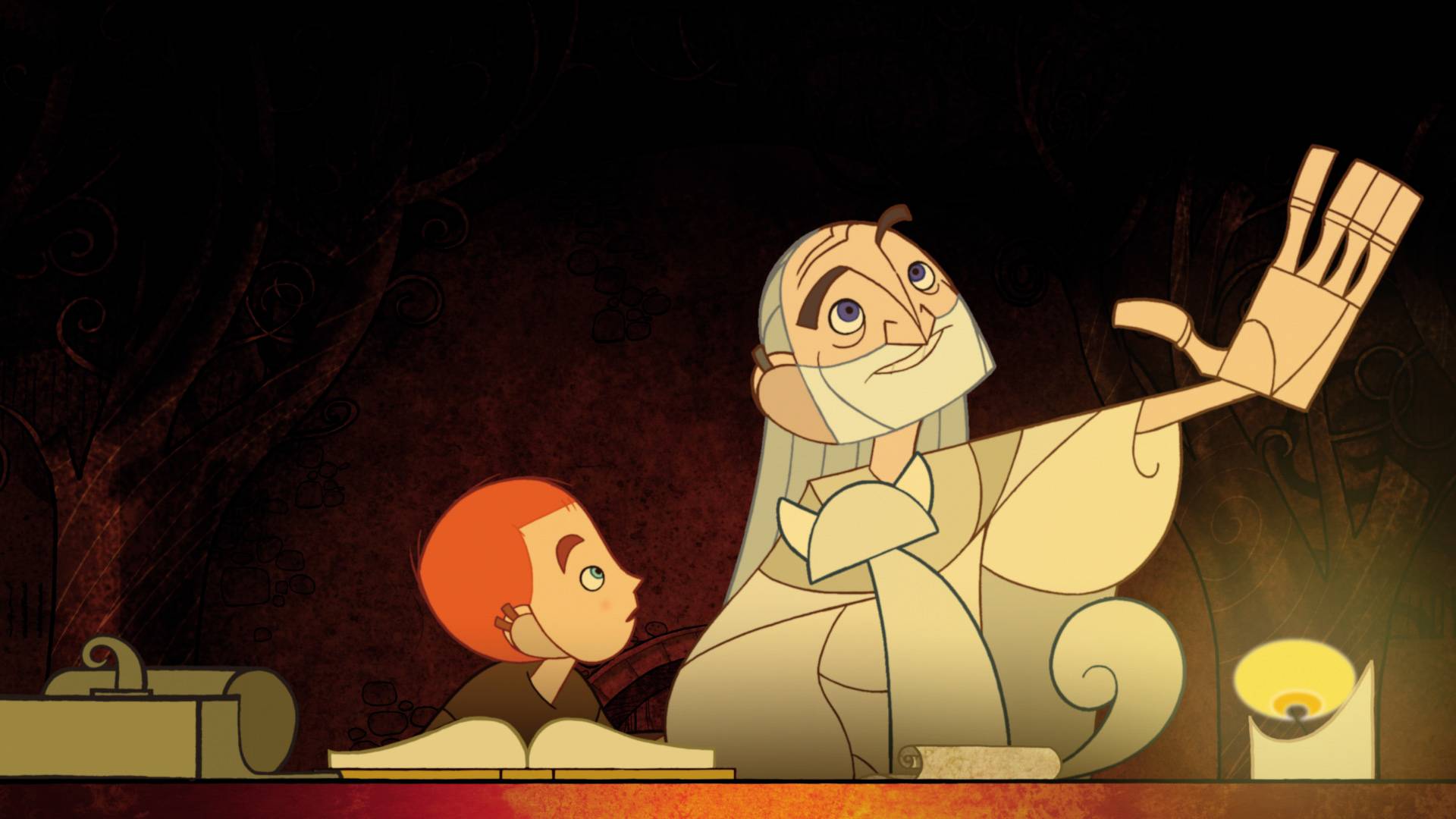 [This is an expanded version of a feature that was first published in two parts at Good Letters, the blog hosted by Image journal.]
•
Have you ever seen The Book of Kells? I mean, really seen it with your own eyes?
I’m not sure I’ve ever seen a more breathtaking work of art. Photographs can’t capture the way light plays across the vibrant, reflective ink. Nineteen years ago I stood in Dublin’s Trinity College and leaned over a glass shield to study a couple of those exquisitely inked pages, and yet I remember it like it was an hour ago.
What would move Celtic monks to illustrate a Latin text so lavishly? I suspect the effort was inspired by something more than the desire to show off. It had something, I’m sure, to do with a sense of the sacred in that text. The Book of Kells is, after all, an illustrated version of the four gospels.
And now, more than a thousand years later, we have a lavishly illustrated movie about the making of that book.
At the 2010 Academy Awards, the Best Animated Feature nominees included the typical entries from Pixar and Dreamworks. But it also included a shocker. Where most moviegoers expected to see a nomination for Hayao Miyazaki’s extraordinary feature Ponyo, instead they were introduced to a title that most of them had not yet had an opportunity to see: The Secret of Kells.
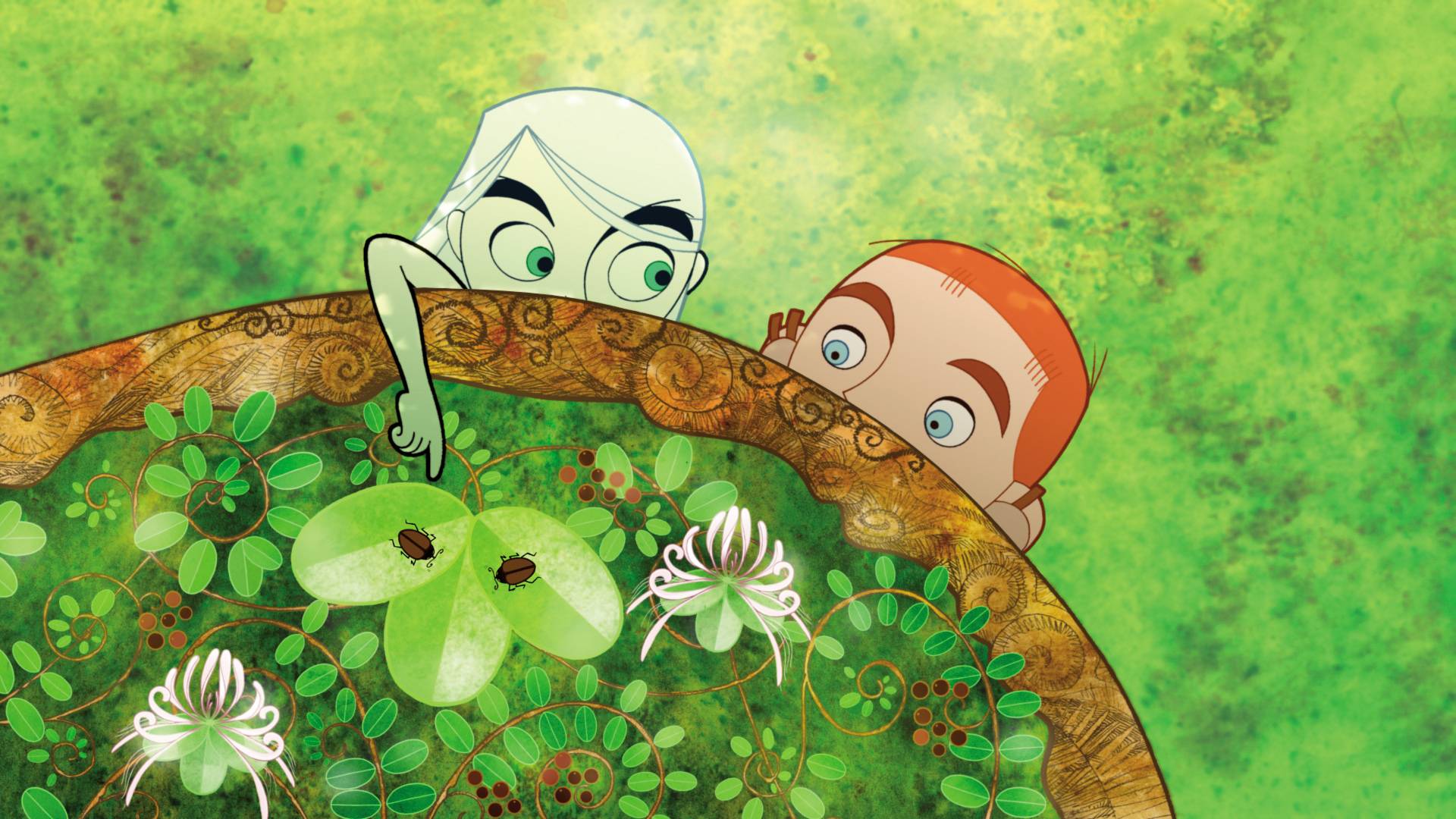 After seeing it, I did what I often do when I come home from a thrilling motion picture—I wrote to my friend Steven D. Greydanus, film critic at DecentFilms.com, The National Catholic Register, and Christianity Today. But I was interested in doing more than just singing the film’s praises. Something was bothering me: Had I just watched a film about The Book of Kells that never once acknowledged what is written on the book’s pages?
I organized my thoughts in numbered points, each of which ended with a question. And Steven responded. You’re invited to peruse our exchanges, and then to share your own experience of The Secret of Kells and the book that inspired it.
(Please note: Our conversation does contain spoilers, so you might want to see the movie before you read this.)
Jeffrey to Steven, #1
I finally saw The Secret of Kells. Wow. I haven’t been so hypnotized and enthralled by animation in a very long time.
It’s remarkable how, in this era of increasingly lifelike digital animation and 3D, something that seems handmade can still work the most powerful magic.
What did you think of the film’s style? I’m having a hard time thinking of any other film that serves as a helpful reference point. Maybe Watership Down—especially its stylized, mythological prologue.
Steven replies:
Jeff, I’m delighted that you saw The Secret of Kells, and that you found it as compelling and memorable as I did!
“Handmade” is a good word for the look of The Secret of Kells, although some of the effects, like the lovely dappled sunlight in the forest and a lot of the design work, are so intricate that many viewers assume it’s computerized, and are amazed to learn that in fact the animators made virtually no use of computers. Like The Book of Kells itself, it’s a painstakingly hand-crafted labor of love that seems at times almost miraculous. Admirers of The Book of Kells sometimes attributed it to angels; admirers of the film attribute it to computers.
The stylized figures and simplified movements reminded me at times of Samurai Jack or the Clone Wars series. The Insular influence, reflecting the Celtic design tradition, is a really unique factor, though. Watership Down is a very creative point of comparison, one I’ve not seen elsewhere. Good call!
 Jeffrey to Steven, #2
There is a trend in recent films—probably inspired by conversations about the American occupation of Iraq and Afghanistan—to emphasize the search for a common bond between cultures. Cultural respect and diplomacy are celebrated. The fight-or-flight mentality is shown as naïve at best, villainous at worst.
But The Secret of Kells portrays the approaching enemy as irredeemable—a brutal, ferocious, inhuman force. The invaders have no human eyes for eye contact. They’re like orcs, or Hellboy’s Golden Army. And so the vulnerable heroes see only two choices: To build a wall and hope to withstand the onslaught, or to flee.
Normally, I’m aggravated when “the enemy” is portrayed as something “other”—mere monsters, unworthy of curiosity or compassion. But here it didn’t bother me and I’m not sure why. What did you think of the film’s portrayal of the cultural conflict?
Steven replies:
I can think of two possible reasons why the faceless evil of the Northmen doesn’t aggravate you the way that the typical Hollywood demonization of the enemy does.
First, they’re so faceless and generic that there’s clearly no political axe to be ground here.
Second, there’s no triumphalism, no celebratory rout of the enemy. Does that make any sense?
Jeffrey to Steven, #3
Absolutely! That last point, especially, rings true. The victory of Brendan and Aidan comes not through a violent resistance of enemies, but through the crafting of beauty which can “turn darkness into light.”
All through the film, I was increasingly excited by the fact that The Book of Kells is reconciling all of these pagan mythologies and artistic motifs into a unified whole—at the center of which is The Gospel. It’s a profound illustration of the Gospel’s function as what Lewis called “the true myth,” which fulfills the longings and questions and themes manifested in mythologies through the ages.
But then the movie ends without ever giving the audience much of a clue about what was actually in the book. It seemed to settle, instead, for something along the lines of “Beauty will save the world.” I don’t have an argument with that, since I think beauty is God’s territory. And it’s a rare and wonderful thing for a movie—especially a movie that all ages can enjoy — to celebrate the value of artistic vision and aesthetic excellence.
So I’m conflicted about their decision. On the one hand, if they’d been explicit about the real content of The Book of Kells, they’d have been accused of making a “Christian propaganda” film. On the other hand, if they don’t make it explicit, it seems odd… and even cowardly.
How did that strike you?
 Steven replies:
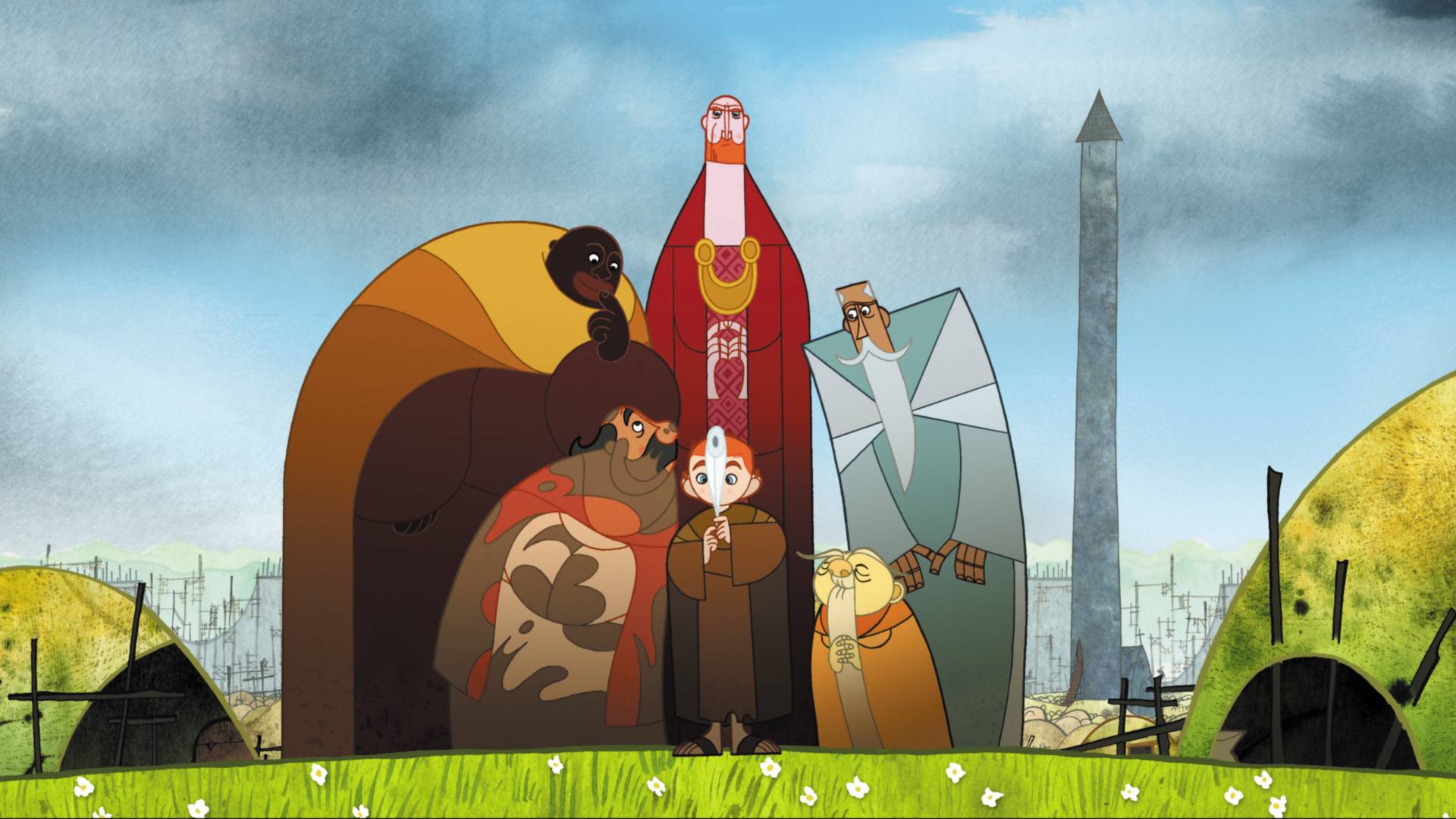
I agree that “beauty will save the world” is a valid message as far as it goes, but I don’t think allowing the monks to talk about the actual content of their faith would have turned it into a “propaganda film.” That the Chi-Rho page in particular is made so much of, but its meaning is never even hinted at, is really inexcusable.
I think the filmmakers could have gone a lot further in allowing Christianity and paganism to exist in tension without tipping the narrative one way or the other. Here’s a film in which we meet supernatural representatives of the pagan world, both good and bad. If there were also angels and saintly miracles, wouldn’t that be equally reflective of the Irish patrimony?
How would that make the film “propaganda” for one side or the other? To say nothing of the monks merely expressing their faith in a positive way, as opposed to Abbot Cellach’s mere rejection of paganism.
Jeffrey to Steven, #4
In your review, you wrote, “It must be admitted that The Secret of Kells somewhat short-changes Brendan’s Christian world in relation to Ireland’s lingering paganism. The Faerie world is matter-of-factly depicted as living, magical and powerful; Christianity is mundane and limited.”
I’m not sure I entirely agree.
Don’t you think that “Brendan’s Christian world” has injured itself by cutting itself off from the natural world and other cultures?
By surrendering to the abbot’s overpowering fears, the people of Brendan’s Christian world have cut themselves off from natural revelation, for starters. And nature—represented here by Aisling—is one of the places where God does extraordinary, mysterious work. I’m inclined to say that, yes, Christianity is limited in the film, but only insofar as fearful Christians have limited it.
Steven replies:
But what about Brother Aidan? He’s meant to embody the more winsome face of faith, but his Christianity, while more fun and humane than Abbot Cellach’s, is just as mundane and limited. There’s nothing truly mysterious, miraculous, or even spiritual about his experiences or ideas. It’s all demythologized and aestheticized—and again, they don’t do this to the pagan world, at least explicitly.
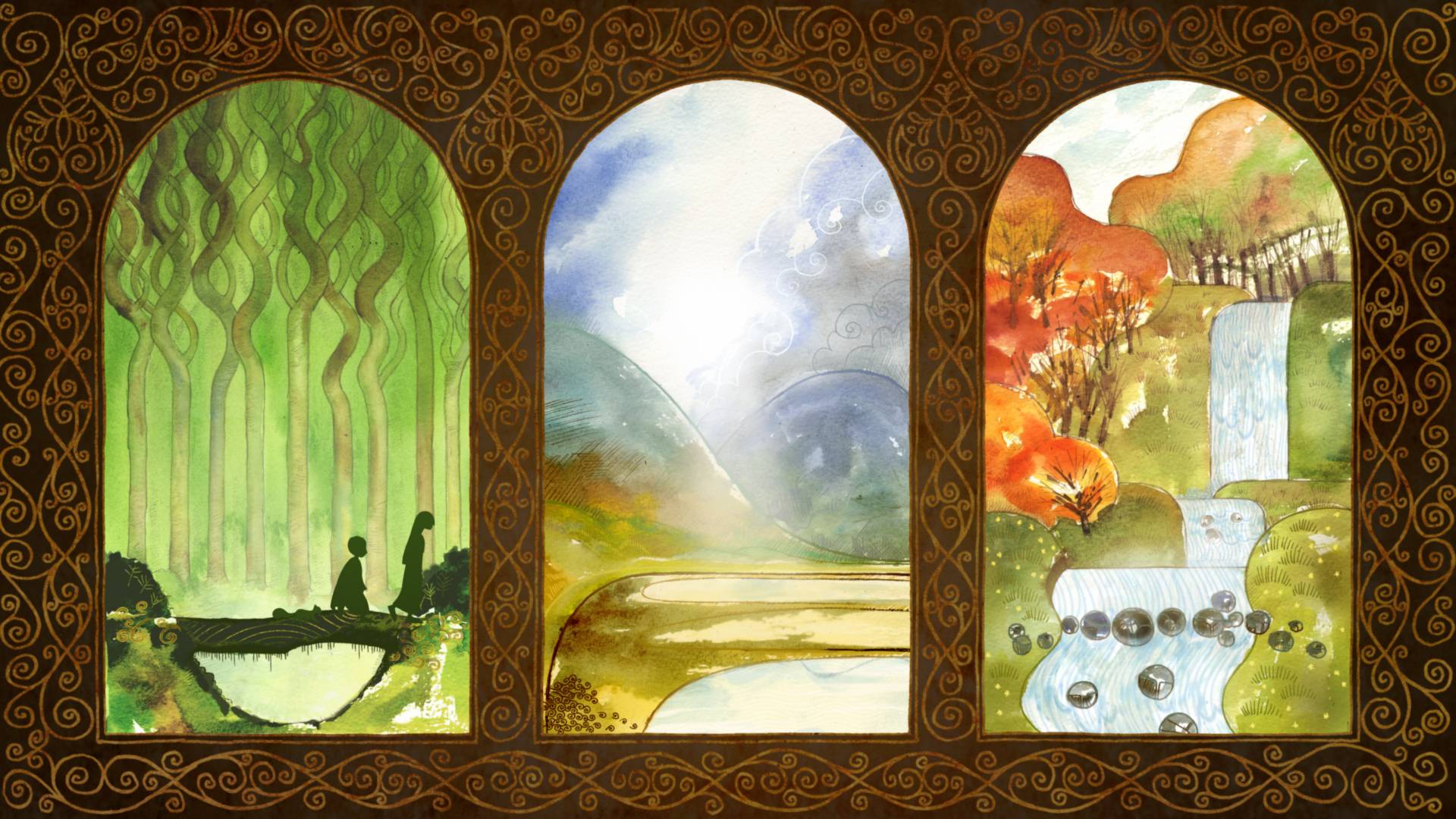
Critically speaking, you could choose to regard Brendan’s encounters with Aisling and Crom Cruach as a fantasy sequences, although the wolves that drive away the Northmen in the end seem real enough. Minimally, the film presents Aisling and Crom as seemingly real, and the viewer can easily regard them as such. Whereas the fanciful tales of St. Columcille are not only not seen onscreen, but are implied to have a naturalistic basis, at least insofar as Columcille’s “third eye” turns out to be a crystal—although his acquisition of the crystal is explicitly connected with a confrontation with dark forces in exactly the way that we see Brendan himself do, so that’s really the one hint of anything like mystery or power on the Christian side of the equation.
 Jeffrey to Steven, #5
It’s interesting to me—and you noted something about this in your review—that St. Brendan becomes the film’s best example of bold Christianity, in that Brendan is willing to engage with the whole world. He doesn’t just run away from evil, as Aidan does. Nor does he build a wall against it, as the abbot does. He faces the monster, Crom Cruach. In fact, he seeks to capture its crystalline eye.
And that’s really interesting to me. Isn’t that what Christianity claims—that what is true and “clear-eyed” in the distorted and incomplete religions and myths of the world is, in fact, the property of the One True Vision? Ultimately, false religions are left with nothing but their lie, destroying themselves. Evil implodes, while what was true and beautiful within its lie is reclaimed by Christ. In fact, the true and the beautiful were Christ’s property to begin with.
And yet there I go again: Interpreting a film by reaching into a deeper place than the film really seems interested in taking us.
It’s almost as if the filmmakers are unaware of the profundity of their own story.
Steven replies:
That’s a really good way of putting it. I think I may see that confrontation between Brendan and Crom in a deeper light than the filmmakers too, although the explicit connection between Brendan and St. Columcille in confronting the powers of darkness does suggest that there’s some actual spiritual warfare motif here. I think too of the connection to the famous legend of St. Patrick driving the snakes out of Ireland. We might be reaching a bit here, but I don’t think it’s too terribly much of a reach!
The other aspect of the scene that I think begs for a deeper reading is the way Brendan defeats the serpent by literally circumscribing his power—and then leaves him, in an image borrowed from Insular art and other sources, devouring his own tail. The self-devouring serpent, the Ouroboros motif, is found in many cultures, sometimes with a more positive spin (so to speak), other times more negative. Here, clearly, Crom devours himself in impotent rage and fury, suggesting the self-destructive nature of evil, especially evil defeated.
Jeffrey to Steven, #6
What films do you think best represent medieval Christianity?
It’s regarded now as just a silly ’80s action flick, but I’ve always been rather fond of Ladyhawke, in part for its representation of faith. The bishop in the film is wicked to the core, but like The Book of Kells, the film suggests that the “good magic” of nature can be reconciled with the church of nature’s creator.
Steven replies:
I wish I could mention The Seventh Seal here, but as thoughtful about spiritual matters as that film is, the Christian elements are a pretty hollow facade.
Andrei Rublev offers an aptly messy depiction of the medieval world that includes positive and negative sides of Christian experience.
Becket includes some lavish medieval religious pageantry.
Oh, and Eric Rohmer’s charming Perceval, one of the most genuinely medieval-minded films I’ve ever seen, ends with a remarkable Passion play as redolent of medieval spirituality as anything I can think of.
Next Post

August 24, 2010 Ask Me Anything - Toy Story 3, Inception, "Hipsters"
Browse Our Archives
Select a Category Blog Bloggers on "Through a Screen Darkly" Browser Coming Soon Endorsements Fiction Books Film Forum Film Reviews Inspirations Interviews Journal Kindlings Muse Movie buzz Music Reviews Non-Fiction Books radio Reviewers on "Through a Screen Darkly" The Auralia Thread Through a Screen Darkly Through a Screen Darkly - Bonus Materials Top 10 (or 20 or 100) lists Uncategorized
Select a Month June 2015 May 2015 April 2015 March 2015 February 2015 January 2015 December 2014 November 2014 October 2014 September 2014 August 2014 July 2014 June 2014 May 2014 April 2014 March 2014 February 2014 January 2014 December 2013 November 2013 October 2013 September 2013 August 2013 July 2013 June 2013 May 2013 April 2013 March 2013 February 2013 January 2013 December 2012 November 2012 October 2012 September 2012 August 2012 July 2012 June 2012 May 2012 April 2012 March 2012 February 2012 January 2012 December 2011 November 2011 October 2011 September 2011 August 2011 July 2011 June 2011 May 2011 April 2011 March 2011 February 2011 January 2011 December 2010 November 2010 October 2010 September 2010 August 2010 July 2010 June 2010 May 2010 April 2010 March 2010 February 2010 January 2010 December 2009 November 2009 October 2009 September 2009 August 2009 July 2009 June 2009 May 2009 April 2009 March 2009 February 2009 January 2009 December 2008 November 2008 October 2008 September 2008 August 2008 July 2008 June 2008 May 2008 April 2008 March 2008 February 2008 January 2008 December 2007 November 2007 October 2007 September 2007 August 2007 July 2007 June 2007 May 2007 April 2007 March 2007 February 2007 January 2007 December 2006 November 2006 October 2006 September 2006 August 2006 July 2006 June 2006 May 2006 April 2006 March 2006 February 2006 January 2006 December 2005 November 2005 October 2005 September 2005 August 2005 July 2005 June 2005 May 2005 April 2005 March 2005 February 2005 January 2005 December 2004 November 2004 October 2004 September 2004 August 2004 July 2004 June 2004 May 2004 April 2004 July 2003 May 2003 March 2003 September 1999
Follow Us!
TAKE THE
Religious Wisdom Quiz
How many minor prophets are in the Old Testament?
Select your answer to see how you score.
10 12 16 14
Related posts from Looking Closer


Tomorrowland? Or Tomorrow-bland?


My Favorite Film of 2014: The Strange Little...
TRENDING AT PATHEOS Religious Music & Entertainment

"Les Diabolique" and Transgression
Alongside something like Arrival, Vertigo, or Charade, Les Diaboliques is a...

"The Plague Dogs" and Mortality
So, flashback to the late 70s, early 80s. Walt Disney Studios is...

With the recent and highly successful release of Christopher Nolan’s epic film,...

"L'avventura" and Human Weakness
Today's piece is going to be a little different for a few...

I first want to apologize for not posting or writing anything. I'm...

I've engaged in the multi-year project of reading through the Church Fathers,...
view all Religious Music & Entertainment blogs
Ad-Free & Subscriber Log-In Subscription Support
- About Us
- 2026 Calendar
- Videos
- Podcasts
- Library of World Religions
- Faith In Media Tracker
- Advertise With Us
- Write for Us
- Privacy Policy
- Terms of Service
- Do Not Sell My Data
- Contact Us
- Radiant Digital
- Manage Newsletter Subscriptions
- Unsubscribe From Notifications
- Sitemap
Copyright 2008-2026, Patheos. All rights reserved.
Subscription Support Ad-Free & Subscriber Log-In
Follow Patheos