
BuddhistCatholicContemplativeEvangelicalGeneral ChristianHinduJewishLatter-day SaintMuslimNew VisionsProgressive Christian
Beliefs
- Buddhist
- Catholic
- Contemplative
- Evangelical
- General Christian
- Hindu
- Jewish
- Latter-day Saint
- More Voices
- Muslim
- New Visions
- Pagan
- Progressive Christian
Topics
- Religion News
- Food and Religion
- Sports and Religion
- Religious Art
- Religious Music and Entertainment
- Religious Events
- History and Religion
- Style and Religion
- Politics and Religion
- Women in Religion
- Recreation Outdoors and Religion
- Business Finance and Religion
- Careers Workplace and Religion
- Education and Religion
- Family Parenting and Religion
- Health Fitness and Religion
- Home and Religion
- Relationships and Religion
- Technology and Religion
- Travel and Religion
Columnists
- Buddhist Columnists
- Business Finance and Religion Columnists
- Careers Workplace and Religion Columnists
- Catholic Columnists
- Contemplative Columnists
- Education and Religion Columnists
- Evangelists Columnists
- Family Parenting and Religion Columnists
- General Christian Columnists
- Health Fitness and Religion Columnists
- Hindu Columnists
- History and Religion Columnists
- Home and Religion Columnists
- Jewish Columnists
- More Voices Columnists
- Latter Day Columnists
- Muslim Columnists
- New Visions Columnists
- Nonreligious Columnists
- Pagan Columnists
- Politics and Religion Columnists
- Progressive Columnists
- Recreation Outdoors and Religion Columnists
- Relationships and Religion Columnists
- Religion News Columnists
- Religious Art Columnists
- Religious Events Columnists
- Religious Music and Entertainment Columnists
- Sports and Religion Columnists
- Style and Religion Columnists
- Technology and Religion Columnists
- Travel and Religion Columnists
- Women in Religion Columnists
Resource Library
- 2026 Calendar
- Library of World Religions
- The 100 Most Holy Places on Earth
- Patheos Answers
- Podcasts
- Videos
- Faith Leaders Database
- Anglican Episcopalian
- Bahai
- Baptist
- Buddhism
- Christianity
- Confucianism
- Eastern Orthodoxy
- Hinduism
- Holiness and Pentecostal
- ISKCON
- Islam
- Judaism
- Lutheran
- Methodist
- The Church of Jesus Christ of Latter-day Saints
- New Age
- Paganism
- Presbytarian and Reformed
- Protestantism
- Religion Behind the Scenes
- Roman Catholic
- Scientology
- Shia Islam
- Sikhism
- Sufism
- Sunni Islam
- Taoism
- Zen
- See all religions
Research Tools
 Ad-Free & Subscriber Log-In Subscription Support
Ad-Free & Subscriber Log-In Subscription Support
Follow Patheos 

- Trending:
- Forgiveness
- |
- Marriage
- |
- Consciousness
- |
- Death Penalty
- |
- Election
- |
- Halloween
 Looking Closer
- Home
- Religious Music & Entertainment
- Walk the Line (2005)
Walk the Line (2005)
Last updated on: June 22, 2015 at 11:09 am by Jeffrey Overstreet
Walk the Line (2005) 2015-06-22T11:09:36-06:00 Jeffrey Overstreet
Patheos Explore the world's faith through different perspectives on religion and spirituality! Patheos has the views of the prevalent religions and spiritualities of the world.
 Imagine a film about the life of Tom Cruise that pretends that his marriage to Katie Holmes was a thrilling triumph, and all of that stuff about Nicole Kidman and Mimi Rogers was just an unfortunate prologue. Now imagine if that film only made a couple of sketchy, passing references to Scientology. Would you accept this film as the proper monument to Cruise?
Or better, imagine a film about the story of Bono and U2 without mention of the Bible study where the band members became close friends and began their career-long exploration of Christian faith. Imagine if that film avoided scenes of Bono in daily prayer. And how could we accept a film about Bono that said next-to-nothing about his journeys to Africa and his passion to bring help to the poor and the dying there?
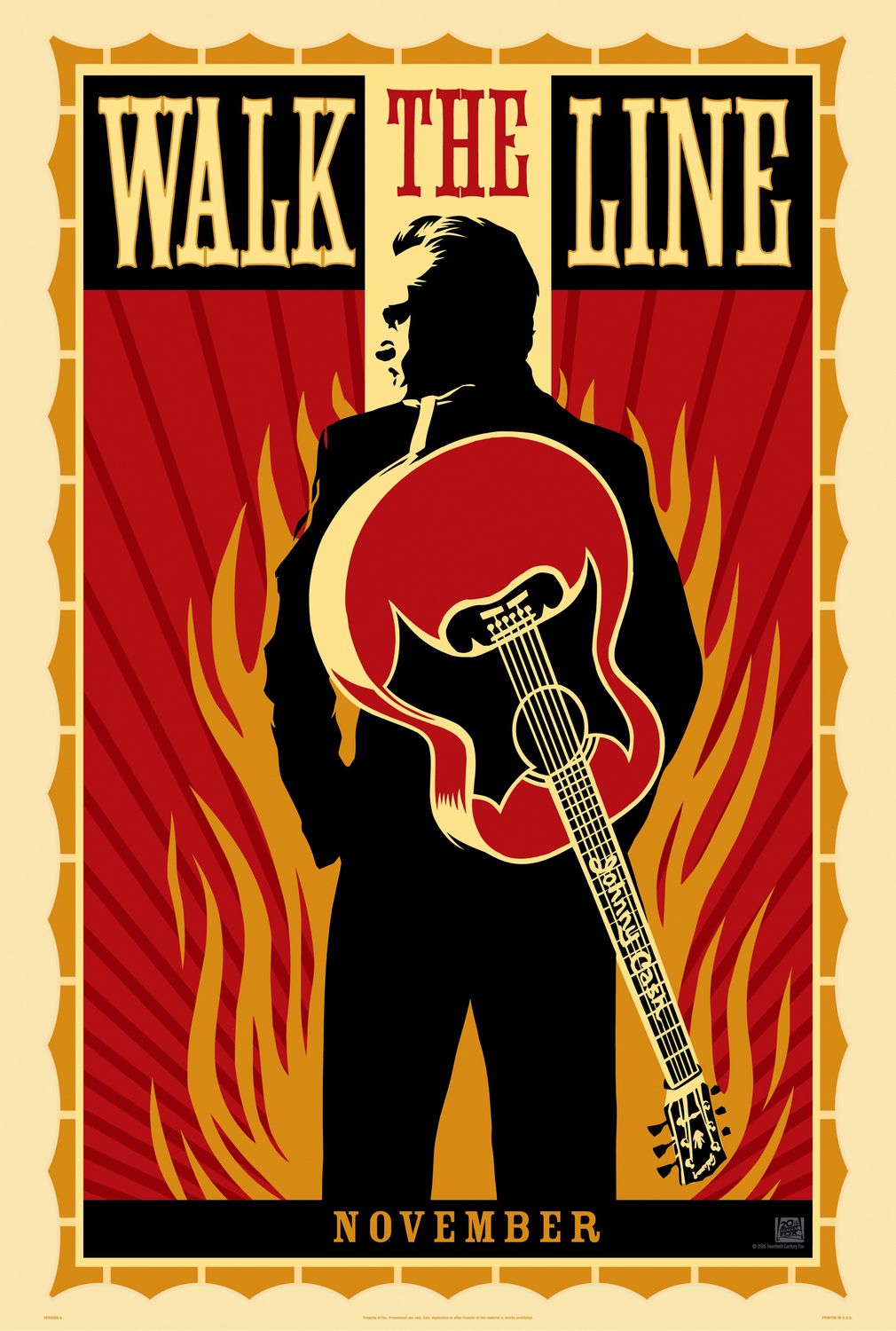
James Mangold’s new film about the life of Johnny Cash, Walk the Line, burns, burns, burns with energy and explosive musical performances. Following the narrative arc of last year’s musical biopic Ray, screenwriter Gil Dennis brings spirit, energy, and humor to the story, with both eyes on Cash’s autobiographies. And the words ignite onscreen, fueled by volatile and Oscar-worthy turns by Joaquin Phoenix and Reese Witherspoon.
But oh, what a mangled mess Mangold has made of things.
First: Let’s give credit where credit is due. The biggest star of this show is T-Bone Burnett, who pulls off what may be his most accomplished work of film soundtracking so far, making these songs sound like they’re catching fire on Cash’s strings for the first time. You can sense the giddy fanboy enthusiasm Burnett and Mangold have for recreating such legendary hours as Cash’s audition for the famous producer Sam Phillips (played here by Dallas Roberts), which stands among the film’s most compelling and memorable moments, and Cash’s subsequent rise to fame on Sun Records, alongside such giants as Elvis, Orbison, and Jerry Lee Lewis. (While the actors playing these superstars deliver utterly unconvincing impersonations, they are properly presented as human beings rather than a pantheon of gods.)
Burnett’s work shines even brighter because, as the actors walk onto the musical platform he has built, they perform as if their careers depend upon it. This is a season in which huge personalities are coming to life in masterful performances — Truman Capote by Phillip Seymour Hoffman, Edward R. Murrow by David Strathairn, and now Phoenix and Witherspoon as Cash and his beloved June Carter. They’re every bit as successful, if not more so, than their colleagues.
Phoenix brilliantly develops Cash from a naïve young soldier to a battle scarred, reckless, rock-n-roll Tyrannosaurus Rex. No actor we’re familiar with could have done it better. He masters the walk, in which it appears Cash’s upper body is a size too large, creating something between a swagger and lurch. And, better than anyone might have guessed, Phoenix finds Cash’s deep drawl — a voice as distinct as John Wayne’s. His singing might convince some viewers that it’s actually a clever work of lip-synching to the master’s voice, but no… that’s Phoenix finding a whole new register. Years ago, in films like Signs and Gladiator, this intriguing actor stepped out of the shadow of his famous brother River, who played a country music singer in The Thing Called Love after owning the spotlight in My Own Private Idaho and Stand by Me. But now he’s made the move that will ensure him leading roles for years to come. He’s becoming more interesting all the time.
Witherspoon matches him, stride for stride, song for song, in her best performance yet. She turns Cash and Carter’s debates and duets into fiery, compelling sequences. Her accent never stumbles. They’re a joy to watch. And she makes the turbulence in June Carter’s heart convincing, flinching during romantic interludes as she keeps Cash’s wife and kids in her peripheral vision.
Yes, it’s a powerful, glamorous, colorful production.
But as a telling of the story of Johnny Cash, Walk the Line is so misguided that it almost ignores the very thing that Cash himself says saved him from his weaknesses: the light of love and wisdom emanating not from June Carter, but from the Gospel… the message and the promises that brought him out of the darkness and saved him from himself.
Even worse, the film portrays Cash’s pursuit of Carter as belligerent, irresponsible, and disrespectful … which may have been the truth, but certainly should not be presented as romantic and excusable. After all, according to this movie, Cash’s hell-bent pursuit of Carter went on while he was still married to the suffering Vivian Liberto (Ginnifer Goodwin). The way Walk the Line is crafted, the audience is prompted to erupt in hallelujahs when the “happily ever after” banners fly, as June’s resolve finally collapses under the force of Cash’s egotistical appeals, and Cash’s family gets left in the dust.
Now — let me be clear — Mangold’s version may, indeed, stick to the true details of this chapter of Cash’s life. But we need more information. Given only these details, viewers who don’t know the whole story will come away with the wrong conclusions, learning the wrong lessons.
Alas, the filmmakers have forced Cash’s story into a mold that his life does not fit. They want us to take this as a story of two lovers “destined” to be together, a marriage that nothing could stop. The fact that Cash found “true love” with Vivian previously, and that they brought daughters into the world… these details become, in the film, just a complicated obstacle postponing Cash’s collision with Carter… the collision the audience is waiting to see. Thus, even though Mangold admirably avoids villainizing Vivian, his choices cannot help but incline the audience against her and the girls. They’re a technicality, the unfortunate casualties of Cash’s rise to fame.
In this regard, Mangold repeats the mistakes that Hackford made in Ray, who seemed think he could absolve Ray Charles of his sins by glorifying the man for his successes. Both directors admirably allow their central characters to exhibit shocking and dismaying behavior onscreen, to reveal their flaws without flinching… and that’s a good thing, because it’s the truth.. The two stories are so similar that it’s uncanny — from the way both Cash and Charles lost their beloved brothers during childhood to their eventual plunges into drug abuse. Mangold does a good job of showing us where Cash’s drive comes from, illustrating the abuse and contempt Cash suffered from his father well into his adult life. (Robert Patrick gives one of his finest performances as the insufferable Ray Cash.)
Still, the revelation of the source of Cash’s wounds should not justify, in our minds, the misbehaviors that Cash indulged so recklessly. Nor should his eventual success make up for the mistakes he leaves in his wake. But Mangold builds suspense all the way through the film, urging the audience to long for that eventual consummation of the illicit love growing between Cash and Carter. The fact that Cash finally kisses the principled girl he’s pursuing does not the selfishness that led him to that moment. And Vivian’s disinterest in Cash’s musical talent does not give us the right to root against their marriage. This film does not earn its happy ending.
And yet, audiences are proving content to accept this portrayal, surrendering to the gravity of this Hollywood love story rather than caring about conscience. Mangold has viewers cheering when the credits roll, as if they’ve somehow forgotten that Vivian is still out there, just out of the camera’s reach, with wounds that haven’t healed and issues that haven’t been resolved.
Nor do they seem to care that this romantic peak is reached by Cash’s continual disregard for June Carter’s own feelings and convictions. As portrayed, Cash conducts his courtship with the manipulative tactics of a monster, not a romantic hero. The crowd should remember that they also cheered, just a few minutes earlier, when June threw beer bottles at her drunken pursuer, outraged that he and his Neanderthal cronies could behave with such crude irresponsibility.
Again — these may, indeed, be the true details of Cash’s life. I am no expert on how this romance actually came about. But that does not mean we should celebrate this behavior. According to this interpretation, June’s love is not a flourish of grace that saves him, but a blessing Cash takes by force while he’s still indebted to another family.
Think of what men who are tempted to be unfaithful to their wives might learn from watching this version of the Johnny Cash story. It might affirm their belief that the other woman is actually a better option. It might suggest to them that, although their children will have broken hearts, the glory of a new romance, and the adventures it opens up, will make the damage worthwhile.
When Cash finally takes his talents into Folsom Prison for that legendary concert, thrilling the damaged souls there with some vibrant rock-and-roll shot through with gospel hope, Mangold misplaces his focus again, highlighting Cash’s defiance toward authority. And the subsequent text onscreen thrills us with the news that the recording of this concert became a bestseller.
No, no no… this is not the true triumph of Cash’s life. The real victory is expressed in the hope glimmering on the edges of Cash’s lyrics. In Folsom Prison, Cash could testify that, in spite of the darkness he brought upon himself, he was saved by a loving God who extended grace to him.
Cash’s story is not the Frank Sinatra story… that “he did it his way.” No. When Cash did it his way, he nearly destroyed himself. Don’t be fooled — Cash’s refusal to accept “no” for an answer was not what saved him from his flaws. Cash spells it out, plain as day, in his music and his own stories about his life, that he was ultimately rescued by the gravity of the gospel, by the way Christ prodded his conscience. Was June Carter one of the people who made a significant difference in his life and redemption? Yes. But to give her the glory shows a profound lack of vision.
Instead of giving us the true story of Johnny Cash, Mangold perpetuates that ongoing Hollywood lie — that “true love” will excuse us of our sins. Mangold wants us to believe that a story of sex, drugs, rock’n’roll, and a saving faith was instead a story of sex, drugs, rock’n’roll and a saving infidelity.
Previous Post

November 17, 2005
Specials: PTC on Potter. GetReligion on Lewis. Apostrophes.
Browse Our Archives
Select a Category Blog Bloggers on "Through a Screen Darkly" Browser Coming Soon Endorsements Fiction Books Film Forum Film Reviews Inspirations Interviews Journal Kindlings Muse Movie buzz Music Reviews Non-Fiction Books radio Reviewers on "Through a Screen Darkly" The Auralia Thread Through a Screen Darkly Through a Screen Darkly - Bonus Materials Top 10 (or 20 or 100) lists Uncategorized
Select a Month June 2015 May 2015 April 2015 March 2015 February 2015 January 2015 December 2014 November 2014 October 2014 September 2014 August 2014 July 2014 June 2014 May 2014 April 2014 March 2014 February 2014 January 2014 December 2013 November 2013 October 2013 September 2013 August 2013 July 2013 June 2013 May 2013 April 2013 March 2013 February 2013 January 2013 December 2012 November 2012 October 2012 September 2012 August 2012 July 2012 June 2012 May 2012 April 2012 March 2012 February 2012 January 2012 December 2011 November 2011 October 2011 September 2011 August 2011 July 2011 June 2011 May 2011 April 2011 March 2011 February 2011 January 2011 December 2010 November 2010 October 2010 September 2010 August 2010 July 2010 June 2010 May 2010 April 2010 March 2010 February 2010 January 2010 December 2009 November 2009 October 2009 September 2009 August 2009 July 2009 June 2009 May 2009 April 2009 March 2009 February 2009 January 2009 December 2008 November 2008 October 2008 September 2008 August 2008 July 2008 June 2008 May 2008 April 2008 March 2008 February 2008 January 2008 December 2007 November 2007 October 2007 September 2007 August 2007 July 2007 June 2007 May 2007 April 2007 March 2007 February 2007 January 2007 December 2006 November 2006 October 2006 September 2006 August 2006 July 2006 June 2006 May 2006 April 2006 March 2006 February 2006 January 2006 December 2005 November 2005 October 2005 September 2005 August 2005 July 2005 June 2005 May 2005 April 2005 March 2005 February 2005 January 2005 December 2004 November 2004 October 2004 September 2004 August 2004 July 2004 June 2004 May 2004 April 2004 July 2003 May 2003 March 2003 September 1999
Follow Us!
TAKE THE
Religious Wisdom Quiz
Which book comes directly after Job?
Select your answer to see how you score.
Ecclesiastes Proverbs Psalms Isaiah
Related posts from Looking Closer



Tomorrowland? Or Tomorrow-bland?

TRENDING AT PATHEOS Religious Music & Entertainment

"Les Diabolique" and Transgression
Alongside something like Arrival, Vertigo, or Charade, Les Diaboliques is a...

"The Plague Dogs" and Mortality
So, flashback to the late 70s, early 80s. Walt Disney Studios is...

With the recent and highly successful release of Christopher Nolan’s epic film,...

"L'avventura" and Human Weakness
Today's piece is going to be a little different for a few...

I first want to apologize for not posting or writing anything. I'm...

I've engaged in the multi-year project of reading through the Church Fathers,...
view all Religious Music & Entertainment blogs
Ad-Free & Subscriber Log-In Subscription Support
- About Us
- 2026 Calendar
- Videos
- Podcasts
- Library of World Religions
- Faith In Media Tracker
- Advertise With Us
- Write for Us
- Privacy Policy
- Terms of Service
- Do Not Sell My Data
- Contact Us
- Radiant Digital
- Manage Newsletter Subscriptions
- Unsubscribe From Notifications
- Sitemap
Copyright 2008-2026, Patheos. All rights reserved.
Subscription Support Ad-Free & Subscriber Log-In
Follow Patheos