
BuddhistCatholicContemplativeEvangelicalGeneral ChristianHinduJewishLatter-day SaintMuslimNew VisionsProgressive Christian
Beliefs
- Buddhist
- Catholic
- Contemplative
- Evangelical
- General Christian
- Hindu
- Jewish
- Latter-day Saint
- More Voices
- Muslim
- New Visions
- Pagan
- Progressive Christian
Topics
- Religion News
- Food and Religion
- Sports and Religion
- Religious Art
- Religious Music and Entertainment
- Religious Events
- History and Religion
- Style and Religion
- Politics and Religion
- Women in Religion
- Recreation Outdoors and Religion
- Business Finance and Religion
- Careers Workplace and Religion
- Education and Religion
- Family Parenting and Religion
- Health Fitness and Religion
- Home and Religion
- Relationships and Religion
- Technology and Religion
- Travel and Religion
Columnists
- Buddhist Columnists
- Business Finance and Religion Columnists
- Careers Workplace and Religion Columnists
- Catholic Columnists
- Contemplative Columnists
- Education and Religion Columnists
- Evangelists Columnists
- Family Parenting and Religion Columnists
- General Christian Columnists
- Health Fitness and Religion Columnists
- Hindu Columnists
- History and Religion Columnists
- Home and Religion Columnists
- Jewish Columnists
- More Voices Columnists
- Latter Day Columnists
- Muslim Columnists
- New Visions Columnists
- Nonreligious Columnists
- Pagan Columnists
- Politics and Religion Columnists
- Progressive Columnists
- Recreation Outdoors and Religion Columnists
- Relationships and Religion Columnists
- Religion News Columnists
- Religious Art Columnists
- Religious Events Columnists
- Religious Music and Entertainment Columnists
- Sports and Religion Columnists
- Style and Religion Columnists
- Technology and Religion Columnists
- Travel and Religion Columnists
- Women in Religion Columnists
Resource Library
- 2026 Calendar
- Library of World Religions
- The 100 Most Holy Places on Earth
- Patheos Answers
- Podcasts
- Videos
- Faith Leaders Database
- Anglican Episcopalian
- Bahai
- Baptist
- Buddhism
- Christianity
- Confucianism
- Eastern Orthodoxy
- Hinduism
- Holiness and Pentecostal
- ISKCON
- Islam
- Judaism
- Lutheran
- Methodist
- The Church of Jesus Christ of Latter-day Saints
- New Age
- Paganism
- Presbytarian and Reformed
- Protestantism
- Religion Behind the Scenes
- Roman Catholic
- Scientology
- Shia Islam
- Sikhism
- Sufism
- Sunni Islam
- Taoism
- Zen
- See all religions
Research Tools
 Ad-Free & Subscriber Log-In Subscription Support
Ad-Free & Subscriber Log-In Subscription Support
Follow Patheos 

- Trending:
- Forgiveness
- |
- Marriage
- |
- Consciousness
- |
- Death Penalty
- |
- Election
- |
- Halloween
 The Living Tradition
- Home
- Muslim
- How Beauty Evokes Love in Sufism
How Beauty Evokes Love in Sufism
Last updated on: October 26, 2019 at 12:48 pm by Kabir Helminski
How Beauty Evokes Love in Sufism 2019-10-26T12:48:30-04:00 Kabir Helminski
Patheos Explore the world's faith through different perspectives on religion and spirituality! Patheos has the views of the prevalent religions and spiritualities of the world.
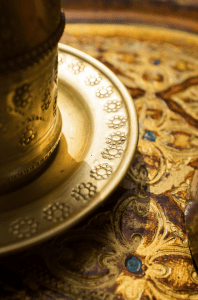 I have been fortunate during my spiritual training to have been inspired by some extraordinary teachers, people who came into my life as if by chance, but whose presence and effect on my soul could not have been prayed for, much less imagined. One of these teachers was for a period of time the owner of a café in Vancouver where I sometimes enjoyed being served a cup of frothy Turkish coffee. Murray, as he was sometimes called, was the only person to be found in western Canada who could actually read, write, and fully understand Ottoman Turkish (Turkey, pre 1926). He was discovered and asked to serve as a translator for Suleyman Dede, a Mevlevi shaikh who was trained in the Ottoman era. It was destiny, pure and simple, for Murray turned out to be a hidden master, descended from the esoteric aristocracy of Abkhazia (Circassia). Murray was a hidden Sufi, avoiding adulation, camouflaged sometimes as a carpenter, a café owner, and even occasionally as a fisherman on the high seas. He and his wife Maisie always welcomed me like family, and I was drawn to them by a spiritual fragrance and charisma impossible to conceal.
One particularly rainy afternoon I took refuge in the Istanbul Café and our conversation began this way.
“I had an interesting experience last night. I had been listening to some songs by a particularly interesting songwriter and as I listened to one song after another I actually began to experience a kind of ecstasy, which was all the more extraordinary since I hadn’t been in a very good mood to begin with. It seemed that as I listened to this particular sequence of songs a crescendo was building and deep emotions were stirred. Memories were evoked—powerful recollections of the first stirrings of my own spiritual life, of my father, or a powerful sense of loving many people who were in my life. I wonder why this experience was so powerful—more powerful, in fact, than my spiritual practices, which may leave me with a feeling of well-being and calm, but rarely this kind of ecstatic joy. Afterwards I felt moved to create, to write and compose something myself, to give expression to the beauty I had experienced.”
My mentor pondered for a moment, as if he were about to reveal some secret. “These songs awakened in you a sense of beauty, and beauty evokes love. We cannot will ourselves to love just by saying “I want to love.” But we can, sometimes, be awakened to the vibration of love by beauty, and, more importantly, we can create more beauty in our lives and that will be the cause of more love.”
“Well, I’m very curious.” I said. “How can we create more beauty, I’m not sure what you mean?”
“Beauty is anything that causes our nervous system to resonate with the energy of Eternal Spirit. Beauty is anything that the five senses and human intelligence perceives as beautiful. We can create beauty in practical ways, both in terms of aesthetics, but even more importantly in human relationships. We can gradually engender an atmosphere, an environment of beauty and love. We call this adab. Adab is an expression of beauty and it is how we do love. The wise people of our tradition understood that adab is a process of alchemy, creating a crucible for our own transformation. That’s what a Sufi lodge, a tekke, is meant to be.”
“The Sufi lodge is a place where an accelerated transformation is possible, but a tekke is not just a physical place. Most important is the atmosphere created by a community of people in a subtle and conscious relationship with each other. Each dervish must mature to the point where he or she can awaken a reciprocal exchange of love with other members of the group.”
“So the Sufi process is not just about me becoming more spiritual? You mean I have some responsibility to become part of a system, a community, and to experience myself as part of something larger?”
“Exactly,” my teacher said, “and the atmosphere that is created is the remedy for the toxins that exist in human relationships. In this kind of atmosphere, resentment and judgment melt into affection and acceptance. The alchemy of Love will transform the negativity. That negativity is taken for granted in everyday life. It is quite a beautiful and amazing process, but I’m not sure North Americans can achieve this. What do you think?”
“It’s true that we’re up against a powerful force. It seems quite unconscious—the compulsion to choose individual independence over community, to retreat from relationship, our impatience with bearing the faults of others. We have little or nothing requiring us to be together, we can always go to another workshop, another teacher, another spiritual event, or imagine that we don’t need relationships to spiritually develop. We imagine we can do it all ourselves and avoid the challenges, the messiness of human relationships.”
“But the work is to transform the ego that thinks like that, the ego that dresses itself in clever disguises. The ego especially likes to appear as spiritual, to clothe itself in respectable attributes like self-discipline, intellectual attainment, false humility, enlightened personality, sentimentality, and pseudo compassion.”
“I really want to know what love is—I don’t think I understand it at all.”
“Think of love as a resonance, a resonance between the subtle centers (latifas) of your own nervous system and the Eternal Spirit (Ruh). You can to some extent awaken it yourself, but the atmosphere and energy of a loving community creates a stronger resonance, and that connection allows more love and beauty to enter into relationships, transforming more and more aspects of ourselves.
It is through this resonance that we will eventually experience moments of ecstatic beauty, as if we are living in a mist of beautiful love that more and more becomes our natural state and who we are. In that love, the “me” falls away and a “we” remains. This is why Sufis have always organized themselves in this way and this is why they can achieve so much more than individual practice alone can offer. A current is generated that connects the subtle centers of the heart in communion with the Eternal Creative Spirit, which is the ultimate Beauty. That is why it is called the Beloved and why we are called lovers.”
“So what do I have to do next? What’s the next step?”
“Now you will return, and return again and again, to the work of doing love, to practicing the fruits of love, and to creating beauty. You have more souls to love, more songs to write. ”
Previous Post

October 9, 2019
Being in Love Together
Next Post

November 12, 2019 Creedence Clearwater and the Rain that Fell on Muhammad
Browse Our Archives
Select a Category activism Community Divine Names Fear Feminine Islam Listening Mevlana Jalaluddin Rumi Mevlevi Music Prophet Muhammad Psychology Quran Ramadan Remembrance Rumi Sacred Space Shadow Work Shams of Tabriz Spiritual Imagination spirituality Sufism Suleyman Dede Uncategorized Universal Intelligence Zikr Zikr Allah
Select a Month October 2021 August 2021 July 2021 June 2021 April 2021 March 2021 February 2021 January 2021 November 2020 August 2020 June 2020 May 2020 April 2020 March 2020 February 2020 January 2020 December 2019 November 2019 October 2019 September 2019 August 2019 July 2019 June 2019 May 2019 April 2019 March 2019 February 2019 January 2019 December 2018 November 2018 October 2018 September 2018 August 2018 July 2018 June 2018 May 2018 April 2018 March 2018 February 2018 January 2018 December 2017 November 2017 October 2017 September 2017 August 2017 July 2017 June 2017 May 2017 April 2017 March 2017 February 2017 January 2017 December 2016 November 2016 October 2016 September 2016 August 2016 July 2016 June 2016 May 2016 April 2016
Follow Us!
TAKE THE
Religious Wisdom Quiz
Who was thrown into a pit by his jealous brothers?
Select your answer to see how you score.
Moses Joseph David Peter
Related posts from The Living Tradition

Freedom from Food: The Gifts of a Three-Month...


Prophet Muhammad and the Garbage Thrower
TRENDING AT PATHEOS Muslim

25 Years Later: How Much Has Changed for...
As we approach the 25th anniversary of September 11th, I’ve found myself...

Podcast: Third Spaces & The Rise of Yemeni...
In the latest episode of The Artistic Foodies Podcast, hosts Abbas...

HalalFest Picks: Best 60 Halal Spots for Super...
Back in 2016, I came up with a list of 29...

Unity Is America’s Strength — Division Is Its...
by Hidayatullah Ahsan When Valentina Gomez, a Republican candidate for Congress in...

Zohran Mamdani and New York’s Fight Against Islamophobia
This past June, against all odds, Zohran Mamdani won the Democratic primary...

What the Fourth of July Means to a...
As we mark another Fourth of July, millions of Americans will celebrate...
view all Muslim blogs
Ad-Free & Subscriber Log-In Subscription Support
- About Us
- 2026 Calendar
- Videos
- Podcasts
- Library of World Religions
- Faith In Media Tracker
- Advertise With Us
- Write for Us
- Privacy Policy
- Terms of Service
- Do Not Sell My Data
- Contact Us
- Radiant Digital
- Manage Newsletter Subscriptions
- Unsubscribe From Notifications
- Sitemap
Copyright 2008-2026, Patheos. All rights reserved.
Subscription Support Ad-Free & Subscriber Log-In
Follow Patheos