
BuddhistCatholicContemplativeEvangelicalGeneral ChristianHinduJewishLatter-day SaintMuslimNew VisionsProgressive Christian
Beliefs
- Buddhist
- Catholic
- Contemplative
- Evangelical
- General Christian
- Hindu
- Jewish
- Latter-day Saint
- More Voices
- Muslim
- New Visions
- Pagan
- Progressive Christian
Topics
- Religion News
- Food and Religion
- Sports and Religion
- Religious Art
- Religious Music and Entertainment
- Religious Events
- History and Religion
- Style and Religion
- Politics and Religion
- Women in Religion
- Recreation Outdoors and Religion
- Business Finance and Religion
- Careers Workplace and Religion
- Education and Religion
- Family Parenting and Religion
- Health Fitness and Religion
- Home and Religion
- Relationships and Religion
- Technology and Religion
- Travel and Religion
Columnists
- Buddhist Columnists
- Business Finance and Religion Columnists
- Careers Workplace and Religion Columnists
- Catholic Columnists
- Contemplative Columnists
- Education and Religion Columnists
- Evangelists Columnists
- Family Parenting and Religion Columnists
- General Christian Columnists
- Health Fitness and Religion Columnists
- Hindu Columnists
- History and Religion Columnists
- Home and Religion Columnists
- Jewish Columnists
- More Voices Columnists
- Latter Day Columnists
- Muslim Columnists
- New Visions Columnists
- Nonreligious Columnists
- Pagan Columnists
- Politics and Religion Columnists
- Progressive Columnists
- Recreation Outdoors and Religion Columnists
- Relationships and Religion Columnists
- Religion News Columnists
- Religious Art Columnists
- Religious Events Columnists
- Religious Music and Entertainment Columnists
- Sports and Religion Columnists
- Style and Religion Columnists
- Technology and Religion Columnists
- Travel and Religion Columnists
- Women in Religion Columnists
Resource Library
- 2026 Calendar
- Library of World Religions
- The 100 Most Holy Places on Earth
- Patheos Answers
- Podcasts
- Videos
- Faith Leaders Database
- Anglican Episcopalian
- Bahai
- Baptist
- Buddhism
- Christianity
- Confucianism
- Eastern Orthodoxy
- Hinduism
- Holiness and Pentecostal
- ISKCON
- Islam
- Judaism
- Lutheran
- Methodist
- The Church of Jesus Christ of Latter-day Saints
- New Age
- Paganism
- Presbytarian and Reformed
- Protestantism
- Religion Behind the Scenes
- Roman Catholic
- Scientology
- Shia Islam
- Sikhism
- Sufism
- Sunni Islam
- Taoism
- Zen
- See all religions
Research Tools
 Ad-Free & Subscriber Log-In Subscription Support
Ad-Free & Subscriber Log-In Subscription Support
Follow Patheos 

- Trending:
- Forgiveness
- |
- Marriage
- |
- Consciousness
- |
- Death Penalty
- |
- Election
- |
- Halloween
 The Living Tradition
- Home
- Muslim
- Prophet Muhammad and the Man Who Ate Too Much
Prophet Muhammad and the Man Who Ate Too Much
Last updated on: September 29, 2019 at 12:26 pm by Anna Rohleder
Prophet Muhammad and the Man Who Ate Too Much 2019-09-29T12:26:44-04:00 Anna Rohleder
Patheos Explore the world's faith through different perspectives on religion and spirituality! Patheos has the views of the prevalent religions and spiritualities of the world.

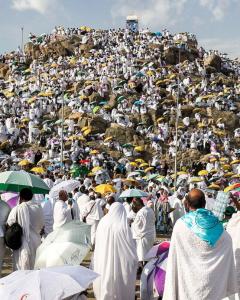
Image by Rudy and Peter Skitterians from Pixabay
Early in my time on the Sufi path, I went to visit some friends I had known through a meditation group. One took me aside at the end of our evening and said, “There is one story by Rumi that has touched me more than any other. Do you know ‘Muhammad and the Big Eater’?”
The story, which takes place in the fifth book of the Masnavi, goes like this: Once a group of people came to see the Prophet Muhammad (peace and blessings be always upon him). They weren’t believers, but they knew of his kindness and generosity, and simply hoped he would offer them a free meal. And they weren’t disappointed. The Companions of the Prophet each took a member of the group and went back to their homes for dinner. But one man remained; a man no one wanted to host. He sat in front of the mosque “like thick dregs in a cup.”
Muhammad spoke to him kindly and took him back to his own home, where he was seated before a generous meal. The man proceeded to devour all the dishes on the table and more: “enough food for 18 people”. No one rebuked him. But some members of the Prophet’s household were upset at the man’s behavior. When he went to bed, the maid locked the door to his room from the outside.
The man awoke in the middle of the night with a desperate need to relieve himself. Finding the door locked, he tried to go back to sleep and wait till morning. But the body’s needs took over, and when he woke up he found himself covered in his own excrement. He couldn’t imagine facing the person who would open the door and find him in that state.
And yet, when the door was unlocked at dawn, there didn’t seem to be anyone there. The man rushed out, unaware of Muhammad’s invisible presence behind the door. He intended to run away without saying anything to anyone.
Meanwhile, the members of the Prophet’s household became angrier when they saw what had happened in the room overnight. One servant even brought the soiled linens as evidence of the guest’s outrageous behavior. But Muhammad only smiled and asked for a bucket of water for washing. This made everyone more upset. They tried to stop him but he insisted, heeding inner guidance to clean the dirty bedclothes himself.
At that moment, the man returned. He was only coming back to retrieve an amulet which he had left behind in his haste to escape. But he was stopped short by seeing the Prophet washing his dirty sheets. He tore his shirt, fell to his knees and began to weep. But not only out of shame. At that moment, the light of awareness dawned in his heart, and he finally saw the Prophet for who he really is.
“What touched you so much about the story?” I asked the person from my meditation group. (Of all the things people quote from Rumi, this is decidedly among the less common.)
“I like that it is such a human story,” he said. “This man can’t help himself, literally and figuratively. But there’s no judgment of him for being weak. There’s only love.”
It is certainly a beautiful illustration of how the Prophet was a mercy to all the worlds—and to all beings. For me, there are two other elements that stand out as well.
The first is how, as Mevlana says elsewhere, even straying from the way can be the cause of ultimately being guided back to the straight path. How so? In Sufism we talk about sin as what causes separation from God. It’s not about being right or wrong on the terms of conventional morality so much as about being honest with ourselves. Recognizing the effects of our actions on our inner life and on our relationships with others can bring about those moments of tawba, repentance in the sense of turning around.
And that’s where the second, subtler element of transformation comes in. Why does the big eater eat so much? I think it’s a combination of fear and shame. On one hand, he probably believes there isn’t enough to go around and so he has to grab as much as he can for himself while it’s there. At the same time, he likely also feels undeserving and unworthy of anything good. Putting the two together: it seems the big eater eats so much because he’s starved for love.
When he breaks down in front of the Prophet, “Muhammad bends over him and holds him and caresses him and opens his inner knowing.” The Prophet is like a tender mother whose compassion for her child is boundless.
And yet, the love he offers is not sentimental or indulgent. It is, rather, a love that comes with knowledge, opening the man’s awareness of how he has been cutting himself off from the Source of all abundance. The man’s true hunger is also our hunger, our deep need for God. At the end of the story of the big eater, Mevlana advises:
“Let body needs dwindle and soul decisions increase. Diminish your physical self.
Your spiritual eye will begin to open.
When the body empties and stays empty, God fills it with musk and mother-of-pearl. That way a man gives his dung and gets purity.”
Previous Post

September 15, 2019
Meeting Silence: Sitting with Presence
Next Post

October 9, 2019 Being in Love Together
Browse Our Archives
Select a Category activism Community Divine Names Fear Feminine Islam Listening Mevlana Jalaluddin Rumi Mevlevi Music Prophet Muhammad Psychology Quran Ramadan Remembrance Rumi Sacred Space Shadow Work Shams of Tabriz Spiritual Imagination spirituality Sufism Suleyman Dede Uncategorized Universal Intelligence Zikr Zikr Allah
Select a Month October 2021 August 2021 July 2021 June 2021 April 2021 March 2021 February 2021 January 2021 November 2020 August 2020 June 2020 May 2020 April 2020 March 2020 February 2020 January 2020 December 2019 November 2019 October 2019 September 2019 August 2019 July 2019 June 2019 May 2019 April 2019 March 2019 February 2019 January 2019 December 2018 November 2018 October 2018 September 2018 August 2018 July 2018 June 2018 May 2018 April 2018 March 2018 February 2018 January 2018 December 2017 November 2017 October 2017 September 2017 August 2017 July 2017 June 2017 May 2017 April 2017 March 2017 February 2017 January 2017 December 2016 November 2016 October 2016 September 2016 August 2016 July 2016 June 2016 May 2016 April 2016
Follow Us!
TAKE THE
Religious Wisdom Quiz
I used a tent peg and hammer to kill a fleeing enemy commander while he slept. Who am I?
Select your answer to see how you score.
Delilah Deborah Ruth Jael
Related posts from The Living Tradition


Freedom from Food: The Gifts of a Three-Month...

Beyond Gain and Loss: Rumi's Teaching on Surah...
TRENDING AT PATHEOS Muslim

25 Years Later: How Much Has Changed for...
As we approach the 25th anniversary of September 11th, I’ve found myself...

Podcast: Third Spaces & The Rise of Yemeni...
In the latest episode of The Artistic Foodies Podcast, hosts Abbas...

HalalFest Picks: Best 60 Halal Spots for Super...
Back in 2016, I came up with a list of 29...

Unity Is America’s Strength — Division Is Its...
by Hidayatullah Ahsan When Valentina Gomez, a Republican candidate for Congress in...

Zohran Mamdani and New York’s Fight Against Islamophobia
This past June, against all odds, Zohran Mamdani won the Democratic primary...

What the Fourth of July Means to a...
As we mark another Fourth of July, millions of Americans will celebrate...
view all Muslim blogs
Ad-Free & Subscriber Log-In Subscription Support
- About Us
- 2026 Calendar
- Videos
- Podcasts
- Library of World Religions
- Faith In Media Tracker
- Advertise With Us
- Write for Us
- Privacy Policy
- Terms of Service
- Do Not Sell My Data
- Contact Us
- Radiant Digital
- Manage Newsletter Subscriptions
- Unsubscribe From Notifications
- Sitemap
Copyright 2008-2026, Patheos. All rights reserved.
Subscription Support Ad-Free & Subscriber Log-In
Follow Patheos