
BuddhistCatholicContemplativeEvangelicalGeneral ChristianHinduJewishLatter-day SaintMuslimNew VisionsProgressive Christian
Beliefs
- Buddhist
- Catholic
- Contemplative
- Evangelical
- General Christian
- Hindu
- Jewish
- Latter-day Saint
- More Voices
- Muslim
- New Visions
- Pagan
- Progressive Christian
Topics
- Religion News
- Food and Religion
- Sports and Religion
- Religious Art
- Religious Music and Entertainment
- Religious Events
- History and Religion
- Style and Religion
- Politics and Religion
- Women in Religion
- Recreation Outdoors and Religion
- Business Finance and Religion
- Careers Workplace and Religion
- Education and Religion
- Family Parenting and Religion
- Health Fitness and Religion
- Home and Religion
- Relationships and Religion
- Technology and Religion
- Travel and Religion
Columnists
- Buddhist Columnists
- Business Finance and Religion Columnists
- Careers Workplace and Religion Columnists
- Catholic Columnists
- Contemplative Columnists
- Education and Religion Columnists
- Evangelists Columnists
- Family Parenting and Religion Columnists
- General Christian Columnists
- Health Fitness and Religion Columnists
- Hindu Columnists
- History and Religion Columnists
- Home and Religion Columnists
- Jewish Columnists
- More Voices Columnists
- Latter Day Columnists
- Muslim Columnists
- New Visions Columnists
- Nonreligious Columnists
- Pagan Columnists
- Politics and Religion Columnists
- Progressive Columnists
- Recreation Outdoors and Religion Columnists
- Relationships and Religion Columnists
- Religion News Columnists
- Religious Art Columnists
- Religious Events Columnists
- Religious Music and Entertainment Columnists
- Sports and Religion Columnists
- Style and Religion Columnists
- Technology and Religion Columnists
- Travel and Religion Columnists
- Women in Religion Columnists
Resource Library
- 2026 Calendar
- Library of World Religions
- The 100 Most Holy Places on Earth
- Patheos Answers
- Podcasts
- Videos
- Faith Leaders Database
- Anglican Episcopalian
- Bahai
- Baptist
- Buddhism
- Christianity
- Confucianism
- Eastern Orthodoxy
- Hinduism
- Holiness and Pentecostal
- ISKCON
- Islam
- Judaism
- Lutheran
- Methodist
- The Church of Jesus Christ of Latter-day Saints
- New Age
- Paganism
- Presbytarian and Reformed
- Protestantism
- Religion Behind the Scenes
- Roman Catholic
- Scientology
- Shia Islam
- Sikhism
- Sufism
- Sunni Islam
- Taoism
- Zen
- See all religions
Research Tools
 Ad-Free & Subscriber Log-In Subscription Support
Ad-Free & Subscriber Log-In Subscription Support
Follow Patheos 

- Trending:
- Forgiveness
- |
- Marriage
- |
- Consciousness
- |
- Death Penalty
- |
- Election
- |
- Halloween
 The Living Tradition
- Home
- Muslim
- Step Back and See: Quran, Hadith, and Rumi
Step Back and See: Quran, Hadith, and Rumi
Last updated on: September 7, 2019 at 1:11 pm by Daniel Thomas Dyer
Step Back and See: Quran, Hadith, and Rumi 2019-09-07T13:11:09-04:00 Daniel Thomas Dyer
Patheos Explore the world's faith through different perspectives on religion and spirituality! Patheos has the views of the prevalent religions and spiritualities of the world.
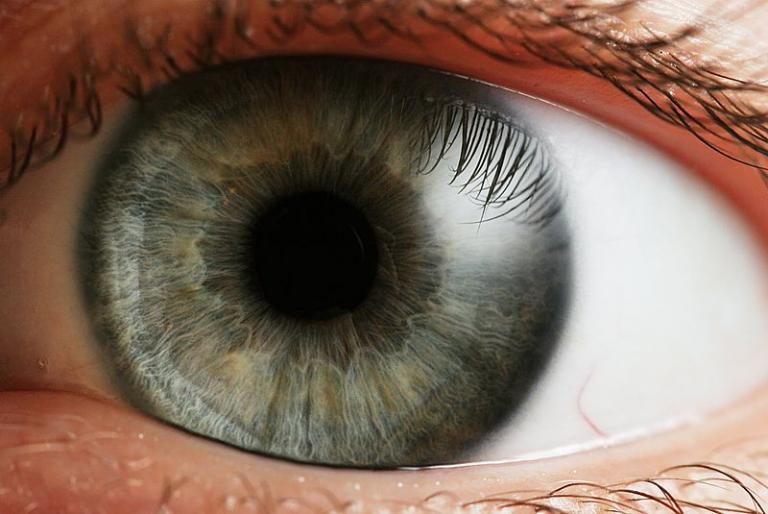
Image by Petr Novák, Wikipedia
A human being is essentially an eye;
the rest is merely flesh and skin…[1]
Recently I’ve been thinking about how dependent virtue is on vision. I mean the kind of vision that Rumi hints at above – a sight that includes insight. It’s the ability, for instance, to see the repercussions of our actions for ourselves and others, both now and in the future, as well as the ability to re-vision similar experiences in the past to help guide us in the present. When we are tempted by some returning desire, fear, vanity, or anger, what often saves us is the ability to step out of the heat of the moment and expand into this greater frame of reference, taking in a wider, deeper perspective. Isn’t virtue just a great view?
It’s true that sometimes we are not able to act from this elevated perspective; sometimes our short-sighted egos just won’t let us. But when the pull of that wider vision is powerful enough, we might be able to restrain ourselves from some ultimately unsatisfying indulgence, or direct ourselves to act upon something the eye of the heart has glimpsed. So much depends on stepping out of ourselves, detached, and taking it all in: witnessing.
The twentieth century philosopher, J.W. Dunne, used an intriguing analogy to portray human perception. Here’s the gist:
An artist escapes from a lunatic asylum with a crazy ambition: he wants to paint a picture of the entire universe. So he sets up his easel in a suitable place and starts to paint. When he’s done, he stands back and sees that he has succeeded in capturing the entire universe, except for one small thing – himself. He isn’t in the picture. So he moves his easel back a little and starts on a fresh canvas. He paints the same universe, but this time shows that it is on a canvas that stands on an easel and is being painted by an artist (himself), who is standing in the very universe he is painting.
He stands back again to admire his work, but it still feels like something is missing. Then it dawns on him that the self he has painted is not his whole self, because it does not include the self who is witnessing himself witness the universe – it just shows a painter witnessing the universe. So he moves the easel back again and this time draws three universes and two painters, one witnessing and painting the other, as he witnesses and paints the universe…
Of course this goes on forever: each time the bewildered artist is dissatisfied with the picture, because there is always a greater witness over the shoulder of the one he has just painted. The analogy stirs something in my heart. The idea of witnesses stretching back into infinity can cause the rational mind to disintegrate, and something more expansive seems to awaken, a little giddy with itself. In reality there probably isn’t an endless series of witnesses within each of us (and, if there was, trying to mentally inhabit more than one or two of them would be an exhausting misadventure!). Nevertheless, it can be a useful visualisation.
A friend pointed out to me recently that the word ‘ecstasy’ derives from the Greek word ekstasis and literally means to stand outside. If we can step outside ourselves into a greater witness beyond our habitual one, do we not sense the Ultimate Witness – ash-Shahid – peering through us from the depths of infinity? Imagining those depths lined by a rank of witnesses who never make it to the Ultimate Witness because the distance is endless has a way of bringing home God’s utter transcendence. Yet it also evokes God’s immanence, for whilst the bewildered artist is stepping outside of himself, he is also journeying into the core of his own being . ‘The universe cannot contain Me,’ says the Hadith Qudsi, ‘only the heart of my faithful servant can contain Me.’
Dunne’s theory of ‘serialism’ does not end there, because by using mathematical series theory he goes on to claim that it can be logically deduced that time as a linear phenomena of past, present, and future only exists in the world of the first witness. In the worlds of the witnesses over his shoulder there would be no death and only an Eternal Present!
Serialism caused something of a stir when Dunne first proposed it in the 1930s, but it was soon dismissed and forgotten by the philosophical community. Many philosophers, being atheists or materialists, were disturbed by its mystical implications. Some claimed to have found a fault in his logic. Others, more open to the mystical, recoiled from the idea of an infinite regress, because intuitively it seems to lack a certain elegance, beauty, and simplicity.
But what does Rumi say? An endless series of witnesses is not an image he ever makes use of in his teaching, as far as I am aware. However, we do find lines such as these:
Once you get hold of selflessness,
you’ll be dragged from your ego
and freed from many traps—
come, return to the root of the root of your Self.[2]
Every stanza in the ghazal in which these lines appear finishes with the same refrain – ‘return to the root of the root of your Self’ – which might easily be transposed to ‘return to the witness of the witness of your Self’. It would be stretching it to read an infinite regression like Dunne’s in these lines of Rumi, but we can at least say that, like Dunne, Rumi beckons us to take a step back into something deeper, and both invite us on a journey towards the Self that paradoxically involves a stepping out of our selves.
And what about Rumi’s source of inspiration, the Quran? If we were asked to summarise, in a few brief words of our own, what the Quran has to tell us, ‘step back and see’ might not be a bad encapsulation. In Surah Ya Sin there are these intriguing verses stressing the importance of sight/insight:
Now had it been Our will, we could surely have deprived them of their sight, so that they would stray forever from the Way: for how could they have had insight?
And had it been Our will, We could surely have given them a different nature – rooted in their places – so that they would not be able to move forward, and could not turn back.
[36:66-67][3]
The virtuous path is aligned with perception in the first verse, whilst the second might be read as imagining what it would be like for us if we could not take a step to shift our perspective, but instead, like plants, our movement was restricted. Elsewhere, the Quran leaves us with no doubt about the importance of our self-awareness and this two-way vision:
On the earth are signs for those with inner certainty,
just as within your own selves; will you not then see?
[51:20-21][4]
Or, as Rumi puts it with some urgency:
Dissolve this whole body of yours in vision:
pass into sight, pass into sight, pass into sight![5]
Perhaps the repetition of the command ‘pass into sight’ is not simply for emphasis. Whilst it may not suggest a passing into sight from one witness to another in an infinite series, it could suggest that passing into sight is a process that requires continual movement, renewal, and repetition. Without getting caught in an unwieldy infinite regress within the individual, Rumi’s vision seems to hint at an infinite unfolding within the quality of Sight itself. The individual dissolves, only the words on his tongue remaining: Ya Shahid! Ya Basir! O Witness, O All-Seeing One!
[1] Mathnawi VI, 812, trans. by Kabir and Camille Helminski in Jewels of Remembrance.
[2] Divan-e Shams-e Tabrizi: 1926, trans. by Kabir Helminski in Love is a Stranger.
[3] From Surah Ya Sin in the Quran, trans. by Camille Helminski in The Light of Dawn.
[4] From Surah a-Dhariyat in the Quran, trans by Muhammad Asad in The Message of the Quran.
[5] Mathnawi VI, 1463, trans. by Kabir and Camille Helminski in Jewels of Remembrance.
Previous Post

August 2, 2019
What the Fireflies Know
Next Post

September 15, 2019 Meeting Silence: Sitting with Presence
Browse Our Archives
Select a Category activism Community Divine Names Fear Feminine Islam Listening Mevlana Jalaluddin Rumi Mevlevi Music Prophet Muhammad Psychology Quran Ramadan Remembrance Rumi Sacred Space Shadow Work Shams of Tabriz Spiritual Imagination spirituality Sufism Suleyman Dede Uncategorized Universal Intelligence Zikr Zikr Allah
Select a Month October 2021 August 2021 July 2021 June 2021 April 2021 March 2021 February 2021 January 2021 November 2020 August 2020 June 2020 May 2020 April 2020 March 2020 February 2020 January 2020 December 2019 November 2019 October 2019 September 2019 August 2019 July 2019 June 2019 May 2019 April 2019 March 2019 February 2019 January 2019 December 2018 November 2018 October 2018 September 2018 August 2018 July 2018 June 2018 May 2018 April 2018 March 2018 February 2018 January 2018 December 2017 November 2017 October 2017 September 2017 August 2017 July 2017 June 2017 May 2017 April 2017 March 2017 February 2017 January 2017 December 2016 November 2016 October 2016 September 2016 August 2016 July 2016 June 2016 May 2016 April 2016
Follow Us!
TAKE THE
Religious Wisdom Quiz
Why were the plagues significant against Egyptian beliefs?
Select your answer to see how you score.
They were meant to test Pharaoh’s patience They were random acts of nature Pharaoh had offended the Hebrew people Each plague targeted an Egyptian god
Related posts from The Living Tradition


Freedom from Food: The Gifts of a Three-Month...

Beyond Gain and Loss: Rumi's Teaching on Surah...
TRENDING AT PATHEOS Muslim

25 Years Later: How Much Has Changed for...
As we approach the 25th anniversary of September 11th, I’ve found myself...

Podcast: Third Spaces & The Rise of Yemeni...
In the latest episode of The Artistic Foodies Podcast, hosts Abbas...

HalalFest Picks: Best 60 Halal Spots for Super...
Back in 2016, I came up with a list of 29...

Unity Is America’s Strength — Division Is Its...
by Hidayatullah Ahsan When Valentina Gomez, a Republican candidate for Congress in...

Zohran Mamdani and New York’s Fight Against Islamophobia
This past June, against all odds, Zohran Mamdani won the Democratic primary...

What the Fourth of July Means to a...
As we mark another Fourth of July, millions of Americans will celebrate...
view all Muslim blogs
Ad-Free & Subscriber Log-In Subscription Support
- About Us
- 2026 Calendar
- Videos
- Podcasts
- Library of World Religions
- Faith In Media Tracker
- Advertise With Us
- Write for Us
- Privacy Policy
- Terms of Service
- Do Not Sell My Data
- Contact Us
- Radiant Digital
- Manage Newsletter Subscriptions
- Unsubscribe From Notifications
- Sitemap
Copyright 2008-2026, Patheos. All rights reserved.
Subscription Support Ad-Free & Subscriber Log-In
Follow Patheos