
BuddhistCatholicContemplativeEvangelicalGeneral ChristianHinduJewishLatter-day SaintMuslimNew VisionsProgressive Christian
Beliefs
- Buddhist
- Catholic
- Contemplative
- Evangelical
- General Christian
- Hindu
- Jewish
- Latter-day Saint
- More Voices
- Muslim
- New Visions
- Pagan
- Progressive Christian
Topics
- Religion News
- Food and Religion
- Sports and Religion
- Religious Art
- Religious Music and Entertainment
- Religious Events
- History and Religion
- Style and Religion
- Politics and Religion
- Women in Religion
- Recreation Outdoors and Religion
- Business Finance and Religion
- Careers Workplace and Religion
- Education and Religion
- Family Parenting and Religion
- Health Fitness and Religion
- Home and Religion
- Relationships and Religion
- Technology and Religion
- Travel and Religion
Columnists
- Buddhist Columnists
- Business Finance and Religion Columnists
- Careers Workplace and Religion Columnists
- Catholic Columnists
- Contemplative Columnists
- Education and Religion Columnists
- Evangelists Columnists
- Family Parenting and Religion Columnists
- General Christian Columnists
- Health Fitness and Religion Columnists
- Hindu Columnists
- History and Religion Columnists
- Home and Religion Columnists
- Jewish Columnists
- More Voices Columnists
- Latter Day Columnists
- Muslim Columnists
- New Visions Columnists
- Nonreligious Columnists
- Pagan Columnists
- Politics and Religion Columnists
- Progressive Columnists
- Recreation Outdoors and Religion Columnists
- Relationships and Religion Columnists
- Religion News Columnists
- Religious Art Columnists
- Religious Events Columnists
- Religious Music and Entertainment Columnists
- Sports and Religion Columnists
- Style and Religion Columnists
- Technology and Religion Columnists
- Travel and Religion Columnists
- Women in Religion Columnists
Resource Library
- 2026 Calendar
- Library of World Religions
- The 100 Most Holy Places on Earth
- Patheos Answers
- Podcasts
- Videos
- Faith Leaders Database
- Anglican Episcopalian
- Bahai
- Baptist
- Buddhism
- Christianity
- Confucianism
- Eastern Orthodoxy
- Hinduism
- Holiness and Pentecostal
- ISKCON
- Islam
- Judaism
- Lutheran
- Methodist
- The Church of Jesus Christ of Latter-day Saints
- New Age
- Paganism
- Presbytarian and Reformed
- Protestantism
- Religion Behind the Scenes
- Roman Catholic
- Scientology
- Shia Islam
- Sikhism
- Sufism
- Sunni Islam
- Taoism
- Zen
- See all religions
Research Tools
 Ad-Free & Subscriber Log-In Subscription Support
Follow Patheos 

- Trending:
- Advent
- |
- Forgiveness
- |
- Thanksgiving
- |
- Election
- |
- Seasonal Holidays
- |
- Marriage
 The Living Tradition
- Home
- Muslim
- Sacred Space: Lighting the Lamps Within
Sacred Space: Lighting the Lamps Within
Last updated on: April 12, 2019 at 9:59 pm by Daliah Merzaban
Sacred Space: Lighting the Lamps Within 2019-04-12T21:59:16-04:00 Daliah Merzaban
Patheos Explore the world's faith through different perspectives on religion and spirituality! Patheos has the views of the prevalent religions and spiritualities of the world.
When I imagine sacred space, my first impulse is to think of the soft, thick purple and cream-coloured prayer carpet that sits at the foot of the floor-to-ceiling windows in my living room. Looking out the past the balcony to the right, I can glimpse the moon blooming and retreating each passing month in the night sky.
A vase with fresh roses and a flickering candle accompany me on my left, while the fragrance of wild orange and bergamot fills the room from the diffuser on the corner of the TV stand. At times, ney music or Quranic verses may hum softly in the background, as I open a page or two of Rumi’s poetry, breathing their wisdom deep into my belly.
Outwardly, these adornments work together beautifully to create an ambiance that nurtures tranquility and promotes self care and compassion. After neglecting these qualities for so long, it’s taken me a few years to strike a favorable balance.
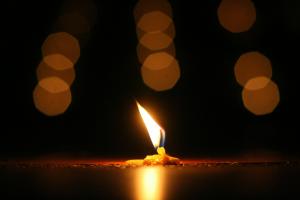
(Source: Pixabay)
The more time I spend refining my sacred space, though, the more I realise the end goal is so much more expansive than simply achieving comfort in the body and mind. By creating external conditions whereby stillness is enhanced, distractions are minimized and senses are refreshed, I’m pushed to focus on cultivating the other, more important, sacred space: the one inside.
As the spiritual and psychological work of this path continually reveal to me, this isn’t always comfortable. In fact, it is often the opposite. Replicating the stillness of the outer sacred space in the inner one requires a lot of spring cleaning to clear out the junk—such as the impulsive thoughts and self-limiting beliefs—that have been lodged in many nooks and crannies of my psyche.
Hanging onto emotional baggage dulls the energy of my inner world a lot like clutter might in a room. Until those suitcases are opened and the anguish and pain are released, there will always be barriers to inner stillness. It’s a lot like ablution, only instead of water, it is zikr that does the cleansing.
In a sense, the inner work of decluttering is about nurturing the inner sacred space so our deeper and more meaningful senses can be accentuated — the spiritual senses in the heart, or the “deeper level of mind” as Shaikh Kabir sometimes calls it.
Among the spiritual senses, hearing seems important to focus on here. If my thoughts pull me to past traumas or future worries, how can I listen to the sacredness of this moment? I find it beautiful that the Divine Name expressing the All-Hearing Quality of Reality, As-Sami, shares the same root as Sema, the Mevlevi whirling ceremony, during which each dervish spinning on her axis awakens to the harmony in her innermost self and the community of creation.
In Book III of his epic Masnavi, Rumi offers some clues about spiritual listening:
If you don’t perceive
how the leaves applaud
you need a spiritual ear,
not the ear of the body.Close the ear of the head
to witty chatter and lying,
that you might behold
the radiant city of the soul.The ear of Muhammad draws out
the hidden meaning in words,
because as God says of him
in the Quran, “he is an ear.”(Mathnawi III, 100-102, from the Rumi Daybook, page 185)
The type of hearing described above requires a high degree of inner stillness and focus. It’s incredible to imagine how pristine the sacred space embodied by Muhammad, peace and blessings be upon him, must have been for his heart to receive the Quran. A similar emptiness of the lower self, or nafs in sufi terminology, gave Rumi a conduit into the Source of Life that allowed tens of thousands of verses of poetry to flow through his humble heart and delight and heal humanity for centuries.
While we may not master the level of attention of our teachers and guides, I’m discovering that after enough emptying, it’s possible to tap into the stillness beyond thought and hear the voice of my soul more clearly. It is here that I get little tastes of the creativity that has the potential to spring up like sweet water from the dry earth of the body and mind. When it happens, I sense I’m coming into contact with a universal waterfall of meanings. Words from it splash into my mind’s ear and images into my mind’s eye, which I can catch and convey on paper, often in a poem or a song.
In many ways, fostering inner sacred space is about creating the conditions to be able to listen. When my immediate physical space is clean, my senses are calm and still and I find it easier to focus on whatever I am doing. Similarly, clearing away some of what’s muddling my inner sanctuary crystallizes the capacity to attend to what is beyond the chatter of the mind.
There’s something very sensual about enriching sacred space. Dimming the lights, illuminating candles, filling the room with beautiful scents and music are typically associated with romantic love. But the intimacy need not be with another human being; It can also be about engendering romance with our own souls and the Beloved all loves are seeking.
This type of intimacy allows us to delve deeply into our hearts and souls and bring out the unique jewels the Divine Reality, Allah, longs for us to manifest in the world. The way I imagine sacred space, then, has evolved from something outward (surrounding myself with beauty) to something inward (creating the stillness needed to access the beauty of Universal Intelligence).
Ultimately, both are essential to lighting the way to reach a point of contact with the sacred in me —something every one of us shares right at our very centre, if we are silent enough to perceive what Rumi expresses in this timeless verse:
Ground yourself, strip yourself down,
To blind, loving silence.
Stay there, until you see
You are gazing at the Light
With its own ageless eyes.~From the poem, One, One One
Translated by Andrew Harvey. Edited by Kabir Helminski
The Rumi Collection
Previous Post
March 26, 2019
Why it's a spiritual duty to develop the imagination
Next Post

April 21, 2019 Be Humble in Love; Be Bold in Loving
Browse Our Archives
Select a Category activism Community Divine Names Fear Feminine Islam Listening Mevlana Jalaluddin Rumi Mevlevi Music Prophet Muhammad Psychology Quran Ramadan Remembrance Rumi Sacred Space Shadow Work Shams of Tabriz Spiritual Imagination spirituality Sufism Suleyman Dede Uncategorized Universal Intelligence Zikr Zikr Allah
Select a Month October 2021 August 2021 July 2021 June 2021 April 2021 March 2021 February 2021 January 2021 November 2020 August 2020 June 2020 May 2020 April 2020 March 2020 February 2020 January 2020 December 2019 November 2019 October 2019 September 2019 August 2019 July 2019 June 2019 May 2019 April 2019 March 2019 February 2019 January 2019 December 2018 November 2018 October 2018 September 2018 August 2018 July 2018 June 2018 May 2018 April 2018 March 2018 February 2018 January 2018 December 2017 November 2017 October 2017 September 2017 August 2017 July 2017 June 2017 May 2017 April 2017 March 2017 February 2017 January 2017 December 2016 November 2016 October 2016 September 2016 August 2016 July 2016 June 2016 May 2016 April 2016
Follow Us!
TAKE THE
Religious Wisdom Quiz
In 2 Peter, what does Peter say he will soon put aside?
Select your answer to see how you score.
His job His ministry His life His burdens
Related posts from The Living Tradition
Freedom from Food: The Gifts of a Three-Month...
Beyond Gain and Loss: Rumi's Teaching on Surah...
TRENDING AT PATHEOS Muslim

25 Years Later: How Much Has Changed for...
As we approach the 25th anniversary of September 11th, I’ve found myself...

Podcast: Third Spaces & The Rise of Yemeni...
In the latest episode of The Artistic Foodies Podcast, hosts Abbas...

HalalFest Picks: Best 60 Halal Spots for Super...
Back in 2016, I came up with a list of 29...
Unity Is America’s Strength — Division Is Its...
by Hidayatullah Ahsan When Valentina Gomez, a Republican candidate for Congress in...

Zohran Mamdani and New York’s Fight Against Islamophobia
This past June, against all odds, Zohran Mamdani won the Democratic primary...

What the Fourth of July Means to a...
As we mark another Fourth of July, millions of Americans will celebrate...
view all Muslim blogs
Ad-Free & Subscriber Log-In Subscription Support
- About Us
- 2026 Calendar
- Videos
- Podcasts
- Library of World Religions
- Faith In Media Tracker
- Advertise With Us
- Write for Us
- Privacy Policy
- Terms of Service
- Do Not Sell My Data
- Contact Us
- Radiant Digital
- Manage Newsletter Subscriptions
- Unsubscribe From Notifications
- Sitemap
Copyright 2008-2026, Patheos, part of the Radiant Digital network of media brands. All rights reserved.
Subscription Support Ad-Free & Subscriber Log-In
Follow Patheos