
BuddhistCatholicContemplativeEvangelicalGeneral ChristianHinduJewishLatter-day SaintMuslimNew VisionsProgressive Christian
Beliefs
- Buddhist
- Catholic
- Contemplative
- Evangelical
- General Christian
- Hindu
- Jewish
- Latter-day Saint
- More Voices
- Muslim
- New Visions
- Pagan
- Progressive Christian
Topics
- Religion News
- Food and Religion
- Sports and Religion
- Religious Art
- Religious Music and Entertainment
- Religious Events
- History and Religion
- Style and Religion
- Politics and Religion
- Women in Religion
- Recreation Outdoors and Religion
- Business Finance and Religion
- Careers Workplace and Religion
- Education and Religion
- Family Parenting and Religion
- Health Fitness and Religion
- Home and Religion
- Relationships and Religion
- Technology and Religion
- Travel and Religion
Columnists
- Buddhist Columnists
- Business Finance and Religion Columnists
- Careers Workplace and Religion Columnists
- Catholic Columnists
- Contemplative Columnists
- Education and Religion Columnists
- Evangelists Columnists
- Family Parenting and Religion Columnists
- General Christian Columnists
- Health Fitness and Religion Columnists
- Hindu Columnists
- History and Religion Columnists
- Home and Religion Columnists
- Jewish Columnists
- More Voices Columnists
- Latter Day Columnists
- Muslim Columnists
- New Visions Columnists
- Nonreligious Columnists
- Pagan Columnists
- Politics and Religion Columnists
- Progressive Columnists
- Recreation Outdoors and Religion Columnists
- Relationships and Religion Columnists
- Religion News Columnists
- Religious Art Columnists
- Religious Events Columnists
- Religious Music and Entertainment Columnists
- Sports and Religion Columnists
- Style and Religion Columnists
- Technology and Religion Columnists
- Travel and Religion Columnists
- Women in Religion Columnists
Resource Library
- 2026 Calendar
- Library of World Religions
- The 100 Most Holy Places on Earth
- Patheos Answers
- Podcasts
- Videos
- Faith Leaders Database
- Anglican Episcopalian
- Bahai
- Baptist
- Buddhism
- Christianity
- Confucianism
- Eastern Orthodoxy
- Hinduism
- Holiness and Pentecostal
- ISKCON
- Islam
- Judaism
- Lutheran
- Methodist
- The Church of Jesus Christ of Latter-day Saints
- New Age
- Paganism
- Presbytarian and Reformed
- Protestantism
- Religion Behind the Scenes
- Roman Catholic
- Scientology
- Shia Islam
- Sikhism
- Sufism
- Sunni Islam
- Taoism
- Zen
- See all religions
Research Tools
 Ad-Free & Subscriber Log-In Subscription Support
Follow Patheos 

- Trending:
- Advent
- |
- Forgiveness
- |
- Thanksgiving
- |
- Election
- |
- Seasonal Holidays
- |
- Marriage
 The Living Tradition
- Home
- Muslim
- Shams and the Breaking Heart
Shams and the Breaking Heart
Last updated on: December 28, 2018 at 2:50 pm by Anna Rohleder
Shams and the Breaking Heart 2018-12-28T14:50:41-04:00 Anna Rohleder
Patheos Explore the world's faith through different perspectives on religion and spirituality! Patheos has the views of the prevalent religions and spiritualities of the world.
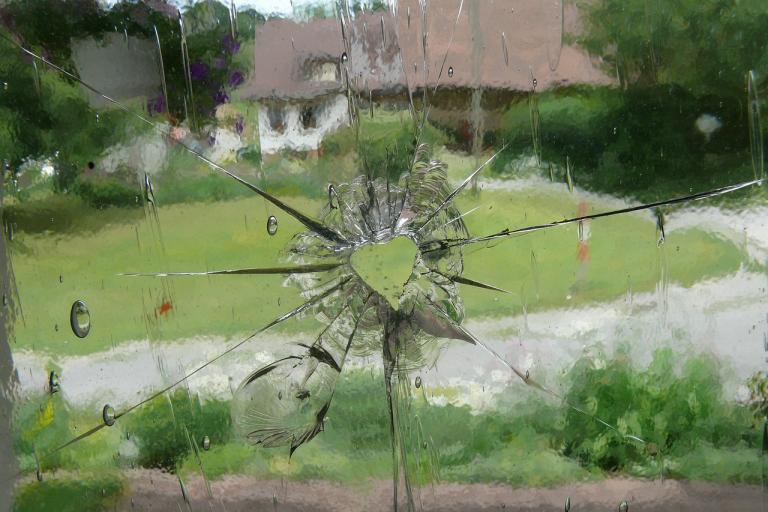
Image courtesy Pixabay
Lately I’ve been haunted by some lines from a poem called “The Testing-Tree”:
In a murderous time
the heart breaks and breaks
and lives by breaking.
It is necessary to go
Through the dark and deeper dark
And not to turn.
Working for a humanitarian news service has forced me to learn about distant conflicts and crises. In parallel, I find myself becoming more aware of the injustices faced by marginalized people in my own city and country. Looking at the photo of a little boy in Iraq, his whole body scored with shrapnel wounds, is heartbreaking. Hearing the stories of people denied not just material resources, but even their basic human dignity, in a society that claims to be a democracy is heartbreaking.
In everyday life, that seems to be where the conversation usually ends. We sigh and shrug and say that’s just how it is. This poem says the opposite: it insists that heartbreak is not a reason to turn away but rather “to go / through the dark and deeper dark / and not to turn.” For us on the Sufi path, such advice may well sound familiar; Shams taught the same idea centuries ago. In a series of passages on the heart*, he explains that its capacity develops through contraction as well as expansion:
The moment the bright light of the Truth reflects upon the heart, the heart becomes joyful. Then in a moment the light disappears, but many times it happens like this so that the heart might become a heart. It burns, and many times the heart gets broken, until it melts and only God remains.
(from Rumi’s Sun, p. 402)
In our tradition we learn that the heart is an organ of spiritual perception, able to intuit the unity behind the fractured world of appearances. But even as the heart comes to know that this wholeness is true Reality, it feels all the more keenly the pain of separation that comes from living in denial or forgetfulness. Being alive in the fullness of that experience – aware of spiritual reality while not turning away from the world’s real suffering – seems to me an important dimension of our path. Echoing the Hadith Qudsi that says, “I am with those whose hearts have been broken on My way,” Shams tells us, “brokenness of heart is necessary.”
At the beginning of my own journey on this way, I was very much in love with the love that we share and all the beautiful ways that we care for each other. And then I remember there was a point when I realized that to open my heart means I have to feel everything – not just joy and tenderness but also grief, anger and regret. Sufism is not the kind of smorgasbord spirituality where you take what you like and leave the rest.
And how could it be otherwise, if a central tenet of our path is to gather all of our disparate selves and become an increasingly cooked and coherent self? To do that requires a focus, a point of orientation and an organizing principle, which Shams tells us again is the heart:
….Ascending to the Throne is useless; whether you ascend to the Throne or descend through the seven layers of the earth, it’s of no use — one must open the door of the heart.
( p. 333)
Then there’s a surprise. Shams says,
One should not be a person of bodily instincts, but a person of heart. Seek the heart, not instincts! Where is the place of the heart? The heart is hidden…
(p. 402)
I thought I knew where – or what – the heart is. But Shams asks: “Where is the place of the heart?” He doesn’t say it is in the chest. He doesn’t say it’s in the mind. He says, “The heart is hidden…” In the modern terms of quantum physics, we could say the heart is a nonlocal phenomenon. It’s not (just) something that resides in us, either as a physical organ or as a center of energy. In its spiritual function it is the consciousness of connection, which requires some kind of encounter to be activated. As Martin Buber writes in his book I and Thou:
“The concentration and fusion into a whole being can never be accomplished by me, can never be accomplished without me. I require a You to become; becoming I, I say You.”
“Only as the You becomes present does presence come into being.”
This description accords with my experience of what I would call people of heart. They are the ones who perceive other people as real and present as their experience of themselves – and not just other human beings, but also animals and plants, even rocks and wind and rain. People of heart always have presence because they are awake to those encounters – even when, or maybe especially when, those encounters have the potential to be painful.
An open heart has room for everything. It doesn’t narrow the encounter with labels or other limiting concepts. It is, Shams says, “more expansive, more pleasant and more illuminated than the heavens.” (p. 247)
It is the sacred space within us that a mosque or dergah or any other external sacred space is meant to evoke. It is a sanctuary and a door to the infinite, but it’s also a place where we can live, even when the times we live in are murderous.
** All quotations from Rumi’s Sun: The Teachings of Shams of Tabriz, translated by Camille Helminski and Refik Algan*
Previous Post
December 4, 2018
Endeavor to Make God Your Companion in Every State
Next Post

January 5, 2019 "Hello Silence, My Old Friend"
Browse Our Archives
Select a Category activism Community Divine Names Fear Feminine Islam Listening Mevlana Jalaluddin Rumi Mevlevi Music Prophet Muhammad Psychology Quran Ramadan Remembrance Rumi Sacred Space Shadow Work Shams of Tabriz Spiritual Imagination spirituality Sufism Suleyman Dede Uncategorized Universal Intelligence Zikr Zikr Allah
Select a Month October 2021 August 2021 July 2021 June 2021 April 2021 March 2021 February 2021 January 2021 November 2020 August 2020 June 2020 May 2020 April 2020 March 2020 February 2020 January 2020 December 2019 November 2019 October 2019 September 2019 August 2019 July 2019 June 2019 May 2019 April 2019 March 2019 February 2019 January 2019 December 2018 November 2018 October 2018 September 2018 August 2018 July 2018 June 2018 May 2018 April 2018 March 2018 February 2018 January 2018 December 2017 November 2017 October 2017 September 2017 August 2017 July 2017 June 2017 May 2017 April 2017 March 2017 February 2017 January 2017 December 2016 November 2016 October 2016 September 2016 August 2016 July 2016 June 2016 May 2016 April 2016
Follow Us!
TAKE THE
Religious Wisdom Quiz
I was lifted up on a pole that healed those who looked at me. What am I?
Select your answer to see how you score.
A healing statue The Golden Calf The Stone Tablets The bronze serpent
Related posts from The Living Tradition
Freedom from Food: The Gifts of a Three-Month...

Prophet Muhammad and the Garbage Thrower
TRENDING AT PATHEOS Muslim

25 Years Later: How Much Has Changed for...
As we approach the 25th anniversary of September 11th, I’ve found myself...

Podcast: Third Spaces & The Rise of Yemeni...
In the latest episode of The Artistic Foodies Podcast, hosts Abbas...

HalalFest Picks: Best 60 Halal Spots for Super...
Back in 2016, I came up with a list of 29...
Unity Is America’s Strength — Division Is Its...
by Hidayatullah Ahsan When Valentina Gomez, a Republican candidate for Congress in...

Zohran Mamdani and New York’s Fight Against Islamophobia
This past June, against all odds, Zohran Mamdani won the Democratic primary...

What the Fourth of July Means to a...
As we mark another Fourth of July, millions of Americans will celebrate...
view all Muslim blogs
Ad-Free & Subscriber Log-In Subscription Support
- About Us
- 2026 Calendar
- Videos
- Podcasts
- Library of World Religions
- Faith In Media Tracker
- Advertise With Us
- Write for Us
- Privacy Policy
- Terms of Service
- Do Not Sell My Data
- Contact Us
- Radiant Digital
- Manage Newsletter Subscriptions
- Unsubscribe From Notifications
- Sitemap
Copyright 2008-2026, Patheos, part of the Radiant Digital network of media brands. All rights reserved.
Subscription Support Ad-Free & Subscriber Log-In
Follow Patheos