
BuddhistCatholicContemplativeEvangelicalGeneral ChristianHinduJewishLatter-day SaintMuslimNew VisionsProgressive Christian
Beliefs
- Buddhist
- Catholic
- Contemplative
- Evangelical
- General Christian
- Hindu
- Jewish
- Latter-day Saint
- More Voices
- Muslim
- New Visions
- Pagan
- Progressive Christian
Topics
- Religion News
- Food and Religion
- Sports and Religion
- Religious Art
- Religious Music and Entertainment
- Religious Events
- History and Religion
- Style and Religion
- Politics and Religion
- Women in Religion
- Recreation Outdoors and Religion
- Business Finance and Religion
- Careers Workplace and Religion
- Education and Religion
- Family Parenting and Religion
- Health Fitness and Religion
- Home and Religion
- Relationships and Religion
- Technology and Religion
- Travel and Religion
Columnists
- Buddhist Columnists
- Business Finance and Religion Columnists
- Careers Workplace and Religion Columnists
- Catholic Columnists
- Contemplative Columnists
- Education and Religion Columnists
- Evangelists Columnists
- Family Parenting and Religion Columnists
- General Christian Columnists
- Health Fitness and Religion Columnists
- Hindu Columnists
- History and Religion Columnists
- Home and Religion Columnists
- Jewish Columnists
- More Voices Columnists
- Latter Day Columnists
- Muslim Columnists
- New Visions Columnists
- Nonreligious Columnists
- Pagan Columnists
- Politics and Religion Columnists
- Progressive Columnists
- Recreation Outdoors and Religion Columnists
- Relationships and Religion Columnists
- Religion News Columnists
- Religious Art Columnists
- Religious Events Columnists
- Religious Music and Entertainment Columnists
- Sports and Religion Columnists
- Style and Religion Columnists
- Technology and Religion Columnists
- Travel and Religion Columnists
- Women in Religion Columnists
Resource Library
- 2026 Calendar
- Library of World Religions
- The 100 Most Holy Places on Earth
- Patheos Answers
- Podcasts
- Videos
- Faith Leaders Database
- Anglican Episcopalian
- Bahai
- Baptist
- Buddhism
- Christianity
- Confucianism
- Eastern Orthodoxy
- Hinduism
- Holiness and Pentecostal
- ISKCON
- Islam
- Judaism
- Lutheran
- Methodist
- The Church of Jesus Christ of Latter-day Saints
- New Age
- Paganism
- Presbytarian and Reformed
- Protestantism
- Religion Behind the Scenes
- Roman Catholic
- Scientology
- Shia Islam
- Sikhism
- Sufism
- Sunni Islam
- Taoism
- Zen
- See all religions
Research Tools
 Ad-Free & Subscriber Log-In Subscription Support
Ad-Free & Subscriber Log-In Subscription Support
Follow Patheos 

- Trending:
- Forgiveness
- |
- Marriage
- |
- Consciousness
- |
- Death Penalty
- |
- Election
- |
- Halloween
 The Living Tradition
- Home
- Muslim
- Ramadan with Shams: The Ambush of Love
Ramadan with Shams: The Ambush of Love
Last updated on: August 24, 2017 at 9:00 am by Daniel Thomas Dyer
Ramadan with Shams: The Ambush of Love 2017-08-24T09:00:26-04:00 Daniel Thomas Dyer
Patheos Explore the world's faith through different perspectives on religion and spirituality! Patheos has the views of the prevalent religions and spiritualities of the world.
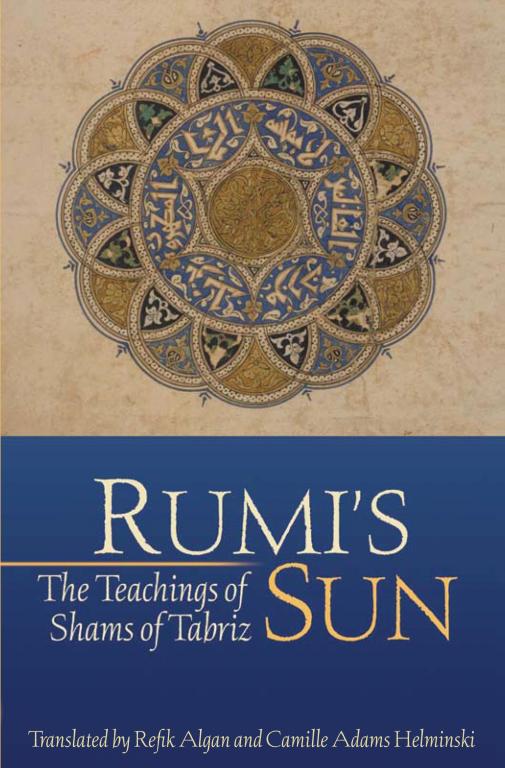
This Ramadan, I drank from the wisdom of Shams of Tabriz contained in the wonderful book Rumi’s Sun: The Teachings of Shams of Tabriz. “Shams” means “Sun” of course, and this year the summer equinox fell in the month of Ramadan; something which felt significant. I have discovered that for Shams the best indication of a sincere spiritual seeker is a sense of need, and I reflected a great deal on God as as-Samad, the Satisfier of All Needs, the Independent, the Eternal. “Need is the foremost wing feather on the way,” Shams tells us, and he points out that “…the Quran and the words of Muhammad are all through yearning, through need.”[i] We find Shams returning to this theme again and again:
Desire won’t take us anywhere. Only the need of the poor ones , their entreaties must be our companions. Truly, Alms are for the poor [9:60]. What we need is that need.[ii]
The “poor ones” mentioned above are those who are aware of their own existential poverty, who are aware that they can claim nothing as their own. It is a deep sense of our need for, and utter dependency on, God, to whom everything belongs and in whom everything is sourced. I sense that such “poor ones” must be aware of this need not merely on an intellectual level (which many of us could claim), but at the level of the heart. Very far from being “neediness”, it might even be called “Self-reliance” with a capital “S”. And Shams is clear that it is not “desire” in the sense of our ego’s desire to be enlightened and exalted; it is something much deeper, closer to the earth, more embodied, humble, and aware.
Shams offers us a vision of “The Palace of the Ancient One”. He begins by telling us:
“If you pass beyond the body and reach the soul, then you will have reached ‘createdness’”.[iii]
Ramadan is an opportunity to be more aware of our bodies, their appetites and desires, thirsts and hungers, and, in so doing, to possibly pass beyond them to our souls. But the prime realisation on discovering the soul, Shams tells us, is not our own immortality, nor our inner strength and beauty, but the stark realisation of our “createdness”. This implies a Creator on whom we are utterly dependent, and I hear a sense of aching vulnerability in this word “createdness”. By contrast, most of our lives may well be spent without any sense of “createdness” whatsoever – we think, feel, and act as if we are self-created centres of the universe, even whilst we view ourselves as spiritual!
Next, Shams tells us:
The Truth is the Ancient, Eternal Being. Where can the one who is created find the One who is Eternal? What connects the earthly creature and the Lord of lords?
Shams’ rhetorical question implies an almost hopeless situation: we are too tiny, limited, and insignificant to forge a connection with our Creator. We may be able to journey beyond our bodies to our souls, but Shams seems to be telling us that the next step, from the soul to Spirit, is beyond us. There is nothing our souls can offer the Ancient One, no matter what refined qualities of soul we might possess. Shams uses a metaphor to describe this, saying to God:
Even if Your lovers bring You their own heads, the gift of their life,
they will only have brought cumin seeds to Kerman.[iv]
In Shams’ time, all cumin came from Kerman. We have nothing to offer Allah, no qualities or attributes that Allah does not already possess, for all our attributes are sourced in the Divine Attributes themselves. Our vaunted sense of self begins to diffuse away into something much greater when we dwell on this.
And Ramadan seems to be designed to aid this process. As we fast, we may begin to realise how our sense of time, and indeed our sense of self, is conditioned by what we consume, by our stomachs in fact! It is difficult to explain this to someone who has never fasted before. When meal times are taken away, we might begin to experience a sense of timelessness and ego-disintegration . Shams alludes to this when he describes the holy days of Ramadan speaking to us, warning us not to make our fast into a shallow exercise, a form of idol worship. According to Shams, Ramadan’s holy days tell us,
O people who are unaware of your own selves! You are looking for blessing from us, but we want you to look at us in such a way that there might remain no dayness in day, no hourness in hours, and that the lifelessness of the lifeless might end.[v]
Shams wants our fast to be a shattering experience, our days opening out into desert expanses where we acutely feel our “createdness” in the face of the Eternal and Infinite; where we feel our crying need.
I remember well my first Ramadan as a Muslim convert: the fast was deeply unsettling and it felt like my world was falling apart! Many days I simply failed to fast, and still do. There is a paradox here: sometimes, when we are unable to fast due to illness, stress, or a simple failure of will, it can help us better appreciate our dependency, limitations, and need. As Bob Dylan sang, “There’s no success like failure, and failure’s no success at all.”[vi] Sometimes our success, or the appearance of it, might even be a veil.
Returning to “The Palace of the Ancient One”, Shams continues:
There is a palace where He is without need, so take your need there! Because the One without need loves need, and you, due to that need may suddenly leap out of these created affairs. Something from the Eternal One, is connected to you; it is love. The ambush of love comes and embraces you, just as it says in the Qur’an: They love God is the effect of God loves them [5:54]. Then you will see the Ancient Eternal One through the Ancient Eternal One because He perceives all vision [6:103].[vii]
So there is hope. That step from soul to Spirit can be made, but not by us. Spirit Itself must make it for us, but only if we have first taken our need to where Spirit resides. Visiting that place is a visualisation to which I was very drawn this Ramadan. When I was amidst those expanses of hunger and thirst, I imagined the Palace of the Ancient One and felt better able to sustain the fast. Following in the footsteps of Shams, I caught the scent of something marvellous there. God willing, each year this sense will grow and I might encounter the ambush of love.
~ Daniel Thomas Dyer
A new edition of Rumi’s Sun: The Teachings of Shams’ of Tabriz will be published in August by Threshold Books. The new edition will contain a surah index, allowing the reader to reference Shams’ interpretations of particular passages from the Quran.
Pre-order at amazon.com here.
Pre-order at amazon.co.uk here.
[i] Rumi’s Sun, The Teachings of Shams of Tabriz; trans. Refik Algan and Camille Adams Helminski, “The Great Wings of Need”, p.51; “Words of Grandeur”, p.73
[ii] Ibid., “Seeking the Blessing of the Poor Ones”, p.41
[iii] Ibid., “The Palace of the Ancient One”, p.1
[iv] Ibid., “The Palace of the Ancient One”, p.2
[v] Ibid., “Read the Letter of the Friend”, p.39
[vi] “Love Minus Zero/No Limit” from the album Bringing It All Back Home
[vii] Ibid., “The Palace of the Ancient One”, p.2
Previous Post

June 21, 2017
Understanding Ramadan Anew: Taken Apart, Put Back Together Again
Next Post

July 17, 2017 The Work of Heart
Browse Our Archives
Select a Category activism Community Divine Names Fear Feminine Islam Listening Mevlana Jalaluddin Rumi Mevlevi Music Prophet Muhammad Psychology Quran Ramadan Remembrance Rumi Sacred Space Shadow Work Shams of Tabriz Spiritual Imagination spirituality Sufism Suleyman Dede Uncategorized Universal Intelligence Zikr Zikr Allah
Select a Month October 2021 August 2021 July 2021 June 2021 April 2021 March 2021 February 2021 January 2021 November 2020 August 2020 June 2020 May 2020 April 2020 March 2020 February 2020 January 2020 December 2019 November 2019 October 2019 September 2019 August 2019 July 2019 June 2019 May 2019 April 2019 March 2019 February 2019 January 2019 December 2018 November 2018 October 2018 September 2018 August 2018 July 2018 June 2018 May 2018 April 2018 March 2018 February 2018 January 2018 December 2017 November 2017 October 2017 September 2017 August 2017 July 2017 June 2017 May 2017 April 2017 March 2017 February 2017 January 2017 December 2016 November 2016 October 2016 September 2016 August 2016 July 2016 June 2016 May 2016 April 2016
Follow Us!
TAKE THE
Religious Wisdom Quiz
Who was healed of leprosy after washing seven times in the Jordan River?
Select your answer to see how you score.
Naaman Hazael Ben-hadad Hezekiah
Related posts from The Living Tradition

Freedom from Food: The Gifts of a Three-Month...

Prophet Muhammad and the Garbage Thrower
TRENDING AT PATHEOS Muslim

25 Years Later: How Much Has Changed for...
As we approach the 25th anniversary of September 11th, I’ve found myself...

Podcast: Third Spaces & The Rise of Yemeni...
In the latest episode of The Artistic Foodies Podcast, hosts Abbas...

HalalFest Picks: Best 60 Halal Spots for Super...
Back in 2016, I came up with a list of 29...

Unity Is America’s Strength — Division Is Its...
by Hidayatullah Ahsan When Valentina Gomez, a Republican candidate for Congress in...

Zohran Mamdani and New York’s Fight Against Islamophobia
This past June, against all odds, Zohran Mamdani won the Democratic primary...

What the Fourth of July Means to a...
As we mark another Fourth of July, millions of Americans will celebrate...
view all Muslim blogs
Ad-Free & Subscriber Log-In Subscription Support
- About Us
- 2026 Calendar
- Videos
- Podcasts
- Library of World Religions
- Faith In Media Tracker
- Advertise With Us
- Write for Us
- Privacy Policy
- Terms of Service
- Do Not Sell My Data
- Contact Us
- Radiant Digital
- Manage Newsletter Subscriptions
- Unsubscribe From Notifications
- Sitemap
Copyright 2008-2026, Patheos. All rights reserved.
Subscription Support Ad-Free & Subscriber Log-In
Follow Patheos