
BuddhistCatholicContemplativeEvangelicalGeneral ChristianHinduJewishLatter-day SaintMuslimNew VisionsProgressive Christian
Beliefs
- Buddhist
- Catholic
- Contemplative
- Evangelical
- General Christian
- Hindu
- Jewish
- Latter-day Saint
- More Voices
- Muslim
- New Visions
- Pagan
- Progressive Christian
Topics
- Religion News
- Food and Religion
- Sports and Religion
- Religious Art
- Religious Music and Entertainment
- Religious Events
- History and Religion
- Style and Religion
- Politics and Religion
- Women in Religion
- Recreation Outdoors and Religion
- Business Finance and Religion
- Careers Workplace and Religion
- Education and Religion
- Family Parenting and Religion
- Health Fitness and Religion
- Home and Religion
- Relationships and Religion
- Technology and Religion
- Travel and Religion
Columnists
- Buddhist Columnists
- Business Finance and Religion Columnists
- Careers Workplace and Religion Columnists
- Catholic Columnists
- Contemplative Columnists
- Education and Religion Columnists
- Evangelists Columnists
- Family Parenting and Religion Columnists
- General Christian Columnists
- Health Fitness and Religion Columnists
- Hindu Columnists
- History and Religion Columnists
- Home and Religion Columnists
- Jewish Columnists
- More Voices Columnists
- Latter Day Columnists
- Muslim Columnists
- New Visions Columnists
- Nonreligious Columnists
- Pagan Columnists
- Politics and Religion Columnists
- Progressive Columnists
- Recreation Outdoors and Religion Columnists
- Relationships and Religion Columnists
- Religion News Columnists
- Religious Art Columnists
- Religious Events Columnists
- Religious Music and Entertainment Columnists
- Sports and Religion Columnists
- Style and Religion Columnists
- Technology and Religion Columnists
- Travel and Religion Columnists
- Women in Religion Columnists
Resource Library
- 2026 Calendar
- Library of World Religions
- The 100 Most Holy Places on Earth
- Patheos Answers
- Podcasts
- Videos
- Faith Leaders Database
- Anglican Episcopalian
- Bahai
- Baptist
- Buddhism
- Christianity
- Confucianism
- Eastern Orthodoxy
- Hinduism
- Holiness and Pentecostal
- ISKCON
- Islam
- Judaism
- Lutheran
- Methodist
- The Church of Jesus Christ of Latter-day Saints
- New Age
- Paganism
- Presbytarian and Reformed
- Protestantism
- Religion Behind the Scenes
- Roman Catholic
- Scientology
- Shia Islam
- Sikhism
- Sufism
- Sunni Islam
- Taoism
- Zen
- See all religions
Research Tools
 Ad-Free & Subscriber Log-In Subscription Support
Ad-Free & Subscriber Log-In Subscription Support
Follow Patheos 

- Trending:
- Forgiveness
- |
- Marriage
- |
- Consciousness
- |
- Death Penalty
- |
- Election
- |
- Halloween
 The Living Tradition
- Home
- Muslim
- The Timelessness of Hunger
The Timelessness of Hunger
Last updated on: May 29, 2017 at 3:59 pm by Mahmoud Mostafa
The Timelessness of Hunger 2017-05-29T15:59:51-04:00 Mahmoud Mostafa
Patheos Explore the world's faith through different perspectives on religion and spirituality! Patheos has the views of the prevalent religions and spiritualities of the world.

“O you who have faith, fasting is ordained for you as it has been ordained to those who have come before you that perhaps you will attain God-consciousness” 2:183
I sat in the audience at the end of the Mevlevi Semaa ceremony, listening intently to these words recited by Kani Karaca, one of the great Quranic Reciters of our times and a devoted dervish. The Whirling Dervishes of Turkey had come to Southern California as part of their tour around the United States. It was the beginning of the month of Ramadan, nearly twenty years ago.
Like most people who are born in the Islamic tradition, I started fasting as a child and was able to complete the entire month of Ramadan when I was about 10 years old. And like many Muslims growing up in a majority Muslim society, fasting was a communal occasion marked by festivities, special foods, and a lot of fun things for kids, from TV and Radio programs, to special songs and colorful lanterns to waking up in the middle of the night to the beat of a drummer whose job was to wake people up for a meal before the start of the fast. Our grandfather used to pay this man a little extra to call out to us by name when he came around our place. Ramadan was a special month that we looked forward to each year with anticipation.
When my parents decided to immigrate to the USA, Ramadan became a non-descript time for us. Our fasting became a curiosity for the people around us who couldn’t fathom doing without food or water from dawn to sunset for an entire month. The kids at school thought I was crazy. Playing sports in the middle of summer without water! We fasted alone and it felt desolate and empty to me. What I didn’t realize is that the removal of the social and fun aspects of Ramadan would turn fasting for me from a communal act to an ever-deepening act of loving that would help transform my heart. It could have gone the other way for me. I could have turned away from fasting altogether as I saw happen to many of my university friends who did not fast at all because they were free from the social pressure of living in a Muslim society. I was blessed that it didn’t happen to me. I felt a strong connection to fasting and this connection deepened with time.
As I grew older, I started to do extra days of fasting beyond Ramadan. Something in me longed for those days of abstinence from food and water. I felt a deep inner quietness during the fasting hours. And when I was guided to the Sufi Path, my heart was opened to prolonged periods of fasting. But nothing prepared me for what happened after I heard Kani Karaca recite those words that night. I’d heard and read those verses many times before but I never heard in them what I heard at that moment.
I went home that night feeling tender and vulnerable. I reflected on the verse that Kani recited and wondered about Taqwa, the word that is translated as God-consciousness, awe or fear but whose primary meaning is protection and prevention. Over the next few days I read about fasting in the traditions of the Prophet. I came upon a tradition where the Prophet said, “Satan runs in the children of Adam as easily as blood runs through their veins. Restrict his passage with hunger and fasting.” He and some of his companions used to fast often and would get to a point of such hunger that they would tie stones around their stomachs to lessen the hunger pangs. They would never eat their fill when they broke their fast. They used to spend the nights during their fasting in deep acts of devotion and remembrance.
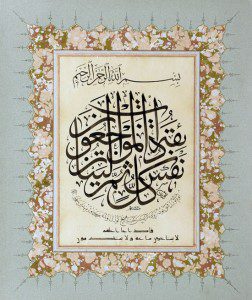
With hunger and fasting. These words made me examine my own experience of fasting and I came to realize that I couldn’t remember a time when I truly felt hunger. Even during Ramadan, I didn’t feel hungry by the end of the day. I awaited with anticipation the breaking of the fast so I could enjoy the special dishes that we shared. But did I feel hungry? No. As I took further account of my life I realized that I ate because it was time to eat, not because I felt hungry. I ate breakfast, lunch and dinner just because it was time to eat. I could see that I ate when I felt stress or anxiety. And I could also see that I competed for food, particularly when it came to sweets and desserts. I competed with my own children over chocolates, sometimes hiding a batch so they wouldn’t get to them before I did! This was my state! I was eating because I was conditioned to eat. I was eating in order to numb myself when I felt pain. And I was greedy for food, wanting to grab it before it was gone!
I came upon another tradition of the Prophet that recounted how he used to fast continuously for days without breaking and that some of his companions wanted to do the same and he told them not to, “I am filled and sated by my Lord. Do not try to do what you see me do. If you must prolong your fasting then fast from pre-dawn (Sahur) to pre-dawn.” And so I made my intention to do the same. I would fast from 4:00 am to 3:00 am the next day. After returning from work, sunset approached and I could feel apprehension. “What will I do? Can I really just keep on fasting?” I asked myself. “You’re crazy! What are you doing, trying to kill yourself? How will you be able to work the next day?” This inner dialogue went on for a while. Sunset came and nothing happened. I could see how I was just waiting to break my fast at sunset. I could see that throughout my life, my fasting was absorbed in waiting for the time to end the fast! But now, the time came and the fast continued. I felt time stand still. I felt a deep inner stillness in my being; a feeling of longing that was beyond time. It was as if I’d died. The emptiness made me feel at loving ease with dying. I started to weep as I felt a release within me. I got up to pray and spent the evening in Zhikr. I went to sleep around 10:00 pm and was awakened around 2:00 am feeling the energetic longing for intimate prayer. I spent the hour in prayer and contemplation. When I broke my fast at 3:00 am all I could eat was some fruit. There was just no room in my stomach. I panicked again. “You’re going to work in a few hours and you’ve hardly eaten anything. Fool!” I turned to prayer and put my trust in God. The day went fine. I was wide-awake and alert all day. I felt my heart was full of love and peace. There was none of the usual stress and anxiety that I normally experienced at work. It became clear to me that taking my body beyond its accustomed limits and habits opened me up to deeper loving, trust, peace, and acceptance.
After this experience I knew that I still needed to feel true hunger. So I broke my fast with just water. Finally, after three days, I could feel real pangs in my stomach. Now I really knew what hunger felt like. And I started to undertake long fasts during Rajab and Sha’aban, the two months preceding Ramadan, so that sometimes I would fast for three months in a row. During these extended fasts I would usually end the last ten days of Ramadan breaking my fast with only juices and clear soups. These long fasts felt like I had been on a long journey in a vast wilderness. They nurtured deep stillness in my heart and the prolonged hunger, instead of making me tired, energized me and allowed me to awaken in the middle of the night to pray and meditate. These night vigils brought overwhelming feelings of love and tenderness to my heart and opened me up to receiving much wisdom and guidance from the Quran. The more I fasted the more I felt alive and awake from the inside.

Fasting is an ancient spiritual practice that breaks the most basic habits of the ego: eating and drinking. This interruption of our basic survival behaviors teaches us patience, trust, and acceptance. The stillness that results from an empty stomach opens us from the inside and expands our awareness. For me there is still much to learn and grow in this area. One aspect that is still very difficult for me is to eat little. This was made evident to me when I broke fast in Ramadan with a dear friend at a train station in Geneva. As we commiserated about the long day of fasting, my Swiss friend told me he thought it was more difficult to eat little than to abstain completely from food. When I reflected on what he said I could see it was true for me. The Prophet said, “Fill one third of your stomach with food, and one third with water, and leave one third empty.” And he said, “We are a folk who do not eat unless we are hungry and when we eat we do not eat our fill.” His blessed guidance about this is enough Jihad for a lifetime!
Previous Post

May 22, 2017
The Feminine Power Supporting the Prophets
Next Post

June 6, 2017 Preventing Spiritual Flabbiness: The Benefits of Regular Fasting
Browse Our Archives
Select a Category activism Community Divine Names Fear Feminine Islam Listening Mevlana Jalaluddin Rumi Mevlevi Music Prophet Muhammad Psychology Quran Ramadan Remembrance Rumi Sacred Space Shadow Work Shams of Tabriz Spiritual Imagination spirituality Sufism Suleyman Dede Uncategorized Universal Intelligence Zikr Zikr Allah
Select a Month October 2021 August 2021 July 2021 June 2021 April 2021 March 2021 February 2021 January 2021 November 2020 August 2020 June 2020 May 2020 April 2020 March 2020 February 2020 January 2020 December 2019 November 2019 October 2019 September 2019 August 2019 July 2019 June 2019 May 2019 April 2019 March 2019 February 2019 January 2019 December 2018 November 2018 October 2018 September 2018 August 2018 July 2018 June 2018 May 2018 April 2018 March 2018 February 2018 January 2018 December 2017 November 2017 October 2017 September 2017 August 2017 July 2017 June 2017 May 2017 April 2017 March 2017 February 2017 January 2017 December 2016 November 2016 October 2016 September 2016 August 2016 July 2016 June 2016 May 2016 April 2016
Follow Us!
TAKE THE
Religious Wisdom Quiz
Who was Lydia's profession?
Select your answer to see how you score.
Potter Cloth merchant Weaver Farmer
Related posts from The Living Tradition

Freedom from Food: The Gifts of a Three-Month...


Prophet Muhammad and the Garbage Thrower
TRENDING AT PATHEOS Muslim

25 Years Later: How Much Has Changed for...
As we approach the 25th anniversary of September 11th, I’ve found myself...

Podcast: Third Spaces & The Rise of Yemeni...
In the latest episode of The Artistic Foodies Podcast, hosts Abbas...

HalalFest Picks: Best 60 Halal Spots for Super...
Back in 2016, I came up with a list of 29...

Unity Is America’s Strength — Division Is Its...
by Hidayatullah Ahsan When Valentina Gomez, a Republican candidate for Congress in...

Zohran Mamdani and New York’s Fight Against Islamophobia
This past June, against all odds, Zohran Mamdani won the Democratic primary...

What the Fourth of July Means to a...
As we mark another Fourth of July, millions of Americans will celebrate...
view all Muslim blogs
Ad-Free & Subscriber Log-In Subscription Support
- About Us
- 2026 Calendar
- Videos
- Podcasts
- Library of World Religions
- Faith In Media Tracker
- Advertise With Us
- Write for Us
- Privacy Policy
- Terms of Service
- Do Not Sell My Data
- Contact Us
- Radiant Digital
- Manage Newsletter Subscriptions
- Unsubscribe From Notifications
- Sitemap
Copyright 2008-2026, Patheos. All rights reserved.
Subscription Support Ad-Free & Subscriber Log-In
Follow Patheos