
BuddhistCatholicContemplativeEvangelicalGeneral ChristianHinduJewishLatter-day SaintMuslimNew VisionsProgressive Christian
Beliefs
- Buddhist
- Catholic
- Contemplative
- Evangelical
- General Christian
- Hindu
- Jewish
- Latter-day Saint
- More Voices
- Muslim
- New Visions
- Pagan
- Progressive Christian
Topics
- Religion News
- Food and Religion
- Sports and Religion
- Religious Art
- Religious Music and Entertainment
- Religious Events
- History and Religion
- Style and Religion
- Politics and Religion
- Women in Religion
- Recreation Outdoors and Religion
- Business Finance and Religion
- Careers Workplace and Religion
- Education and Religion
- Family Parenting and Religion
- Health Fitness and Religion
- Home and Religion
- Relationships and Religion
- Technology and Religion
- Travel and Religion
Columnists
- Buddhist Columnists
- Business Finance and Religion Columnists
- Careers Workplace and Religion Columnists
- Catholic Columnists
- Contemplative Columnists
- Education and Religion Columnists
- Evangelists Columnists
- Family Parenting and Religion Columnists
- General Christian Columnists
- Health Fitness and Religion Columnists
- Hindu Columnists
- History and Religion Columnists
- Home and Religion Columnists
- Jewish Columnists
- More Voices Columnists
- Latter Day Columnists
- Muslim Columnists
- New Visions Columnists
- Nonreligious Columnists
- Pagan Columnists
- Politics and Religion Columnists
- Progressive Columnists
- Recreation Outdoors and Religion Columnists
- Relationships and Religion Columnists
- Religion News Columnists
- Religious Art Columnists
- Religious Events Columnists
- Religious Music and Entertainment Columnists
- Sports and Religion Columnists
- Style and Religion Columnists
- Technology and Religion Columnists
- Travel and Religion Columnists
- Women in Religion Columnists
Resource Library
- 2026 Calendar
- Library of World Religions
- The 100 Most Holy Places on Earth
- Patheos Answers
- Podcasts
- Videos
- Faith Leaders Database
- Anglican Episcopalian
- Bahai
- Baptist
- Buddhism
- Christianity
- Confucianism
- Eastern Orthodoxy
- Hinduism
- Holiness and Pentecostal
- ISKCON
- Islam
- Judaism
- Lutheran
- Methodist
- The Church of Jesus Christ of Latter-day Saints
- New Age
- Paganism
- Presbytarian and Reformed
- Protestantism
- Religion Behind the Scenes
- Roman Catholic
- Scientology
- Shia Islam
- Sikhism
- Sufism
- Sunni Islam
- Taoism
- Zen
- See all religions
Research Tools
 Ad-Free & Subscriber Log-In Subscription Support
Ad-Free & Subscriber Log-In Subscription Support
Follow Patheos 

- Trending:
- Forgiveness
- |
- Marriage
- |
- Consciousness
- |
- Death Penalty
- |
- Election
- |
- Halloween
 The Living Tradition
- Home
- Muslim
- Sitting with Holy Women
Sitting with Holy Women
Last updated on: June 7, 2016 at 2:21 pm by Saimma Dyer
Sitting with Holy Women 2016-06-07T14:21:55-04:00 Saimma Dyer
Patheos Explore the world's faith through different perspectives on religion and spirituality! Patheos has the views of the prevalent religions and spiritualities of the world.
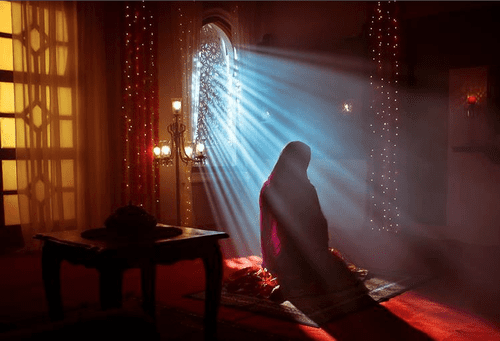
image from Alchemiya
We sat in our circle in a bright hall, the sunbeams highlighting dust motes in the air. Our teacher was beginning the invocation before we began our loud zhikr together. He said the familiar words to welcome all the prophets and saints into our remembrance, our hearts, our gathering. And for what felt like the first time, I heard, “We welcome Khadija, Fatima and Aisha.”
I’m sure the words had been shared before, but perhaps this time my heart was actually listening. Something shifted in my awareness, an opening. Why should this feel different? Of course, these Holy Mothers should be in our prayers, our remembrance; this was no new idea, no radical innovation. And yet, for some reason, that bright dust-mote day, these Holy Mothers entered my heart in a new way.
Khadija, may God sanctify her soul, had always been a central figure for me when it came to the Prophet Muhammad’s life, peace and blessing be upon him. As a young child, sitting in a madrassa, probably on a wet Yorkshire evening (or perhaps it just felt wet because the mosque basement was always damp), I soaked up the stories of the Prophet’s life and companions, told very animatedly by the Imama’s teenage daughter – who just happened to be called Khadija. So of course, there was much emphasis on her namesake of whom she was, quite rightly, very proud. This early meeting with the Prophet’s first wife developed into a deep love. Camille Adams Helminski writes of Khadija in her book, Women of Sufism, that she was known as at-Tahira, ‘the pure one’, and was “a woman of great integrity, intelligence, and spiritual depth”.
Her integrity was surely well-matched in her husband. Another beautiful line that captures their relationship is: “More independent now that he was supported by Khadija’s love as well as her wealth, Muhammad would often retire to a nearby cave to meditate and pray…”
Khadija’s intelligence and spiritual depth is no more evident than when Muhammad receives his first revelation and thinks he has become mad. It is she who comforts and consoles him, reassuring him that he is not crazy but, truly, he has received divine guidance. If Khadija had not been there to cover Muhammad in her cloak, embrace him with her honest love, and turn to her Christian cousin to confirm the prophecy of the coming messenger, would Islam have survived? For me, Khadija was the first believer, who innately knew and accepted the message – it was she who converted Muhammad.
For twenty-five years Khadija was at Muhammad’s side, valiantly strengthening him during the turbulent and vicious attacks on the new Muslim community with her love and the last of her wealth. She raised their children “with a strong sense of Spirit and reliance upon their Sustainer” just like herself. Muhammad mourned her all his life. In my heart, Khadija towers over Islam, a divine archetype of strength and enduring love.
Fatima, may God preserve her secret, is the most celebrated of Muhammad’s children, no doubt in part due to her being by her father’s side throughout most of his life, supporting him as her mother had done before her. So great was her loving concern for her father that she became known as Umm Abi-ha, ‘the mother of her father’. Born during the beginning of the revelation, she was intimately steeped in her father’s message. And later, she married Muhammad’s cousin and closest friend, Ali.
I never tire of hearing how much father and daughter loved each other, how each would get up whenever the other entered the room, greet and kiss each other, seat the other in their place. I delight in imagining Muhammad seating Fatima in his place, between Abu Bakr and fierce Umar, who might quieten under the gaze of her luminous face. Perhaps the men would lower their eyes, soften and become shy in her presence. I sense Fatima as beautifully subtle yet incredibly powerful, just like the moon she is oftentimes compared with.
And then there is Aisha, may God bless her fire. Of all the Holy women of faith, Aisha is the one I have struggled with the most. Somewhere along the way – I know not where – I gained, what felt like an almost blasphemous, dislike of this ‘Mother of the Faithful’.
My husband joked that it was due to my loyalty to Khadija, the only wife with whom Muhammad was monogamous, that I had this uncomfortableness with Aisha. And true, I do love that Khadija and Muhammad’s monogamous relationship matches my own marital relationship. But it has always been more than that. I would always hear about how feisty Aisha was, a word with negative connotations in my community (especially as it was applied very often to me as a child and teenager). She dared to dabble in politics and warfare and suffered the consequences – she gave women who wanted power a bad name.
I mentioned my issue with Aisha to a dear friend some years back and he recommended I read some books – fictional and non-fictional accounts of her life. That didn’t help – in fact it made it much worse. The writers either wrote about her in a derogatory way: she was wilful (feisty), spoilt, undermined Ali, and involved herself in matters beyond her concern (beyond her womanly capabilities); or they sycophantically applauded everything about her, increasing her virtues by decreasing the virtues of and being disrespectful to Khadija and Fatima! And most injurious in my eyes, she disliked Muhammad’s continued love of Khadija – never mind the eight other living wives, she was jealous of the dead one! My confusion led to an internal obsession with needing to understand who she really was, and what her place was in my life and my understanding of the Prophet.
Over time, sitting with the idea of Aisha in remembrance, I feel my heart has uncovered a little of her beyond my limited conditioning. How did this Humaira, ‘the red-haired one’, feel as the youngest, and only, virgin wife? What power and passion did she absorb, witnessing so many of the Prophet’s revelations? I see a young wife, curled up in her small hut as the Prophet did his night prayers, and how “when he would bow in prostration, she would tuck up her feet to make space for his forehead and hands”.
What heartache did she go through when she was accused of adultery and her husband wavered in his belief of her? Did she feel vindicated when God revealed her truth, or did she feel rage that the Divine had to step in and defend her when her family did not? How might my heart have darkened towards those who spoke against me, towards Ali? Now I see her actions later in life, when she joined forces against Ali, being perhaps less about her former resentment and more about her righteous upholding of justice for Uthman’s murder. She may have been wrong in how she went about it, but I too have made grievous errors based on my perceived righteous behaviour. Until her dying breath, she remained repentant for her part in the rebellion.
Finally, I feel open to this most beautiful, courageous, and fiesty of women! May I be blessed to know this Mother of the Faithful, may she accept and guide me towards being one of her children.
I am so grateful for that bright dust-mote day, for the hearts that introduced me to the guidance of these Holy Mothers, whom I can now call upon in my prayers and in my daily life, when I need love and discernment, grace and presence, strength and integrity.
Bismillah, I welcome Khadija, Fatima and Aisha, and I humbly request to be welcomed by them.
Previous Post
May 30, 2016
Of Saints and Matchmakers
Next Post

June 14, 2016 Bringing Ali Back Home
Browse Our Archives
Select a Category activism Community Divine Names Fear Feminine Islam Listening Mevlana Jalaluddin Rumi Mevlevi Music Prophet Muhammad Psychology Quran Ramadan Remembrance Rumi Sacred Space Shadow Work Shams of Tabriz Spiritual Imagination spirituality Sufism Suleyman Dede Uncategorized Universal Intelligence Zikr Zikr Allah
Select a Month October 2021 August 2021 July 2021 June 2021 April 2021 March 2021 February 2021 January 2021 November 2020 August 2020 June 2020 May 2020 April 2020 March 2020 February 2020 January 2020 December 2019 November 2019 October 2019 September 2019 August 2019 July 2019 June 2019 May 2019 April 2019 March 2019 February 2019 January 2019 December 2018 November 2018 October 2018 September 2018 August 2018 July 2018 June 2018 May 2018 April 2018 March 2018 February 2018 January 2018 December 2017 November 2017 October 2017 September 2017 August 2017 July 2017 June 2017 May 2017 April 2017 March 2017 February 2017 January 2017 December 2016 November 2016 October 2016 September 2016 August 2016 July 2016 June 2016 May 2016 April 2016
Follow Us!
TAKE THE
Religious Wisdom Quiz
What does "Apocalypse" mean in Greek?
Select your answer to see how you score.
Redemption Wrath Revelation or unveiling End of world
Related posts from The Living Tradition

Freedom from Food: The Gifts of a Three-Month...
TRENDING AT PATHEOS Muslim

25 Years Later: How Much Has Changed for...
As we approach the 25th anniversary of September 11th, I’ve found myself...

Podcast: Third Spaces & The Rise of Yemeni...
In the latest episode of The Artistic Foodies Podcast, hosts Abbas...

HalalFest Picks: Best 60 Halal Spots for Super...
Back in 2016, I came up with a list of 29...

Unity Is America’s Strength — Division Is Its...
by Hidayatullah Ahsan When Valentina Gomez, a Republican candidate for Congress in...

Zohran Mamdani and New York’s Fight Against Islamophobia
This past June, against all odds, Zohran Mamdani won the Democratic primary...

What the Fourth of July Means to a...
As we mark another Fourth of July, millions of Americans will celebrate...
view all Muslim blogs
Ad-Free & Subscriber Log-In Subscription Support
- About Us
- 2026 Calendar
- Videos
- Podcasts
- Library of World Religions
- Faith In Media Tracker
- Advertise With Us
- Write for Us
- Privacy Policy
- Terms of Service
- Do Not Sell My Data
- Contact Us
- Radiant Digital
- Manage Newsletter Subscriptions
- Unsubscribe From Notifications
- Sitemap
Copyright 2008-2026, Patheos. All rights reserved.
Subscription Support Ad-Free & Subscriber Log-In
Follow Patheos