
BuddhistCatholicContemplativeEvangelicalGeneral ChristianHinduJewishLatter-day SaintMuslimNew VisionsProgressive Christian
Beliefs
- Buddhist
- Catholic
- Contemplative
- Evangelical
- General Christian
- Hindu
- Jewish
- Latter-day Saint
- More Voices
- Muslim
- New Visions
- Pagan
- Progressive Christian
Topics
- Religion News
- Food and Religion
- Sports and Religion
- Religious Art
- Religious Music and Entertainment
- Religious Events
- History and Religion
- Style and Religion
- Politics and Religion
- Women in Religion
- Recreation Outdoors and Religion
- Business Finance and Religion
- Careers Workplace and Religion
- Education and Religion
- Family Parenting and Religion
- Health Fitness and Religion
- Home and Religion
- Relationships and Religion
- Technology and Religion
- Travel and Religion
Columnists
- Buddhist Columnists
- Business Finance and Religion Columnists
- Careers Workplace and Religion Columnists
- Catholic Columnists
- Contemplative Columnists
- Education and Religion Columnists
- Evangelists Columnists
- Family Parenting and Religion Columnists
- General Christian Columnists
- Health Fitness and Religion Columnists
- Hindu Columnists
- History and Religion Columnists
- Home and Religion Columnists
- Jewish Columnists
- More Voices Columnists
- Latter Day Columnists
- Muslim Columnists
- New Visions Columnists
- Nonreligious Columnists
- Pagan Columnists
- Politics and Religion Columnists
- Progressive Columnists
- Recreation Outdoors and Religion Columnists
- Relationships and Religion Columnists
- Religion News Columnists
- Religious Art Columnists
- Religious Events Columnists
- Religious Music and Entertainment Columnists
- Sports and Religion Columnists
- Style and Religion Columnists
- Technology and Religion Columnists
- Travel and Religion Columnists
- Women in Religion Columnists
Resource Library
- 2026 Calendar
- Library of World Religions
- The 100 Most Holy Places on Earth
- Patheos Answers
- Podcasts
- Videos
- Faith Leaders Database
- Anglican Episcopalian
- Bahai
- Baptist
- Buddhism
- Christianity
- Confucianism
- Eastern Orthodoxy
- Hinduism
- Holiness and Pentecostal
- ISKCON
- Islam
- Judaism
- Lutheran
- Methodist
- The Church of Jesus Christ of Latter-day Saints
- New Age
- Paganism
- Presbytarian and Reformed
- Protestantism
- Religion Behind the Scenes
- Roman Catholic
- Scientology
- Shia Islam
- Sikhism
- Sufism
- Sunni Islam
- Taoism
- Zen
- See all religions
Research Tools
 Ad-Free & Subscriber Log-In Subscription Support
Ad-Free & Subscriber Log-In Subscription Support
Follow Patheos 

- Trending:
- Forgiveness
- |
- Marriage
- |
- Consciousness
- |
- Death Penalty
- |
- Election
- |
- Halloween
 The Living Tradition
- Home
- Muslim
- The Weapons of Beauty
The Weapons of Beauty
Last updated on: May 23, 2016 at 4:01 pm by Kabir Helminski
The Weapons of Beauty 2016-05-23T16:01:56-04:00 Kabir Helminski
Patheos Explore the world's faith through different perspectives on religion and spirituality! Patheos has the views of the prevalent religions and spiritualities of the world.
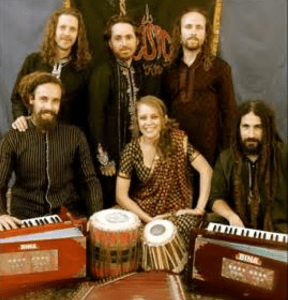
The American-Canadian Qawwali group, Fana Fi Allah, one example of expressing the beauty of Islam.
We are just beginning this new collaborative blog, The Living Tradition, and it seems appropriate to begin with the following talk given recently in Delhi, India, at an historic international event which invited several hundred Sufi leaders and scholars from 20 countries and ended with a public gathering of approximately 200,000 people. We hope that The Living Tradition will make it clear that Islamic Sufism is a spirituality adequate to the unprecedented times we live in. We hope to offer fresh voices that express how this spiritual path can be lived, sustaining our hope and enlivening our souls.
A Plenary Talk at the World Sufi Forum, March 18th, 2016
Bismillah ar Rahman ar Rahim. Allahumma salli wa salim `ala ashrafi nuri jemil enbiya wal mursaleen wal hamdulillahi rabb il alameen.
Oh Our Sustainer, You are peace and from you comes all peace and our ultimate return is to you to Peace. O our Sustainer, continually you enliven us with peace Allow us to enter Your garden, the abode of Peace. With Your peace you have exalted everything. We truly could not worship you as you truly deserve to be worshiped. Subtle are You beyond all knowing, you who are only object of knowledge. We truly could not know you as you deserve to be known. I ask God for forgiveness for my mistakes, and I bear witness that there no reality but Hu.
For about 25 years this poor dervish has been a Shaikh of the Mevlevi Tariqah of Jalaluddin Rumi, living in the far West in a culture very different from many of you.
It should be kept in mind always that Sufism, tasawwuf, is a living tradition. As such it will take different forms in different cultures, and at different levels of cultural development. The dimension of cultural development is an extremely important subject. The current culture of India is quite different from, for instance, that of Silicon Valley, California. I come from the far West, and the way Islam will be transmitted in my environment and the problems we face are different, perhaps, from the conditions some of you face. I believe this applies to how we will understand Islam somewhat differently in different times and cultures.
I am happy to see that we are raising the banner of Sufism. Those who criticize Sufism, are criticizing something they have imagined but do not know or understand, but do not understand. The best criticism of Sufism comes from within Sufism. For Sufism understands that true spirituality is about sincerity, right intention, and humility.
Where in today’s world will we find the Ahli Jamal, the People of Beauty? When what we see too often are the Ahli Narr, the People of the Fire, and the promoters of the Merciless Din, the Religion of Fear and Punishment.
But there are also millions of souls who are the People of Beauty, who live the Din al Haqq (the religion of Love) and belong to what Mawlana Rumi called the Madhabi Ashq (the school of Love). Our best weapons are beauty, friendship, music, poetry, and continual remembrance of Allah.
The greatest opportunity of the spiritual life is to become an expression of Divine Beauty through the Asma al Husna. And to make humanity aware of the beautiful and vast spiritual horizons which the human soul is created and designed to perceive. As you certainly know, Allah is beautiful and loves the beautiful.
If Sufism will be able to serve humanity, it will be primarily through the power of love and beauty. Isn’t that what brought you to Sufism? Did you not meet a human being who seemed to have an extraordinary beauty of soul?
How extraordinary it is that the Divine Revelation that brought unprecedented beauty, love and mercy into the world should in time be so distorted as to be used as a justification for brainwashing, oppression, and violence. How extraordinary that the revelation that told us “Let there be no coercion in religion,” would be ignored and its name used to justify coercion both violent and subtle.
But we must offer the hand of friendship to those who have lost their hearts and souls, who are burning in the fire of anger, rage, and violence. Sufism is the garden within the flames. Let’s invite them in with a generous invitation as we have been invited so generously to a path we never could have asked for because we wouldn’t have know what to ask for, we couldn’t have known the true extent of Allah’s generosity and beauty.
If the greatest possibility of the spiritual life is to express and live Beauty, the central problem of the spiritual life is human egoism and how it distorts reality. This is the problem that Sufism is meant to do with. Sufism is a path of transformation in which the transformation of the human self is accomplished through consciousness and love.
If, on the other hand, Sufism is used as a way of concentrating authority and privilege, if it becomes a way of narrowing the mind, if it merely increases the human beings prejudices, it is no longer Sufism but merely a strategy of the ego, an assertion of the false self.
Sufism begins with presence, hudhur. In presence we have a vantage point outside of the nafs, a perspective on our egoistic tendencies. We must teach the practice of conscious presence. From the vantage point of presence one can invoke the power of love and allow this power to tame the false self.
As in Surah ar-Rum 30:30-32: Turn your face with purity toward the primordial religion (dïn hanïfä), according to the innate nature (fitrah) with which He has made humankind; do not allow what God has made to be corrupted. That is authentic religion, but most people do not understand.
The whole purpose of the spiritual process, then, is to know and preserve our innate spiritual purity, our essential self, and this means being able to transcend the false self through self-awareness, higher consciousness. If we forget that Islam is about self transformation, we have effectively abandoned the religion.
O you who have attained to faith! If you ever abandon your faith, God will in time bring forth [in your people] people whom He loves and who love Him
biqawmin yuhibbuhum wayuhibboonahu
– humble towards the believers, proud towards all who deny the truth: [people] who strive hard in God’s cause, and do not fear to be censured by anyone who might censure them: such is God’s favour, which He grants unto whom He wills. And God is infinite, all-knowing. (Surah Maida, 5:54)
This is evidence that the most important thing is love, and it is a two-way reciprocal love. The highest criteria for evaluating whether progress is being made on the spiritual path is whether our capacity for love is increasing. If we do not see the Light of Muhabbat in a teacher, a community, or a path it is probably not a genuinely spiritual path. Someone may talk of love, but if you listen with the heart, and instead of a lover, you may hear a growling dog, you should ask, where is the ashk? Mevlana Rumi says, The mistakes of the lover bring more good than the so-called righteous actions of the prideful.
We are living in a time when many Muslims have abandoned the religion of truth for the religion of fear and judgment. The spirit of Islam has been corrupted by those who focus almost exclusively on superficialities, externals, rules, and punishments. While such people may claim to follow the sunnah of the Prophet (saws), they’re actually denying the true sunnah which is mercy, flexibility, and sincerity. The Qur’an itself warns us very clearly against a complex and oppressive religious law:
Say: “Have you ever considered all the means of sustenance which God has bestowed upon you from on high – and which you thereupon divide into ‘things forbidden’ (haram) and ‘things lawful’ (halal)?” Say: “Has God given you permission – or do you, perchance, attribute your own guesswork to God?”
qul allahu athina lakum am AAala Allahi taftaroona?
Surah Jonah 10(59-60)
We are living in an era when the relationship between man and woman is being re-balanced, when the spiritual qualities of the feminine need to be appreciated in order to correct the imbalances and distortions of male egoism and misogyny. The disrespect of women is predictably associated with extremism and fanaticism. Do you think the boys being educated in extremist madrasahs ever know the beautiful guidance of women. Sometimes the best Islam is the Islam of grandmothers. The marginalization of women in the official life of Islam has impoverished all of us. I believe strongly that we need to visibly honor the feminine and the re-integrate feminine leadership into our Ummah. In today’s world women are in the forefront in so many areas, and their absence from the visible leadership of institutional Islam, and even in the Sufi orders, is another sign that we are failing to keep the balance, al Mizan. Consider this:
The faithful men and women are awliya (friends, protectors, and saints) for one another. They will enjoin what is right, as what is required of Haqq, and prevent each other from what is wrong. [Surah at Tawba 9:71]
Waalmuminoona waalmuminatu baAAduhum awliyao baAAd
How do we please God? We may teach our children to observe the details of spiritual practice, of the right way to do salaah, to fast, etc. But ultimately what matters to al Haqq (the Real) is our inner sincerity, our humility, and our love. When asked, “What is sin?” Our beloved and noble Prophet (saws) said, “Sin is what troubles your heart. Leave it behind.”
May we find the Din al Haqq that shines upon all religion. The Din al Haqq that unifies all of humanity.
Finally what is the best defense against terrorism? Reviving the heartbeat of true Islam. That heart is beating in each of us, but we need to quiet the mind, still the desires, and go deep into the sirr, the secret place where you are closest to God. If we go deep enough and learn to live from that Sirr, we may discover the truth of these words by Mevlana Jaluddin Rumi:
In generosity and helping others be like a river
In compassion and grace be like the sun
In concealing others faults be like the night
In anger and fury be as if you have died
In modesty and humility be like the earth
In tolerance be like a sea
Either appear as you are or be as you appear
Previous Post

October 25, 2021
Entering the Garden
Next Post

April 16, 2016 5 Early Indications I Was Destined for Islam
Browse Our Archives
Select a Category activism Community Divine Names Fear Feminine Islam Listening Mevlana Jalaluddin Rumi Mevlevi Music Prophet Muhammad Psychology Quran Ramadan Remembrance Rumi Sacred Space Shadow Work Shams of Tabriz Spiritual Imagination spirituality Sufism Suleyman Dede Uncategorized Universal Intelligence Zikr Zikr Allah
Select a Month October 2021 August 2021 July 2021 June 2021 April 2021 March 2021 February 2021 January 2021 November 2020 August 2020 June 2020 May 2020 April 2020 March 2020 February 2020 January 2020 December 2019 November 2019 October 2019 September 2019 August 2019 July 2019 June 2019 May 2019 April 2019 March 2019 February 2019 January 2019 December 2018 November 2018 October 2018 September 2018 August 2018 July 2018 June 2018 May 2018 April 2018 March 2018 February 2018 January 2018 December 2017 November 2017 October 2017 September 2017 August 2017 July 2017 June 2017 May 2017 April 2017 March 2017 February 2017 January 2017 December 2016 November 2016 October 2016 September 2016 August 2016 July 2016 June 2016 May 2016 April 2016
Follow Us!
TAKE THE
Religious Wisdom Quiz
Which Christian group is known for speaking in tongues?
Select your answer to see how you score.
Catholic Baptist Pentecostal Methodist
Related posts from The Living Tradition

Freedom from Food: The Gifts of a Three-Month...

Prophet Muhammad and the Garbage Thrower
TRENDING AT PATHEOS Muslim

25 Years Later: How Much Has Changed for...
As we approach the 25th anniversary of September 11th, I’ve found myself...

Podcast: Third Spaces & The Rise of Yemeni...
In the latest episode of The Artistic Foodies Podcast, hosts Abbas...

HalalFest Picks: Best 60 Halal Spots for Super...
Back in 2016, I came up with a list of 29...

Unity Is America’s Strength — Division Is Its...
by Hidayatullah Ahsan When Valentina Gomez, a Republican candidate for Congress in...

Zohran Mamdani and New York’s Fight Against Islamophobia
This past June, against all odds, Zohran Mamdani won the Democratic primary...

What the Fourth of July Means to a...
As we mark another Fourth of July, millions of Americans will celebrate...
view all Muslim blogs
Ad-Free & Subscriber Log-In Subscription Support
- About Us
- 2026 Calendar
- Videos
- Podcasts
- Library of World Religions
- Faith In Media Tracker
- Advertise With Us
- Write for Us
- Privacy Policy
- Terms of Service
- Do Not Sell My Data
- Contact Us
- Radiant Digital
- Manage Newsletter Subscriptions
- Unsubscribe From Notifications
- Sitemap
Copyright 2008-2026, Patheos. All rights reserved.
Subscription Support Ad-Free & Subscriber Log-In
Follow Patheos