
BuddhistCatholicContemplativeEvangelicalGeneral ChristianHinduJewishLatter-day SaintMuslimNew VisionsProgressive Christian
Beliefs
- Buddhist
- Catholic
- Contemplative
- Evangelical
- General Christian
- Hindu
- Jewish
- Latter-day Saint
- More Voices
- Muslim
- New Visions
- Pagan
- Progressive Christian
Topics
- Religion News
- Food and Religion
- Sports and Religion
- Religious Art
- Religious Music and Entertainment
- Religious Events
- History and Religion
- Style and Religion
- Politics and Religion
- Women in Religion
- Recreation Outdoors and Religion
- Business Finance and Religion
- Careers Workplace and Religion
- Education and Religion
- Family Parenting and Religion
- Health Fitness and Religion
- Home and Religion
- Relationships and Religion
- Technology and Religion
- Travel and Religion
Columnists
- Buddhist Columnists
- Business Finance and Religion Columnists
- Careers Workplace and Religion Columnists
- Catholic Columnists
- Contemplative Columnists
- Education and Religion Columnists
- Evangelists Columnists
- Family Parenting and Religion Columnists
- General Christian Columnists
- Health Fitness and Religion Columnists
- Hindu Columnists
- History and Religion Columnists
- Home and Religion Columnists
- Jewish Columnists
- More Voices Columnists
- Latter Day Columnists
- Muslim Columnists
- New Visions Columnists
- Nonreligious Columnists
- Pagan Columnists
- Politics and Religion Columnists
- Progressive Columnists
- Recreation Outdoors and Religion Columnists
- Relationships and Religion Columnists
- Religion News Columnists
- Religious Art Columnists
- Religious Events Columnists
- Religious Music and Entertainment Columnists
- Sports and Religion Columnists
- Style and Religion Columnists
- Technology and Religion Columnists
- Travel and Religion Columnists
- Women in Religion Columnists
Resource Library
- 2026 Calendar
- Library of World Religions
- The 100 Most Holy Places on Earth
- Patheos Answers
- Podcasts
- Videos
- Faith Leaders Database
- Anglican Episcopalian
- Bahai
- Baptist
- Buddhism
- Christianity
- Confucianism
- Eastern Orthodoxy
- Hinduism
- Holiness and Pentecostal
- ISKCON
- Islam
- Judaism
- Lutheran
- Methodist
- The Church of Jesus Christ of Latter-day Saints
- New Age
- Paganism
- Presbytarian and Reformed
- Protestantism
- Religion Behind the Scenes
- Roman Catholic
- Scientology
- Shia Islam
- Sikhism
- Sufism
- Sunni Islam
- Taoism
- Zen
- See all religions
Research Tools
 Ad-Free & Subscriber Log-In Subscription Support
Ad-Free & Subscriber Log-In Subscription Support
Follow Patheos 

- Trending:
- Forgiveness
- |
- Marriage
- |
- Consciousness
- |
- Death Penalty
- |
- Election
- |
- Halloween

- Home
- General Christian
- History and Religion
- “Judge Not” – What Jesus Actually Meant (and What He Didn’t)
“Judge Not” – What Jesus Actually Meant (and What He Didn’t)
Last updated on: February 9, 2026 at 8:01 pm by Amy Blossom
“Judge Not” – What Jesus Actually Meant (and What He Didn’t) 2026-02-09T20:01:04-05:00 Amy Blossom
Patheos Explore the world's faith through different perspectives on religion and spirituality! Patheos has the views of the prevalent religions and spiritualities of the world.
In Matthew 7:1, Jesus says, “Judge not, that you be not judged.” I think it’s safe to say that most people know this verse of Scripture and have used it at one time or another. It is among the most-quoted yet least-understood passages in the Bible.

Image Created by Author in Canva
This line spoken by Jesus has been used to shut down moral conversation, dismiss discernment and frame any form of opinion as unloving or unchristian. But when Jesus spoke these words, He was not abolishing moral clarity; He was exposing an issue of the heart.
To understand what Jesus meant, we have to read the verse in its original context.
The Context We Usually Skip
Jesus says these words during His Sermon on the Mount, recorded in Matthew 7:1–5. The timing of Jesus’ words matters because the Sermon on the Mount is a teaching on what life looks like living under God’s standards.
Most people quote verse one, but the full statement on judgment continues in verse two:
“Judge not, that you be not judged. For with what judgment you judge, you will be judged; and with the measure you use, it will be measured back to you.” (Matthew 7:1-2)
Keep both of those verses in mind as we look at verses 3-5 where we find the true context of verses one and two: “And why do you look at the speck in your brother’s eye, but do not consider the plank in your own eye? Or how can you say to your brother, ‘Let me remove the speck from your eye’; and look, a plank is in your own eye? Hypocrite! First remove the plank from your own eye, and then you will see clearly to remove the speck from your brother’s eye.” (Matthew 7:3-5)
Here is what most people miss: Jesus is not condemning judgment or discernment; He is condemning hypocrisy. This is an important distinction to point out because it changes the meaning of “Judge not, that you be not judged.”
What Jesus Was Actually Targeting
In Jesus’ time, religious leaders displayed outward public righteousness but acted very differently in private. They were “experts” at identifying the sins of others while ignoring their own sins.
The word “judge” in Matthew 7:1 does not mean evaluating or distinguishing between right and wrong as we often use the word today. It refers to passing sentence, assuming moral superiority, and positioning oneself as the final authority over another person’s standing before God.
Jesus is warning the people against assuming spiritual superiority, especially when it comes to their perceived knowledge of the Lord. The religious leaders believed that they could see more clearly than others, but the opposite was true.
Jesus fully expects His followers to help one another. The issue is not whether correction happens, the issue is how and from where it happens.
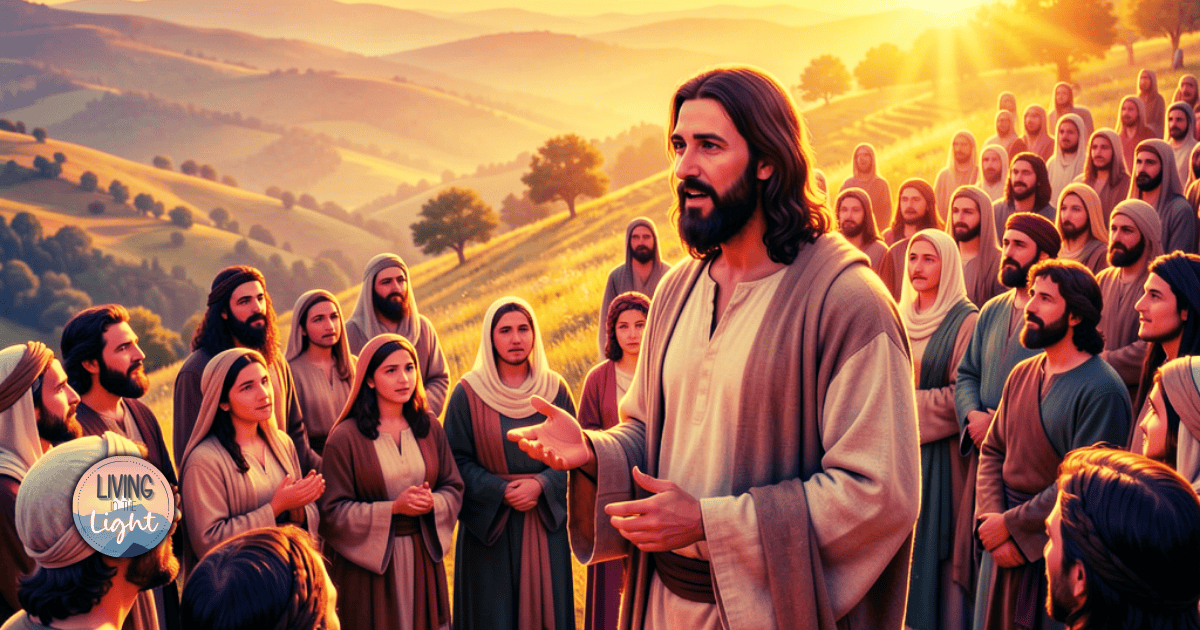
Image Created by Author in Canva
“Judge Not” Does Not Mean “Never Discern”
If Jesus meant that His followers should never make moral judgments, the rest of His teachings would collapse under contradiction.
In the same sermon, Jesus tells His listeners to:
- Choose the narrow way over the broad road (Matthew 7:13–14)
- Recognize false prophets by their fruit (Matthew 7:15–20)
- Build their lives on obedience, not just words (Matthew 7:21–27)
All of these commands require discernment. Today, discernment itself is often labeled as judging.
Later in the Gospels, Jesus confronts hypocrisy directly, calls out sin clearly and teaches His disciples how to address wrongdoing within the community with humility in love.
What Jesus forbids is self-righteous judgment that is blind to its own need for mercy.
Why This Verse Feels So Uncomfortable
“Judge not” unsettles us because it removes our favorite place to hide.
It is far easier to evaluate others than to examine ourselves. It feels safer to point outward than to look inward. Jesus disrupts that instinct. What we should all do is:
- Examine ourselves before we speak.
- Confess our own sins before we correct others.
- Before we measure someone else, remember how God has measured us.
Jesus is calling us to maintain moral integrity without abandoning humility.
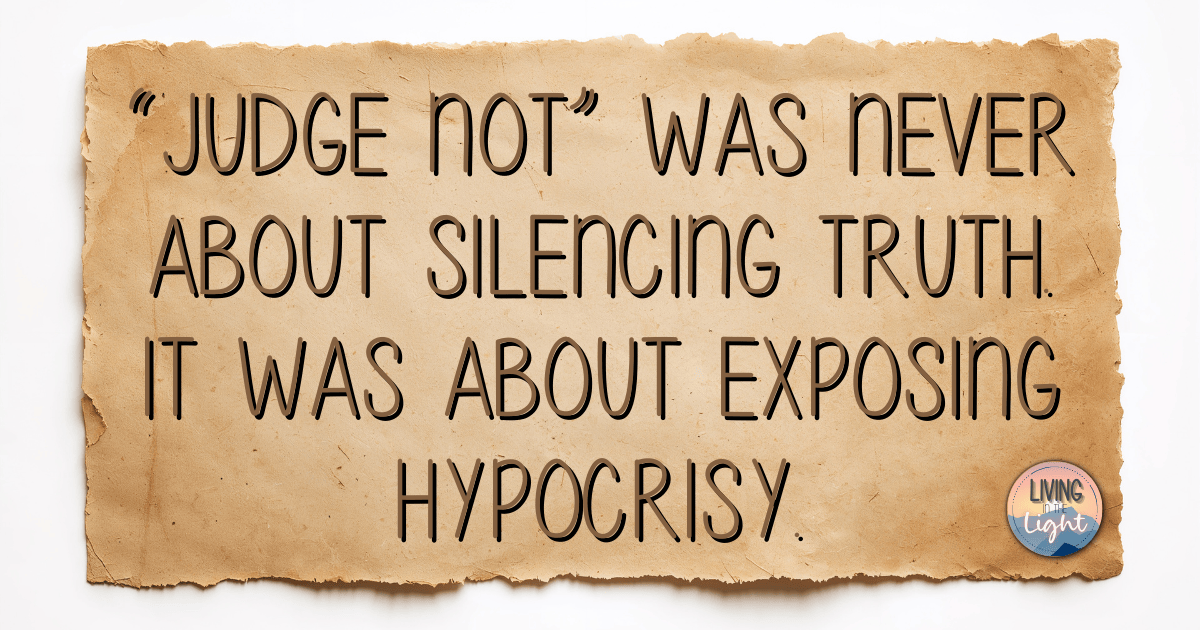
Image Created by Author in Canva
What Jesus Is Inviting Us Into
Jesus is not saying, “Anything goes.” He is saying, “Start with yourself.”
He is inviting His followers to become people whose lives are shaped so much by grace that correction, when needed, comes from love rather than ego. In other words, the goal is not to win arguments or prove others wrong. The goal is restoration, clarity and truth rooted in humility.
This kind of humility does not come naturally. It is shaped in moments of honest reflection before God.
A Better Question Than “Can I Judge?”
Instead of asking, “Am I allowed to judge this?” Jesus leads us to ask ourselves a deeper question: “Am I willing to be examined by the same standard?”
This question changes everything. Instead of asking whether we are allowed to judge, Jesus calls us to consider whether we are willing to be judged by the same standard.
So, the next time “judge not” comes to mind, remember this: Jesus was not ending discernment; He was ending the kind of hypocrisy that leads to correcting others without ever submitting to correction itself. And that is the harder work Jesus calls us to do.
Blessings,
Amy
I’d love to hear from you! Please feel free to share your insights, experiences or questions in the comments section at the bottom of the page.
History and Religion
Previous Post

January 23, 2026
Matthew 5:44 - Loving Your Enemies Will Transform Your Life
Recent Comments
"Jesus has been and continues to be an enigma to many. His life and deeds ..."
Was Jesus a Socialist? Setting the ..."
"Thank you! I couldn’t put my thoughts into words and you did it for me."
Was Jesus a Socialist? Setting the ..."
"The Message of the Manger is truly uplifting. "The manger is still speaking to us ..."
Put Christ Back in Christmas: Return ..."
"The story of the original Christmas is a bottom-up episode. The suited, booted, decorated with ..."
The Christmas Story: Why God Chose ..."
Browse Our Archives
Select a Category Bible History Bible Study Christian Life Daily Living Testimonies Uncategorized
Select a Month February 2026 January 2026 December 2025 November 2025 October 2025 September 2025 August 2025 March 2025 February 2025 January 2025 December 2024 November 2024 October 2024 September 2024 August 2024
Follow Us!
TAKE THE
Religious Wisdom Quiz
What was the name of Moses' sister?
Select your answer to see how you score.
Miriam Deborah Rachel Rebekah
Related posts from Living in the Light

Family
Matthew 5:44 - Loving Your Enemies Will Transform...
Family
Philippians 4:13 in Context: What It Really Means

Family
We Love Jesus, But We Don’t Prioritize Reading...

Family
Five Little-Known Bible Stories That Matter
TRENDING AT PATHEOS General Christian

I was strolling through the top floor of the brand new Parthenon...

What Does Gêvâh Mean For Kimberley Guifoyle &...
This week, a lot of the news is focused on Kimberly Guilfoyle....

INNER CIRCLE: Profound Mystery (Of Christ In All...
Ephesians 5:31-32 “For this reason, a man will leave his father and...

Do Not Rejoice When Your Enemy Falls: The...
Turning an execution into a public spectacle is a disturbing expression of...

'The Chosen' S6 Trailer: The Passion Gets Very...
Not many watching 'The Chosen' worry about spoilers, but just because they...

The purpose-driven labor priest
A labor activist reads Rick Warren and it gets me wondering about...
view all General Christian blogs
What Are Your Thoughts?leave a comment
Ad-Free & Subscriber Log-In Subscription Support
- About Us
- 2026 Calendar
- Videos
- Podcasts
- Library of World Religions
- Faith In Media Tracker
- Advertise With Us
- Write for Us
- Privacy Policy
- Terms of Service
- Do Not Sell My Data
- Contact Us
- Radiant Digital
- Manage Newsletter Subscriptions
- Unsubscribe From Notifications
- Sitemap
Copyright 2008-2026, Patheos. All rights reserved.
Subscription Support Ad-Free & Subscriber Log-In
Follow Patheos