
BuddhistCatholicContemplativeEvangelicalGeneral ChristianHinduJewishLatter-day SaintMuslimNew VisionsProgressive Christian
Beliefs
- Buddhist
- Catholic
- Contemplative
- Evangelical
- General Christian
- Hindu
- Jewish
- Latter-day Saint
- More Voices
- Muslim
- New Visions
- Pagan
- Progressive Christian
Topics
- Religion News
- Food and Religion
- Sports and Religion
- Religious Art
- Religious Music and Entertainment
- Religious Events
- History and Religion
- Style and Religion
- Politics and Religion
- Women in Religion
- Recreation Outdoors and Religion
- Business Finance and Religion
- Careers Workplace and Religion
- Education and Religion
- Family Parenting and Religion
- Health Fitness and Religion
- Home and Religion
- Relationships and Religion
- Technology and Religion
- Travel and Religion
Columnists
- Buddhist Columnists
- Business Finance and Religion Columnists
- Careers Workplace and Religion Columnists
- Catholic Columnists
- Contemplative Columnists
- Education and Religion Columnists
- Evangelists Columnists
- Family Parenting and Religion Columnists
- General Christian Columnists
- Health Fitness and Religion Columnists
- Hindu Columnists
- History and Religion Columnists
- Home and Religion Columnists
- Jewish Columnists
- More Voices Columnists
- Latter Day Columnists
- Muslim Columnists
- New Visions Columnists
- Nonreligious Columnists
- Pagan Columnists
- Politics and Religion Columnists
- Progressive Columnists
- Recreation Outdoors and Religion Columnists
- Relationships and Religion Columnists
- Religion News Columnists
- Religious Art Columnists
- Religious Events Columnists
- Religious Music and Entertainment Columnists
- Sports and Religion Columnists
- Style and Religion Columnists
- Technology and Religion Columnists
- Travel and Religion Columnists
- Women in Religion Columnists
Resource Library
- 2026 Calendar
- Library of World Religions
- The 100 Most Holy Places on Earth
- Patheos Answers
- Podcasts
- Videos
- Faith Leaders Database
- Anglican Episcopalian
- Bahai
- Baptist
- Buddhism
- Christianity
- Confucianism
- Eastern Orthodoxy
- Hinduism
- Holiness and Pentecostal
- ISKCON
- Islam
- Judaism
- Lutheran
- Methodist
- The Church of Jesus Christ of Latter-day Saints
- New Age
- Paganism
- Presbytarian and Reformed
- Protestantism
- Religion Behind the Scenes
- Roman Catholic
- Scientology
- Shia Islam
- Sikhism
- Sufism
- Sunni Islam
- Taoism
- Zen
- See all religions
Research Tools
 Ad-Free & Subscriber Log-In Subscription Support
Ad-Free & Subscriber Log-In Subscription Support
Follow Patheos 

- Trending:
- Forgiveness
- |
- Marriage
- |
- Consciousness
- |
- Death Penalty
- |
- Election
- |
- Halloween

- Home
- General Christian
- History and Religion
- Are There Contradictions in the Bible? Not a Single One
Are There Contradictions in the Bible? Not a Single One
Last updated on: November 3, 2025 at 7:45 pm by Amy Blossom
Are There Contradictions in the Bible? Not a Single One 2025-11-03T19:45:44-05:00 Amy Blossom
Patheos Explore the world's faith through different perspectives on religion and spirituality! Patheos has the views of the prevalent religions and spiritualities of the world.
Today we witness frequent challenges to the Christian faith. One of them is the claim that the Bible contains contradictions where scriptures say opposite things or challenge one another. This claim, if true, would undermine the reliability of God’s Word. However, this belief is based on misunderstandings of what a genuine contradiction is. This claim also fails to consider how Scripture was written, and how a careful contextual study shows that what appears to be contradictory can be harmonized.
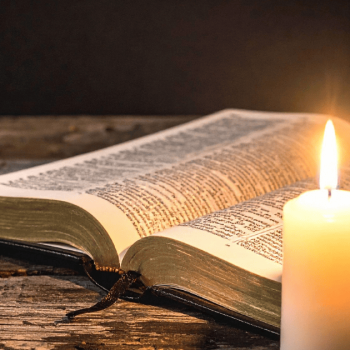
Image created by Author in Canva
Defining “Contradiction” and Why it Matters
A true contradiction occurs when two statements cannot both be true at once like claiming “it is daytime” and “it is not daytime” at the same time. The allegation that “Scripture contradicts itself” often arises from comparing verses that are not addressing the same time, context, audience or emphasis. It could also be that two scriptures are complementing each other by giving additional details.
Ligonier Ministries explains that if the Bible had real contradictions, then it would not be a consistent account and could not claim to be divinely inspired.
When you read a supposed contradiction, ask the following questions:
- Are both verses talking about the same event or situation, or are they describing different moments?
- Could the writer’s background or purpose help explain why the details sound different?
- Is there a word or phrase in the original language that might mean something deeper than our English version shows?
- Has the verse been translated or understood correctly, or could grammar or phrasing be causing confusion?
When these questions are asked, what seems like contradiction disappears. Through careful study, the depth and consistency of Scripture is revealed. What once appeared to be a clash of statements often turns out to be a complete picture of truth that is seen from different angles.
Again and again, what skeptics call contradictions become confirmations of divine precision. Rather than undermining faith, these examples lead us to admire the perfection of God’s Word and how it all connects from Genesis to Revelation. After all, each writer is inspired by the same Spirit, and each truth reinforces the next.
For those willing to slow down, look deeper, and compare Scripture with Scripture, every supposed inconsistency becomes an opportunity to discover how unbreakably consistent the Bible truly is.
Why God’s Word Cannot Contradict Itself
Traditionally, those who accept Scripture’s divine origin know that God, as the ultimate Author, is truthful and cannot contradict Himself. For this reason, internal consistency is essential to a strong belief in scriptural inspiration.
Jesus is the Word (John 1:1) and He is truth (Hebrews 6:18; Titus 1:2). Therefore, He cannot contradict Himself. Consistency and truth is not a choice, it is a necessity for a high view of Scripture’s inspiration. For example, the doctrine of inspiration found in 2 Timothy 3:16-17 points to Scripture as “God-breathed”, and if God is truth and cannot lie, then we expect no ultimate contradiction.
Now, this does not mean every scripture is immediately transparent. God reveals to us meaning and emphasis of particular scriptures in His timing – when we’re ready to receive. What it does mean, however, is that when questions arise, they should prompt investigation rather than an immediate assumption of error.
(To Learn More About the Authenticity of the Bible, Click Here)
Case Studies of “Contradictions” Resolved
When skeptics point to alleged contradictions in Scripture, a closer look nearly always reveals harmony instead of conflict. The following examples show how careful study of context and language transforms supposed contradictions into powerful confirmations of divine accuracy.
Image Created by Author in Canva.
The Road to Damascus
On the road to Damascus, Saul of Tarsus is converted into a believer of Christ. At that time, Saul becomes Paul the apostle. In Acts 9:7 it says: “And the men who journeyed with him stood speechless, hearing a voice but seeing no one.” Further in the Book of Acts 22:9 we see a potential contradiction spoken by Paul: “And those who were with me indeed saw the light and were afraid, but they did not hear the voice of Him who spoke to me.”
At first glance, this appears contradictory – did Paul’s companions hear the voice or not?
The answer is simple once we understand what the verses are describing. In one passage, Luke records that the men heard a sound, but in the other, Paul explains that they did not understand the words being spoken. In other words, they heard something, but they couldn’t make out what was said.
It’s the same as being in a large crowd. You might hear a voice in the distance but do not clearly understand the conversation. Both statements are true: they heard the noise of a voice, but not the message itself.
This means that there is no contradiction. We are just reading two perspectives describing the same event in different ways.
The Field Purchased with Judas’s “Blood Money”
Another supposed contradiction occurs in Matthew 27:3-10. In these verses we read that after Judas repented, he returned the thirty pieces of silver, and the chief priests used the money to buy the potter’s field.
Then in Acts 1:18 we read: “Now this man acquired a field with the wages of iniquity; and falling headlong, he burst open in the middle and all his entrails gushed out.”
At surface level there appears to be a contradiction: in Matthew the priests purchase the field; in Acts Luke writes that “this man” [Judas] acquired the field. So, which is it? Did the priests purchase the field or did Judas?
Many Bible scholars explain these two passages in this way: Judas threw the money into the temple before he died. Afterwards, the priests used his money to buy the field. In this sense, the field was purchased “by him.”
Additionally, the description of Judas “falling headlong” fits naturally with what happened after he hanged himself. His body likely fell and burst open. When we put the details together, the two accounts don’t disagree at all, they simply describe different aspects of the same tragic event from different viewpoints.
Zedekiah, the King Who Saw and Did Not See
One of the most fascinating examples comes from the final days of the Kingdom of Judah. The prophet Jeremiah foretold that King Zedekiah would be captured and would see the king of Babylon face to face: “You shall speak with him face to face, and see him eye to eye.” (Jeremiah 32:4). However, the prophet Ezekiel says: “I will bring him [Zedekiah] to Babylon… yet he shall not see it, though he shall die there.” (Ezekiel 12:13).
Admittedly, this seems impossible – how could Zedekiah both see the king and not see Babylon?
To explain how these two accounts are not contradictory, we have to read the text in 2 Kings 25 and Jeremiah 39. In 2 Kings 25:6-7 and Jeremiah 39:5-9, we see that Zedekiah fled Jerusalem but was captured and taken to Riblah, where he stood face-to-face with Nebuchadnezzar, the king of Babylon ( just as Jeremiah declared). During the encounter Zedekiah watched as his sons were killed in front of him. After that, Zedekiah’s eyes were “put out,” blinding him. He was taken to Babylon as a blind man where he died – just as Ezekiel said he would.
What appears to be a contradiction is actually a twofold prophecy. Jeremiah describes the confrontation; Ezekiel describes what happens after. Both prophets were exactly right, down to the smallest detail.
(Click Here to Read: What if God is Real and You Don’t Believe?)
Why This Matters…
Understanding why alleged contradictions matter helps us defend the truth and strengthen our faith in God’s Word.
- If Christians simply accept every alleged contradiction as true, it undermines our confidence in Scripture’s reliability for doctrine, faith, and daily living. But when we examine these claims closely, we find that God’s Word remains trustworthy.
- Skeptics often point to so-called “contradictions” as a reason to dismiss Christianity. However, when we can say, “We’ve examined the Scriptures and found harmony, not error,” it strengthens the case that the Bible is indeed God-breathed.
- Rather than avoiding difficult passages, we should be encouraged to study them carefully. When we do study the Bible, we have to look at original languages and context.
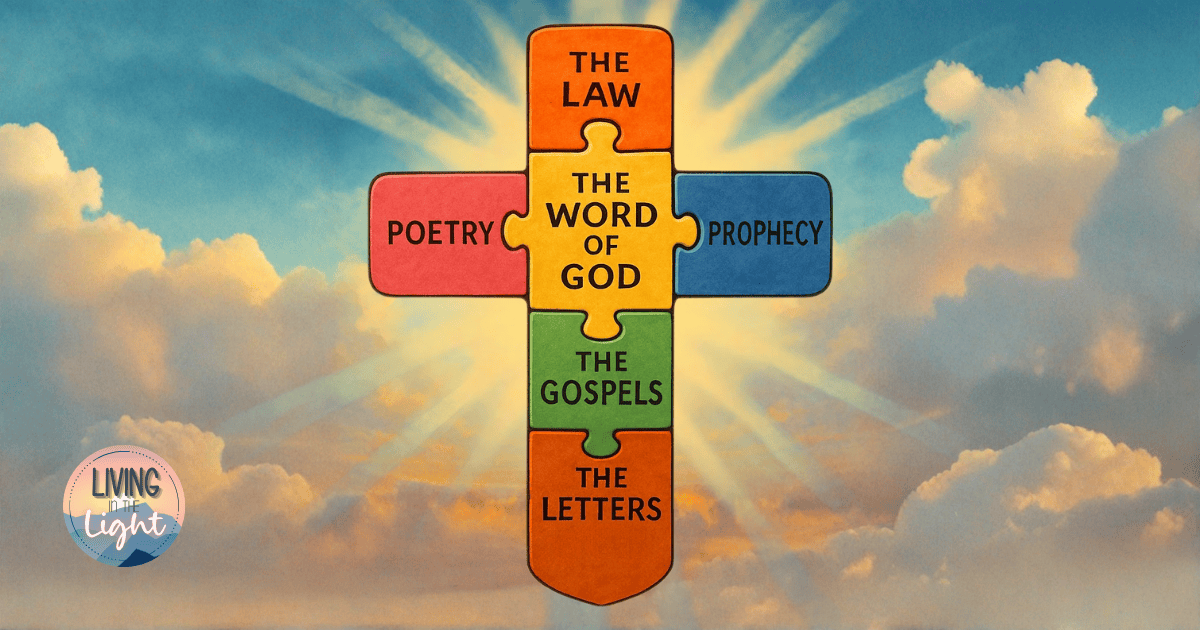
Image Created by Author in Canva
Final Thoughts
In 2 Peter 3:16 we learn that: “…some things hard to understand, which untaught and unstable people twist to their own destruction, as they do also the rest of the Scriptures.”
This means that not everything in the Bible is easy to understand or that everything is transparent. Some elements are mysteries that have a divine purpose behind them. Regardless of skeptics claiming that Bible contains contradictions and therefore cannot be trusted, there is no contradiction that cannot be explained through further study.
The Bible is the Word of God, and it can be trusted completely. God’s Word was breathed out by Him, given to us for teaching, reproof, correction, and training in righteousness (2 Timothy 3:16). And because God is consistent in character, we can trust that His Word is consistent in truth.
When we come upon a “contradiction,” it is an invitation to deepen our study, not a reason to doubt. As we approach Scripture with humility, diligence, and faith, we can be confident that we serve a God whose Word never fails, whose promises are sure, and whose truth will always stand firm.
Blessings,
Amy
“I’d love to hear from you! Please feel free to share your insights, experiences or questions in the comments section at the bottom of the page.”
Evangelical
History and Religion
Education and Religion
Previous Post

October 29, 2025
Light in the Darkness: A Christian Response to Halloween
Next Post

November 5, 2025 Chosen and Loved: What It Means to Be Adopted by God
Recent Comments
"Jesus has been and continues to be an enigma to many. His life and deeds ..."
Was Jesus a Socialist? Setting the ..."
"Thank you! I couldn’t put my thoughts into words and you did it for me."
Was Jesus a Socialist? Setting the ..."
"The Message of the Manger is truly uplifting. "The manger is still speaking to us ..."
Put Christ Back in Christmas: Return ..."
"The story of the original Christmas is a bottom-up episode. The suited, booted, decorated with ..."
The Christmas Story: Why God Chose ..."
Browse Our Archives
Select a Category Bible History Bible Study Christian Life Daily Living Testimonies Uncategorized
Select a Month February 2026 January 2026 December 2025 November 2025 October 2025 September 2025 August 2025 March 2025 February 2025 January 2025 December 2024 November 2024 October 2024 September 2024 August 2024
Follow Us!
TAKE THE
Religious Wisdom Quiz
I am a day when the high priest enters the Most Holy Place once a year to make atonement. What day am I?
Select your answer to see how you score.
Passover The Day of Trumpets The Sabbath The Day of Atonement
Related posts from Living in the Light

Family
Matthew 5:44 - Loving Your Enemies Will Transform...
Family
Philippians 4:13 in Context: What It Really Means

Family
We Love Jesus, But We Don’t Prioritize Reading...
Family
Five Little-Known Bible Stories That Matter
TRENDING AT PATHEOS General Christian

I was strolling through the top floor of the brand new Parthenon...

What Does Gêvâh Mean For Kimberley Guifoyle &...
This week, a lot of the news is focused on Kimberly Guilfoyle....

INNER CIRCLE: Profound Mystery (Of Christ In All...
Ephesians 5:31-32 “For this reason, a man will leave his father and...

Do Not Rejoice When Your Enemy Falls: The...
Turning an execution into a public spectacle is a disturbing expression of...

'The Chosen' S6 Trailer: The Passion Gets Very...
Not many watching 'The Chosen' worry about spoilers, but just because they...

The purpose-driven labor priest
A labor activist reads Rick Warren and it gets me wondering about...
view all General Christian blogs
What Are Your Thoughts?leave a comment
Ad-Free & Subscriber Log-In Subscription Support
- About Us
- 2026 Calendar
- Videos
- Podcasts
- Library of World Religions
- Faith In Media Tracker
- Advertise With Us
- Write for Us
- Privacy Policy
- Terms of Service
- Do Not Sell My Data
- Contact Us
- Radiant Digital
- Manage Newsletter Subscriptions
- Unsubscribe From Notifications
- Sitemap
Copyright 2008-2026, Patheos. All rights reserved.
Subscription Support Ad-Free & Subscriber Log-In
Follow Patheos