
BuddhistCatholicContemplativeEvangelicalGeneral ChristianHinduJewishLatter-day SaintMuslimNew VisionsProgressive Christian
Beliefs
- Buddhist
- Catholic
- Contemplative
- Evangelical
- General Christian
- Hindu
- Jewish
- Latter-day Saint
- More Voices
- Muslim
- New Visions
- Pagan
- Progressive Christian
Topics
- Religion News
- Food and Religion
- Sports and Religion
- Religious Art
- Religious Music and Entertainment
- Religious Events
- History and Religion
- Style and Religion
- Politics and Religion
- Women in Religion
- Recreation Outdoors and Religion
- Business Finance and Religion
- Careers Workplace and Religion
- Education and Religion
- Family Parenting and Religion
- Health Fitness and Religion
- Home and Religion
- Relationships and Religion
- Technology and Religion
- Travel and Religion
Columnists
- Buddhist Columnists
- Business Finance and Religion Columnists
- Careers Workplace and Religion Columnists
- Catholic Columnists
- Contemplative Columnists
- Education and Religion Columnists
- Evangelists Columnists
- Family Parenting and Religion Columnists
- General Christian Columnists
- Health Fitness and Religion Columnists
- Hindu Columnists
- History and Religion Columnists
- Home and Religion Columnists
- Jewish Columnists
- More Voices Columnists
- Latter Day Columnists
- Muslim Columnists
- New Visions Columnists
- Nonreligious Columnists
- Pagan Columnists
- Politics and Religion Columnists
- Progressive Columnists
- Recreation Outdoors and Religion Columnists
- Relationships and Religion Columnists
- Religion News Columnists
- Religious Art Columnists
- Religious Events Columnists
- Religious Music and Entertainment Columnists
- Sports and Religion Columnists
- Style and Religion Columnists
- Technology and Religion Columnists
- Travel and Religion Columnists
- Women in Religion Columnists
Resource Library
- 2026 Calendar
- Library of World Religions
- The 100 Most Holy Places on Earth
- Patheos Answers
- Podcasts
- Videos
- Faith Leaders Database
- Anglican Episcopalian
- Bahai
- Baptist
- Buddhism
- Christianity
- Confucianism
- Eastern Orthodoxy
- Hinduism
- Holiness and Pentecostal
- ISKCON
- Islam
- Judaism
- Lutheran
- Methodist
- The Church of Jesus Christ of Latter-day Saints
- New Age
- Paganism
- Presbytarian and Reformed
- Protestantism
- Religion Behind the Scenes
- Roman Catholic
- Scientology
- Shia Islam
- Sikhism
- Sufism
- Sunni Islam
- Taoism
- Zen
- See all religions
Research Tools
 Ad-Free & Subscriber Log-In Subscription Support
Ad-Free & Subscriber Log-In Subscription Support
Follow Patheos 

- Trending:
- Forgiveness
- |
- Marriage
- |
- Consciousness
- |
- Death Penalty
- |
- Election
- |
- Halloween

- Home
- Progressive Christian
- Divine Law Within and Beyond – October 19 Lectionary
Divine Law Within and Beyond – October 19 Lectionary
Last updated on: October 12, 2025 at 4:14 pm by Bruce Epperly
Divine Law Within and Beyond – October 19 Lectionary 2025-10-12T16:14:30-04:00 Bruce Epperly
Patheos Explore the world's faith through different perspectives on religion and spirituality! Patheos has the views of the prevalent religions and spiritualities of the world.
The Adventurous Lectionary – October 19, 2025 – The Nineteenth Sunday after Pentecost
Jeremiah 31:27-34; Psalm 119:97-14; 2 Timothy 3:15-4:5; Luke 18:1-8.
Our relationship with God is filled with contrasts. The Infinite is present in the finite, and the eternal in the temporal. While God is present in every situation, the unfolding of life, our own and our institutional and national life, involves interplay of order and chaos, novelty and tradition, providence and agency, and our alignment with divinity and turning toward self-interest. While the scriptures assert that ultimately God’s moral arc will prevail in the historical adventure, in the meantime, the dynamic call and response regularly oscillates toward and then away from God’s vision, imagined in terms of the creative and just order of the universe, the realm of wholeness and Shalom.
Moment by moment and over the long haul, personally and institutionally, God calls and we respond, opening and closing new possibilities for the God-world relationship and the moral arc of history. God always seeks wholeness and beauty in our lives and history, but the contours of divine activity are shaped, in part, by our receptivity to God’s vision.
Today’s passages reflect on the nature of divine order and human responsiveness and invite us to ask: How shall we understand the divine order of the universe? Is there a divine law that undergirds the universe and human life? Is this law inflexible or relational? Are the laws of nature and the laws of human life oppressive – as most legalistic interpretations of natural law suggest – or liberating, encouraging creativity and care for each other – and real freedom and agency – as the heart of our relationship with God? How do we discern the moral and spiritual arcs of history in the turbulent era of Trump and Trump church.
The passages from Jeremiah 31 and Psalm 119 affirm the transformative power of divine law. God’s law is intimate and personal, historical and institutional, written on our hearts and present in the affairs of nations. Even when we turn away from God, divine law is present as our deepest reality. Aligned with divine law, we experience the blessings of divine providence moving through our lives. When we turn away from God’s moral law, as Israel did, God appears to be absent and punitive. We experience spiritual deprivation which is reflected in political, economic, and communal destruction. The prophet even suggests, in patriarchal and hierarchical terms, that God has a right to destroy an unfaithful nation in the same way as a husband can dispose of an unfaithful wife. Divine violence is in the background of these scriptures, and we must challenge it. Surely, we must liberate this text from oppressive patriarchy and marital legalism to discover its deeper meaning and role in healing persons and institutions.
Jeremiah provides words of hope after a time of desolation. In a time of darkness, God promises a new beginning. Despite their waywardness, the people will once more experience God’s presence and have a clear sense of God’s guidance. God is doing a new thing – making a new covenant – in the peoples’ inner lives that will be reflected in a transformed social order. God initiates, but the people must open to divine wisdom emerging from within their lives. This wisdom is not so much statutory – an inflexible external law or undeviating natural law –but an inner relationship similar to the love of parent and child. This divine infusion of wisdom leads to a sense of love for the law, as Psalm 119 articulates. For those who open to divine order, who meditate on God’s law, the law of God is sweet, trustworthy, and nourishing. While directives may be present in divine law, it is ultimately about relationship – God’s nearness and our response. What would it mean for us to meditate on God’s law? What might our nation or the world look like if world leaders meditated on God’s law and, in a pluralistic society, if our public policy related divine law?
Still, it is challenging to imagine in our pluralist society a nation that directly experiences God. Moreover, can we imagine God’s law written on our hearts in an age in which are leaders seem hell-bent on turning from God’s way. Even under the best circumstances, when leaders are committed to integrity and altruism, which vision of God’s law will prevail, which experiences of God would be normative? Still, we can seek the ways of justice – the universally applicable golden or silver rules – in governmental policies that respect religious and cultural diversity.
Paul Tillich once spoke of three types of law – autonomy, or self-rule, “I will do what I want or think right” epitomized by the American individualistic ethos; heteronomy, “my way or the highway,” the rule of others, reflected in the behavior of authoritarian regimes, patriarchy, and domineering family situations, “You will do what I tell you” or “because I said so”; and finally theonomy, alignment of God and humankind, “God is calling with love and I respond lovingly, recognizing that God’s way brings joy and reflects my own well-being and the well-being of the planet.”
Amazing it may seem in a time in which US leaders join self-interested, individualistic autonomy with authoritarian heteronomy, I believe that Jeremiah guides us toward a theonomous understanding of law and ethics, reflective of what is best for us, our neighbor, and our planet, and recognizing the interplay of self-affirmation, love for the neighbor, and love of God in creative and liberating ways. At the very least, we need to have our personal and political decisions guided by prayerful self-transcendence and sacrifice of self-interest for world loyalty.
The words of 2 Timothy describe spiritual authority that comes from beyond us and that nevertheless brings fulfillment to our inner lives and relationships. In a pluralistic culture, the author counsels this young Christian to “hold fast to your Christian identity, don’t be led astray by popular movements, take seriously the wisdom of tradition in growing your faith and staying on the right path.” Timothy’s faith was nurtured in by his mother and grandmother, his community, and his scriptural studies. Relationship, scripture, experience, and tradition are sources of authority.
In a passage often misunderstood, the author of 2 Timothy asserts that “all scripture is inspired.” This passage has often been cited to undergird fundamentalist or literalist understandings of scripture or subservience to ecclesiastical authorities who are the only competent persons to interpret scriptures, but I think the meaning is deeper than merely paper authority or rigid doctrine. First, taken literally, this passage only pertains to the Old or First Testament – the New Testament scriptures had not yet been written. Second, in the spirit of the Hebraic and early Christian understandings of scripture, scripture was intended to be part of a lively dialogue, a life-giving and dynamic midrash, with commentaries emerging to respond to changing times, rather than as an unchanging and infallible document. Finally, God-breathed scriptures are inspiring, not imprisoning. They guide our paths but don’t determine woodenly every step we take. Like deep breaths, they energize and motivate rather than imprison and suffocate. Scripture should breathe live and encourage creativity and agency, rather than dominate and separate.
Authority is essential in the life of faith. We clearly need guidance in a pluralistic and relativistic age, and scripture’s stories and counsel are guideposts for the journey. While God’s mercies are new every morning, we need to join tradition, scripture, experience, reason, and cultural insights in understanding God’s call in our time.
The parable of the Widow and the Uninterested or Apathetic Judge affirms the importance of persistence in prayer. The widow comes to the judge day after day, petitioning him to decide on her behalf, and despite his indifference to the justice of her cause, he relents simply to get her off his back. In contrast to the judge’s apathy, God is empathetic: God cares and God wants us to receive blessings. The problem Jesus raises is that God’s blessings are often deferred or appear to be. God apparently does not wave an almighty hand, solve all our problems, cure all diseases, or make governments just. There seems to be a gap between our prayers and God’s responses. While this parable doesn’t go into the metaphysics of prayer – answered and unanswered prayer – the implication is that God’s love will be eventually revealed and though it may emerge in ways different than we have imagined, we need to continue to pray and look for divine responses. God is always faithful and wants us to have abundant life despite appearances to the contrary. We need to look at the long view, keep opening to God in prayer, and wait for God’s guidance. Still, people who lose faith as a result of trauma and tragedy should not be judged as lesser Christians than those who invoke “praise the Lord anyway” slogans. Struggle is at the heart of faith, and certain seasons may test us beyond our current endurance. God’s faith in us is more important than faith in God, and God will not abandon us.
At the end of the day, we must trust a faithful and loving God who aims to heal and harm, and we must place ourselves on the side of healing and wholeness to promote God’s holistic vision rather than standing in the way, Our attitudes matter and the more we open to God’s vision, the greater God’s impact on our lives and the world will be.
+++
Bruce Epperly is Theologian in Residence at Westmoreland Congregational United Church of Christ, Bethesda, MD (https://www.westmorelanducc.org/) and a professor in theology and spirituality at Wesley Theological Seminary. He is the author of over 80 books including: “Homegrown Mystics: Restoring the Soul of Our Nation through the Healing Wisdom of America’s Mystics” (Amazon.com: Homegrown Mystics: Restoring Our Nation with the Healing Wisdom of America’s Visionaries: 9781625249142: Epperly, Bruce: Books) “Jesus: Mystic, Healer, and Prophet “(Jesus: Mystic, Healer, and Prophet: Epperly, Bruce: 9781625248732: Amazon.com: Books), Saving Progressive Christianity to Save the Planet”( Saving Progressive Christianity to Save the Planet: Epperly, Bruce G: 9781631999215: Amazon.com: Books), and his most recent book, “God of the Growing Edge: Whitehead and Thurman on Theology, Spirituality and Social Change.” (The God of the Growing Edge: Whitehead and Thurman on Theology, Spirituality, and Social Change: Epperly, Bruce G: 9781631999291: Amazon.com: Books The God of the Growing Edge: Whitehead and Thurman on Theology, Spirituality, and Social Change: Epperly, Bruce G: 9781631999291: Amazon.com: Books) His latest book is “A New Pentecost for Progressive Christians.” (A New Pentecost for Progressive Christians: Epperly, Bruce G: 9781631999413: Amazon.com: Books)
Previous Post

October 4, 2025
The Healing You Need is Here - Commentary for October 12
Next Post

October 19, 2025 Standin' In the Need of Prayer - Lectionary October 26, 2025
Recent Comments
Browse Our Archives
Select a Category Book Reviews The Adventurous Lectionary Uncategorized
Select a Month October 2026 September 2026 August 2026 July 2026 June 2026 May 2026 April 2026 March 2026 February 2026 January 2026 December 2025 November 2025 October 2025 September 2025 August 2025 July 2025 June 2025 May 2025 April 2025 March 2025 February 2025 January 2025 December 2024 November 2024 October 2024 September 2024 August 2024 July 2024 June 2024 May 2024 April 2024 March 2024 February 2024 January 2024 December 2023 November 2023 October 2023 September 2023 August 2023 July 2023 June 2023 May 2023 March 2023 February 2023 January 2023 December 2022 November 2022 October 2022 September 2022 August 2022 July 2022 June 2022 May 2022 April 2022 March 2022 February 2022 January 2022 December 2021 November 2021 October 2021 September 2021 August 2021 July 2021 June 2021 May 2021 April 2021 March 2021 February 2021 January 2021 December 2020 November 2020 October 2020 September 2020 August 2020 July 2020 June 2020 May 2020 April 2020 March 2020 February 2020 January 2020 December 2019 November 2019 October 2019 September 2019 August 2019 July 2019 June 2019 May 2019 April 2019 March 2019 February 2019 January 2019 December 2018 November 2018 October 2018 September 2018 August 2018 July 2018 June 2018 May 2018 April 2018 March 2018 February 2018 January 2018 December 2017 November 2017 October 2017 September 2017 August 2017 July 2017 June 2017 May 2017 April 2017 March 2017 February 2017 January 2017 December 2016 November 2016 October 2016 September 2016 August 2016 July 2016 June 2016 May 2016 April 2016 March 2016 February 2016 January 2016 December 2015 November 2015 October 2015 September 2015 August 2015 July 2015 June 2015 May 2015 April 2015 March 2015 February 2015 January 2015 December 2014 November 2014 October 2014 September 2014 August 2014 July 2014 June 2014 May 2014 April 2014 March 2014 February 2014 January 2014 December 2013 November 2013 October 2013 September 2013 August 2013 July 2013 June 2013 May 2013 April 2013 March 2013 February 2013 January 2013 December 2012 November 2012 October 2012 September 2012 August 2012 July 2012 June 2012 May 2012 April 2012 March 2012 February 2012 December 2011 May 2011 April 2011 March 2011 February 2011 January 2011
TAKE THE
Religious Wisdom Quiz
What city is known as the Holy City, sacred to Jews, Christians, and Muslims?
Select your answer to see how you score.
Cairo Jerusalem Rome Athens
Books by This Author Books by Living A Holy Adventure
Related posts from Living A Holy Adventure
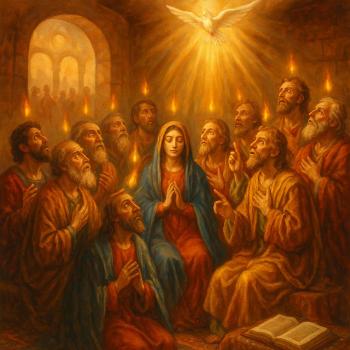
Become Fire: A New Pentecost for Progressive Christians

God is God and You Aren't - Epiphany...

Delighting in God's Vision - Epiphany 3 -...

Adventurous Lectionary - Pentecost 14- August 25, 2024
TRENDING AT PATHEOS Progressive Christian

Pope Leo Celebrates Mass for Nurses & Docs...
I don't have any idea how he did it, but Pope Leo...

The Sermon on the Mount, Part I: Matthew...
The Sermon on the Mount, Part I (Matthew 4:12-5:12) St. Matthew moves...

What's up from Crossway: Reviewing some of their latest A few weeks...

Janie Learns the Way of the Cross: A...
Teaching children about Jesus' Passion can be challenging. Many parents and educators...

Looking For Good Catholic Writing - October 2026
He alone extends the heavens, and he walks upon the waves of...

In "Irreplaceable," our book on vocation and technology, Trevor Sutton and I...
view all Progressive Christian blogs
What Are Your Thoughts?leave a comment
Ad-Free & Subscriber Log-In Subscription Support
- About Us
- 2026 Calendar
- Videos
- Podcasts
- Library of World Religions
- Faith In Media Tracker
- Advertise With Us
- Write for Us
- Privacy Policy
- Terms of Service
- Do Not Sell My Data
- Contact Us
- Radiant Digital
- Manage Newsletter Subscriptions
- Unsubscribe From Notifications
- Sitemap
Copyright 2008-2026, Patheos. All rights reserved.
Subscription Support Ad-Free & Subscriber Log-In
Follow Patheos