
BuddhistCatholicContemplativeEvangelicalGeneral ChristianHinduJewishLatter-day SaintMuslimNew VisionsProgressive Christian
Beliefs
- Buddhist
- Catholic
- Contemplative
- Evangelical
- General Christian
- Hindu
- Jewish
- Latter-day Saint
- More Voices
- Muslim
- New Visions
- Pagan
- Progressive Christian
Topics
- Religion News
- Food and Religion
- Sports and Religion
- Religious Art
- Religious Music and Entertainment
- Religious Events
- History and Religion
- Style and Religion
- Politics and Religion
- Women in Religion
- Recreation Outdoors and Religion
- Business Finance and Religion
- Careers Workplace and Religion
- Education and Religion
- Family Parenting and Religion
- Health Fitness and Religion
- Home and Religion
- Relationships and Religion
- Technology and Religion
- Travel and Religion
Columnists
- Buddhist Columnists
- Business Finance and Religion Columnists
- Careers Workplace and Religion Columnists
- Catholic Columnists
- Contemplative Columnists
- Education and Religion Columnists
- Evangelists Columnists
- Family Parenting and Religion Columnists
- General Christian Columnists
- Health Fitness and Religion Columnists
- Hindu Columnists
- History and Religion Columnists
- Home and Religion Columnists
- Jewish Columnists
- More Voices Columnists
- Latter Day Columnists
- Muslim Columnists
- New Visions Columnists
- Nonreligious Columnists
- Pagan Columnists
- Politics and Religion Columnists
- Progressive Columnists
- Recreation Outdoors and Religion Columnists
- Relationships and Religion Columnists
- Religion News Columnists
- Religious Art Columnists
- Religious Events Columnists
- Religious Music and Entertainment Columnists
- Sports and Religion Columnists
- Style and Religion Columnists
- Technology and Religion Columnists
- Travel and Religion Columnists
- Women in Religion Columnists
Resource Library
- 2026 Calendar
- Library of World Religions
- The 100 Most Holy Places on Earth
- Patheos Answers
- Podcasts
- Videos
- Faith Leaders Database
- Anglican Episcopalian
- Bahai
- Baptist
- Buddhism
- Christianity
- Confucianism
- Eastern Orthodoxy
- Hinduism
- Holiness and Pentecostal
- ISKCON
- Islam
- Judaism
- Lutheran
- Methodist
- The Church of Jesus Christ of Latter-day Saints
- New Age
- Paganism
- Presbytarian and Reformed
- Protestantism
- Religion Behind the Scenes
- Roman Catholic
- Scientology
- Shia Islam
- Sikhism
- Sufism
- Sunni Islam
- Taoism
- Zen
- See all religions
Research Tools
 Ad-Free & Subscriber Log-In Subscription Support
Ad-Free & Subscriber Log-In Subscription Support
Follow Patheos 

- Trending:
- Forgiveness
- |
- Marriage
- |
- Consciousness
- |
- Death Penalty
- |
- Election
- |
- Halloween

- Home
- Progressive Christian
- Third Sunday in Lent – March 3, 2024
Third Sunday in Lent – March 3, 2024
Last updated on: February 25, 2024 at 3:03 pm by Bruce Epperly
Third Sunday in Lent – March 3, 2024 2024-02-25T15:03:30-05:00 Bruce Epperly
Patheos Explore the world's faith through different perspectives on religion and spirituality! Patheos has the views of the prevalent religions and spiritualities of the world.
The Adventurous Lectionary -The Third Sunday in Lent – March 3, 2024
Exodus 20:1-17
Psalm 19
I Corinthians 1:18-25
John 2:13-22
Today’s readings focus on interdependent and potentially supportive relationships, with God, humankind, and the non-human world. Faith and ethics are built into the nature of things. The heavens declare God’s glory and God’s law is implanted in our hearts and communities. The readings embody a holistic faith that takes us beyond personal and individual piety in joining theology, ethics, spirituality, economics, and public policy. The personal is the political and the political is the personal. Without advocating theocratic rule, they suggest that religion and politics really do mix, indeed they must mix, since in biblical religion the personal is the political and the political is the personal.
While the Hebraic wanderers lived under the rule of a proto-theocracy that we do not wish to embody in our nation’s laws, their understanding of the relationship of God and values is not a historical aberration. Even secular and pluralistic societies promote certain economic and relational behaviors as representative of their highest values. Deep down, we have an implicit recognition of the moral arc of history, despite our differing views of its direction. We should aim to the far horizons of Shalom while recognizing that the contours of Shalom are historical, contextual, and relative.
In spite of usual interpretations, the Ten Commandments begin with relationships rather than rules, concrete experiences rather than abstract edicts. The centerpiece of the commandments is the divine-human covenant, and God’s unique relationship with a wilderness people. God’s graceful liberation and deliverance undergirds each of the commandments. God reminds the people that grace requires a response. God’s fidelity – God’s choice of an enslaved people – calls forth our fidelity and relationship with God and each other. Saved by divine power and love, the people need to live up to the values of holiness. God is moral, actively liberating the oppressed, and that should be our calling in the political realm.
Theologian Paul Tillich spoke of three types of law: autonomy, or self-determination, based primarily on my personal values (I am a law unto myself, rugged individualism whether related to gun ownership, property, or bodily autonomy); heteronomy, the enforcement of laws and behaviors, often contrary to my personal desires, by an external source (others coerce me into behaving, law infringes on human rights, personal freedom is restricted to fit into other’s convenience or quest for power); and theonomy, laws and behaviors emerging from the divine-human relationship and promoting my own authentic well-being, even if I currently unaware of this (law that is good for me, and reflects my inner being, articulating what is best for me in the context of the overall wellbeing of the community).
The Hebraic people, at their best, saw the Ten Commandments as a form of theonomy, insuring personal and social well-being. God’s love for the Hebraic people elicits a loving response which embraces their day-to-day relationships. Our fidelity to God is measured by our fidelity to God’s creatures. Accordingly, the commandments provide a framework within which to live our lives.
Grounded in divine grace and deliverance, the commandments begin with our relationship with God. In a God-breathed, God-designed universe, alignment with God’s vision is the foundation of social and personal morality and well-being. Following God in all things orders our priorities and values and places them in the widest possible ethical and spiritual context, God’s graceful covenant. If we love the creator rightly, we will appropriately love creation. We will find ourselves fellow companions with one another, not self-ruled individualists, accountable only to ourselves, and heedless of our impact on the environment.
Sabbath-keeping is one commandment that is routinely violated without any remorse. Here I am not talking about blue laws and external prohibitions, but a challenge to the willingness to place work and profit-making above everything else. In our 24/7 culture, we need to find ways to disengage from action; to slow down, pray, and meditate. Health of body, mind, and spirit – indeed, communal health – depends on rest as well as action.
Murder, theft, greed, adultery, and lying are condemned but also accepted in our current social context. Genocide is being committed by Hamas and Israeli leaders. I am amazed how many lies I hear invoked by political pundits, politicians, and posts on Facebook, especially by those who claim to be the “real” Christians in politics. Lying and conspiracy theories – adherence to the “big lie” regarding the election are brazen and pronounced more vocally when they are found to be without merit. These are not accidental lies but intentional fabrications from the leaders of political parties and their leaders. Greed is celebrated through television commercials as well as the identification of increased spending with national well-being. We are willing to destroy the environment to create a few jobs and short-term profits. We sell commodities based on sex appeal and find ourselves trying to keep up with our neighbors in economics and providing opportunities for our children. Lying and infidelity, indeed, objectification, destroys our relationships and public trust. Healthy relationships are grounded in affirmation, trust, respect, and empathy.
Psalm 19 celebrates God’s cosmic law embedded in every heart. The micro and the macro mirror each other. The order of the planets and the order of the human spirit are conjoined. The heavens are telling God’s glory; this same glory is also present in humankind. Aligned with the dynamic laws that created heaven and earth, our spirits are revived. Awe and gratitude lead to a joyful life and enable our words and meditations to bring healing and wholeness to the world. God intends for the creative order of the universe to be replicated in our personal and public lives.
Paul asserts that following God’s cross-centered way of life appears to be foolishness to the world. Imagine winning by kenosis, or self-emptying love. Imagine sacrifice and hospitality as our polestars. Imagine suffering as a source of healing. Imagine God as present in the least of these, the humblest among us, receiving our joys and sorrow – like the Tao supporting all things – without alienation or condemnation. The cross, representing ultimate defeat to the world, is the pathway of healing and wholeness. Only a suffering God can save, as Bonhoeffer proclaims. God is the fellow sufferer who understands, as Whitehead asserts. Suffering love – the love of parent and grandparent for child, of lovers for one another – can save and transform. This is foolishness in a world that glorifies power and individualism. In this foolishness, love wins and the world is saved.
The Gospel reading portrays a passionate Jesus, willing to practice civil disobedience to purify the Temple. Indeed, Jesus’ prophetic anger is manifest in what the Temple leadership would describe as destructive and illegal behavior. The Temple is to be a place of worship, not profiteering. God is concerned about our economics. While profit has its place in securing well-being for ourselves and our families, profit-making is governed by the ethics of time, place, and person. Economics are to be conducted as if “people really mattered.” Joining love of God and creation, our economics are intended to heal the earth and the human family.
“So what?” we might ask. Our cultural values are so far from this vision that generosity, fairness, and ensuring a social safety net seem impractical and almost un-American. In our cultural values, our own well-being is personal and individual. We believe that how we spend our money is private, and without ethical implications, whether in our personal lives or our influence on the political system. We delight in a tax cut with minimal benefits, that will only further erode the social safety net and increase the gap between the rich and poor. We crusade against embryo destruction in fertility clinics and cut programs for children’s and mother’s well-being. Despite another school shooting, gun rights and property rights trump personal safety, and profit eclipses the well-being of employees. Care for the vulnerable, however, is not optional in today’s scriptures. Caring for the least of these is God’s demand, whether in economic or religious life. Religious institutions should be the primary proponents of the common good. Moreover, our incomes are not our own; they fall under a broader and deeper ethic of holiness and social wellness.
We cannot promote theocracy, especially the kind envisaged by some conservative and fundamentalist Christians. But, in a diverse world of separate spheres of power, we can promote behaviors that look beyond self-interest to bring healing to the world in all its diversity. We can seek a world in which God’s will is done on earth as it is in heaven. We can recall that institutional decisions reflect individual choices and the choices of the people like us at the voting booth. Shunning theocracy, we nevertheless seek God’s Shalom in every political decision.
++++
Rev. Bruce Epperly Ph.D. has served as a professor, seminary administrator, university chaplain, and congregational pastor at Georgetown University, Wesley Theological Seminary, Lancaster Theological Seminary, and South Congregational Church United Church of Christ on Cape Cod. “Retired,” he continues to teach in the Doctoral of Ministry program at Wesley Theological Seminary, give seminars, write, and rejoice in grandparenting and marriage with Rev. Dr. Kate Epperly. An ordained minister in the United Church of Christ and Christian Church (Disciples of Christ), he is the author of over eighty books, “The Elephant is Running: Process and Open and Relational Theology and Religious Pluralism,” “Jesus: Mystic, Healer, and Prophet,” “Walking with Francis of Assisi: From Privilege to Activism,” “Simplicity, Spirituality, and Service: The Eternal Wisdom of Francis, Clare, and Bonaventure,” and “Taking a Walk with Whitehead: Meditations with Process-Relational Theology.” His books on faith and politics include, “Talking Politics with Jesus: A Process Perspective on the Sermon on the Mount,” “One World: The Lord’s Prayer from a Process Perspective,” and “Process Theology and Politics. His most recent texts are a trilogy: “Process Theology and Healing,” “Process Theology and Mysticism,” and “Process Theology and Prophetic Faith.” He may be reached at [email protected].
Previous Post

February 18, 2024
Adventurous Lectionary -The Second Sunday in Lent - Feb. 25
Next Post

March 3, 2024 Adventurous Lectionary - Lent 4 - March 10, 2024
Recent Comments
"https://www.antalyaescortsi... siz siz olun gelin"
Caesar or Jesus: A Palm Sunday ..."
"https://www.antalyaescortsi... harikalar diyarı"
Palm Sunday’s Tragic Beauty – March ..."
"Power of love is far more beautiful and effective than the love of power. "The ..."
Palm Sunday’s Tragic Beauty – March ..."
"Ash Wednesday, 2026The 40 Days and Three Tests of Jesus in the DesertThe joy these ..."
The First Sunday in Lent – ..."
Browse Our Archives
Select a Category Book Reviews The Adventurous Lectionary Uncategorized
Select a Month October 2026 September 2026 August 2026 July 2026 June 2026 May 2026 April 2026 March 2026 February 2026 January 2026 December 2025 November 2025 October 2025 September 2025 August 2025 July 2025 June 2025 May 2025 April 2025 March 2025 February 2025 January 2025 December 2024 November 2024 October 2024 September 2024 August 2024 July 2024 June 2024 May 2024 April 2024 March 2024 February 2024 January 2024 December 2023 November 2023 October 2023 September 2023 August 2023 July 2023 June 2023 May 2023 March 2023 February 2023 January 2023 December 2022 November 2022 October 2022 September 2022 August 2022 July 2022 June 2022 May 2022 April 2022 March 2022 February 2022 January 2022 December 2021 November 2021 October 2021 September 2021 August 2021 July 2021 June 2021 May 2021 April 2021 March 2021 February 2021 January 2021 December 2020 November 2020 October 2020 September 2020 August 2020 July 2020 June 2020 May 2020 April 2020 March 2020 February 2020 January 2020 December 2019 November 2019 October 2019 September 2019 August 2019 July 2019 June 2019 May 2019 April 2019 March 2019 February 2019 January 2019 December 2018 November 2018 October 2018 September 2018 August 2018 July 2018 June 2018 May 2018 April 2018 March 2018 February 2018 January 2018 December 2017 November 2017 October 2017 September 2017 August 2017 July 2017 June 2017 May 2017 April 2017 March 2017 February 2017 January 2017 December 2016 November 2016 October 2016 September 2016 August 2016 July 2016 June 2016 May 2016 April 2016 March 2016 February 2016 January 2016 December 2015 November 2015 October 2015 September 2015 August 2015 July 2015 June 2015 May 2015 April 2015 March 2015 February 2015 January 2015 December 2014 November 2014 October 2014 September 2014 August 2014 July 2014 June 2014 May 2014 April 2014 March 2014 February 2014 January 2014 December 2013 November 2013 October 2013 September 2013 August 2013 July 2013 June 2013 May 2013 April 2013 March 2013 February 2013 January 2013 December 2012 November 2012 October 2012 September 2012 August 2012 July 2012 June 2012 May 2012 April 2012 March 2012 February 2012 December 2011 May 2011 April 2011 March 2011 February 2011 January 2011
TAKE THE
Religious Wisdom Quiz
Who was known as "the disciple whom Jesus loved"?
Select your answer to see how you score.
Peter John James Thomas
Books by This Author Books by Living A Holy Adventure
Related posts from Living A Holy Adventure

The World-Loving God - Lectionary Commentary for Lent...

The First Sunday in Lent - February 22,...
Divine Law Within and Beyond - October 19...
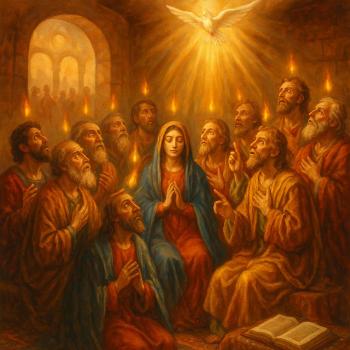
Become Fire: A New Pentecost for Progressive Christians
TRENDING AT PATHEOS Progressive Christian

Janie Learns the Way of the Cross: A...
Teaching children about Jesus' Passion can be challenging. Many parents and educators...

Looking For Good Catholic Writing - October 2026
He alone extends the heavens, and he walks upon the waves of...

In "Irreplaceable," our book on vocation and technology, Trevor Sutton and I...

I was strolling through the top floor of the brand new Parthenon...

What Does Gêvâh Mean For Kimberley Guifoyle &...
This week, a lot of the news is focused on Kimberly Guilfoyle....

INNER CIRCLE: Profound Mystery (Of Christ In All...
Ephesians 5:31-32 “For this reason, a man will leave his father and...
view all Progressive Christian blogs
What Are Your Thoughts?leave a comment
Ad-Free & Subscriber Log-In Subscription Support
- About Us
- 2026 Calendar
- Videos
- Podcasts
- Library of World Religions
- Faith In Media Tracker
- Advertise With Us
- Write for Us
- Privacy Policy
- Terms of Service
- Do Not Sell My Data
- Contact Us
- Radiant Digital
- Manage Newsletter Subscriptions
- Unsubscribe From Notifications
- Sitemap
Copyright 2008-2026, Patheos. All rights reserved.
Subscription Support Ad-Free & Subscriber Log-In
Follow Patheos