
BuddhistCatholicContemplativeEvangelicalGeneral ChristianHinduJewishLatter-day SaintMuslimNew VisionsProgressive Christian
Beliefs
- Buddhist
- Catholic
- Contemplative
- Evangelical
- General Christian
- Hindu
- Jewish
- Latter-day Saint
- More Voices
- Muslim
- New Visions
- Pagan
- Progressive Christian
Topics
- Religion News
- Food and Religion
- Sports and Religion
- Religious Art
- Religious Music and Entertainment
- Religious Events
- History and Religion
- Style and Religion
- Politics and Religion
- Women in Religion
- Recreation Outdoors and Religion
- Business Finance and Religion
- Careers Workplace and Religion
- Education and Religion
- Family Parenting and Religion
- Health Fitness and Religion
- Home and Religion
- Relationships and Religion
- Technology and Religion
- Travel and Religion
Columnists
- Buddhist Columnists
- Business Finance and Religion Columnists
- Careers Workplace and Religion Columnists
- Catholic Columnists
- Contemplative Columnists
- Education and Religion Columnists
- Evangelists Columnists
- Family Parenting and Religion Columnists
- General Christian Columnists
- Health Fitness and Religion Columnists
- Hindu Columnists
- History and Religion Columnists
- Home and Religion Columnists
- Jewish Columnists
- More Voices Columnists
- Latter Day Columnists
- Muslim Columnists
- New Visions Columnists
- Nonreligious Columnists
- Pagan Columnists
- Politics and Religion Columnists
- Progressive Columnists
- Recreation Outdoors and Religion Columnists
- Relationships and Religion Columnists
- Religion News Columnists
- Religious Art Columnists
- Religious Events Columnists
- Religious Music and Entertainment Columnists
- Sports and Religion Columnists
- Style and Religion Columnists
- Technology and Religion Columnists
- Travel and Religion Columnists
- Women in Religion Columnists
Resource Library
- 2026 Calendar
- Library of World Religions
- The 100 Most Holy Places on Earth
- Patheos Answers
- Podcasts
- Videos
- Faith Leaders Database
- Anglican Episcopalian
- Bahai
- Baptist
- Buddhism
- Christianity
- Confucianism
- Eastern Orthodoxy
- Hinduism
- Holiness and Pentecostal
- ISKCON
- Islam
- Judaism
- Lutheran
- Methodist
- The Church of Jesus Christ of Latter-day Saints
- New Age
- Paganism
- Presbytarian and Reformed
- Protestantism
- Religion Behind the Scenes
- Roman Catholic
- Scientology
- Shia Islam
- Sikhism
- Sufism
- Sunni Islam
- Taoism
- Zen
- See all religions
Research Tools
 Ad-Free & Subscriber Log-In Subscription Support
Ad-Free & Subscriber Log-In Subscription Support
Follow Patheos 

- Trending:
- Forgiveness
- |
- Marriage
- |
- Consciousness
- |
- Death Penalty
- |
- Election
- |
- Halloween

- Home
- Progressive Christian
- The Adventurous Lectionary – The Twenty Sunday after Pentecost – November 5, 2023
The Adventurous Lectionary – The Twenty Sunday after Pentecost – November 5, 2023
Last updated on: October 29, 2023 at 7:15 pm by Bruce Epperly
The Adventurous Lectionary – The Twenty Sunday after Pentecost – November 5, 2023 2023-10-29T19:15:52-04:00 Bruce Epperly
Patheos Explore the world's faith through different perspectives on religion and spirituality! Patheos has the views of the prevalent religions and spiritualities of the world.
The Adventurous Lectionary – November 5, 2023 – Pentecost 23
Joshua 3:7-17; Psalm 1071-7, 33-37; I Thessalonians 2:9-13; Matthew 23:1-12
Today’s readings reflect on different aspects of spiritual and temporal leadership. For the children of Israel, leadership was connected with fidelity to God, and fidelity to God was connected with victory over the inhabitants of Canaan. While Jesus also touts the relationship between fidelity and leadership, his vision of leadership in relational not coercive, and sees power in terms of solidarity rather than defeat of opponents. With the realities of war in the Israel and Gaza, the preacher must be careful in not identifying leadership with violence or supporting colonization or conquest. Joshua was a remarkable leader, but the stories of Canaan’s conquest have been used as models for the subjugation of indigenous peoples and versions of the “doctrine of discovery” whether in the Americas, Israel, or South Africa. A wise preacher must contrast Jesus’ understanding of power and leadership with that of the Israelites and those who have sought the genocide of the Jewish people.
The Israelites believed in divinely chosen leaders. The idea of divinely anointed leaders is repugnant to us, especially when church leaders connect divine anointing with narrow political ideologies and morally suspect individuals. Yet, still people identify divine decision-making with Donald Trump, and see him – and he sees himself cynically – as the savior of Christianity. Such understandings of divine anointing are exclusionary and mistrust otherness, whether in terms of race, sexuality, politics, or nation of origin.
As our understandings of God have hopefully become more universalist and pluralistic, we must ask: Does our image of God include or exclude those who differ from us, or create the possibility of persecution and genocide or institutional healing and transformation? Does our vision of God shape our vision of leadership in the church, home, and nation? Too often our images of God support authoritarian images of political and domestic leadership, privileging patriarchy and demagoguery.
The reading from Joshua presents a mirror image of the Israelites’ escape from Egypt under Moses’ leadership. It depicts Joshua as a leader, blessed by God with powers similar to his predecessor Moses. In the case of the reading from Joshua 3, God is described as giving Joshua, God’s agent of victory, the power to part the waters of the Jordan River enabling the people move forward safely to their new land.
The main difference in the passages, however, involves the intent of both God and Israelites – the crossing of the Red Sea under Moses’ leadership involved liberation from captivity. In contrast, the miraculous crossing of the Jordan, under Joshua, though promised by God, was the prelude to conquest and displacement of the native peoples. No doubt the Israelites, like many before and after them, believed God was on their side and that the enemy – the present occupant – had no right to their homeland.
The twin stories of Exodus and crossing the Jordan raise the question, “How influential is God on natural processes such as winds and waters? Can God determine cause and effect relationships using certain media as talismans – Moses’ staff or the ark of the covenant? And, if so, why can’t God always effect similar changes in our physical bodies, for example, the eradication of cancer cells or the coronavirus?” Both readings mirror each other in their ruthlessness: the Egyptian soldiers die as the result of surging waters; the Canaanites will soon be victims of Israelite colonization. Does God cause, inspire, or condone such violence? Does God really pick sides in international conflicts? This passage must be read with care and not as a model of displacement or justification of manifest destiny or subjugation of ethnic, racial, and sexual minorities. Certainly, the current violence in the Middle East reflects theological justifications for the occupation of a land and, also, divine destruction of the infidel.
Clearly, the God of Israel can do great things and can raise up great leaders. The challenge of this passage is that it encourages nationalistic identifications of our nation’s projects with God’s will. They also justify all-out violence toward our neighbors. Passages such as this have been used as weapons of war and genocide throughout the centuries. They assume God has a preferential option for some peoples and is hell-bent on destroying others. We see it Christian nationalism and dominion theologies. As I noted earlier, historically, we can also see this in the conquest of the Americas, the Crusades, and southern Africa by those who presumed they were instruments of God’s will. And, then there is the Israel-Hamas war!
Passages such as this, as well as the destruction of Jericho and the ensuing bloodlust, need to be used with caution and criticism. We might consider the story from the point of view of the Canaanites as well as the Israelites. We need to be empathetic, rather than unilateral in our assessment of the “other side. How would they have recounted these events? Would they have invoked God’s blessing on the wars that ensued? Did their defeats create a crisis of faith in relationship to the gods they worshipped? Today, we need to have the moral imagination to embrace the pain of Israelis and families in the West Bank and Gaza as well as the fear and anguish of persons seeking a haven of rest, after traveling a thousand miles, in the USA.
The litany from Psalm 107 proclaims the goodness of God and reminds us that God’s steadfast love endures forever. The Psalmist believes that God is ultimately on our side – and the extent “our” is debatable in this passage – and that God will provide what we need for safety, well-being, and spiritual flourishing. To be meaningful today, this passage must be both individualized and universalized. God wants my flourishing and the flourishing of my family; God also wants all creation to flourish, including people of other nations. This passage encourages, then, an ethic of flourishing in which we seek the well-being of all God’s beloved. Abundant life is for all creation, and not just my immediate kin. We must remember that citizens of other countries love their nation just as much as we love ours, and we must be willing to listen to their misgivings about our nation’s foreign policy and values.
The passage from I Thessalonians raises two important points, as I see it. First, in response to hearing God’s word diligently preached, we are called to “lead a life worthy of God.” Embracing God’s good news in Jesus involves the whole of our lives – body, mind, and spirit. It involves a transformed mind (Romans 12:2) and transformed actions, and faith active in love for each other. As Paul says to the Galatians, the choice is clear: we can live by the egocentric ways of the flesh or the open-hearted ways of the spirit. One way emphasizes self and its well-being; the other path embraces the well-being of others as well as my needs. Our care for each other is the fullest demonstration of God’s grace toward humankind. In light of the story of Joshua and the Israelites, what would it mean for our nation and its leaders to live lives worthy of God? On the eve of the USA election, we need to ask, how does a worthy life shape our political involvement?
Despite the fact that many Christians see biblical ethics as primarily personal, authentic biblical ethics – and the passage in I Thessalonians – guides and challenges corporate behavior as well as individual actions.
The second important point is the identification of the evangelists’ words with God’s word. This may strike many preachers as hubris. How many of us would say, “The word of God that you heard from us, you accepted it not as a human word but as what it really is, God’s word, which is also at work in you believers?” Do we assume to be speaking “God’s word” from our pulpits? This sounds too fundamentalist and too authoritarian for most progressive preachers. Yet, we must be open to God’s word speaking and working through us if God is truly omnipresent and constantly presenting us with insights and intuitions. We can be the voice of God, in all humility, to one another. We can be agents of healing and reconciliation in partnership with God. Given that, we need to take our preaching seriously. Good – and sometimes bad – preaching changes lives. Our congregants’ lives can be transformed – persons can experience new hope – as a result of the interplay of the Spirit’s guidance and a well-thought-out preached word. Perhaps the author of I Thessalonians is not suggesting perfection or an absolute correspondence of his word with God’s intent, but rather the ability to align oneself with God in such a way that one’s words reveal God’s life-transforming message.
The reading from I Thessalonians and Matthew 23 mirror each other. In the case of Jesus’ description of the religious leaders, their errors come from separating themselves from others, from claiming a special position in relationship with God, and assuming a type of authority that is beyond human reach. What they preach, they don’t practice. They need, as the Quakers say, to let their lives speak. We need to live with integrity, aligning ourselves with the faith we affirm and putting the well-being of others on par with our own. We need to sacrifice our status to ensure that God’s vision be incarnate on earth as it is in heaven. Even when we share God’s good news, we need to share it with humility and for the well-being of others and not our self-aggrandizement or ego-boosting. We are mere mortals, and yet we have been entrusted with God’s message. God’s message joins, rather than separates us, from others, binding us together in brokenness and healing. We can as Thessalonians and the words of Jesus suggest mediate God’s good news through words of wisdom and love, and this should be our goal, whether teaching, preaching, or sharing with one another. Our lives – as well as our words – are our testimony and we pastors and the congregations we lead are called to live worthy of God and preach worthy of the grace we have received. Our quest to embody God’s way in our lives and congregations is our polestar for all aspects of our ministries.
+++
Bruce Epperly is a pastor, professor, spiritual guide, and author of over seventy books, including JESUS – MYSTIC, HEALER, AND PROPHET; THE ELEPHANT IS RUNNING: PROCESS AND OPEN AND RELATIONAL THEOLOGY AND RELIGIOUS PLURALISM; PROPHETIC HEALING: HOWARD THURMAN’S VISION OF CONTEMPLATIVE ACTIVISM; MYSTIC’S IN ACTION: TWELVE SAINTS FOR TODAY; WALKING WITH SAINT FRANCIS: FROM PRIVILEGE TO ACTIVISM; MESSY INCARNATION: MEDITATIONS ON PROCESS CHRISTOLOGY, FROM COSMOS TO CRADLE: MEDITATIONS ON THE INCARNATION, and THE PROPHET AMOS SPEAKS TO AMERICA. His most recent books are PROCESS THEOLOGY AND THE REVIVAL WE NEED and TAKING A WALK WITH WHITEHEAD: MEDITATIONS WITH PROCESS-RELATIONAL THEOLOGY. He can be reached at [email protected]


Recent Comments
"https://www.antalyaescortsi... siz siz olun gelin"
Caesar or Jesus: A Palm Sunday ..."
"https://www.antalyaescortsi... harikalar diyarı"
Palm Sunday’s Tragic Beauty – March ..."
"Power of love is far more beautiful and effective than the love of power. "The ..."
Palm Sunday’s Tragic Beauty – March ..."
"Ash Wednesday, 2026The 40 Days and Three Tests of Jesus in the DesertThe joy these ..."
The First Sunday in Lent – ..."
Browse Our Archives
Select a Category Book Reviews The Adventurous Lectionary Uncategorized
Select a Month October 2026 September 2026 August 2026 July 2026 June 2026 May 2026 April 2026 March 2026 February 2026 January 2026 December 2025 November 2025 October 2025 September 2025 August 2025 July 2025 June 2025 May 2025 April 2025 March 2025 February 2025 January 2025 December 2024 November 2024 October 2024 September 2024 August 2024 July 2024 June 2024 May 2024 April 2024 March 2024 February 2024 January 2024 December 2023 November 2023 October 2023 September 2023 August 2023 July 2023 June 2023 May 2023 March 2023 February 2023 January 2023 December 2022 November 2022 October 2022 September 2022 August 2022 July 2022 June 2022 May 2022 April 2022 March 2022 February 2022 January 2022 December 2021 November 2021 October 2021 September 2021 August 2021 July 2021 June 2021 May 2021 April 2021 March 2021 February 2021 January 2021 December 2020 November 2020 October 2020 September 2020 August 2020 July 2020 June 2020 May 2020 April 2020 March 2020 February 2020 January 2020 December 2019 November 2019 October 2019 September 2019 August 2019 July 2019 June 2019 May 2019 April 2019 March 2019 February 2019 January 2019 December 2018 November 2018 October 2018 September 2018 August 2018 July 2018 June 2018 May 2018 April 2018 March 2018 February 2018 January 2018 December 2017 November 2017 October 2017 September 2017 August 2017 July 2017 June 2017 May 2017 April 2017 March 2017 February 2017 January 2017 December 2016 November 2016 October 2016 September 2016 August 2016 July 2016 June 2016 May 2016 April 2016 March 2016 February 2016 January 2016 December 2015 November 2015 October 2015 September 2015 August 2015 July 2015 June 2015 May 2015 April 2015 March 2015 February 2015 January 2015 December 2014 November 2014 October 2014 September 2014 August 2014 July 2014 June 2014 May 2014 April 2014 March 2014 February 2014 January 2014 December 2013 November 2013 October 2013 September 2013 August 2013 July 2013 June 2013 May 2013 April 2013 March 2013 February 2013 January 2013 December 2012 November 2012 October 2012 September 2012 August 2012 July 2012 June 2012 May 2012 April 2012 March 2012 February 2012 December 2011 May 2011 April 2011 March 2011 February 2011 January 2011
TAKE THE
Religious Wisdom Quiz
What fruit did Adam and Eve eat in the Garden of Eden?
Select your answer to see how you score.
Forbidden fruit Banana Grape Lemon
Books by This Author Books by Living A Holy Adventure
Related posts from Living A Holy Adventure

Divine Law Within and Beyond - October 19...

Humility and Protest – Pentecost 12 – August...
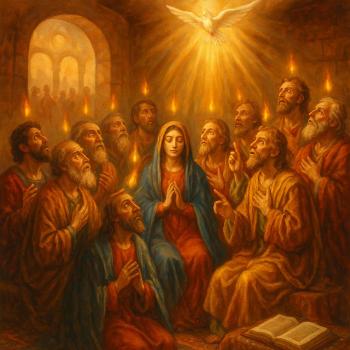
Become Fire: A New Pentecost for Progressive Christians

God is God and You Aren't - Epiphany...
TRENDING AT PATHEOS Progressive Christian

How to Make a Decision When You Can't...
Main point: It’s much more valuable to stay close to God so...

Archdiocese Hosts Military Marriage Retreat in Germany
RASTATT, Germany — The transient military lifestyle, with its frequent deployments and...

Nearly every morning, I make the drive to Detroit with my high-school-age...

The Real AI Story Is Adoption Without Trust
Artificial intelligence has crossed a political threshold. It is no longer a...

A new article, written by Jeff Lindsay and Gale L. Pooley,...

Swimfan: Forgotten Aughts Pleasures
This is a recovery effort. In 2002, My Big Fat Greek Wedding...
view all Progressive Christian blogs
What Are Your Thoughts?leave a comment
Ad-Free & Subscriber Log-In Subscription Support
- About Us
- 2026 Calendar
- Videos
- Podcasts
- Library of World Religions
- Faith In Media Tracker
- Advertise With Us
- Write for Us
- Privacy Policy
- Terms of Service
- Do Not Sell My Data
- Contact Us
- Radiant Digital
- Manage Newsletter Subscriptions
- Unsubscribe From Notifications
- Sitemap
Copyright 2008-2026, Patheos. All rights reserved.
Subscription Support Ad-Free & Subscriber Log-In
Follow Patheos