
BuddhistCatholicContemplativeEvangelicalGeneral ChristianHinduJewishLatter-day SaintMuslimNew VisionsProgressive Christian
Beliefs
- Buddhist
- Catholic
- Contemplative
- Evangelical
- General Christian
- Hindu
- Jewish
- Latter-day Saint
- More Voices
- Muslim
- New Visions
- Pagan
- Progressive Christian
Topics
- Religion News
- Food and Religion
- Sports and Religion
- Religious Art
- Religious Music and Entertainment
- Religious Events
- History and Religion
- Style and Religion
- Politics and Religion
- Women in Religion
- Recreation Outdoors and Religion
- Business Finance and Religion
- Careers Workplace and Religion
- Education and Religion
- Family Parenting and Religion
- Health Fitness and Religion
- Home and Religion
- Relationships and Religion
- Technology and Religion
- Travel and Religion
Columnists
- Buddhist Columnists
- Business Finance and Religion Columnists
- Careers Workplace and Religion Columnists
- Catholic Columnists
- Contemplative Columnists
- Education and Religion Columnists
- Evangelists Columnists
- Family Parenting and Religion Columnists
- General Christian Columnists
- Health Fitness and Religion Columnists
- Hindu Columnists
- History and Religion Columnists
- Home and Religion Columnists
- Jewish Columnists
- More Voices Columnists
- Latter Day Columnists
- Muslim Columnists
- New Visions Columnists
- Nonreligious Columnists
- Pagan Columnists
- Politics and Religion Columnists
- Progressive Columnists
- Recreation Outdoors and Religion Columnists
- Relationships and Religion Columnists
- Religion News Columnists
- Religious Art Columnists
- Religious Events Columnists
- Religious Music and Entertainment Columnists
- Sports and Religion Columnists
- Style and Religion Columnists
- Technology and Religion Columnists
- Travel and Religion Columnists
- Women in Religion Columnists
Resource Library
- 2026 Calendar
- Library of World Religions
- The 100 Most Holy Places on Earth
- Patheos Answers
- Podcasts
- Videos
- Faith Leaders Database
- Anglican Episcopalian
- Bahai
- Baptist
- Buddhism
- Christianity
- Confucianism
- Eastern Orthodoxy
- Hinduism
- Holiness and Pentecostal
- ISKCON
- Islam
- Judaism
- Lutheran
- Methodist
- The Church of Jesus Christ of Latter-day Saints
- New Age
- Paganism
- Presbytarian and Reformed
- Protestantism
- Religion Behind the Scenes
- Roman Catholic
- Scientology
- Shia Islam
- Sikhism
- Sufism
- Sunni Islam
- Taoism
- Zen
- See all religions
Research Tools
 Ad-Free & Subscriber Log-In Subscription Support
Follow Patheos 

- Trending:
- Advent
- |
- Forgiveness
- |
- Thanksgiving
- |
- Election
- |
- Seasonal Holidays
- |
- Marriage

- Home
- Progressive Christian
- Theological Reflections on Suicide: A Conversation with Karen Mason’s “Preventing Suicide”
Theological Reflections on Suicide: A Conversation with Karen Mason’s “Preventing Suicide”
Last updated on: September 16, 2014 at 12:54 pm by Bruce Epperly
Theological Reflections on Suicide: A Conversation with Karen Mason’s “Preventing Suicide” 2014-09-16T12:54:57-04:00 Bruce Epperly
Patheos Explore the world's faith through different perspectives on religion and spirituality! Patheos has the views of the prevalent religions and spiritualities of the world.
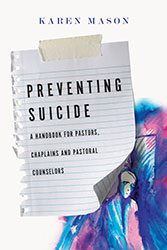 A number of months ago, a bereaved mother asked me, “Where is Susie now?” Her question was far from academic. When her daughter committed suicide, one of the first pastoral responses she received was, “Suicide is an unforgiveable sin. Your daughter has cut herself off from God entirely, and is now paying the price, forever!” To that pastor, it meant Susie, whose life was tormented by depression in this lifetime, would now experience eternal torment in hell. The minister with whom she spoke not only failed to be a good pastoral care giver, he failed to be a good theologian; despite his “orthodoxy,” he may have also failed to provide her with theological counsel worthy of the gospel of Jesus Christ.
I took a very different path from the aforementioned pastor in responding to Susie’s mother. My approach was grounded in a dynamic, relational vision of reality, and an understanding of God’s love as personal and intimate, and also infinite in time and space. I responded with, “While we don’t know all the answers about the afterlife, I believe that Susie is in God’s hands just as she was throughout her life. Suicide has not changed God’s love for her.” Quoting the apostle Paul, I asserted that “nothing – not even suicide – can separate us from the love of God.”
Karen Mason, in her new book Preventing Suicide: A Handbook for Pastors, Chaplains and Pastoral Counselors, is right on target in her recognition that theology can cure or kill, help or harm, in relationship to the needs of persons struggling with suicide and the family members of persons who have been successful or unsuccessful in attempting suicide. Good theology is known by its fruits: it joins rather than separates, is graceful rather than condemnatory, it promises good and not evil, and a future and a hope. Karen Mason sees preventing suicide as involving grace and acceptance and not fear of punishment.
The apostle Paul captures the spirit of healthy theology in I Corinthians 12. In describing the interdependent body of Christ, Paul proclaims, “If one part suffers, every part suffers with it; if one part is honored, every part rejoices with it.” In other words, suicide is not a problem pertaining to “others,” it affects “us.” There is no “other” in an interdependent world; we are all in this together, creating each other through our relationships, bringing pain or possibility to the world by our actions. Recognition of our interdependence reminds us that no one is immune from suicidal thoughts or the despair that may lead to suicide; it also reminds us that help is always on the way. We are never alone; God is with us, and God gives us persons who can nurture us in the most challenging times.
Biblical theologian and scholar Terrence Fretheim notes that the question, “Do you believe in God?” may not be as important as “What kind of God do you believe in?” That is, what is the moral character of your object of ultimate concern? Is God on your side, gracefully ready to support you? Or, is God a stern judge, ready to punish you severely at the slightest infraction? While we can never fully ascertain God’s nature, it is clear that these two visions of God will radically shape our understanding of suicide and those who successfully or unsuccessfully attempt suicide If God’s primary characteristic is severe and unbending judgment, then suicide is final and irrevocable and takes us beyond God’s care. If on the other hand, grace abounds, suicide is part of our personal adventures: the pain is real, and the loss great to us and others, but the reality of suicide does not put an end to God’s love and movement in our lives. From this perspective, our goal is embracing the pain of others and ourselves without judgment or condemnation, grounded in our recognition that suicide is often a result of seeing oneself in unbearable, unchanging, and hopeless situations of body, mind, spirit, or environment. Speaking in the context of his own despair, the author of Lamentations affirms:
The steadfast love of the LORD never ceases;
his mercies never come to an end;
they are new every morning;
great is your faithfulness.
“The LORD is my portion,” says my soul,
“therefore I will hope in him.”
The LORD is good to those who wait for him,
to the soul who seeks him.
It is good that one should wait quietly
for the salvation of the LORD. (Lamentations 3:22-26)
Suicide may eliminate certain divine possibilities from other lives, but God continues to provide new mercies every morning. God’s mercy never comes to an end. Suicide attempts call us to understanding and affirmation, not blame or ostracism. Psalm 139 captures God’s own attitudes toward our moments of feeling lost, alone, and without hope. We cannot evade the love on the One who searches and knows all things.
Where can I go from your spirit?
Or where can I flee from your presence?
If I ascend to heaven, you are there;
if I make my bed in Sheol, you are there.
If I take the wings of the morning
and settle at the farthest limits of the sea,
even there your hand shall lead me,
and your right hand shall hold me fast.
If I say, “Surely the darkness shall cover me,
and the light around me become night,”
even the darkness is not dark to you;
the night is as bright as the day,
for darkness is as light to you.
Our darkness cannot impede God’s light. Nothing can separate us from the light and love of God.
Read an excerpt from Preventing Suicide at the Patheos Book Club.
Previous Post

September 15, 2014
The Adventurous Lectionary - September 21, 2014 - Pentecost 15
Next Post
September 22, 2014 The Adventurous Lectionary - September 28, 2014 - Pentecost 16
Browse Our Archives
Select a Category Book Reviews The Adventurous Lectionary Uncategorized
Select a Month November 2026 October 2026 September 2026 August 2026 July 2026 June 2026 May 2026 April 2026 March 2026 February 2026 January 2026 December 2025 November 2025 October 2025 September 2025 August 2025 July 2025 June 2025 May 2025 April 2025 March 2025 February 2025 January 2025 December 2024 November 2024 October 2024 September 2024 August 2024 July 2024 June 2024 May 2024 April 2024 March 2024 February 2024 January 2024 December 2023 November 2023 October 2023 September 2023 August 2023 July 2023 June 2023 May 2023 March 2023 February 2023 January 2023 December 2022 November 2022 October 2022 September 2022 August 2022 July 2022 June 2022 May 2022 April 2022 March 2022 February 2022 January 2022 December 2021 November 2021 October 2021 September 2021 August 2021 July 2021 June 2021 May 2021 April 2021 March 2021 February 2021 January 2021 December 2020 November 2020 October 2020 September 2020 August 2020 July 2020 June 2020 May 2020 April 2020 March 2020 February 2020 January 2020 December 2019 November 2019 October 2019 September 2019 August 2019 July 2019 June 2019 May 2019 April 2019 March 2019 February 2019 January 2019 December 2018 November 2018 October 2018 September 2018 August 2018 July 2018 June 2018 May 2018 April 2018 March 2018 February 2018 January 2018 December 2017 November 2017 October 2017 September 2017 August 2017 July 2017 June 2017 May 2017 April 2017 March 2017 February 2017 January 2017 December 2016 November 2016 October 2016 September 2016 August 2016 July 2016 June 2016 May 2016 April 2016 March 2016 February 2016 January 2016 December 2015 November 2015 October 2015 September 2015 August 2015 July 2015 June 2015 May 2015 April 2015 March 2015 February 2015 January 2015 December 2014 November 2014 October 2014 September 2014 August 2014 July 2014 June 2014 May 2014 April 2014 March 2014 February 2014 January 2014 December 2013 November 2013 October 2013 September 2013 August 2013 July 2013 June 2013 May 2013 April 2013 March 2013 February 2013 January 2013 December 2012 November 2012 October 2012 September 2012 August 2012 July 2012 June 2012 May 2012 April 2012 March 2012 February 2012 December 2011 May 2011 April 2011 March 2011 February 2011 January 2011
TAKE THE
Religious Wisdom Quiz
Where in the Bible can we find the phrase "a time to be born and a time to die"?
Select your answer to see how you score.
Genesis Matthew Job Ecclesiastes
Books by This Author Books by Living A Holy Adventure
Related posts from Living A Holy Adventure
Theology Matters to LGBTQ Persons: A Response to...
Mysticism, Hallucinations, and Designer Spirituality
Does the Pursuing God Ever Stop Pursuing?

Balancing Self Interest and World Loyalty: On Dee...
TRENDING AT PATHEOS Progressive Christian

Smart people saying smart things (11.24.26)
Please take time to listen to Perry Bacon, Sarah Posner, Adam Serwer,...

The Contingency of Our Technology
Last week we were hit with a raft of massive technology outages....

In 1939, President Franklin D. Roosevelt moved Thanksgiving from November 30 to...

Reasons for Restraint: Ricardo Gonzalez, Florida and Dec...
The Morning of January 3 I begin with the dead. On the...

I published this column for Thanksgiving 2012 in the Deseret News....

For many years, Catholicism has been caught up in division over the...
view all Progressive Christian blogs
Ad-Free & Subscriber Log-In Subscription Support
- About Us
- 2026 Calendar
- Videos
- Podcasts
- Library of World Religions
- Faith In Media Tracker
- Advertise With Us
- Write for Us
- Privacy Policy
- Terms of Service
- Do Not Sell My Data
- Contact Us
- Radiant Digital
- Manage Newsletter Subscriptions
- Unsubscribe From Notifications
- Sitemap
Copyright 2008-2026, Patheos, part of the Radiant Digital network of media brands. All rights reserved.
Subscription Support Ad-Free & Subscriber Log-In
Follow Patheos