
BuddhistCatholicContemplativeEvangelicalGeneral ChristianHinduJewishLatter-day SaintMuslimNew VisionsProgressive Christian
Beliefs
- Buddhist
- Catholic
- Contemplative
- Evangelical
- General Christian
- Hindu
- Jewish
- Latter-day Saint
- More Voices
- Muslim
- New Visions
- Pagan
- Progressive Christian
Topics
- Religion News
- Food and Religion
- Sports and Religion
- Religious Art
- Religious Music and Entertainment
- Religious Events
- History and Religion
- Style and Religion
- Politics and Religion
- Women in Religion
- Recreation Outdoors and Religion
- Business Finance and Religion
- Careers Workplace and Religion
- Education and Religion
- Family Parenting and Religion
- Health Fitness and Religion
- Home and Religion
- Relationships and Religion
- Technology and Religion
- Travel and Religion
Columnists
- Buddhist Columnists
- Business Finance and Religion Columnists
- Careers Workplace and Religion Columnists
- Catholic Columnists
- Contemplative Columnists
- Education and Religion Columnists
- Evangelists Columnists
- Family Parenting and Religion Columnists
- General Christian Columnists
- Health Fitness and Religion Columnists
- Hindu Columnists
- History and Religion Columnists
- Home and Religion Columnists
- Jewish Columnists
- More Voices Columnists
- Latter Day Columnists
- Muslim Columnists
- New Visions Columnists
- Nonreligious Columnists
- Pagan Columnists
- Politics and Religion Columnists
- Progressive Columnists
- Recreation Outdoors and Religion Columnists
- Relationships and Religion Columnists
- Religion News Columnists
- Religious Art Columnists
- Religious Events Columnists
- Religious Music and Entertainment Columnists
- Sports and Religion Columnists
- Style and Religion Columnists
- Technology and Religion Columnists
- Travel and Religion Columnists
- Women in Religion Columnists
Resource Library
- 2026 Calendar
- Library of World Religions
- The 100 Most Holy Places on Earth
- Patheos Answers
- Podcasts
- Videos
- Faith Leaders Database
- Anglican Episcopalian
- Bahai
- Baptist
- Buddhism
- Christianity
- Confucianism
- Eastern Orthodoxy
- Hinduism
- Holiness and Pentecostal
- ISKCON
- Islam
- Judaism
- Lutheran
- Methodist
- The Church of Jesus Christ of Latter-day Saints
- New Age
- Paganism
- Presbytarian and Reformed
- Protestantism
- Religion Behind the Scenes
- Roman Catholic
- Scientology
- Shia Islam
- Sikhism
- Sufism
- Sunni Islam
- Taoism
- Zen
- See all religions
Research Tools
 Ad-Free & Subscriber Log-In Subscription Support
Ad-Free & Subscriber Log-In Subscription Support
Follow Patheos 

- Trending:
- Forgiveness
- |
- Marriage
- |
- Consciousness
- |
- Death Penalty
- |
- Election
- |
- Halloween

- Home
- Progressive Christian
- The Adventurous Lectionary: June 29, 2014
The Adventurous Lectionary: June 29, 2014
Last updated on: June 25, 2014 at 12:20 pm by Bruce Epperly
The Adventurous Lectionary: June 29, 2014 2014-06-25T12:20:09-04:00 Bruce Epperly
Patheos Explore the world's faith through different perspectives on religion and spirituality! Patheos has the views of the prevalent religions and spiritualities of the world.
 Lectionary Reflecions for the Third Sunday after Pentecost
June 29, 2014
Genesis 22:1-14
Psalm 13
Jeremiah 28:5-9
Romans 6:12-23
Matthew 10:40-42
This week’s stories are all challenging. We need to take exception to the story of Abraham and Isaac to be faithful to the God of grace. Following Christ is ultimately about a life-giving lifestyle, not violence or fear.
To be honest, I am unsure what to do with the passage related to Abraham and Isaac. Though we can see it as metaphorical, the metaphor is too brutal to be helpful and the God portrayed more bloodthirsty than caring. First of all, it is absolutely essential to dismiss young children prior to reading the scripture. Taken literally, as children will do, it represents the worst form of child abuse and portrays God as an arbitrary trickster, testing us with heartbreaking tasks, and then dropping his game of Russian roulette at the last moment. Isaac must have been traumatized by this event. Abraham loved Isaac, and was compelled to choose between God and his son. Perhaps, from then on, he also had misgivings about God’s care for him. Could God be trusted with caring for those he loved after this bait and switch on the mountaintop? Divine deliverance at the last moment cannot obliterate the harm done by parental and religious violence.
Moreover, what kind of God is portrayed in this passage? While our faith needs to be refined in the crucible of life, what kind of God requires us to kill to be faithful? This god’s demands sound more like what people would expect from a terrorist, mobster or gang leader. What would have happened if Abraham said “no” to God? “Punish me, kill me, but I will not sacrifice my child just to please you. I would rather die than obey your orders!” Oftentimes, we substitute, especially in wisdom literature, the world “awe” for “fear” to be more religiously accurate, but surely this passage means “fear,” and maybe even terror before a bloodthirsty, inscrutable God. In the years to come, could Abraham, Sarah (who must have found out), or Isaac, ever have loved God again? You can fear the God of power and might, but can you love a God whose love is always on the borderline between embrace and destruction, and whose attitude toward creation is ambivalent at best?
For many, the story of Abraham and Isaac prefigures the cross. But, a God who demands the death of his own son to be reconciled with sinful humanity is also spiritually and morally suspect. While we need not dismiss the theory of sacrificial atonement as meaningless, we must remember that it is but one of many atonement theories and that Jesus sacrificed out of free will and not divine predetermination. He could have escaped the cross, as scripture states, but saw going to Jerusalem as fulfilling his destiny.
Psalm 13 joins hope and despair. God appears to have abandoned the Psalmist. “How long will you hide your face?” he pleads. Still, the Psalmist takes his anguish to God in hope that once more God will return. This is a provocative passage worth considering for your sermon. Many of our congregants may be living with what they perceive to be divine absence, and some may feel that this sense of God-forsakenness is their fault. This passage will enable them to more fully understand and accept their life situation and perhaps sustain them in times of spiritual darkness.
Jeremiah asserts that the fruits of prophetic utterance are the ultimate test of their veracity. Today, many prophesy the Christ’s second coming, identifying it with asteroids hitting the earth or the occurrence of four red moons. They are part of a long line of soothsayers, including the proponents of the Mayan calendar, who stir up frenzy, gain a following and often economic benefit, and are then proven wrong. Prophetic words, like the growth of a plant, take time to come to fruition. What prophetic words might we pay attention to today? Would they be the words of televangelists promoting a divine rescue operation or those who speak of the consequences of the disparity between wealthy and poor and the impact of global climate change? The latter, though often speaking from outside the church, may be more representative of the Bible’s prophetic tradition than today’s Christian media stars.
Paul is addressing the lifestyle of believers. The works of sin draw us away from God and one another, and are deathward in orientation. The works of grace build community and restore the soul and awaken us to eternal life. Lifestyle matters! Is our personal and corporate lifestyle reflective of God’s pathway of salvation or self-interest, hedonism, and consumerism? What guides our personal, professional, and political decision-making?
Jesus’ words connect our relationships with others to our relationship with God. We welcome and encounter God in encountering the other. Our acts of comfort and kindness, especially toward the vulnerable, touch the very heart of God, and transform our own lives. We are blessed in our generosity and receive the reward of nearness to our Parent and Creator.
Next Post

June 30, 2014 The Adventurous Lectionary – July 6, 2014 – Fourth Sunday after Pentecost
Browse Our Archives
Select a Category Book Reviews The Adventurous Lectionary Uncategorized
Select a Month October 2026 September 2026 August 2026 July 2026 June 2026 May 2026 April 2026 March 2026 February 2026 January 2026 December 2025 November 2025 October 2025 September 2025 August 2025 July 2025 June 2025 May 2025 April 2025 March 2025 February 2025 January 2025 December 2024 November 2024 October 2024 September 2024 August 2024 July 2024 June 2024 May 2024 April 2024 March 2024 February 2024 January 2024 December 2023 November 2023 October 2023 September 2023 August 2023 July 2023 June 2023 May 2023 March 2023 February 2023 January 2023 December 2022 November 2022 October 2022 September 2022 August 2022 July 2022 June 2022 May 2022 April 2022 March 2022 February 2022 January 2022 December 2021 November 2021 October 2021 September 2021 August 2021 July 2021 June 2021 May 2021 April 2021 March 2021 February 2021 January 2021 December 2020 November 2020 October 2020 September 2020 August 2020 July 2020 June 2020 May 2020 April 2020 March 2020 February 2020 January 2020 December 2019 November 2019 October 2019 September 2019 August 2019 July 2019 June 2019 May 2019 April 2019 March 2019 February 2019 January 2019 December 2018 November 2018 October 2018 September 2018 August 2018 July 2018 June 2018 May 2018 April 2018 March 2018 February 2018 January 2018 December 2017 November 2017 October 2017 September 2017 August 2017 July 2017 June 2017 May 2017 April 2017 March 2017 February 2017 January 2017 December 2016 November 2016 October 2016 September 2016 August 2016 July 2016 June 2016 May 2016 April 2016 March 2016 February 2016 January 2016 December 2015 November 2015 October 2015 September 2015 August 2015 July 2015 June 2015 May 2015 April 2015 March 2015 February 2015 January 2015 December 2014 November 2014 October 2014 September 2014 August 2014 July 2014 June 2014 May 2014 April 2014 March 2014 February 2014 January 2014 December 2013 November 2013 October 2013 September 2013 August 2013 July 2013 June 2013 May 2013 April 2013 March 2013 February 2013 January 2013 December 2012 November 2012 October 2012 September 2012 August 2012 July 2012 June 2012 May 2012 April 2012 March 2012 February 2012 December 2011 May 2011 April 2011 March 2011 February 2011 January 2011
TAKE THE
Religious Wisdom Quiz
Who was the giant defeated by David?
Select your answer to see how you score.
Samson Goliath Herod Pharaoh
Books by This Author Books by Living A Holy Adventure
Related posts from Living A Holy Adventure
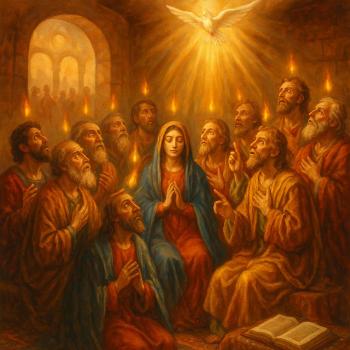
Become Fire: A New Pentecost for Progressive Christians

Finding Joy in the Waiting: An Advent Reflection

Adventurous Lectionary - Epiphany 5 - February 4,...

The Adventurous Lectionary - The Eighteenth Sunday after...
TRENDING AT PATHEOS Progressive Christian

In one sense walking into Westminster Abbey is like walking down the...

'Super Scam Me' Exposes AI Jon Bon Jovi...
Leslie Pickett believed she was in a relationship with Jon Bon Jovi....

The Brazilian Remake of Kendricks' 'Flywheel' Opens in...
“Flywheel,” the story that launched the Kendrick Brothers’ filmmaking career is getting...

The Dangers of Gradual Accommodation (Winking at Sin)
Recently, the “law of gradualness” resurfaced during the opening of a weeklong,...

The Iron Gates and the Lion of the...
Yesterday, I didn't finish my report about, well, yesterday. So I'll...

The Image: On the Horror of Capitalism and...
The Image Then went the Pharisees, and took counsel how they might...
view all Progressive Christian blogs
Ad-Free & Subscriber Log-In Subscription Support
- About Us
- 2026 Calendar
- Videos
- Podcasts
- Library of World Religions
- Faith In Media Tracker
- Advertise With Us
- Write for Us
- Privacy Policy
- Terms of Service
- Do Not Sell My Data
- Contact Us
- Radiant Digital
- Manage Newsletter Subscriptions
- Unsubscribe From Notifications
- Sitemap
Copyright 2008-2026, Patheos. All rights reserved.
Subscription Support Ad-Free & Subscriber Log-In
Follow Patheos