
BuddhistCatholicContemplativeEvangelicalGeneral ChristianHinduJewishLatter-day SaintMuslimNew VisionsProgressive Christian
Beliefs
- Buddhist
- Catholic
- Contemplative
- Evangelical
- General Christian
- Hindu
- Jewish
- Latter-day Saint
- More Voices
- Muslim
- New Visions
- Pagan
- Progressive Christian
Topics
- Religion News
- Food and Religion
- Sports and Religion
- Religious Art
- Religious Music and Entertainment
- Religious Events
- History and Religion
- Style and Religion
- Politics and Religion
- Women in Religion
- Recreation Outdoors and Religion
- Business Finance and Religion
- Careers Workplace and Religion
- Education and Religion
- Family Parenting and Religion
- Health Fitness and Religion
- Home and Religion
- Relationships and Religion
- Technology and Religion
- Travel and Religion
Columnists
- Buddhist Columnists
- Business Finance and Religion Columnists
- Careers Workplace and Religion Columnists
- Catholic Columnists
- Contemplative Columnists
- Education and Religion Columnists
- Evangelists Columnists
- Family Parenting and Religion Columnists
- General Christian Columnists
- Health Fitness and Religion Columnists
- Hindu Columnists
- History and Religion Columnists
- Home and Religion Columnists
- Jewish Columnists
- More Voices Columnists
- Latter Day Columnists
- Muslim Columnists
- New Visions Columnists
- Nonreligious Columnists
- Pagan Columnists
- Politics and Religion Columnists
- Progressive Columnists
- Recreation Outdoors and Religion Columnists
- Relationships and Religion Columnists
- Religion News Columnists
- Religious Art Columnists
- Religious Events Columnists
- Religious Music and Entertainment Columnists
- Sports and Religion Columnists
- Style and Religion Columnists
- Technology and Religion Columnists
- Travel and Religion Columnists
- Women in Religion Columnists
Resource Library
- 2026 Calendar
- Library of World Religions
- The 100 Most Holy Places on Earth
- Patheos Answers
- Podcasts
- Videos
- Faith Leaders Database
- Anglican Episcopalian
- Bahai
- Baptist
- Buddhism
- Christianity
- Confucianism
- Eastern Orthodoxy
- Hinduism
- Holiness and Pentecostal
- ISKCON
- Islam
- Judaism
- Lutheran
- Methodist
- The Church of Jesus Christ of Latter-day Saints
- New Age
- Paganism
- Presbytarian and Reformed
- Protestantism
- Religion Behind the Scenes
- Roman Catholic
- Scientology
- Shia Islam
- Sikhism
- Sufism
- Sunni Islam
- Taoism
- Zen
- See all religions
Research Tools
 Ad-Free & Subscriber Log-In Subscription Support
Follow Patheos 

- Trending:
- Advent
- |
- Forgiveness
- |
- Thanksgiving
- |
- Election
- |
- Seasonal Holidays
- |
- Marriage

- Home
- Progressive Christian
- Relativity and Revelation: Responding to Samaa Habib’s “Face to Face with Jesus”
Relativity and Revelation: Responding to Samaa Habib’s “Face to Face with Jesus”
Last updated on: June 20, 2014 at 5:30 pm by Bruce Epperly
Relativity and Revelation: Responding to Samaa Habib’s “Face to Face with Jesus” 2014-06-20T17:30:40-04:00 Bruce Epperly
Patheos Explore the world's faith through different perspectives on religion and spirituality! Patheos has the views of the prevalent religions and spiritualities of the world.
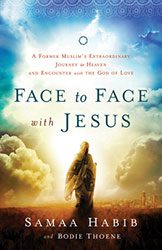 Samaa Habib’s Face to Face with Jesus: A Former Muslim’s Journey to Heaven and Encounter with the God of Love is a fascinating spiritual autobiography, describing one person’s encounter with the holy. It is a highly personal book with universal ramifications. It is highly particularistic and sectarian, yet it also has an unexpected globalism.
Like a growing number of spiritual autobiographies, Habib’s text describes a “near death experience” in which she encounters the divine. In this case, she sees the divine in the form of Jesus Christ, as understood by the Pentecostal biblical-centered movements of Christianity. In many ways, Habib’s description follows a typical pattern for “near death experiences” (NDE’s): she encounters a bright light, converses with a holy being, experiences a life review in which she becomes painfully aware of her imperfections, and is given the opportunity to choose whether she will remain in heaven or return to earth. She suggests that her return to this world is related to the prayers and needs of others, most especially her sister Adila. Her experience is authentic, yet equally personal and entirely her own, and not necessarily universal for all people.
Habib’s experience is life-transforming and may give us a glimpse of the afterlife. It is also profoundly intimate and individual. As H. Richard Niebuhr and others have noted, revelation is never generic, it is always particular. Whether found in scripture or mystical experience, revelation requires a receiver, and every receiver shapes the revelation in terms of her or his belief system, culture, and personal perspective. This doesn’t undermine the importance of our experiences, but simply our ability to claim that our experiences fully describe God. I can be fully convinced of a life changing encounter with God, while recognizing that the shape of the god and truth I encounter is always partial and perspectival.
Like the popular Heaven is for Real (Todd Burpo), Habib’s description of her NDE reflects a fundamentalist biblical perspective, accented by a sense that salvation comes through Christ alone. Many other NDE’s reflect similar experiences of divine love and life review, but are understood in more universalist Christian and new age forms. In these latter cases, the experience of Christ is continuous with saving revelations in other traditions, while Habib’s experience confirms her belief that no one encounters God in a saving fashion apart an explicit doctrinal or propositional relationship with Jesus Christ.
The particularity of revelation applies to Habib’s understanding of prayer. She sees prayer as supernatural and able to deliver us and others from life crises. On the battlefield of life, prayer is our greatest weapon and she describes many answers to prayer. Yet, in a curious way, Habib recognizes the relativity of her own prayers. In America, Habib confronts a very different climate. As she describes it, “as I was used to warm climates, the thought of a cold winter with snow seemed something I could not bear. I prayed that it would not snow….and the Lord answered my prayer! It did not snow. It was the warmest weather anyone had witnessed.” While I believe that our prayers can influence, at least to a small degree, our environment, would praying for a winter without snow be ultimately beneficial to the environment or overall human well-being? Would it work against the prayers and best interests of others? Does God favor some over others in such a partisan way? I happen to be a fan of the Boston Red Sox. However, if I pray for a Red Sox win, I am implicitly praying for another team’s misfortune.
Habib appears to recognize the relativity of her prayers and backs off from a total individualistic understanding of prayer when she realizes that her blessings can be problems to others. “Then the next year the drought was bad, and I thought about the farmers who needed the moisture of the snow for a good harvest. I realized that snow was a blessing. I prayed that it would snow. The Lord answered again. The winter was cold, and it snowed so much that it snowed even in April and May.” This, however, is also ambiguous, since it may have led to financial crises among lower income people whose finances were stretched by higher utility bills! One can appreciate Habib’s simple understanding of God’s answers to prayer. Yet, perhaps it is too simplistic and fails to realize the global and interdependent nature of life. It may also privilege our own interpretations of reality in ways that oversimplify the nature of causation, revelation, and divine providence.
Habib’s text is a lovely testimony to a certain interpretation of reality and a lively experience of the holy. Reality, however, may be much more complex and multifaceted and revelation more personal, pluralistic, and idiosyncratic than her interpretation suggests. I appreciate her conversion to Christian faith, but I also am aware of Muslims who see God as loving and personal, just as she sees the God of Jesus. I personally affirm a relational and personal image of God, but realize that many persons of faith see reality as universal and impersonal, for example, the spiritual parents of the practice of acupuncture that Habib finds helpful as a vehicle of Christian healing. Grounded in the understanding of chi, dynamic and interdependent energy, acupuncture suggests an energetic form of healing complementary to but not restricted to the personal vision of ultimate reality affirmed by Christian faith.
Habib’s encounters with the holy transformed her life and lured her to a new and more satisfying encounter with God. Still, similar experiences of the holy might inspire different understandings of the holy, perhaps more universalistic and pluralistic. That, indeed, may be the nature of revelation: it is healthy when we embrace its transformative power, but may become destructive when we identify our experience of the holy with the holy in its fullness and deny the saving power of other visions of the divine.
To read an excerpt, and more conversation on this book, visit the Patheos Book Club here.
Previous Post

June 16, 2014
The Adventurous Lectionary for June 22, 2014
Next Post

June 25, 2014 The Adventurous Lectionary: June 29, 2014
Browse Our Archives
Select a Category Book Reviews The Adventurous Lectionary Uncategorized
Select a Month November 2026 October 2026 September 2026 August 2026 July 2026 June 2026 May 2026 April 2026 March 2026 February 2026 January 2026 December 2025 November 2025 October 2025 September 2025 August 2025 July 2025 June 2025 May 2025 April 2025 March 2025 February 2025 January 2025 December 2024 November 2024 October 2024 September 2024 August 2024 July 2024 June 2024 May 2024 April 2024 March 2024 February 2024 January 2024 December 2023 November 2023 October 2023 September 2023 August 2023 July 2023 June 2023 May 2023 March 2023 February 2023 January 2023 December 2022 November 2022 October 2022 September 2022 August 2022 July 2022 June 2022 May 2022 April 2022 March 2022 February 2022 January 2022 December 2021 November 2021 October 2021 September 2021 August 2021 July 2021 June 2021 May 2021 April 2021 March 2021 February 2021 January 2021 December 2020 November 2020 October 2020 September 2020 August 2020 July 2020 June 2020 May 2020 April 2020 March 2020 February 2020 January 2020 December 2019 November 2019 October 2019 September 2019 August 2019 July 2019 June 2019 May 2019 April 2019 March 2019 February 2019 January 2019 December 2018 November 2018 October 2018 September 2018 August 2018 July 2018 June 2018 May 2018 April 2018 March 2018 February 2018 January 2018 December 2017 November 2017 October 2017 September 2017 August 2017 July 2017 June 2017 May 2017 April 2017 March 2017 February 2017 January 2017 December 2016 November 2016 October 2016 September 2016 August 2016 July 2016 June 2016 May 2016 April 2016 March 2016 February 2016 January 2016 December 2015 November 2015 October 2015 September 2015 August 2015 July 2015 June 2015 May 2015 April 2015 March 2015 February 2015 January 2015 December 2014 November 2014 October 2014 September 2014 August 2014 July 2014 June 2014 May 2014 April 2014 March 2014 February 2014 January 2014 December 2013 November 2013 October 2013 September 2013 August 2013 July 2013 June 2013 May 2013 April 2013 March 2013 February 2013 January 2013 December 2012 November 2012 October 2012 September 2012 August 2012 July 2012 June 2012 May 2012 April 2012 March 2012 February 2012 December 2011 May 2011 April 2011 March 2011 February 2011 January 2011
TAKE THE
Religious Wisdom Quiz
Where in the Bible can we find the phrase "a time to be born and a time to die"?
Select your answer to see how you score.
Genesis Matthew Job Ecclesiastes
Books by This Author Books by Living A Holy Adventure
Related posts from Living A Holy Adventure

Caesar or Jesus: A Palm Sunday Sermon

Adventurous Lectionary - Reign of Christ - November...

Adventurous Lectionary - Third Sunday of Easter
Adventurous Lectionary -Third Sunday of Epiphany - Jan...
TRENDING AT PATHEOS Progressive Christian

Smart people saying smart things (11.24.26)
Please take time to listen to Perry Bacon, Sarah Posner, Adam Serwer,...

The Contingency of Our Technology
Last week we were hit with a raft of massive technology outages....

In 1939, President Franklin D. Roosevelt moved Thanksgiving from November 30 to...

Reasons for Restraint: Ricardo Gonzalez, Florida and Dec...
The Morning of January 3 I begin with the dead. On the...

I published this column for Thanksgiving 2012 in the Deseret News....

For many years, Catholicism has been caught up in division over the...
view all Progressive Christian blogs
Ad-Free & Subscriber Log-In Subscription Support
- About Us
- 2026 Calendar
- Videos
- Podcasts
- Library of World Religions
- Faith In Media Tracker
- Advertise With Us
- Write for Us
- Privacy Policy
- Terms of Service
- Do Not Sell My Data
- Contact Us
- Radiant Digital
- Manage Newsletter Subscriptions
- Unsubscribe From Notifications
- Sitemap
Copyright 2008-2026, Patheos, part of the Radiant Digital network of media brands. All rights reserved.
Subscription Support Ad-Free & Subscriber Log-In
Follow Patheos