
BuddhistCatholicContemplativeEvangelicalGeneral ChristianHinduJewishLatter-day SaintMuslimNew VisionsProgressive Christian
Beliefs
- Buddhist
- Catholic
- Contemplative
- Evangelical
- General Christian
- Hindu
- Jewish
- Latter-day Saint
- More Voices
- Muslim
- New Visions
- Pagan
- Progressive Christian
Topics
- Religion News
- Food and Religion
- Sports and Religion
- Religious Art
- Religious Music and Entertainment
- Religious Events
- History and Religion
- Style and Religion
- Politics and Religion
- Women in Religion
- Recreation Outdoors and Religion
- Business Finance and Religion
- Careers Workplace and Religion
- Education and Religion
- Family Parenting and Religion
- Health Fitness and Religion
- Home and Religion
- Relationships and Religion
- Technology and Religion
- Travel and Religion
Columnists
- Buddhist Columnists
- Business Finance and Religion Columnists
- Careers Workplace and Religion Columnists
- Catholic Columnists
- Contemplative Columnists
- Education and Religion Columnists
- Evangelists Columnists
- Family Parenting and Religion Columnists
- General Christian Columnists
- Health Fitness and Religion Columnists
- Hindu Columnists
- History and Religion Columnists
- Home and Religion Columnists
- Jewish Columnists
- More Voices Columnists
- Latter Day Columnists
- Muslim Columnists
- New Visions Columnists
- Nonreligious Columnists
- Pagan Columnists
- Politics and Religion Columnists
- Progressive Columnists
- Recreation Outdoors and Religion Columnists
- Relationships and Religion Columnists
- Religion News Columnists
- Religious Art Columnists
- Religious Events Columnists
- Religious Music and Entertainment Columnists
- Sports and Religion Columnists
- Style and Religion Columnists
- Technology and Religion Columnists
- Travel and Religion Columnists
- Women in Religion Columnists
Resource Library
- 2026 Calendar
- Library of World Religions
- The 100 Most Holy Places on Earth
- Patheos Answers
- Podcasts
- Videos
- Faith Leaders Database
- Anglican Episcopalian
- Bahai
- Baptist
- Buddhism
- Christianity
- Confucianism
- Eastern Orthodoxy
- Hinduism
- Holiness and Pentecostal
- ISKCON
- Islam
- Judaism
- Lutheran
- Methodist
- The Church of Jesus Christ of Latter-day Saints
- New Age
- Paganism
- Presbytarian and Reformed
- Protestantism
- Religion Behind the Scenes
- Roman Catholic
- Scientology
- Shia Islam
- Sikhism
- Sufism
- Sunni Islam
- Taoism
- Zen
- See all religions
Research Tools
 Ad-Free & Subscriber Log-In Subscription Support
Follow Patheos 

- Trending:
- Advent
- |
- Forgiveness
- |
- Thanksgiving
- |
- Election
- |
- Seasonal Holidays
- |
- Marriage

- Home
- Progressive Christian
- Jesus in Our Genes: A Response to Christian Piatt’s “Blood Doctrine”
Jesus in Our Genes: A Response to Christian Piatt’s “Blood Doctrine”
Last updated on: May 12, 2014 at 7:09 pm by Bruce Epperly
Jesus in Our Genes: A Response to Christian Piatt’s “Blood Doctrine” 2014-05-12T19:09:42-04:00 Bruce Epperly
Patheos Explore the world's faith through different perspectives on religion and spirituality! Patheos has the views of the prevalent religions and spiritualities of the world.
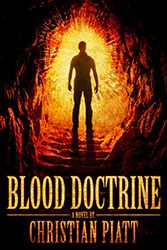 What happens when genetic science meets the blood of the lamb? What if we could implant Jesus’ DNA in an egg and bring the fertilized egg to birth as a form of incarnational in vitro fertilization? That’s the premise of Christian Piatt’s page turner, Blood Doctrine. Moreover, will the birth of a child possessing Jesus’ genetic code usher in the second coming and the end times that some Christians still yearn for?
In this first of what promises to be a series, Christian Piatt presents the story of a young man, who unbeknownst to him apparently possesses Jesus’ complete genetic code. Could something like this happen? Could a specimen of Jesus’ blood, perhaps from the cross be preserved over centuries, then nurtured in a petri dish, and placed in a surrogate mother and then grow into a contemporary Christ? What would happen to the child? Would he or she simply have Jesus’ DNA, and reflect Jesus’ body type and physical energy, or would he grow into Jesus’ full humanity/divinity in human life? Whether in the first or twenty first century, this is the mystery of the incarnation, reflected in the creeds and controversies of the Christian church?
Let’s begin with an incarnational affirmation, raised in a recent conversation with my three year old grandson, who asked me, “Is God in the rain? Is God in the fish? Is God in the whales and sharks?” My response was “Yes, God is in all things.” This is the meaning of divine omnipresence, described by the affirmation that God is present in our cells and our souls, in our bodies and minds, in the DNA and in the events that shape our lives. God is present in our aspirations, challenges, and dreams.
Omnipresence does not demand omnipotence; it suggests at the very least immanence, presence, and influence. When we move into the realm of Christology, omnipotence implies that Jesus’ uniqueness was in the quality of his relationship with God and God’s movements in his life – God can be more present by divine choice in some places rather than others – and not a metaphysical or physical otherness. The full humanity of Jesus implies that Jesus is one of us, in every way, including basic DNA. His full divinity, which can’t be encompassed by physical existence, builds on rather than denies his basic DNA and human experience, otherwise omnipresence would be meaningless. Omnipresence implies a continuity rather than discontinuity with the structures of creaturely existence.
The protagonist of Piatt’s book, Jacob, apparently the embodiment of Jesus’ DNA, is a musician, skateboarder, and sexually-active young adult. Though raised in a church-related orphanage, he is anything but religious, unlike Jesus, whose DNA he apparently carries. This raises interesting questions, grounded in the affirmation that omnipresence invites rather than compels. Does carrying Jesus’ DNA imply that you will embody Jesus’ spiritual unity with God? Was Jesus’ own unity with God a matter of nurture as well as nature? Will Jacob be anything more than a container, able to perform magical acts and not necessarily for the good, unless he receives the appropriate spiritual nurture?
We can imagine that Jesus’ youth, the lost years from twelve to thirty, involved some level of spiritual formation. He was a unique child, according to scripture, who had hints of his vocation as early as twelve years old, suggested by his passionate conversations with the Jerusalem rabbis. But, Jesus’ growth was not complete, and may never have been completed. Luke’s Gospel asserts that Jesus grew in wisdom and stature, and frequently throughout his three year mission, Jesus went to deserted places for prayer and meditation. Even as he faced the cross, Jesus dialogued with God in prayer, seeking to embody God’s vision for his life. Jesus’ embodiment of God’s vision involved his own decision-making and spiritual formation, perhaps in the Essene community, described by Piatt in the text.
Blood Doctrine is a provocative book. It invites us to consider the possibility that Jesus can be physically embodied in people today. It raises questions of whether we can use science and technology to enhance spirituality, and whether science is not enough to nurture spiritual growth but must be joined with good old fashioned spiritual nurture, community affirmation, personal spiritual practices, and openness to God’s vision. Further, if all of us are incarnations, to a greater or lesser degree, of God’s vision, can we grow in grace and holiness to reflect God’s vision, such that our will and God’s vision become one in spirit?
Read an excerpt from Blood Doctrine at the Patheos Book Club here!
Previous Post

May 12, 2014
The Adventurous Lectionary: The Fifth Sunday of Easter – May 18, 2014

Browse Our Archives
Select a Category Book Reviews The Adventurous Lectionary Uncategorized
Select a Month November 2026 October 2026 September 2026 August 2026 July 2026 June 2026 May 2026 April 2026 March 2026 February 2026 January 2026 December 2025 November 2025 October 2025 September 2025 August 2025 July 2025 June 2025 May 2025 April 2025 March 2025 February 2025 January 2025 December 2024 November 2024 October 2024 September 2024 August 2024 July 2024 June 2024 May 2024 April 2024 March 2024 February 2024 January 2024 December 2023 November 2023 October 2023 September 2023 August 2023 July 2023 June 2023 May 2023 March 2023 February 2023 January 2023 December 2022 November 2022 October 2022 September 2022 August 2022 July 2022 June 2022 May 2022 April 2022 March 2022 February 2022 January 2022 December 2021 November 2021 October 2021 September 2021 August 2021 July 2021 June 2021 May 2021 April 2021 March 2021 February 2021 January 2021 December 2020 November 2020 October 2020 September 2020 August 2020 July 2020 June 2020 May 2020 April 2020 March 2020 February 2020 January 2020 December 2019 November 2019 October 2019 September 2019 August 2019 July 2019 June 2019 May 2019 April 2019 March 2019 February 2019 January 2019 December 2018 November 2018 October 2018 September 2018 August 2018 July 2018 June 2018 May 2018 April 2018 March 2018 February 2018 January 2018 December 2017 November 2017 October 2017 September 2017 August 2017 July 2017 June 2017 May 2017 April 2017 March 2017 February 2017 January 2017 December 2016 November 2016 October 2016 September 2016 August 2016 July 2016 June 2016 May 2016 April 2016 March 2016 February 2016 January 2016 December 2015 November 2015 October 2015 September 2015 August 2015 July 2015 June 2015 May 2015 April 2015 March 2015 February 2015 January 2015 December 2014 November 2014 October 2014 September 2014 August 2014 July 2014 June 2014 May 2014 April 2014 March 2014 February 2014 January 2014 December 2013 November 2013 October 2013 September 2013 August 2013 July 2013 June 2013 May 2013 April 2013 March 2013 February 2013 January 2013 December 2012 November 2012 October 2012 September 2012 August 2012 July 2012 June 2012 May 2012 April 2012 March 2012 February 2012 December 2011 May 2011 April 2011 March 2011 February 2011 January 2011
TAKE THE
Religious Wisdom Quiz
Where in the Bible can we find the phrase "a time to be born and a time to die"?
Select your answer to see how you score.
Genesis Matthew Job Ecclesiastes
Books by This Author Books by Living A Holy Adventure
Related posts from Living A Holy Adventure

The First Sunday in Lent - February 22,...

The Healing You Need is in Front of...
A Teenage Symphony to God: A Homage to...
Become Fire: A New Pentecost for Progressive Christians
TRENDING AT PATHEOS Progressive Christian

Smart people saying smart things (11.24.26)
Please take time to listen to Perry Bacon, Sarah Posner, Adam Serwer,...

The Contingency of Our Technology
Last week we were hit with a raft of massive technology outages....

In 1939, President Franklin D. Roosevelt moved Thanksgiving from November 30 to...

Reasons for Restraint: Ricardo Gonzalez, Florida and Dec...
The Morning of January 3 I begin with the dead. On the...

I published this column for Thanksgiving 2012 in the Deseret News....

For many years, Catholicism has been caught up in division over the...
view all Progressive Christian blogs
Ad-Free & Subscriber Log-In Subscription Support
- About Us
- 2026 Calendar
- Videos
- Podcasts
- Library of World Religions
- Faith In Media Tracker
- Advertise With Us
- Write for Us
- Privacy Policy
- Terms of Service
- Do Not Sell My Data
- Contact Us
- Radiant Digital
- Manage Newsletter Subscriptions
- Unsubscribe From Notifications
- Sitemap
Copyright 2008-2026, Patheos, part of the Radiant Digital network of media brands. All rights reserved.
Subscription Support Ad-Free & Subscriber Log-In
Follow Patheos