
BuddhistCatholicContemplativeEvangelicalGeneral ChristianHinduJewishLatter-day SaintMuslimNew VisionsProgressive Christian
Beliefs
- Buddhist
- Catholic
- Contemplative
- Evangelical
- General Christian
- Hindu
- Jewish
- Latter-day Saint
- More Voices
- Muslim
- New Visions
- Pagan
- Progressive Christian
Topics
- Religion News
- Food and Religion
- Sports and Religion
- Religious Art
- Religious Music and Entertainment
- Religious Events
- History and Religion
- Style and Religion
- Politics and Religion
- Women in Religion
- Recreation Outdoors and Religion
- Business Finance and Religion
- Careers Workplace and Religion
- Education and Religion
- Family Parenting and Religion
- Health Fitness and Religion
- Home and Religion
- Relationships and Religion
- Technology and Religion
- Travel and Religion
Columnists
- Buddhist Columnists
- Business Finance and Religion Columnists
- Careers Workplace and Religion Columnists
- Catholic Columnists
- Contemplative Columnists
- Education and Religion Columnists
- Evangelists Columnists
- Family Parenting and Religion Columnists
- General Christian Columnists
- Health Fitness and Religion Columnists
- Hindu Columnists
- History and Religion Columnists
- Home and Religion Columnists
- Jewish Columnists
- More Voices Columnists
- Latter Day Columnists
- Muslim Columnists
- New Visions Columnists
- Nonreligious Columnists
- Pagan Columnists
- Politics and Religion Columnists
- Progressive Columnists
- Recreation Outdoors and Religion Columnists
- Relationships and Religion Columnists
- Religion News Columnists
- Religious Art Columnists
- Religious Events Columnists
- Religious Music and Entertainment Columnists
- Sports and Religion Columnists
- Style and Religion Columnists
- Technology and Religion Columnists
- Travel and Religion Columnists
- Women in Religion Columnists
Resource Library
- 2026 Calendar
- Library of World Religions
- The 100 Most Holy Places on Earth
- Patheos Answers
- Podcasts
- Videos
- Faith Leaders Database
- Anglican Episcopalian
- Bahai
- Baptist
- Buddhism
- Christianity
- Confucianism
- Eastern Orthodoxy
- Hinduism
- Holiness and Pentecostal
- ISKCON
- Islam
- Judaism
- Lutheran
- Methodist
- The Church of Jesus Christ of Latter-day Saints
- New Age
- Paganism
- Presbytarian and Reformed
- Protestantism
- Religion Behind the Scenes
- Roman Catholic
- Scientology
- Shia Islam
- Sikhism
- Sufism
- Sunni Islam
- Taoism
- Zen
- See all religions
Research Tools
 Ad-Free & Subscriber Log-In Subscription Support
Ad-Free & Subscriber Log-In Subscription Support
Follow Patheos 

- Trending:
- Forgiveness
- |
- Marriage
- |
- Consciousness
- |
- Death Penalty
- |
- Election
- |
- Halloween

- Home
- Progressive Christian
- The Adventurous Lectionary for February 16, 2014
The Adventurous Lectionary for February 16, 2014
Last updated on: February 13, 2014 at 5:24 pm by Bruce Epperly
The Adventurous Lectionary for February 16, 2014 2014-02-13T17:24:17-05:00 Bruce Epperly
Patheos Explore the world's faith through different perspectives on religion and spirituality! Patheos has the views of the prevalent religions and spiritualities of the world.
Lectionary Reflections for the Sixty Sunday after the Epiphany – February 16, 2014
Deuteronomy 30:15-20
Psalm 119:1-8
I Corinthians 3:1-9
Joy and wholeness are not accidental in the biblical tradition. While some people do enjoy the accidents of good fortune, over the long run well-being is related to the quality of our spiritual lives and commitment to personal and relational integrity. This Sunday’s readings turn us toward health of body, mind, and spirit, and assert that personal and communal well-being are the result of integrating our inner and outer lives, and our values and behavior.
“Choose life,” proclaims Deuteronomy 30. What we do shapes the future, our own and those who follow us. While this passage is best not read in terms of linear acts-consequences causation, that is, God rewards the righteous and punishes the unrighteous in clear and obvious ways, it points out the importance of what we do right now for our futures. In an interdependent universe, in which dynamic interdependence involves individuals and communities, cities and ecospheres, and cells and souls, everything we do matters in creating a positive or negative future for ourselves and others. Nothing is lost in forging the future. The smallest acts of kindness can be catalytic in transforming a community in positive ways. Conversely, the life of the ecosphere depends on both small and large acts of stewardship, embodied by individuals, corporations, and political institutions.
Deuteronomy 30 asks preacher and community alike, “Are we choosing life?” The author clearly sees God at work in the relationship of acts and consequences. I would suggest, however, that God’s involvement is not found in linear rewards and punishments, but in the relationship between our actions and the intensity and nature of God’s involvement in our lives. When we turn away from God, we diminish God’s impact on our lives: God is never absent, but God’s voice and vision can be drowned out by our own self-centered value systems and actions. When we turn toward God, a whole new array of possibilities and the energy to achieve them becomes available to us. We receive an abundance of blessings because we find ourselves rooted in God’s vision and open to God’s movements in our personal and corporate lives.
Psalm 119 speaks of the joy of walking according to God’s law. Once again, the lectionary is not speaking about some form of killjoy, linear, and external rule, but our alignment with God’s vision for us and the world. When we align with God’s vision, we are in synch with our deepest desires – our heart beats in rhythm with the heart of the universe. Law, then, becomes “written on the heart” and not some external judge or limiting force. We may feel dissonance, at times, between our concepts and God’s. However, over the long haul, a life in harmony with God’s vision for persons and communities reflects God’s “peaceable realm” internally and externally.
Paul presents a vision of unity in diversity to the otherwise polarized and fractured Corinthian community. Paul imagines a joyful community grounded in our affirmation of the diverse gifts of spiritual teachers and their disciples. Paul and Apollos nuance the faith in unique ways, based on their gifts and insights. Yet, these differences can be a source of spiritual wealth rather than division. A personal and intimate God chooses many paths of wholeness, grounded in the uniqueness of context and community. God’s graceful wisdom gives light on our pathways, but the light is reflected through the prism of our experiences and history. There is room for Paul and Apollos and other spiritual leaders, and the various approaches to God can learn from one another. In opening to God’s diversity, we open to the joyful complexity of community and begin to incarnate the wondrous complexity and diversity of the body of Christ in community life.
Jesus’ words from the Sermon on the Mount seem initially harsh and legalistic. They set a standard well beyond that of ambivalent humankind. No doubt, Jesus’ listeners appropriately responded, “Isn’t it enough to do the right thing? Do we have to always have the right attitudes?” Jesus suggests that true wholeness, however, comes from the law written on the heart: alienation can be deadly to us and others; objectification separates us from our neighbors; and inability to forgive harms body, mind, and spirit. We need to cultivate an alignment between our inner and outer lives. We need to do the right things, and also feel in synch with what is best for us and others. On the journey, there is nothing wrong with beginning by the external actions of reducing our carbon footprint, refraining from violent words and deeds, and eliminating sexist, racist, and homophobic comments as first steps. Over the long haul, our actions – our self-control – need to be grounded in a growing sense of kinship with all humankind, including those we perceive as enemies. Joy and health come from alignment of heart and hands, thoughts and deeds, emotions and actions.
Previous Post

February 5, 2014
The Adventurous Lectionary for February 9, 2014
Next Post

February 17, 2014 Praying with Hands and Heart: A Response to "Mercy in the City"
Browse Our Archives
Select a Category Book Reviews The Adventurous Lectionary Uncategorized
Select a Month October 2026 September 2026 August 2026 July 2026 June 2026 May 2026 April 2026 March 2026 February 2026 January 2026 December 2025 November 2025 October 2025 September 2025 August 2025 July 2025 June 2025 May 2025 April 2025 March 2025 February 2025 January 2025 December 2024 November 2024 October 2024 September 2024 August 2024 July 2024 June 2024 May 2024 April 2024 March 2024 February 2024 January 2024 December 2023 November 2023 October 2023 September 2023 August 2023 July 2023 June 2023 May 2023 March 2023 February 2023 January 2023 December 2022 November 2022 October 2022 September 2022 August 2022 July 2022 June 2022 May 2022 April 2022 March 2022 February 2022 January 2022 December 2021 November 2021 October 2021 September 2021 August 2021 July 2021 June 2021 May 2021 April 2021 March 2021 February 2021 January 2021 December 2020 November 2020 October 2020 September 2020 August 2020 July 2020 June 2020 May 2020 April 2020 March 2020 February 2020 January 2020 December 2019 November 2019 October 2019 September 2019 August 2019 July 2019 June 2019 May 2019 April 2019 March 2019 February 2019 January 2019 December 2018 November 2018 October 2018 September 2018 August 2018 July 2018 June 2018 May 2018 April 2018 March 2018 February 2018 January 2018 December 2017 November 2017 October 2017 September 2017 August 2017 July 2017 June 2017 May 2017 April 2017 March 2017 February 2017 January 2017 December 2016 November 2016 October 2016 September 2016 August 2016 July 2016 June 2016 May 2016 April 2016 March 2016 February 2016 January 2016 December 2015 November 2015 October 2015 September 2015 August 2015 July 2015 June 2015 May 2015 April 2015 March 2015 February 2015 January 2015 December 2014 November 2014 October 2014 September 2014 August 2014 July 2014 June 2014 May 2014 April 2014 March 2014 February 2014 January 2014 December 2013 November 2013 October 2013 September 2013 August 2013 July 2013 June 2013 May 2013 April 2013 March 2013 February 2013 January 2013 December 2012 November 2012 October 2012 September 2012 August 2012 July 2012 June 2012 May 2012 April 2012 March 2012 February 2012 December 2011 May 2011 April 2011 March 2011 February 2011 January 2011
TAKE THE
Religious Wisdom Quiz
What is the main point of the Parable of the Persistent Widow?
Select your answer to see how you score.
Pray and don't give up Obey the law Give money generously Avoid judges
Books by This Author Books by Living A Holy Adventure
Related posts from Living A Holy Adventure
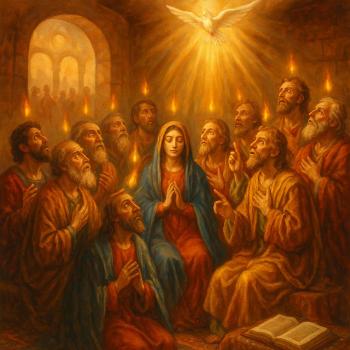
Become Fire: A New Pentecost for Progressive Christians

Adventurous Lectionary - Epiphany 5 - February 4,...

The Adventurous Lectionary - The Eighteenth Sunday after...

The Adventurous Lectionary - Eighth Sunday after Pentecost...
TRENDING AT PATHEOS Progressive Christian

Emotion in Early Christianity by Andrew Crislip
Andrew Crislip’s Emotion in Early Christianity examines an often overlooked dimension of...

16 Spiritual Touchstones for a More Grounded Life
After decades of spiritual study, here are 16 principles I try...

Catholic Evangelization: Sharing Your Faith Every Day
Welcome back to the Graceful Awakening mini-series called, “From Faith to Mission.” ...

The Pillar of the Boatmen: the Ancient Monument...
The Pillar of the Boatmen is a Romano-Gaulish sculpture that dates from...

In one sense walking into Westminster Abbey is like walking down the...

'Super Scam Me' Exposes AI Jon Bon Jovi...
Leslie Pickett believed she was in a relationship with Jon Bon Jovi....
view all Progressive Christian blogs
Ad-Free & Subscriber Log-In Subscription Support
- About Us
- 2026 Calendar
- Videos
- Podcasts
- Library of World Religions
- Faith In Media Tracker
- Advertise With Us
- Write for Us
- Privacy Policy
- Terms of Service
- Do Not Sell My Data
- Contact Us
- Radiant Digital
- Manage Newsletter Subscriptions
- Unsubscribe From Notifications
- Sitemap
Copyright 2008-2026, Patheos. All rights reserved.
Subscription Support Ad-Free & Subscriber Log-In
Follow Patheos