
BuddhistCatholicContemplativeEvangelicalGeneral ChristianHinduJewishLatter-day SaintMuslimNew VisionsProgressive Christian
Beliefs
- Buddhist
- Catholic
- Contemplative
- Evangelical
- General Christian
- Hindu
- Jewish
- Latter-day Saint
- More Voices
- Muslim
- New Visions
- Pagan
- Progressive Christian
Topics
- Religion News
- Food and Religion
- Sports and Religion
- Religious Art
- Religious Music and Entertainment
- Religious Events
- History and Religion
- Style and Religion
- Politics and Religion
- Women in Religion
- Recreation Outdoors and Religion
- Business Finance and Religion
- Careers Workplace and Religion
- Education and Religion
- Family Parenting and Religion
- Health Fitness and Religion
- Home and Religion
- Relationships and Religion
- Technology and Religion
- Travel and Religion
Columnists
- Buddhist Columnists
- Business Finance and Religion Columnists
- Careers Workplace and Religion Columnists
- Catholic Columnists
- Contemplative Columnists
- Education and Religion Columnists
- Evangelists Columnists
- Family Parenting and Religion Columnists
- General Christian Columnists
- Health Fitness and Religion Columnists
- Hindu Columnists
- History and Religion Columnists
- Home and Religion Columnists
- Jewish Columnists
- More Voices Columnists
- Latter Day Columnists
- Muslim Columnists
- New Visions Columnists
- Nonreligious Columnists
- Pagan Columnists
- Politics and Religion Columnists
- Progressive Columnists
- Recreation Outdoors and Religion Columnists
- Relationships and Religion Columnists
- Religion News Columnists
- Religious Art Columnists
- Religious Events Columnists
- Religious Music and Entertainment Columnists
- Sports and Religion Columnists
- Style and Religion Columnists
- Technology and Religion Columnists
- Travel and Religion Columnists
- Women in Religion Columnists
Resource Library
- 2026 Calendar
- Library of World Religions
- The 100 Most Holy Places on Earth
- Patheos Answers
- Podcasts
- Videos
- Faith Leaders Database
- Anglican Episcopalian
- Bahai
- Baptist
- Buddhism
- Christianity
- Confucianism
- Eastern Orthodoxy
- Hinduism
- Holiness and Pentecostal
- ISKCON
- Islam
- Judaism
- Lutheran
- Methodist
- The Church of Jesus Christ of Latter-day Saints
- New Age
- Paganism
- Presbytarian and Reformed
- Protestantism
- Religion Behind the Scenes
- Roman Catholic
- Scientology
- Shia Islam
- Sikhism
- Sufism
- Sunni Islam
- Taoism
- Zen
- See all religions
Research Tools
 Ad-Free & Subscriber Log-In Subscription Support
Follow Patheos 

- Trending:
- Advent
- |
- Forgiveness
- |
- Thanksgiving
- |
- Election
- |
- Seasonal Holidays
- |
- Marriage

- Home
- Progressive Christian
- Pondering Providence: Responding to Robert Tracy Knight’s “The First Thanksgiving”
Pondering Providence: Responding to Robert Tracy Knight’s “The First Thanksgiving”
Last updated on: November 19, 2013 at 12:51 am by Bruce Epperly
Pondering Providence: Responding to Robert Tracy Knight’s “The First Thanksgiving” 2013-11-19T00:51:15-05:00 Bruce Epperly
Patheos Explore the world's faith through different perspectives on religion and spirituality! Patheos has the views of the prevalent religions and spiritualities of the world.
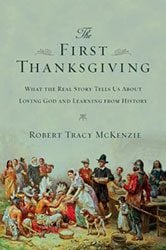 Robert Tracy McKenzie does a masterful job of liberating the pilgrims from the cultural and economic myths that often disguise their faith and practices in his new book The First Thanksgiving. He sees them as God-centered people, leery of religious holidays, and focused on covenant with God and one another. The pilgrims were inspired by the necessity of caring for each other; their faith and economics were a far cry from today’s individualistic capitalism and religious life. Covenant means that we need each other and that within the fabric of life, the well-being of one supports the well-being of all, and healthy communities support healthy, God-fearing individuals. Their image of freedom centered on our liberty to worship God in the scriptural spirit rather than the choice to do as we please or live without corporate limitations.
Beyond the cultural myths, McKenzie’s First Thanksgiving roots the pilgrim’s perseverance in their trust in God’s covenantal relationship with them and all creation. Divine providence was at the heart of their faith. They truly believed that God moved through history, guided by God’s vision, and that the events of life reflected God’s good pleasure. Despite their affirmation of a strong form of divine providence, McKenzie notes that they resisted the temptation to identify any particular event (such as a hurricane or a particular success) with the specific working out of God’s providence. God’s great faithfulness included the scope of history and, by implication, every event in history. But, we mortals would do well not to see any event in isolation as a reflection of God’s will. God’s aim for human and cosmic history is good and even apparently contrary events are part of the divine fabric of history and cosmology. The outcomes of historical process are for God’s glory not our comfort.
The pilgrims were sustained by the faith that God was at work in the large and the small, the global and the personal. God is the energetic will determining all things. McKenzie’s interpretation of the pilgrims’ understanding of God’s will as determining all things raises the question, “Can we be patient with history and trust God’s providence while also affirming randomness and creaturely creativity as causes of the events of our lives? Can we affirm a gentle providence working in all things in a relational rather than all-determining manner? Is creaturely creativity, albeit shaped by God’s vision, consistent with divine providence?”
The pilgrims clearly identified God’s sovereignty with the events of history. On our own, we can do nothing; we are tainted by sin; and prone to alienation. The more power God has the more certain we can be of our own standing in the world. The less power we have in relationship to divine sovereignty, the better off we are spiritually and corporately.
Recent theological movements, such as process theology, see the divine-human relationship as collaborative in nature. Divine sovereignty orients each moment of experience while leaving room for creaturely initiative. Our use of power, though shaped by God’s influence, can expand or impede God’s movements in our world. God, from the point of view of process-relational theology, works with creaturely freedom, both shaping and adapting to it; God intimately responds to our prayers and actions in such a way that what we do influences the course of divine activity.
The question, of course, is “Is a relational, collaborative God, powerful enough to sustain our faith in difficult times?” The pilgrims believed that all times – and our times – are in God’s hands. They were sure that divine providence steered the course of history and our personal lives, regardless of appearances. Our well-being was secondary and ultimately of modest consequence in contrast to God’s sovereign glory. More contemporary theologies, such as process theology, connect divine and creaturely well-being. Our lives contribute to God’s experience in ways that bring beauty or ugliness to God’s experience. Moreover no one specific event is entirely God’s will nor is the course of history pre-ordained in a particular direction. While God aims at beauty of experience, there is no final and absolute model of beauty to be attained. Beauty, in its many forms, emerges in the process. There is no guarantee to that God’s will be done fully in history, although God is constantly at work in history.
Shared divine-creaturely power does not rob God of power. God’s power is at work in and through things, cooperating with and bringing the best out of every situation. God shapes the wide panorama of the universe as the details unfold in the interaction of many interdependent causes. We cannot be certain of a particular outcome but we can trust that God will continue to seek the best for us and all creation, regardless of what we have done in the past or will do in the future. Sovereignty, if we use the term at all to describe God’s relationship with the world, is more about empowerment than control, artistry than order, and adventure than outcome. God’s good pleasure is always relational and never coercive. Accordingly, although we must be agnostic about the outcome of history, we can be confident that God will always be at work in our lives and the historical process. God always has the resilience and energy to respond to every situation, providing healing possibilities for even the most challenging situations.
For more on The First Thanksgiving – including an author video on the “real” first Thanksgiving dinner – visit the Patheos Book Club here.
Previous Post

November 18, 2013
Bonhoeffer’s Vision and Process Theology
Next Post

November 27, 2013 Living with Less: Responding to Susan Vogt’s Blessed by Less
Browse Our Archives
Select a Category Book Reviews The Adventurous Lectionary Uncategorized
Select a Month November 2026 October 2026 September 2026 August 2026 July 2026 June 2026 May 2026 April 2026 March 2026 February 2026 January 2026 December 2025 November 2025 October 2025 September 2025 August 2025 July 2025 June 2025 May 2025 April 2025 March 2025 February 2025 January 2025 December 2024 November 2024 October 2024 September 2024 August 2024 July 2024 June 2024 May 2024 April 2024 March 2024 February 2024 January 2024 December 2023 November 2023 October 2023 September 2023 August 2023 July 2023 June 2023 May 2023 March 2023 February 2023 January 2023 December 2022 November 2022 October 2022 September 2022 August 2022 July 2022 June 2022 May 2022 April 2022 March 2022 February 2022 January 2022 December 2021 November 2021 October 2021 September 2021 August 2021 July 2021 June 2021 May 2021 April 2021 March 2021 February 2021 January 2021 December 2020 November 2020 October 2020 September 2020 August 2020 July 2020 June 2020 May 2020 April 2020 March 2020 February 2020 January 2020 December 2019 November 2019 October 2019 September 2019 August 2019 July 2019 June 2019 May 2019 April 2019 March 2019 February 2019 January 2019 December 2018 November 2018 October 2018 September 2018 August 2018 July 2018 June 2018 May 2018 April 2018 March 2018 February 2018 January 2018 December 2017 November 2017 October 2017 September 2017 August 2017 July 2017 June 2017 May 2017 April 2017 March 2017 February 2017 January 2017 December 2016 November 2016 October 2016 September 2016 August 2016 July 2016 June 2016 May 2016 April 2016 March 2016 February 2016 January 2016 December 2015 November 2015 October 2015 September 2015 August 2015 July 2015 June 2015 May 2015 April 2015 March 2015 February 2015 January 2015 December 2014 November 2014 October 2014 September 2014 August 2014 July 2014 June 2014 May 2014 April 2014 March 2014 February 2014 January 2014 December 2013 November 2013 October 2013 September 2013 August 2013 July 2013 June 2013 May 2013 April 2013 March 2013 February 2013 January 2013 December 2012 November 2012 October 2012 September 2012 August 2012 July 2012 June 2012 May 2012 April 2012 March 2012 February 2012 December 2011 May 2011 April 2011 March 2011 February 2011 January 2011
TAKE THE
Religious Wisdom Quiz
Where in the Bible can we find the phrase "a time to be born and a time to die"?
Select your answer to see how you score.
Genesis Matthew Job Ecclesiastes
Books by This Author Books by Living A Holy Adventure
Related posts from Living A Holy Adventure

Beauty is Resistance: The World Will be Saved...
Become Fire: A New Pentecost for Progressive Christians
The Day When Nothing Happens - A Holy...
Words of Gratitude and Challenge: A Remembrance of...
TRENDING AT PATHEOS Progressive Christian

Smart people saying smart things (11.24.26)
Please take time to listen to Perry Bacon, Sarah Posner, Adam Serwer,...

The Contingency of Our Technology
Last week we were hit with a raft of massive technology outages....

In 1939, President Franklin D. Roosevelt moved Thanksgiving from November 30 to...

Reasons for Restraint: Ricardo Gonzalez, Florida and Dec...
The Morning of January 3 I begin with the dead. On the...

I published this column for Thanksgiving 2012 in the Deseret News....

For many years, Catholicism has been caught up in division over the...
view all Progressive Christian blogs
Ad-Free & Subscriber Log-In Subscription Support
- About Us
- 2026 Calendar
- Videos
- Podcasts
- Library of World Religions
- Faith In Media Tracker
- Advertise With Us
- Write for Us
- Privacy Policy
- Terms of Service
- Do Not Sell My Data
- Contact Us
- Radiant Digital
- Manage Newsletter Subscriptions
- Unsubscribe From Notifications
- Sitemap
Copyright 2008-2026, Patheos, part of the Radiant Digital network of media brands. All rights reserved.
Subscription Support Ad-Free & Subscriber Log-In
Follow Patheos