
BuddhistCatholicContemplativeEvangelicalGeneral ChristianHinduJewishLatter-day SaintMuslimNew VisionsProgressive Christian
Beliefs
- Buddhist
- Catholic
- Contemplative
- Evangelical
- General Christian
- Hindu
- Jewish
- Latter-day Saint
- More Voices
- Muslim
- New Visions
- Pagan
- Progressive Christian
Topics
- Religion News
- Food and Religion
- Sports and Religion
- Religious Art
- Religious Music and Entertainment
- Religious Events
- History and Religion
- Style and Religion
- Politics and Religion
- Women in Religion
- Recreation Outdoors and Religion
- Business Finance and Religion
- Careers Workplace and Religion
- Education and Religion
- Family Parenting and Religion
- Health Fitness and Religion
- Home and Religion
- Relationships and Religion
- Technology and Religion
- Travel and Religion
Columnists
- Buddhist Columnists
- Business Finance and Religion Columnists
- Careers Workplace and Religion Columnists
- Catholic Columnists
- Contemplative Columnists
- Education and Religion Columnists
- Evangelists Columnists
- Family Parenting and Religion Columnists
- General Christian Columnists
- Health Fitness and Religion Columnists
- Hindu Columnists
- History and Religion Columnists
- Home and Religion Columnists
- Jewish Columnists
- More Voices Columnists
- Latter Day Columnists
- Muslim Columnists
- New Visions Columnists
- Nonreligious Columnists
- Pagan Columnists
- Politics and Religion Columnists
- Progressive Columnists
- Recreation Outdoors and Religion Columnists
- Relationships and Religion Columnists
- Religion News Columnists
- Religious Art Columnists
- Religious Events Columnists
- Religious Music and Entertainment Columnists
- Sports and Religion Columnists
- Style and Religion Columnists
- Technology and Religion Columnists
- Travel and Religion Columnists
- Women in Religion Columnists
Resource Library
- 2026 Calendar
- Library of World Religions
- The 100 Most Holy Places on Earth
- Patheos Answers
- Podcasts
- Videos
- Faith Leaders Database
- Anglican Episcopalian
- Bahai
- Baptist
- Buddhism
- Christianity
- Confucianism
- Eastern Orthodoxy
- Hinduism
- Holiness and Pentecostal
- ISKCON
- Islam
- Judaism
- Lutheran
- Methodist
- The Church of Jesus Christ of Latter-day Saints
- New Age
- Paganism
- Presbytarian and Reformed
- Protestantism
- Religion Behind the Scenes
- Roman Catholic
- Scientology
- Shia Islam
- Sikhism
- Sufism
- Sunni Islam
- Taoism
- Zen
- See all religions
Research Tools
 Ad-Free & Subscriber Log-In Subscription Support
Follow Patheos 

- Trending:
- Advent
- |
- Forgiveness
- |
- Thanksgiving
- |
- Election
- |
- Seasonal Holidays
- |
- Marriage

- Home
- Progressive Christian
- What Kind of God are we Playing? A Response to Andy Crouch’s “Playing God”
What Kind of God are we Playing? A Response to Andy Crouch’s “Playing God”
Last updated on: October 15, 2013 at 4:07 pm by Bruce Epperly
What Kind of God are we Playing? A Response to Andy Crouch’s “Playing God” 2013-10-15T16:07:18-04:00 Bruce Epperly
Patheos Explore the world's faith through different perspectives on religion and spirituality! Patheos has the views of the prevalent religions and spiritualities of the world.
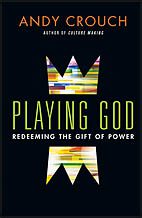 “Power is a gift” says Andy Crouch in his excellent new book Playing God: Redeeming the Gift of Power. Our use of power can either create or destroy, and power that leads to flourishing, Crouch notes, is grounded in our relationship with God. Crouch believes that the use of power is inevitable and can be good, and that it can be redeemed to serve the greater purposes of God and humanity; power, rightly used, can deepen rather than weaken our relationships and connections with others. As Paul Tillich demonstrated in his powerful text, Love, Power, and Justice, written five decades ago, power is a deeply theological issue.
Crouch’s affirmation of the power as potentially positive begs the theological question, “Who is the God with whom we are in relationship and what images of God, noting that the Bible is a library of divine images, bring forth creative and life-affirming power?” Our images of God can inspire us to create or destroy, affirm or manipulate, empower or oppress. I believe that positive uses of power reflect a life-giving understanding of divine power. Negative uses of power reflect constricting and coercive understandings of God’s power.
One of my teachers Bernard Loomer spoke eloquently about two kinds of power – unilateral and relational. Unilateral power is one-sided, winner take all, coercive and domineering, and diminishes rather than inspires creaturely freedom and creativity. We can see this unilateral power in Stalinist Russia, Maoist China, North Korea, Assad’s Syrian regime, and the coercive tactics of USA preachers and politicians who espouse monolithic understandings of salvation or economic policy. There is no room in unilateral power, for questions, doubts, or alternative paths. Compromise is an anathema to such power hungry leaders; victory means destroying rather than finding common ground with persons of contrasting opinions.
Sadly, unilateral power has been a primary image of God throughout Christian history: God has been defined primarily in terms of sovereignty. God has all the power, creation has none. Any deviation from a preset divine purpose is seen as a fall from grace worthy of eternal damnation. We are perceived as inherently evil (the doctrine of original sin) while God alone is good. Grace is unilateral and often arbitrary, and never deserved. If we claim any goodness of our own, we affront divine majesty. God chooses the events of the world and even has chosen people to be “his” instruments of glory, who then can destroy those who are not chosen – infidels, doubters, free-thinkers, theological opponents, and indigenous peoples.
Tragically, the doctrine of divine grace intended as a sign of divine love has often been used as a form of punishment, exclusion, and oppression, when connected with a God whose favor requires the adherence to narrowly understood doctrines or the giving up of indigenous practices. Grace has been seen as unilateral and one-sided; its generosity has been domineering in its neglect of the unique gifts of creation, both human and non-human. While all gifts come from God, their positive embodiment emerges from creaturely decision-making and this needs to be acknowledged to have a life-supporting vision of grace.
In contrast to unilateral power, relational power follows the spirit of Philippians 2:5-11, the Christological hymn describing Christ’s victory as the result of Christ’s letting go of unilateral power in favor of power that brings salvation to all creation. First century Christians would have known the term Lordship and the phrase “every knee shall bend” from two perspectives: the perspective of Caesar and the perspective of Jesus. Caesar rules unilaterally by threat and domination. We bend our knees out of fear of punishment and exclusion. This power objectifies, dominates, and deadens the spirit. In contrast, first century Christians would have seen the power of Jesus as relational: we bend our knees out of love and gratitude, not fear. The power of Christ is for everyone; it does away with force and coercion, winning the day by love and affirmation. It is healing power. Theologian Thomas Oord rightly notes that often theologians have defined God primarily in terms of power, when the God of Jesus is known first and foremost by love. (see Oord, The Nature of Love) They have preferred the despotic Caesar to the Galilean image of Jesus of Nazareth. Often when I find myself in a theological discussion, I discover that such theologians and pastors would rather sacrifice love to omnipotence in their explanations of the impact on creation and humankind of natural disasters, the causes of terrorist acts, or the incidence of cancer or AIDS. Surely the most blatant images of divine unilateral and destructive power relate to explanations of natural disasters and the hoped-for (!) Second Coming of Jesus, who destroys the infidel and the good earth simply to save a faithful remnant.
Crouch’s project, in order to succeed, must jettison all images of sovereign power as unilateral and, frankly, question the appropriateness of the doctrine of original sin as a primary understanding of human life. We can’t help playing God: the issue is the nature of our models of divine power and how they shape and justify our own use of power. A relational vision nurtures relational power in which we work together and one another with God to heal the Earth. God needs us and cannot accomplish this alone; we are God’s companions in creative transformation. (For more on a relational vision of God, see Bruce Epperly, Emerging Process: Adventurous Theology for a Missional Church and Process Theology: A Guide for the Perplexed.)
Our visions of God need to embrace companionship above sovereignty. A companioning God is non-competitive and encourages creativity. The world is unfinished and open-ended. God rejoices in our efforts, even when they are imperfect. Even our imperfection provides God with opportunities for creativity and healing. Original sin is appropriately placed in the theological background and while we recognize and respond to our own and others’ sinful behavior, we see this in light of our original goodness and creation in God’s image. When we use creativity wisely, we expand the realm of divine creativity.
From this perspective, God is not a king, demanding absolute obedience or choosing only one final goal to history, but an artist, poet, and parent, exploring many possibilities of human well-being and planetary flourishing. The God we worship and trust, then, becomes the model for creative, life-supporting, and affirmative relationships that embrace everyone and not a chosen few. Grace empowers us to be graceful in affirmative rather than paternalistic and maternalistic ways. Following the redemptive God, we “play God” in ways that bring forth the value and divinity, the deepest humanity, in our personal and institutional behaviors.
Visit the Patheos Book Club for more conversation on Playing God.


Browse Our Archives
Select a Category Book Reviews The Adventurous Lectionary Uncategorized
Select a Month November 2026 October 2026 September 2026 August 2026 July 2026 June 2026 May 2026 April 2026 March 2026 February 2026 January 2026 December 2025 November 2025 October 2025 September 2025 August 2025 July 2025 June 2025 May 2025 April 2025 March 2025 February 2025 January 2025 December 2024 November 2024 October 2024 September 2024 August 2024 July 2024 June 2024 May 2024 April 2024 March 2024 February 2024 January 2024 December 2023 November 2023 October 2023 September 2023 August 2023 July 2023 June 2023 May 2023 March 2023 February 2023 January 2023 December 2022 November 2022 October 2022 September 2022 August 2022 July 2022 June 2022 May 2022 April 2022 March 2022 February 2022 January 2022 December 2021 November 2021 October 2021 September 2021 August 2021 July 2021 June 2021 May 2021 April 2021 March 2021 February 2021 January 2021 December 2020 November 2020 October 2020 September 2020 August 2020 July 2020 June 2020 May 2020 April 2020 March 2020 February 2020 January 2020 December 2019 November 2019 October 2019 September 2019 August 2019 July 2019 June 2019 May 2019 April 2019 March 2019 February 2019 January 2019 December 2018 November 2018 October 2018 September 2018 August 2018 July 2018 June 2018 May 2018 April 2018 March 2018 February 2018 January 2018 December 2017 November 2017 October 2017 September 2017 August 2017 July 2017 June 2017 May 2017 April 2017 March 2017 February 2017 January 2017 December 2016 November 2016 October 2016 September 2016 August 2016 July 2016 June 2016 May 2016 April 2016 March 2016 February 2016 January 2016 December 2015 November 2015 October 2015 September 2015 August 2015 July 2015 June 2015 May 2015 April 2015 March 2015 February 2015 January 2015 December 2014 November 2014 October 2014 September 2014 August 2014 July 2014 June 2014 May 2014 April 2014 March 2014 February 2014 January 2014 December 2013 November 2013 October 2013 September 2013 August 2013 July 2013 June 2013 May 2013 April 2013 March 2013 February 2013 January 2013 December 2012 November 2012 October 2012 September 2012 August 2012 July 2012 June 2012 May 2012 April 2012 March 2012 February 2012 December 2011 May 2011 April 2011 March 2011 February 2011 January 2011
TAKE THE
Religious Wisdom Quiz
I appeared to Paul on the Damascus road as a blinding light. I spoke to him and changed his life forever. Who am I?
Select your answer to see how you score.
Jesus The Holy Spirit An angel God the Father
Books by This Author Books by Living A Holy Adventure
Related posts from Living A Holy Adventure
Theology Matters to LGBTQ Persons: A Response to...
Mysticism, Hallucinations, and Designer Spirituality
Does the Pursuing God Ever Stop Pursuing?

Balancing Self Interest and World Loyalty: On Dee...
TRENDING AT PATHEOS Progressive Christian

Adventurous Lectionary -1st. Sunday of Advent - November...
The Adventurous Lectionary - The First Sunday of Advent – November 29,...

Will Islam become the world's biggest religion by 2035? Congo will replace...

The resilience of the Christian faith in the english speaking world of...

An Advent Calendar, and a Tree full of...
I've spent the weekend deeply invested in internet drama about a $150...

How to Have Financial Transparency in Marriage
Despite the fact that financial issues and money problems are the number...
The Healing Power of Forgiveness in Marriage
Learning how to give and accept apologies are essential ingredients of a...
view all Progressive Christian blogs
Ad-Free & Subscriber Log-In Subscription Support
- About Us
- 2026 Calendar
- Videos
- Podcasts
- Library of World Religions
- Faith In Media Tracker
- Advertise With Us
- Write for Us
- Privacy Policy
- Terms of Service
- Do Not Sell My Data
- Contact Us
- Radiant Digital
- Manage Newsletter Subscriptions
- Unsubscribe From Notifications
- Sitemap
Copyright 2008-2026, Patheos. All rights reserved.
Subscription Support Ad-Free & Subscriber Log-In
Follow Patheos