
BuddhistCatholicContemplativeEvangelicalGeneral ChristianHinduJewishLatter-day SaintMuslimNew VisionsProgressive Christian
Beliefs
- Buddhist
- Catholic
- Contemplative
- Evangelical
- General Christian
- Hindu
- Jewish
- Latter-day Saint
- More Voices
- Muslim
- New Visions
- Pagan
- Progressive Christian
Topics
- Religion News
- Food and Religion
- Sports and Religion
- Religious Art
- Religious Music and Entertainment
- Religious Events
- History and Religion
- Style and Religion
- Politics and Religion
- Women in Religion
- Recreation Outdoors and Religion
- Business Finance and Religion
- Careers Workplace and Religion
- Education and Religion
- Family Parenting and Religion
- Health Fitness and Religion
- Home and Religion
- Relationships and Religion
- Technology and Religion
- Travel and Religion
Columnists
- Buddhist Columnists
- Business Finance and Religion Columnists
- Careers Workplace and Religion Columnists
- Catholic Columnists
- Contemplative Columnists
- Education and Religion Columnists
- Evangelists Columnists
- Family Parenting and Religion Columnists
- General Christian Columnists
- Health Fitness and Religion Columnists
- Hindu Columnists
- History and Religion Columnists
- Home and Religion Columnists
- Jewish Columnists
- More Voices Columnists
- Latter Day Columnists
- Muslim Columnists
- New Visions Columnists
- Nonreligious Columnists
- Pagan Columnists
- Politics and Religion Columnists
- Progressive Columnists
- Recreation Outdoors and Religion Columnists
- Relationships and Religion Columnists
- Religion News Columnists
- Religious Art Columnists
- Religious Events Columnists
- Religious Music and Entertainment Columnists
- Sports and Religion Columnists
- Style and Religion Columnists
- Technology and Religion Columnists
- Travel and Religion Columnists
- Women in Religion Columnists
Resource Library
- 2026 Calendar
- Library of World Religions
- The 100 Most Holy Places on Earth
- Patheos Answers
- Podcasts
- Videos
- Faith Leaders Database
- Anglican Episcopalian
- Bahai
- Baptist
- Buddhism
- Christianity
- Confucianism
- Eastern Orthodoxy
- Hinduism
- Holiness and Pentecostal
- ISKCON
- Islam
- Judaism
- Lutheran
- Methodist
- The Church of Jesus Christ of Latter-day Saints
- New Age
- Paganism
- Presbytarian and Reformed
- Protestantism
- Religion Behind the Scenes
- Roman Catholic
- Scientology
- Shia Islam
- Sikhism
- Sufism
- Sunni Islam
- Taoism
- Zen
- See all religions
Research Tools
 Ad-Free & Subscriber Log-In Subscription Support
Follow Patheos 

- Trending:
- Advent
- |
- Forgiveness
- |
- Thanksgiving
- |
- Election
- |
- Seasonal Holidays
- |
- Marriage

- Home
- Progressive Christian
- Order and Novelty in Family Spirituality: A Response to Tim and Sue Muldoon’s Six Sacred Rules for Families: A Spirituality for the Home
Order and Novelty in Family Spirituality: A Response to Tim and Sue Muldoon’s Six Sacred Rules for Families: A Spirituality for the Home
Last updated on: October 16, 2013 at 1:55 pm by Bruce Epperly
Order and Novelty in Family Spirituality: A Response to Tim and Sue Muldoon’s Six Sacred Rules for Families: A Spirituality for the Home 2013-10-16T13:55:06-04:00 Bruce Epperly
Patheos Explore the world's faith through different perspectives on religion and spirituality! Patheos has the views of the prevalent religions and spiritualities of the world.
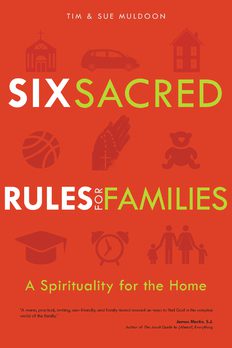 A well-known saying from Zen Buddhism notes: “Before enlightenment, I chopped wood and carried water. After enlightenment, I chopped wood and carried water.” Although deeply rooted in the Roman Catholic tradition, this is the essence of Tim and Sue Muldoon’s Six Sacred Rules for Family: A Spirituality of the Home. Quite often in life, the issue is not what we do but how we do it. Family life today, even in rural areas, can often be described as a state of constant busyness. Parents and children are always on the run and involved in one activity after another – in sports, school events, texting, phone calls, and navigating the web. Weary after a day’s work, both parents find themselves on the road, chauffeuring children from one place to the other, carpooling with other parents’ children, or having the nanny be the primary purveyor of transportation, homework supervision, and supper. Too often rush and anxiety characterizes family spirituality. It may be challenging but parents can find creative and flexible ways that enable them to nurture a sense of calm activity in their families and discern the difference between the essential and the optional in family life and children’s activities.
While few families may be able to fully replicate the disciplines the Muldoon’s share in Six Sacred Rules for Families, the key issue for parenting and family life is cultivating self-awareness that leads to experiencing the sacrament of the present moment. Family life is vocational in nature, the Muldoon’s assert, and I agree – our vocation in family life is to nurture an awareness of love, beauty, possibility, and wonder in the course of daily life. In John Lennon’s hymn to his son, “Beautiful Boy,” he reminds his little boy: “Before you cross the street take my hand. Life is what happens to you while you’re busy making other plans.” This is the nature of family life and spirituality: doing ordinary things in extraordinary ways and making sacred the present moments of life one by one. This takes time and the commitment to pause, notice, open, stretch, and respond to the present moment’s vocation – the interplay of our gifts and life situation with the concrete needs and possibilities of the moment.
Family life is a laboratory of the Spirit in which we nurture a spirituality of family through a combination of necessity, intentionality, synchronicity, and spontaneity. Family life is about necessity, first of all. We need to chop wood and carry water, and that means going to work (typically as single parents with primary custody or as two income families, where both parents go off to work, often working eight to ten hour days). We must earn a living, but earning a living is of one piece with fixing breakfast, going to the market, arranging play dates, reading bed time stories, helping with homework, and simply loafing with your children. For the sake of getting our work done or having some quiet time, we need to compartmentalize, but compartmentalizing our lives is ultimately an illusion, harmful to our and our family’s well-being. Life is lived whole-cloth, moving from one thing to another, and when we move with the Spirit, we experience optimum health and compassion. Airlines charge us to “put on the oxygen mask first” before placing it on our children’s faces. Counterintuitive, this means that you have to take care of yourself to take care of others.
Dealing with necessities invites us to foster our own spiritual practices, appropriate to our life situation. We don’t need to be victims of our lives; we can be agents in shaping our lives. At my congregation, South Congregational Church (United Church of Christ) in Centerville, MA, I spend a moment in each Children’s Sermon inviting the children and everyone else in church to breathe deeply and slowly. The most obvious spiritual practice is doing what we can’t live without in ways that deepen our spirits and that is breathing. We can transform our lives and experience of life by breath prayers, that is, simply stopping to breathe and let God’s calm and energy permeate your whole being. Here’s how a parent can do this on her or his own or with a child:
1) Upon awakening, take a few deep breaths, giving thanks for the gift of life.
2) As you greet your partner, spouse, brother or sister, and/or child/children, breathe deeply and exhale your love to them
3) Find moments throughout the day to breathe deeply, inviting the Spirit of peace into your life.
4) When you begin to feel stressed or busy, pause and breathe; notice how you feel, let go into the moment of breathing, and open to grace.
5) Spend a few minutes breathing with your child/children or another significant person.
Breathing the interruptions of the day opens you to the Spirit in the ordinary and extraordinary moments of life. You can teach your children to breathe gently and mindfully, opening to a calm that permeates the busyness of life.
A spirituality of breathing through life’s necessities opens us to a flexible intentionality. Parents should constantly ask themselves the questions: What is important in life? What are my priorities? What is my calling in this situation and in relationship to my family and personal spirituality? The traditional practice of “examination of conscience” (20) involves the interplay of intentionality and awareness. Having a personal and family vision statement, flexibly lived out, helps parents and children alike to learn to prioritize their lives. A vision is a polestar helping us in living fully and gracefully in the varied situations of life. A vision statement can be as simple as, “I am here to bless my family and everyone I meet” or “I treat my children with love, compassion, and understanding” or “I see Christ in my family and everyone I meet.”
Synchronicity involves openness to “God moments.” We must have our senses open to special moments with our children. Synchronous moments, meaningful coincidences in our lives, open our times with our families to inspiration and creativity, embodied in a surprising question from a child, an encounter with a neighbor in the front yard, or a sight on the way home from work. We open to synchronicity by cultivating lives of prayer and reflection. When our eyes are open to the holy, miracles of vision emerge that would otherwise be unnoticed. We discover we are on holy ground in every encounter and that God can speak to us through the most ordinary events.
Spontaneity is a reminder that we can’t pre-program spiritual growth, but must be flexible and open to changing our plans at the drop of a hat. We must recognize that even with our spiritual practices, intentionality, and vision, we are never fully in control. As Jesus said, the sun rises and the rain falls on the just and the unjust. Accidents occur; people stop by unannounced; larger political and economic factors shape our lives without our consent; illness strikes and so does serendipity. Having a vision and openness to God in every encounter enables us to let go of plans and awaken to the possibilities for compassion and growth in unexpected events.
The Muldoon’s have done a great service in their book. Taken flexibly, their text will awaken us to the beauty of family life and enable us to see holiness in ordinary tasks. It will enable our children to cultivate a sense of calm through all the seasons of life.
To read an excerpt from Six Sacred Rules for Families, visit the Patheos Book Club here.

Next Post

October 21, 2013 The Adventurous Lectionary for October 27, 2013
Browse Our Archives
Select a Category Book Reviews The Adventurous Lectionary Uncategorized
Select a Month November 2026 October 2026 September 2026 August 2026 July 2026 June 2026 May 2026 April 2026 March 2026 February 2026 January 2026 December 2025 November 2025 October 2025 September 2025 August 2025 July 2025 June 2025 May 2025 April 2025 March 2025 February 2025 January 2025 December 2024 November 2024 October 2024 September 2024 August 2024 July 2024 June 2024 May 2024 April 2024 March 2024 February 2024 January 2024 December 2023 November 2023 October 2023 September 2023 August 2023 July 2023 June 2023 May 2023 March 2023 February 2023 January 2023 December 2022 November 2022 October 2022 September 2022 August 2022 July 2022 June 2022 May 2022 April 2022 March 2022 February 2022 January 2022 December 2021 November 2021 October 2021 September 2021 August 2021 July 2021 June 2021 May 2021 April 2021 March 2021 February 2021 January 2021 December 2020 November 2020 October 2020 September 2020 August 2020 July 2020 June 2020 May 2020 April 2020 March 2020 February 2020 January 2020 December 2019 November 2019 October 2019 September 2019 August 2019 July 2019 June 2019 May 2019 April 2019 March 2019 February 2019 January 2019 December 2018 November 2018 October 2018 September 2018 August 2018 July 2018 June 2018 May 2018 April 2018 March 2018 February 2018 January 2018 December 2017 November 2017 October 2017 September 2017 August 2017 July 2017 June 2017 May 2017 April 2017 March 2017 February 2017 January 2017 December 2016 November 2016 October 2016 September 2016 August 2016 July 2016 June 2016 May 2016 April 2016 March 2016 February 2016 January 2016 December 2015 November 2015 October 2015 September 2015 August 2015 July 2015 June 2015 May 2015 April 2015 March 2015 February 2015 January 2015 December 2014 November 2014 October 2014 September 2014 August 2014 July 2014 June 2014 May 2014 April 2014 March 2014 February 2014 January 2014 December 2013 November 2013 October 2013 September 2013 August 2013 July 2013 June 2013 May 2013 April 2013 March 2013 February 2013 January 2013 December 2012 November 2012 October 2012 September 2012 August 2012 July 2012 June 2012 May 2012 April 2012 March 2012 February 2012 December 2011 May 2011 April 2011 March 2011 February 2011 January 2011
TAKE THE
Religious Wisdom Quiz
What is the main lesson of the Parable of the Rich Fool?
Select your answer to see how you score.
Money solves problems Eat, drink and be merry Life does not consist in possessions Laziness is bad
Books by This Author Books by Living A Holy Adventure
Related posts from Living A Holy Adventure
Theology Matters to LGBTQ Persons: A Response to...
Mysticism, Hallucinations, and Designer Spirituality
Does the Pursuing God Ever Stop Pursuing?
Balancing Self Interest and World Loyalty: On Dee...
TRENDING AT PATHEOS Progressive Christian

Adventurous Lectionary -1st. Sunday of Advent - November...
The Adventurous Lectionary - The First Sunday of Advent – November 29,...

Will Islam become the world's biggest religion by 2035? Congo will replace...

Best Books of 2026 on American Christianity
The resilience of the Christian faith in the english speaking world of...

An Advent Calendar, and a Tree full of...
I've spent the weekend deeply invested in internet drama about a $150...

How to Have Financial Transparency in Marriage
Despite the fact that financial issues and money problems are the number...
The Healing Power of Forgiveness in Marriage
Learning how to give and accept apologies are essential ingredients of a...
view all Progressive Christian blogs
Ad-Free & Subscriber Log-In Subscription Support
- About Us
- 2026 Calendar
- Videos
- Podcasts
- Library of World Religions
- Faith In Media Tracker
- Advertise With Us
- Write for Us
- Privacy Policy
- Terms of Service
- Do Not Sell My Data
- Contact Us
- Radiant Digital
- Manage Newsletter Subscriptions
- Unsubscribe From Notifications
- Sitemap
Copyright 2008-2026, Patheos. All rights reserved.
Subscription Support Ad-Free & Subscriber Log-In
Follow Patheos